 Source:
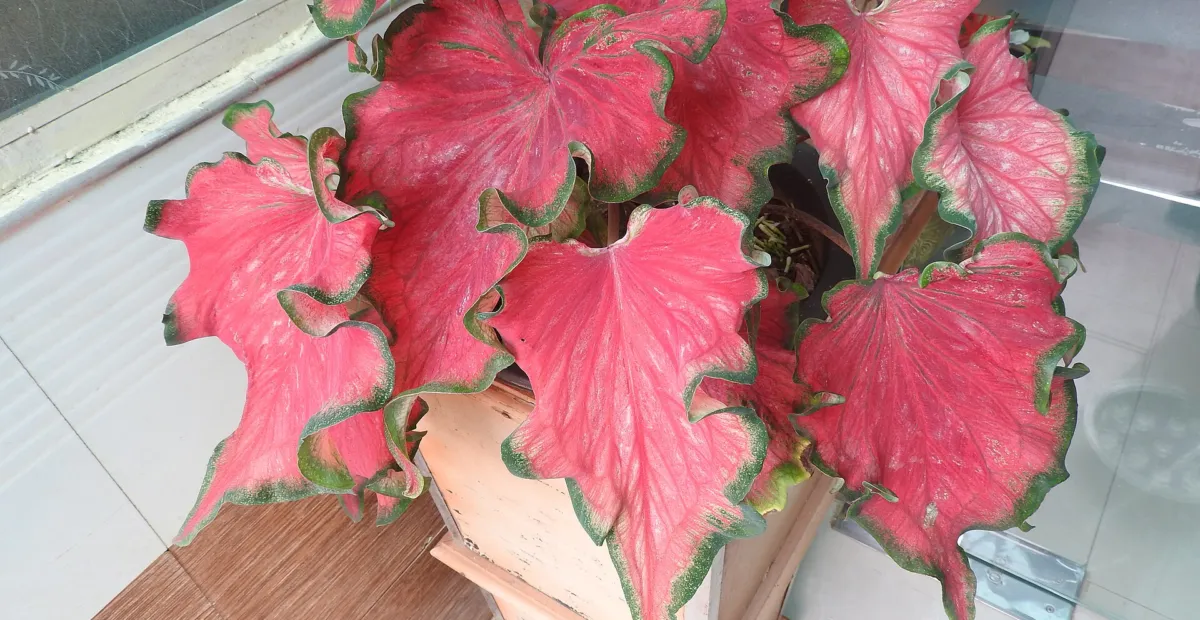
 Elephant ear (Caladium) short overview
Caladium, commonly called elephant ear, is a tuberous tropical American perennial prized for vivid, arrow-shaped foliage. In the United States it is usually grown as a warm-season annual, container plant, or indoor specimen because it is frost-tender and enters dormancy in cool conditions. Provide bright filtered light or shade, evenly moist organic soil, and winter protection. All parts contain irritating calcium oxalates and should be kept away from children and pets.
Taxonomic classification
Elephant ear (Caladium) care guide
Light and placement
Give outdoor plants bright filtered light, partial shade, or shade; morning sun is usually safer than intense afternoon exposure. Many cultivars lose color or scorch in strong full sun, while very deep, dim shade can produce weaker growth and less vivid foliage. Indoors, place near an east- or north-facing window or several feet back from a bright south- or west-facing window.
Watering and humidity
Water deeply whenever the surface begins to dry, keeping the root zone consistently moist during active growth without leaving pots standing in water. Increase watering as leaves expand in hot weather and reduce it as foliage naturally declines. Dormant tubers need much less moisture; excessive winter wetness is a common cause of rot.
Soil and growing medium
Use a loose, humus-rich mix that drains freely but stays evenly moist. A slightly acidic to neutral reaction is suitable. Avoid compacted or chronically waterlogged soil, which can reduce oxygen around the tubers and encourage rot. In containers, combine quality potting mix with organic matter and drainage material rather than using dense garden soil.
Feeding
Feed during active growth with a balanced, water-soluble fertilizer at half strength every 3–4 weeks, or use a controlled-release product according to its label. Water the soil first if it is dry. Stop feeding as growth slows in late summer or before winter dormancy; do not fertilize dormant tubers.
Growth and habit
Growth is rapid during warm weather, producing a clump of leaves from an underground tuber. Plants commonly slow or die back as temperatures fall and moisture decreases. Remove declining foliage only after it has yellowed naturally so the tuber can recover stored energy.
Planting and repotting
Plant outdoors only after soil has warmed and frost danger has passed, generally when nighttime temperatures remain above 60°F. Place tubers about 1 inch deep with the growing points upward and space plants 8–12 inches apart. Water thoroughly after planting and keep the bed evenly moist during establishment.
Repot dormant or newly purchased tubers in spring, using a container with drainage holes. Set the tuber shallowly, cover it with about 1 inch of mix, and increase watering only after shoots emerge. Move established plants carefully because the petioles and leaves are easily damaged.
Propagation and pruning
Propagation
Propagate primarily by dividing dormant tubers or separating offsets, with each section retaining a viable bud. Plant divisions in spring after storage. Seed propagation is possible for breeding and genetic variation but is slower and does not preserve cultivar traits. Allow cut surfaces to dry briefly before planting if division creates fresh wounds.
Pruning
Pruning is limited to removing yellow, collapsed, or badly damaged leaves at the base with clean shears. Do not repeatedly cut healthy foliage, which supplies energy to the tuber. Wear gloves if sensitive to plant sap and dispose of diseased material rather than composting it.
Overwintering
In zones colder than 9a, lift tubers after foliage has yellowed and before hard frost. Let them dry briefly, remove loose soil, and store them in a dry, frost-free place around 60–70°F in vermiculite, peat, or shredded paper. Alternatively, keep containers indoors with greatly reduced watering during dormancy.
Uses
Use Caladiums for shaded borders, mass plantings, containers, window boxes, patios, and seasonal indoor displays. Their principal value is ornamental foliage rather than flowers. Do not use them as food or medicine; the genus contains irritating calcium oxalates, and common-name confusion with edible taro should be avoided.
Appearance
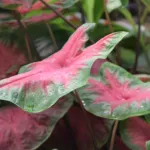
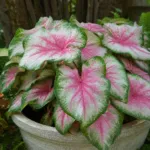
Caladiums are stemless-looking herbs with elongated petioles rising from an underground tuber. Leaves are simple, broad, arrow-shaped to heart-shaped, often peltate, and may carry contrasting veins, margins, spots, or translucent color zones. The foliage is delicate and can tear in wind, hail, or rough handling.
Flowering
Caladiums are grown mainly for foliage and may flower inconspicuously. The inflorescence is a small spadix enclosed by a greenish to yellow-green spathe, typical of the arum family. Flowering is most likely during active summer growth, but it is inconsistent among cultivars and is not usually ornamental.
Pollination and visitors
Reliable genus-level documentation of particular animal pollinators or visitor groups was not established in the reviewed sources. The small, enclosed arum inflorescences are not a dependable pollinator-garden feature.
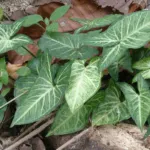
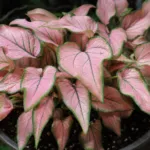
Caladium photos
Click any photo for a larger view. Source, author and license are shown separately.
Diseases and pests
Diseases
Prevent tuber and root rot by using clean containers, porous mix, and careful watering. Remove collapsing or blackened tissue and discard severely rotted tubers. Good air movement helps limit leaf disease, while avoiding overhead irrigation reduces prolonged leaf wetness. Disease pressure is generally modest when drainage and sanitation are good.
Pests
Slugs and snails commonly chew holes in the fragile leaves. Caterpillars, aphids, whiteflies, and spider mites may occasionally occur, particularly on stressed container or indoor plants. Hand-pick larger pests, remove damaged foliage, improve plant hygiene, and use labeled controls only when necessary. Avoid strong sprays that can mark tender leaves.
Related diseases and pests
Only Plant Doctor profiles whose host data indicate this plant may be affected are shown here.
 Environmental stressLeaf sunburn
 DiseaseBlack Root RotBerkeleyomyces basicola
 PestLarge White ButterflyPieris brassicae
 DiseaseBlack Rot of GrapePhyllosticta ampelicida (formerly Guignardia bidwellii)
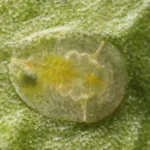 PestCitrus whiteflyDialeurodes citri
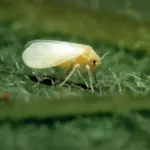 PestSweetpotato whiteflyBemisia tabaci species complex
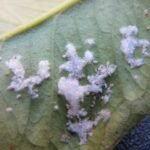 PestWoolly whiteflyAleurothrixus floccosus
Toxicity and pollen
Caladium tissues contain insoluble calcium oxalate crystals that can cause immediate oral burning, drooling, swelling, difficulty swallowing, vomiting, and skin irritation after contact with sap. Keep tubers, leaves, and sap away from children and animals; seek medical or veterinary advice after ingestion, especially if swelling or breathing difficulty occurs.
- Pollination / pollen
- Pollen is produced inside the enclosed arum inflorescence; airborne exposure relevance is not well established.
Caladium is an insect-associated flowering plant, but the reviewed sources do not establish a reliable US airborne-pollen risk level or a standard allergy season. Its showy leaves are not pollen-producing structures. People with known plant allergies should still avoid direct contact with sap and monitor individual reactions.
Native habitat
The genus is native to Central and tropical South America, where species occur in warm, humid habitats ranging from seasonally wet ground to moist forest margins. Caladiums generally favor organic soils, filtered light, and reliable moisture, although some species experience seasonal dormancy.
Interesting fact
Caladiums arise from underground tubers and may disappear completely during dormancy. Their colorful leaves are produced in an unusually broad range of red, pink, white, green, and variegated patterns. The genus is native to Central and tropical South America, while modern horticultural selections are widely produced for the US bedding-plant trade.
Frequently asked questions (FAQ)
The most relevant questions about this plant, with short and direct answers.
🌱Quick care
What is a caladium, or elephant ear?⌄
Caladium is a frost-tender tropical plant grown for its colorful, heart-shaped foliage. It belongs to the Araceae family and is usually grown as a seasonal bedding or container plant in the United States.
How do you care for a caladium?⌄
Grow caladium in bright filtered light or shade, loose humus-rich soil, and evenly moist conditions. Protect it from frost and avoid letting the soil become either bone-dry or waterlogged.
Is caladium an indoor or outdoor plant?⌄
Caladium can grow indoors or outdoors, provided it receives warm temperatures, bright indirect light, and consistent moisture. Outdoors it is commonly grown as a summer plant because the tubers are frost-tender.
🌤️Environment and placement
How much light does a caladium need?⌄
Caladium grows best in bright filtered light, dappled shade, or partial shade. Too much direct afternoon sun can scorch the leaves, while very deep shade may reduce growth and leaf color.
Can caladium grow in full shade?⌄
Caladium can tolerate full shade, but growth may be slower and the foliage may be less colorful. Bright shade or filtered light generally produces the best balance of leaf size and color.
Can caladium tolerate morning sun?⌄
Many caladiums tolerate gentle morning sun, especially when the soil stays evenly moist. Protect the leaves from intense afternoon sun, which can cause fading, scorch, or crispy margins.
What temperature is best for caladium?⌄
Caladium prefers warm conditions and grows poorly in cold soil or cool weather. Protect it from frost and bring containers indoors before temperatures become consistently cool.
Can caladium survive winter outdoors?⌄
Caladium can remain outdoors year-round only in warm regions where the ground does not freeze, generally USDA Zones 8b through 11 with suitable winter conditions. In colder areas, the tubers should be lifted and stored before frost.
💧Care and problems
How often should you water a caladium?⌄
Water caladium whenever the soil surface begins to dry, keeping the root zone evenly moist. Water less during dormancy, and make sure excess water drains freely to reduce the risk of tuber rot.
Why are my caladium leaves turning yellow?⌄
Yellow leaves may indicate natural dormancy, overwatering, underwatering, cold temperatures, or nutrient stress. If yellowing occurs late in the season, gradually reduce watering as the plant prepares to rest.
Why are my caladium leaves turning brown?⌄
Brown edges or patches commonly result from dry soil, low humidity, intense sunlight, cold damage, or fertilizer stress. Keep the soil evenly moist and move the plant away from harsh direct sun.
Why is my caladium wilting?⌄
A wilting caladium usually needs water, but wilt can also result from root or tuber rot, heat, or cold stress. Check the soil and roots before watering heavily, because soggy soil can worsen the problem.
Why is my caladium losing color?⌄
Caladium may lose color when it receives too little light, experiences temperature stress, or approaches seasonal dormancy. Move it to bright filtered light while avoiding strong afternoon sun.
What pests attack caladium?⌄
Caladium may be affected by aphids, mealybugs, spider mites, caterpillars, slugs, snails, and grasshoppers. Inspect leaves regularly and address infestations early with a treatment labeled for ornamental plants.
How do you prevent caladium tuber rot?⌄
Prevent tuber rot by planting in loose, well-drained soil, avoiding persistent waterlogging, and keeping stored tubers dry but not exposed to freezing temperatures. Cool, wet soil is especially risky during planting and dormancy.
🪴Planting and repotting
When should you plant caladium tubers?⌄
Plant caladium tubers in spring after frost danger has passed and the soil has warmed to at least about 60°F, with around 70°F producing faster growth. Cold, wet soil can delay sprouting or encourage rot.
How deep should caladium tubers be planted?⌄
Plant caladium tubers about 1 to 2 inches deep with the budded or bumpy side facing upward. Follow the supplier’s directions for unusually large tubers or a specific cultivar.
What soil is best for caladium?⌄
Use loose, humus-rich, well-drained soil that holds moisture without becoming soggy. A fertile, slightly acidic soil amended with organic matter is generally suitable for garden beds and containers.
Can caladium grow in containers?⌄
Caladium grows well in containers with drainage holes and a moisture-retentive but well-drained potting mix. Containers also make it easier to move the plant indoors before cold weather.
How far apart should caladiums be planted?⌄
Space caladiums according to their mature size, commonly about 8 to 12 inches apart for a fuller display. Larger cultivars may need more room, while compact types can be planted closer together.
How do you overwinter caladium tubers?⌄
Before frost, dig the tubers carefully, let them cure in a dry location for about 1 to 2 weeks, then store them in dry peat, vermiculite, or sawdust. Keep them in a dark, well-ventilated place roughly 60 to 65°F and prevent freezing.
Can you overwinter caladium in its pot?⌄
You can overwinter caladium in its pot by allowing the foliage to yellow naturally, reducing watering, and keeping the dormant container warm and dry. Avoid watering dormant tubers heavily because excess moisture can cause rot.
When should you dig up caladium for winter?⌄
Dig caladium tubers in late summer or fall before a killing frost, especially in USDA Zones 8a and colder. In warmer zones, they may remain in the ground, although wet winter soil can still cause losses.
✂️Propagation and pruning
How do you propagate caladium?⌄
Caladium is usually propagated by dividing its tubers. Each division should contain at least one healthy bud or growth point, and cut surfaces should be allowed to dry before planting.
Can you grow caladium from seed?⌄
Caladium can be grown from seed, but seed propagation is slower and may not reproduce the parent plant’s exact leaf color or pattern. Division of mature tubers is the usual method for home gardeners.
Should you prune caladium leaves?⌄
Prune caladium by removing yellow, damaged, or diseased leaves at the base with clean scissors. Healthy leaves generally should be left in place because they help the tuber store energy.
Should you remove caladium flowers?⌄
Caladium flowers are usually insignificant, so removing them is optional and mainly improves the plant’s appearance. The plant is grown primarily for foliage rather than blooms.
⚠️Toxicity and safety
Is caladium toxic to people?⌄
Yes, caladium is toxic if chewed or swallowed because it contains irritating calcium oxalate crystals. Ingestion can cause burning and swelling of the mouth and throat, so keep the plant away from children and seek medical advice after ingestion.
Is caladium toxic to dogs and cats?⌄
Yes, caladium is toxic to dogs and cats if chewed or swallowed. Keep it out of reach and contact a veterinarian or animal poison service if a pet eats any part of the plant.
Can caladium sap irritate skin?⌄
Caladium sap may cause minor skin irritation in sensitive people. Wear gloves when dividing tubers or handling damaged foliage, and wash exposed skin afterward.
🌸Flowering and special interest
Does caladium flower?⌄
Caladium can produce a small, pale spathe and spadix, but it rarely flowers conspicuously. Its colorful foliage is the main ornamental feature, so a lack of flowers is normal.