
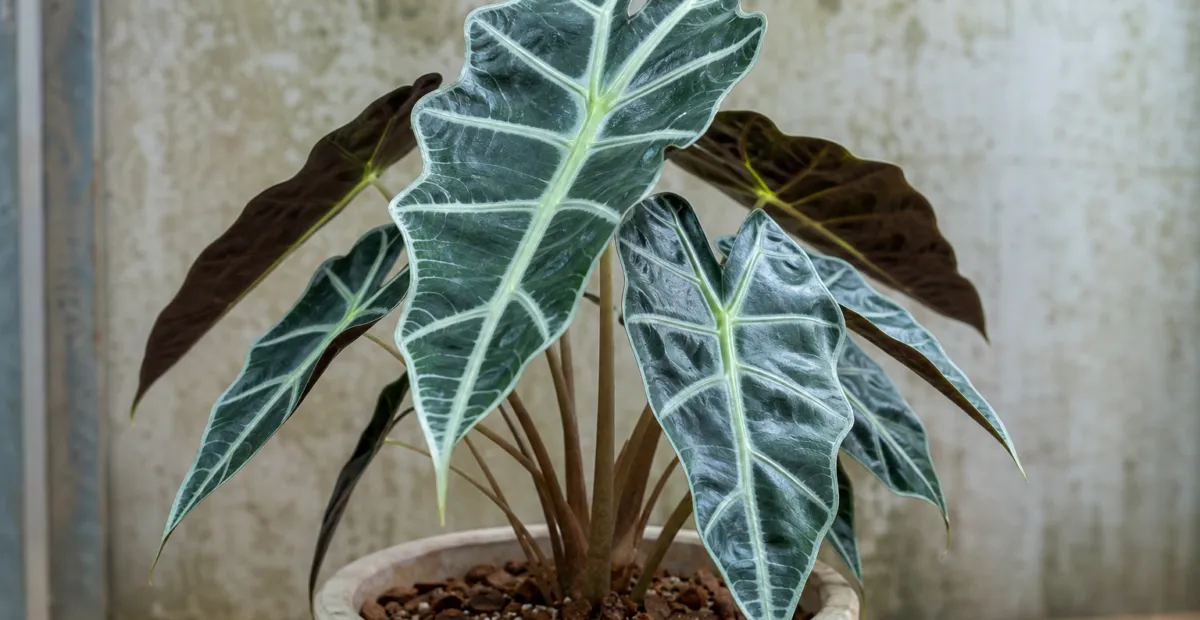
 AI-generated illustration
Alocasia reginae short overview
Alocasia reginae is a compact tropical aroid native to Borneo and valued in the United States as a collector’s houseplant. Its dark, heavily textured leaves provide strong ornamental interest even when it is not flowering. Grow it in bright filtered light, a warm humid setting, and an airy, well-drained mix kept evenly moist but never waterlogged. Protect it from cold drafts and handle the sap carefully because the plant contains insoluble calcium oxalates.
Taxonomic classification
Alocasia reginae care guide
Light and placement
Provide bright filtered light or gentle partial shade. An east- or north-facing window is suitable; near a south or west window, use a sheer curtain or place the plant farther back. Too much direct midday sun can bleach or scorch the leaves, while too little light commonly produces slower growth, longer petioles, and weaker foliage. Rotate the pot periodically for even development.
Watering and humidity
Water thoroughly when the top inch of mix has begun to dry, then allow excess water to drain completely. Keep the root zone consistently moist during active growth but never leave the pot standing in water. In winter or during low-light pauses, water less often while preventing the mix from becoming bone dry. High humidity helps reduce leaf-edge stress, but airflow remains important.
Soil and growing medium
Use a loose, airy aroid mix that combines moisture-holding organic material with coarse drainage components such as orchid bark, perlite, or pumice. The substrate should remain lightly moist while allowing excess water to drain quickly. A slightly acidic to neutral reaction is suitable; avoid compact, waterlogged soil and containers without drainage holes.
Feeding
Feed during active growth with a complete houseplant fertilizer diluted to about one-quarter to one-half of the label rate every 2–4 weeks. Water first if the mix is dry, and occasionally flush the container to reduce salt buildup. Reduce or stop feeding during cool, dim winter conditions or whenever growth has paused.
Growth and habit
This is a compact, clump-forming tropical aroid that produces leaves from a short underground stem or corm-like base. Growth is strongest with warmth, bright filtered light, steady moisture, and active feeding. Avoid abrupt changes in light or watering; stressed plants may pause growth, shed older leaves, or become vulnerable to rot and mites.
Planting and repotting
In the United States, grow this frost-tender species in a container or protected tropical display rather than treating it as a cold-hardy landscape perennial. Plant or pot after temperatures are reliably warm, keeping the crown at its original depth. Allow room for the clump to expand and establish it gradually under filtered light.
Repot in spring or early summer when roots or offsets fill the container, moving up only one pot size. Disturb the root system as little as practical and plant at the same depth. Refresh compacted mix rather than placing the plant in an excessively large pot, which can keep the root zone wet for too long.
Propagation and pruning
Propagation
The practical methods are division of established clumps and separation of offsets or cormels when the plant is actively growing. Work in warm conditions, use a sterile blade, and ensure each division has viable roots or a healthy growth point. Keep newly separated pieces warm and lightly but consistently moist while they re-establish.
Pruning
Remove yellowing, damaged, or collapsed leaves at the base with clean, sharp tools. Do not routinely cut healthy leaves, since each leaf contributes to energy storage and new growth. Wear gloves during pruning because the sap may irritate skin and eyes.
Overwintering
Bring containers indoors before nights approach 50°F. Place the plant in bright filtered light, keep it away from drafts and heating vents, reduce watering as growth slows, and stop fertilizing during a prolonged low-light pause. Inspect carefully for mites and other pests before moving it indoors.
Uses
Used primarily as an ornamental foliage plant in indoor collections, warm conservatories, shaded tropical displays, and protected containers. Its strong leaf texture makes it useful as a specimen or grouped accent. It is not recommended for culinary or medicinal use, and all parts should be treated as unsafe to ingest.
Appearance
The plant forms a compact clump of upright petioles bearing thick, heart-shaped to shield-like leaves. Foliage is dark green to blue-green with a pronounced, often contrasting vein network and a firm, leathery surface. Its visual appeal is primarily foliar; the inconspicuous aroid inflorescence is secondary to the leaves.
Flowering
The species is an angiosperm and can produce the typical Alocasia inflorescence: a spathe surrounding a spadix with separate female and male flower zones. Flowering is not the primary ornamental feature and is less predictable in indoor cultivation than foliage production. Reliable United States flowering months for this exact species were not established.
Pollination and visitors
No dependable species-specific pollinator or visitor record was located. As an Alocasia, it has a specialized spadix-and-spathe inflorescence, but visitor data for A. reginae should not be inferred from better-studied congeners.
Diseases and pests
Diseases
Prevent disease by using a draining mix, clean tools, adequate air movement, and careful watering. Persistent saturation can contribute to root or corm rot, often first appearing as yellowing, collapse, or a soft underground base. Isolate affected plants, remove damaged tissue with sterile tools, and correct the moisture problem before treating further.
Pests
Watch for spider mites, thrips, mealybugs, and scale, especially in dry indoor air. Inspect leaf undersides and petiole joints regularly. Improve humidity and airflow, isolate infested plants, remove light infestations manually, and use insecticidal soap or another labeled treatment according to directions. Avoid chronic overwatering, which weakens the plant and complicates pest recovery.
Related diseases and pests
Only Plant Doctor profiles whose host data indicate this plant may be affected are shown here.
 DiseaseRhizopus soft rotRhizopus stolonifer
 DiseaseBacterial soft rotPectobacterium carotovorum
 Environmental stressUnderwatering
 PestOnion thripsThrips tabaci Lindeman
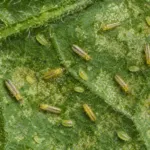 PestMelon thripsThrips palmi Karny
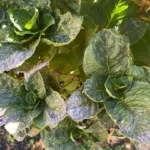 PestChilli thripsScirtothrips dorsalis Hood
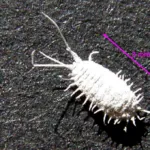 PestObscure mealybugPseudococcus viburni
 DiseaseAster yellows‘Candidatus Phytoplasma asteris’
Toxicity and pollen
Alocasia species are associated with insoluble calcium oxalate crystals. Chewing or ingesting plant material or sap can cause immediate irritation and painful burning or swelling of the mouth, tongue, and throat; skin or eye contact may also irritate. Keep the plant away from children and pets, wear gloves when cutting, and seek professional poison or veterinary advice after ingestion.
- Pollination / pollen
- Species-specific pollen dispersal not documented
Specific airborne-pollen measurements and allergy records for Alocasia reginae were not located. The plant is insect-associated in its reproductive biology, but that does not establish zero allergy risk. Flowering is uncommon indoors, and ordinary handling concerns relate more clearly to irritating calcium oxalate sap than to airborne pollen.
Native habitat
Kew records the species as native to Borneo, where it occurs in a wet tropical biome. Its ecology is consistent with warm, humid forest environments rather than exposed, drought-prone sites. In cultivation, that translates to protection from intense direct sun, prolonged dryness, cold temperatures, and stagnant wet soil.
Interesting fact
Kew recognizes Alocasia reginae as an accepted species rather than a synonym.
Its documented native range is Borneo.
It belongs to the arum family, Araceae.
The plant is a compact, foliage-focused tropical perennial.
Alocasia inflorescences are spadix-and-spathe structures, not showy petals.
Frequently asked questions (FAQ)
The most relevant questions about this plant, with short and direct answers.
🌱Quick care
What is Alocasia reginae?⌄
Alocasia reginae is a compact tropical elephant’s-ear species in the Araceae family, grown primarily for its stiff, textured foliage. It is native to Borneo and is usually kept as an indoor or protected-container plant in the United States.
How much light does Alocasia reginae need?⌄
Give Alocasia reginae bright filtered light or partial shade. Protect it from strong direct afternoon sun, which can scorch its leaves, while avoiding very dim locations that can slow growth.
How often should I water Alocasia reginae?⌄
Water Alocasia reginae when the upper part of the potting mix has begun to dry, then water thoroughly and let excess drain away. Keep the mix evenly moist, but never leave the pot sitting in water.
What soil is best for Alocasia reginae?⌄
Use an airy, organic, well-drained aroid mix containing materials such as fine bark, coco coir or peat, and perlite. The mix should hold some moisture while allowing plenty of air around the roots.
🌤️Environment and placement
What temperature does Alocasia reginae need?⌄
Keep Alocasia reginae warm, ideally above 60°F, and protect it from temperatures below 50°F. Cold drafts, chilled windows, and sudden temperature changes can cause curling, drooping, leaf loss, or dormancy.
Does Alocasia reginae need high humidity?⌄
Alocasia reginae grows best with moderate to high humidity, especially in heated or air-conditioned homes. Use a humidifier, plant grouping, or an enclosed growing space if the leaf edges become dry or the leaves curl.
Can Alocasia reginae grow outdoors?⌄
Alocasia reginae can grow outdoors in warm, frost-free areas with bright shade or filtered light. In most of the United States, move it indoors or protect it before temperatures approach 50°F.
Can Alocasia reginae tolerate direct sunlight?⌄
Alocasia reginae can tolerate gentle early-morning sunlight after gradual acclimation, but bright filtered light is safer. Intense midday or afternoon sun may bleach, scorch, or dehydrate the foliage.
💧Care and problems
Why are my Alocasia reginae leaves curling?⌄
Curling leaves on Alocasia reginae commonly indicate inconsistent moisture, dry air, cold stress, root damage, or pests. Check the soil moisture and roots first, then inspect both sides of the leaves for spider mites or thrips.
Why are Alocasia reginae leaves turning yellow?⌄
Yellow leaves usually result from overly wet soil, root stress, sudden environmental change, or the natural aging of an older leaf. Check drainage and roots before increasing watering or fertilizer.
Why is my Alocasia reginae drooping?⌄
Alocasia reginae may droop after underwatering, cold exposure, root damage, repotting, or pest activity. If the soil is wet but the plant remains limp, inspect the roots for rot rather than watering again.
How do I prevent root rot in Alocasia reginae?⌄
Prevent root rot by using a drainage-hole pot, an airy mix, and a watering routine that allows partial drying between waterings. Remove standing water and avoid placing the plant in an oversized pot that stays wet for too long.
What pests attack Alocasia reginae?⌄
Spider mites, thrips, mealybugs, and scale can infest Alocasia reginae, particularly when the air is dry or the plant is stressed. Isolate affected plants, wash the foliage, and treat repeatedly with a labeled houseplant pesticide or horticultural oil as appropriate.
Should I fertilize Alocasia reginae?⌄
Fertilize Alocasia reginae lightly during active growth with a balanced houseplant fertilizer diluted according to the product label. Reduce or stop feeding during dormancy, after severe root damage, or when growth has stopped.
Why is my Alocasia reginae losing leaves after repotting?⌄
Leaf loss after repotting can be caused by transplant shock, damaged roots, cold conditions, or soil that remains too wet. Keep the plant warm in bright filtered light and avoid repeated repotting while it reestablishes.
🪴Planting and repotting
When should I repot Alocasia reginae?⌄
Repot Alocasia reginae when it is genuinely root-bound, the mix has broken down, or drainage has become poor rather than on a fixed annual schedule. Spring or another period of active growth is generally the least stressful time.
What size pot should I use for Alocasia reginae?⌄
Choose a pot only about 1–2 inches wider than the current root ball. A pot that is much larger than the root system can retain excess moisture and increase the risk of root rot.
Does Alocasia reginae like to be root-bound?⌄
Alocasia reginae generally tolerates a snug pot and does not need frequent repotting. Slight crowding is usually less risky than moving it into a large container filled with slow-drying soil.
✂️Propagation and pruning
How do you propagate Alocasia reginae?⌄
Propagate Alocasia reginae by separating offsets or small corms from a healthy parent plant, usually during repotting. Keep the divisions warm, humid, and lightly but consistently moist while they develop roots.
Can Alocasia reginae be propagated from a leaf cutting?⌄
A single Alocasia reginae leaf or petiole cannot reliably produce a new plant because it lacks the necessary growth point. Successful propagation requires a section containing a corm, rhizome tissue, or viable offset.
How long do Alocasia reginae corms take to sprout?⌄
Alocasia reginae corms may sprout in several weeks under warm, humid, bright-filtered conditions, but timing is variable. Some corms remain dormant longer, especially after drying, chilling, or other stress.
Can Alocasia reginae go dormant?⌄
Yes, Alocasia reginae can enter dormancy and lose some or all leaves after cold, drought, root damage, or major environmental change. Keep the corm or rhizome warm and only lightly moist until new growth appears.
⚠️Toxicity and safety
Is Alocasia reginae toxic to cats and dogs?⌄
Yes, Alocasia reginae is toxic to cats and dogs because it contains irritating insoluble calcium oxalates. Ingestion can cause painful mouth irritation, drooling, vomiting, or difficulty swallowing, so seek veterinary advice promptly if a pet chews it.
Is Alocasia reginae poisonous to people?⌄
Alocasia reginae can irritate people if eaten or if its sap contacts sensitive tissue because of insoluble calcium oxalates. Keep it away from children, wear gloves when handling damaged tissue, and seek medical or poison-control guidance after ingestion.
🌸Flowering and special interest
Does Alocasia reginae flower indoors?⌄
Alocasia reginae can flower indoors when mature and growing strongly, although its arum-like flowers are usually less showy than its foliage. Warmth, adequate filtered light, stable moisture, and good nutrition support flowering but do not guarantee it.
What do Alocasia reginae flowers look like?⌄
Alocasia reginae produces a typical aroid inflorescence consisting of a small spadix surrounded by a protective spathe. The flowers are relatively inconspicuous and may appear close to the base of the plant among the leaf stalks.
Similar plants
 Azure Monkshood (Aconitum carmichaelii) care guideAconitum carmichaelii
 Monkshood (Aconitum ‘Stainless Steel’)Aconitum 'Stainless Steel'
 Monkshood (Aconitum ‘Bressingham Spire’)Aconitum 'Bressingham Spire'
 Golden full moon maple (Acer shirasawanum ‘Aureum’)Acer shirasawanum 'Aureum'
 Globosum (Acer platanoides ‘Globosum’)Acer platanoides 'Globosum'
 Striped maple (Acer pensylvanicum) care guideAcer pensylvanicum