
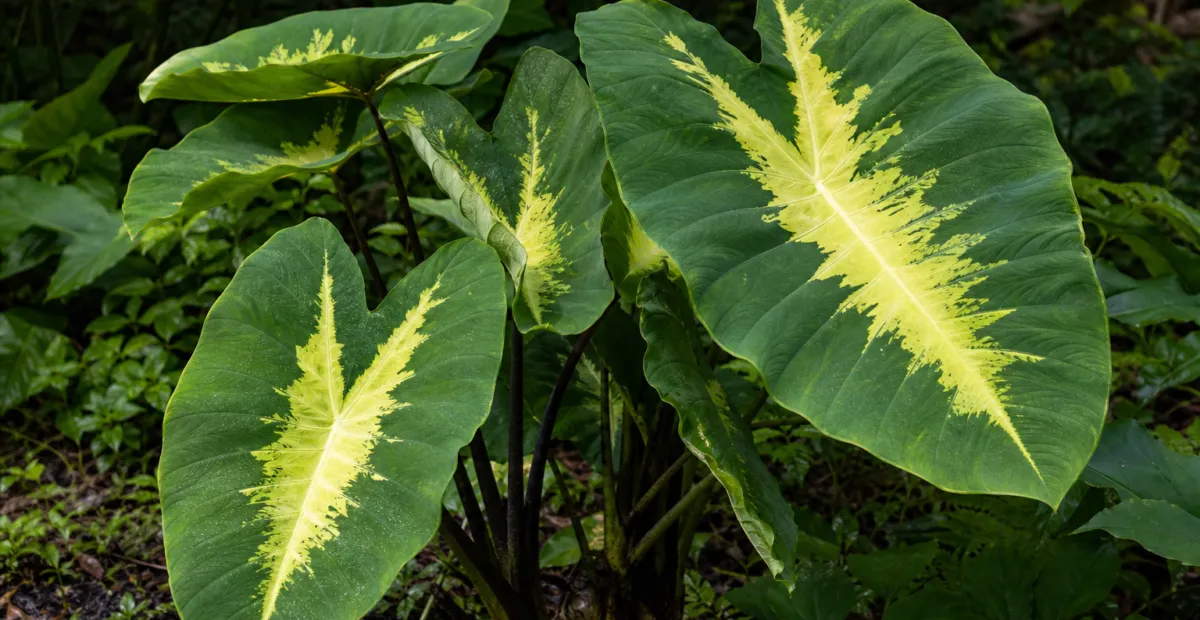
 AI-generated illustration
Nancy’s Revenge (Colocasia esculenta ‘Nancy’s Revenge’) short overview
Colocasia esculenta 'Nancy's Revenge' is a striking elephant ear prized for leaves that begin green and gradually develop butter-yellow to cream markings along the midrib and veins, often forming a bold Y-shaped pattern. It makes a lush specimen for warm-season borders, containers, rain gardens, and protected pond edges. Provide fertile moisture-retentive soil, steady watering, and sun to partial shade. In colder parts of the United States, lift and overwinter the corm before freezing weather.
Taxonomic classification
Nancy’s Revenge (Colocasia esculenta ‘Nancy’s Revenge’) care guide
Light and placement
Give full sun to partial shade, with bright morning light or filtered afternoon light in hot climates. A sheltered east or southeast exposure often balances color development and leaf protection. Too little light may produce weaker petioles and slower growth; intense reflected heat or abrupt full afternoon sun can scorch or bleach leaves, especially in containers.
Watering and humidity
Keep the root zone consistently moist during active growth, watering deeply whenever the surface begins to dry rather than allowing repeated drought. Containers may need frequent watering in summer, while watering should be reduced as temperatures fall and foliage dies back. High humidity helps limit leaf-edge browning indoors, but good air movement remains important.
Soil and growing medium
Use fertile, humus-rich soil that holds moisture without becoming stagnant in containers. In beds, loam amended with compost is suitable. The species tolerates wet conditions better than many ornamentals, but container media should still drain freely to reduce corm-rot risk. A slightly acidic to neutral reaction is suitable; the exact pH preference of this cultivar has not been documented.
Feeding
Feed during active spring and summer growth with a balanced, water-soluble fertilizer at half strength every 2–4 weeks, or use a controlled-release product according to its label. Water the plant first if the soil is dry. Reduce or stop feeding when growth slows in fall and do not fertilize a dormant, leafless corm.
Growth and habit
This is a vigorous, clump-forming elephant ear that produces large leaves from an underground corm. Young foliage may be entirely green, with the selected yellow pattern becoming more pronounced as the plant matures. Growth slows or becomes dormant after cold exposure. In containers, divide crowded offsets and rotate plants so developing leaves receive even light.
Planting and repotting
Plant outdoors after the danger of frost has passed and the soil has warmed. Set the corm about 2–4 inches deep with the growing point upward, then water thoroughly. Allow roughly 3–4 feet between plants where a full specimen is desired. Establishment is fastest in consistently warm, fertile, evenly moist soil.
Repot or divide container-grown plants in spring when active growth resumes. Move the corm into a container only modestly larger than the existing root system and refresh the substrate without burying the growing point deeply. Handle the plant with gloves because sap and tissues contain irritating calcium oxalates.
Propagation and pruning
Propagation
Propagate by separating offsets or dividing the corm during spring growth, using clean tools and allowing cuts to dry briefly before planting. Seed propagation is not a dependable way to reproduce the cultivar because seedlings will not necessarily retain its selected foliage pattern.
Pruning
Remove yellowing, torn, or frost-damaged leaves at the base with clean pruners. Do not routinely trim healthy leaves, because each leaf contributes to corm development. After a killing frost, cut collapsed foliage back once it has dried, then either mulch heavily in a suitable climate or lift the corm for storage.
Overwintering
In USDA Zone 8 and colder areas, move containers indoors or lift the corm after frost damages the foliage. Let the corm dry briefly, remove excess soil, and store it in a cool, dry, frost-free place in barely moist peat, vermiculite, or similar material. Replant in spring when warmth returns.
Uses
Primarily an ornamental foliage plant for tropical-style borders, containers, rain gardens, bog gardens, and protected water edges. It can provide vertical foliage contrast and seasonal screening. Although Colocasia esculenta is also a food crop, raw tissues contain calcium oxalates; do not consume this ornamental cultivar unless its identity and proper food preparation are certain.
Appearance
Large, heart-shaped to sagittate leaves arise on long, thick petioles from an underground corm. New leaves may be solid green, then develop butter-yellow or cream coloration from the center outward. The marking follows the midrib and lateral veins, often producing a conspicuous Y-shaped design. Leaf texture is smooth and the plant has a bold, architectural tropical appearance.
Flowering
This cultivar may flower occasionally, and its characteristic leaf coloration is reported to intensify around the onset of flowering. The inflorescence is a typical aroid structure with a spathe surrounding a spadix, but flowering is secondary to the foliage and the cultivar's normal flowering months are not reliably documented for the United States.
Pollination and visitors
The species is reported to use biotic pollination, but a specific animal visitor for this cultivar was not documented in the sources reviewed. The small, concealed aroid inflorescence is not grown primarily for pollinator value, so attraction is conservatively rated low.
Diseases and pests
Diseases
Prevent corm and root rots by avoiding stagnant, foul-smelling water in containers and by using clean, well-drained media. Remove badly damaged tissue and isolate affected plants. Good air movement, careful watering, and sanitation help limit bacterial and fungal leaf problems. No disease profile specific to this cultivar was found.
Pests
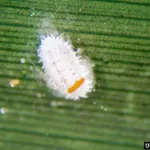
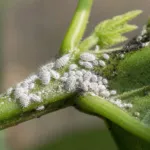
Watch for aphids, scale, mealybugs, spider mites, and other sap-feeding insects. Inspect leaf undersides and petioles regularly, rinse off light infestations, and use insecticidal soap or horticultural oil only as directed. Avoid stressing plants with drought, which can increase mite problems.
Related diseases and pests
Only Plant Doctor profiles whose host data indicate this plant may be affected are shown here.

Toxicity and pollen
All parts contain irritating, insoluble calcium oxalate crystals. Chewing or swallowing raw tissues can cause intense burning and irritation of the mouth, lips, tongue, and throat, with drooling, vomiting, or difficulty swallowing. Wear gloves when handling sap, keep the plant away from children and pets, and seek medical or veterinary advice after suspected ingestion. Although taro is a food crop when properly processed, this ornamental cultivar should not be eaten.
Reliable cultivar-specific data on airborne pollen production and allergy exposure were not found. The plant is an insect-associated flowering aroid rather than a known wind-pollinated allergen, but absence of evidence does not establish zero allergy risk. Avoid contact with sap and plant juices, which are irritants for reasons unrelated to airborne pollen.
Native habitat
The species is associated with tropical and subtropical terrestrial habitats, including moist soils, flooded ground, wetlands, and streamside environments. It performs best where warmth and reliable moisture are available. In the southeastern United States, the species can escape cultivation and naturalize in wet habitats, so outdoor planting should follow local invasive-plant guidance.
Interesting fact
The cultivar was introduced through the International Aroid Society in Florida in 2000. Its foliage can emerge solid green before the yellow pattern develops. The variegation is associated with the onset of flowering. The markings begin near the center and spread along the midrib and lateral veins.
Frequently asked questions (FAQ)
The most relevant questions about this plant, with short and direct answers.
🌱Quick care
What is Colocasia esculenta 'Nancy's Revenge'?⌄
Colocasia esculenta 'Nancy's Revenge' is a large elephant ear cultivar grown for leaves that begin green and develop butter-yellow to cream coloring in a central Y-shaped pattern. It is a moisture-loving perennial in the arum family, Araceae.
How big does Colocasia esculenta 'Nancy's Revenge' get?⌄
Colocasia esculenta 'Nancy's Revenge' can reach about 6 feet tall, with a similar spread under favorable outdoor conditions. Its mature size is smaller in containers or climates with a short growing season.
Is Colocasia esculenta 'Nancy's Revenge' an indoor or outdoor plant?⌄
Colocasia esculenta 'Nancy's Revenge' can be grown outdoors in warm climates or indoors as a container plant with strong light and consistently moist soil. In colder parts of the United States, move containers indoors or store the dormant plant before freezing weather.
🌤️Environment and placement
How much light does Colocasia esculenta 'Nancy's Revenge' need?⌄
Colocasia esculenta 'Nancy's Revenge' grows in full sun to partial shade, provided its soil does not dry out. In hot climates, afternoon shade can help prevent leaf scorch, while indoor plants need very bright filtered light.
Can Colocasia esculenta 'Nancy's Revenge' grow in full sun?⌄
Yes, Colocasia esculenta 'Nancy's Revenge' can grow in full sun when it receives abundant water and fertile soil. Gradually acclimate container plants to direct sunlight to reduce the risk of leaf burn.
Can Colocasia esculenta 'Nancy's Revenge' grow in shade?⌄
Yes, Colocasia esculenta 'Nancy's Revenge' tolerates partial shade and can retain attractive foliage there. Too much shade may produce slower growth, fewer leaves, and less noticeable yellow coloration.
Does Colocasia esculenta 'Nancy's Revenge' need wet soil?⌄
Colocasia esculenta 'Nancy's Revenge' performs best in consistently moist to wet, fertile soil and tolerates waterlogged conditions better than many ornamental plants. Keep the soil wet without allowing stagnant container water to cause root or corm decay.
What USDA hardiness zones can grow Colocasia esculenta 'Nancy's Revenge' outdoors?⌄
Reliable outdoor culture is generally associated with USDA Zones 8 through 10, although protected sites in warmer parts of Zone 7 may succeed. Treat the plant as a tender perennial where winter temperatures can freeze the corm.
💧Care and problems
How often should I water Colocasia esculenta 'Nancy's Revenge'?⌄
Water Colocasia esculenta 'Nancy's Revenge' whenever the soil surface begins to dry, keeping the root zone consistently moist during active growth. Plants in full sun, containers, or hot weather may need watering very frequently.
Why are the leaves of Colocasia esculenta 'Nancy's Revenge' turning yellow?⌄
Yellowing can be normal when Colocasia esculenta 'Nancy's Revenge' develops its characteristic butter-yellow central pattern, especially near flowering. Entire leaves turning yellow may instead indicate cold stress, aging foliage, poor nutrition, or a watering problem.
Why is Colocasia esculenta 'Nancy's Revenge' drooping?⌄
Colocasia esculenta 'Nancy's Revenge' commonly droops when its soil becomes too dry, temperatures fall, or roots are damaged by poor drainage. Check soil moisture and the corm or roots before increasing watering.
What soil is best for Colocasia esculenta 'Nancy's Revenge'?⌄
Use fertile, moisture-retentive loam or a rich container mix that holds water while still draining excess moisture. Compost or other organic matter can improve water retention and nutrient availability in garden beds.
Should I fertilize Colocasia esculenta 'Nancy's Revenge'?⌄
Yes, feed Colocasia esculenta 'Nancy's Revenge' during active spring and summer growth with a balanced fertilizer according to the product label. Avoid heavy fertilizing when the plant is dormant or growing slowly in cool conditions.
What pests affect Colocasia esculenta 'Nancy's Revenge'?⌄
Sucking insects such as aphids, spider mites, scale, and whiteflies may attack Colocasia esculenta 'Nancy's Revenge', particularly when grown indoors or under dry conditions. Inspect leaf undersides and treat infestations early with an appropriate labeled product.
🪴Planting and repotting
When should I plant Colocasia esculenta 'Nancy's Revenge' outdoors?⌄
Plant Colocasia esculenta 'Nancy's Revenge' outdoors after the danger of frost has passed and the soil has warmed. In the United States, the safest timing is usually late spring, adjusted for local climate and soil temperature.
Can Colocasia esculenta 'Nancy's Revenge' grow in a container?⌄
Yes, Colocasia esculenta 'Nancy's Revenge' grows well in a large container with drainage holes and rich, moisture-retentive soil. Choose a heavy pot to reduce tipping and expect to water more often than plants growing in the ground.
How far apart should I plant Colocasia esculenta 'Nancy's Revenge'?⌄
Space Colocasia esculenta 'Nancy's Revenge' about 3 to 4 feet apart for individual plants, allowing additional room if conditions are exceptionally fertile and wet. Container-grown plants can be placed closer for a temporary display.
Can Colocasia esculenta 'Nancy's Revenge' grow near a pond?⌄
Yes, Colocasia esculenta 'Nancy's Revenge' is well suited to pond margins, rain gardens, and other consistently moist locations. Plant it in fertile soil near the water rather than assuming every container or planting site should remain stagnant and anaerobic.
✂️Propagation and pruning
How do you propagate Colocasia esculenta 'Nancy's Revenge'?⌄
Propagate Colocasia esculenta 'Nancy's Revenge' by separating rooted offsets, cormels, or side stolons from the parent plant. Each division should include a viable growth point and roots, then be planted in warm, consistently moist soil.
Does Colocasia esculenta 'Nancy's Revenge' produce offsets?⌄
Yes, Colocasia esculenta 'Nancy's Revenge' can produce numerous side stolons that root where adequate moisture is available. These rooted offsets can be separated and grown as new plants.
Should I prune Colocasia esculenta 'Nancy's Revenge'?⌄
Pruning is limited to removing yellow, damaged, or frost-injured leaves from Colocasia esculenta 'Nancy's Revenge'. Cut petioles near the base with clean tools, but do not remove healthy leaves unnecessarily because they support corm growth.
How do I overwinter Colocasia esculenta 'Nancy's Revenge' in cold climates?⌄
In regions where the ground freezes, dig the corm after frost damages the foliage, let it dry briefly, and store it in a cool, dark, frost-free place in barely moist peat or a similar medium. Container plants can instead be brought indoors and kept cool with greatly reduced watering.
⚠️Toxicity and safety
Is Colocasia esculenta 'Nancy's Revenge' poisonous?⌄
Yes, Colocasia esculenta 'Nancy's Revenge' is toxic if eaten raw because it contains irritating calcium oxalate crystals. Keep the plant away from children and pets, and do not consume ornamental material unless it has been specifically identified and properly prepared for food use.
Can dogs and cats eat Colocasia esculenta 'Nancy's Revenge'?⌄
No, dogs and cats should not chew or eat Colocasia esculenta 'Nancy's Revenge'. Contact a veterinarian or pet poison service promptly if a pet ingests the plant or develops mouth irritation, drooling, vomiting, or difficulty swallowing.
Can touching Colocasia esculenta 'Nancy's Revenge' irritate skin?⌄
The sap of Colocasia esculenta 'Nancy's Revenge' may irritate sensitive skin, especially after cutting or handling damaged tissue. Wear gloves when dividing or pruning the plant and wash exposed skin afterward.
🌸Flowering and special interest
Does Colocasia esculenta 'Nancy's Revenge' flower?⌄
Yes, Colocasia esculenta 'Nancy's Revenge' can produce small yellow or gold arum-type flowers, although its foliage is the main ornamental feature. Flowering is associated with the development of the cultivar's distinctive butter-yellow central leaf pattern.
When does Colocasia esculenta 'Nancy's Revenge' change color?⌄
The leaves of Colocasia esculenta 'Nancy's Revenge' typically emerge green and develop buttercream-yellow coloration toward the center as the plant approaches flowering. The color can extend along the main and lateral veins into a bold Y-shaped pattern.
Why is my Colocasia esculenta 'Nancy's Revenge' still green?⌄
A young Colocasia esculenta 'Nancy's Revenge' may remain mostly green until it reaches maturity and approaches flowering. Adequate warmth, moisture, light, and nutrition support growth, but the timing and intensity of the color change can vary.
Similar plants
 Azure Monkshood (Aconitum carmichaelii) care guideAconitum carmichaelii
 Monkshood (Aconitum ‘Stainless Steel’)Aconitum 'Stainless Steel'
 Monkshood (Aconitum ‘Bressingham Spire’)Aconitum 'Bressingham Spire'
 Golden full moon maple (Acer shirasawanum ‘Aureum’)Acer shirasawanum 'Aureum'
 Globosum (Acer platanoides ‘Globosum’)Acer platanoides 'Globosum'
 Striped maple (Acer pensylvanicum) care guideAcer pensylvanicum