
 Source:
 East-Himalayan Decorated Taro (Colocasia affinis) short overview
Colocasia affinis, the East-Himalayan Decorated Taro, is a tuberous perennial elephant ear prized for ovate, heart-shaped leaves marked with deep purple patches. Native to moist, shaded habitats from the eastern Himalayas through parts of China and Myanmar, it prefers warmth, humidity, filtered light, and evenly moist soil. In the United States it is best grown as a protected container or indoor foliage plant because it is not frost tolerant.
Taxonomic classification
East-Himalayan Decorated Taro (Colocasia affinis) care guide
Light and placement
Provide bright filtered light or partial shade. An east-facing window, a bright north-facing window, or a few feet back from a strong south- or west-facing window is suitable indoors. Outdoors, protect leaves from harsh afternoon sun. Too little light causes stretched petioles, smaller leaves, and weaker purple markings; excessive direct midday sun can scorch or fade the foliage.
Watering and humidity
Water thoroughly when the surface begins to dry, then let excess drain fully. Keep the mix evenly moist during warm active growth, but do not leave the pot standing in water. Reduce watering when growth slows or the plant enters dormancy, while never allowing a stored tuber to remain wet and airless. Humidity helps leaf quality, but airflow remains important.
Soil and growing medium
Use a rich, airy mix that holds moisture without becoming stagnant: quality potting soil combined with fine bark, coco coir, or perlite works well. A slightly acidic to neutral reaction is suitable. The tuber and roots need oxygen, so use a container with drainage holes and avoid dense, airless clay-heavy soil.
Feeding
Feed only during active growth, using a balanced liquid houseplant fertilizer diluted to about half strength every 3–4 weeks. Water the plant first if the medium is dry, and occasionally flush the container to reduce salt buildup. Reduce or stop feeding during dormancy, after leaf loss, or when the plant is cold and not actively growing.
Growth and habit
Growth begins from a tuber and may include short horizontal stolons bearing tubercles. In warm, humid conditions it can produce leaves in succession; cool temperatures, drying, low light, or root disturbance may trigger slowing or dormancy. Remove declining leaves at the base and keep the crown above stagnant water.
Planting and repotting
Plant outdoors only after nights are reliably warm and the soil has warmed, generally after the last frost in suitable climates. Set the tuber shallowly, with the growing point just at or slightly above the soil surface. Space plants about 12–18 inches apart for a grouped display, allowing room for leaves to spread.
Repot in spring when active growth resumes or when roots have filled the container. Move up only one pot size, handle the tuber gently, and water lightly until new growth shows. If the plant is dormant, avoid disturbing it unless the medium has deteriorated or the tuber is rotting.
Propagation and pruning
Propagation
Propagation is most practical by separating offsets or dividing tuberous growth during active spring growth. Keep each division with a viable growing point, pot it in a lightly moist, airy medium, and provide warmth. Seed propagation is possible in principle but is uncommon in ordinary cultivation and may be slow or poorly documented for this species.
Pruning
Pruning is limited to removing yellow, damaged, or diseased leaves. Cut petioles cleanly at the base with sterilized tools and avoid injuring the crown or tuber. Do not cut healthy leaves merely to control size; relocate or divide the plant instead.
Overwintering
Move containers indoors before temperatures approach 50°F, or lift and store the tuber in a barely moist, frost-free medium. Keep overwintered plants warm and in filtered light if retaining foliage. If dormant, keep the tuber dry enough to prevent rot and resume watering gradually when new growth appears.
Uses
Primarily an ornamental foliage plant for warm gardens, shaded containers, greenhouses, terrariums, and indoor collections. Its patterned leaves make it useful as a specimen or accent plant. Do not treat this species as an edible taro substitute; documented culinary safety for this exact taxon is insufficient, and raw aroid tissue may be irritating.
Appearance
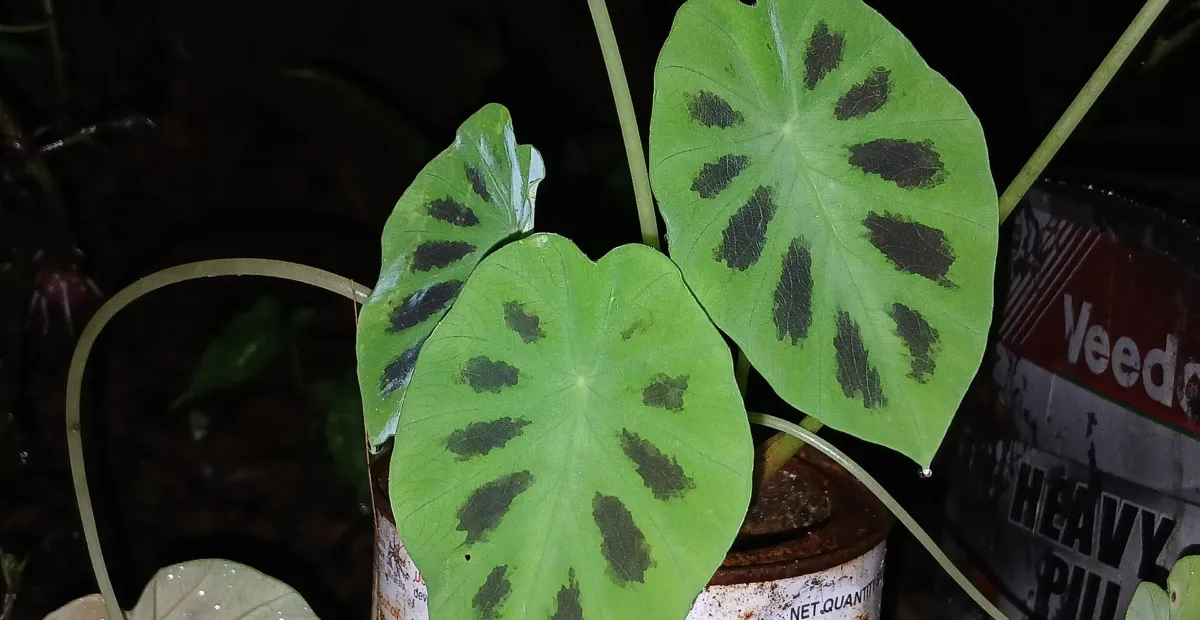
Leaves are peltate, ovate-cordate, and relatively thin-textured, carried on pale green to greenish-white cylindrical petioles. Mature blades commonly show four to six pairs of large purple spots or blotches, though markings may be lighter in deep shade. Horizontal stolons and tubercles are characteristic underground or near-surface structures.
Flowering
The plant produces a typical arum inflorescence consisting of a spathe and shorter spadix. The spathe may be greenish white, yellow, or yellowish, with the limb often reflexing as it opens. Flowering is documented mainly from late spring through summer in its native range, but indoor flowering is irregular and not the primary ornamental feature.
Pollination and visitors
The arum-type inflorescences may receive small insects, but reliable species-specific pollinator records are scarce. A low attraction rating is therefore more defensible than claiming strong bee or butterfly value.
Colocasia affinis photos
Click any photo for a larger view. Source, author and license are shown separately.
Diseases and pests
Diseases
The main risks are root or tuber rot and leaf-spot diseases when the medium stays stagnant or foliage remains wet with poor airflow. Use clean pots, a porous mix, moderate air circulation, and careful watering. Remove badly affected leaves, isolate symptomatic plants, and correct wet, cold, or overcrowded conditions before considering treatment.
Pests
Watch for spider mites, thrips, mealybugs, and aphids, especially in dry indoor air. Inspect leaf undersides and petiole bases regularly. Improve humidity locally without wetting foliage continuously, rinse or wipe leaves, isolate infestations, and use insecticidal soap or another labeled treatment according to directions.
Related diseases and pests
Only Plant Doctor profiles whose host data indicate this plant may be affected are shown here.
 PestMealy Plum AphidHyalopterus pruni (Geoffroy, 1762)
 DiseaseAlternaria leaf spot and fruit rotAlternaria alternata
 PestOnion thripsThrips tabaci Lindeman
 PestMelon thripsThrips palmi Karny
 PestChilli thripsScirtothrips dorsalis Hood
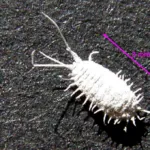 PestObscure mealybugPseudococcus viburni
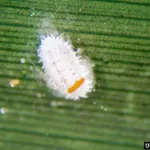 PestCitrus mealybugPlanococcus citri
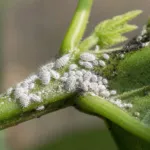 PestCotton mealybugPhenacoccus solenopsis Tinsley
Toxicity and pollen
Species-specific clinical toxicity information is limited, but Colocasia is in a genus known to contain irritating insoluble calcium oxalates. Chewing or ingesting plant tissue can cause burning and irritation of the mouth, drooling, vomiting, or difficulty swallowing. Wear gloves when handling damaged tissue and keep the plant away from children and pets.
- Typical season
- Not well documented for U.S. exposure; flowering is seasonal and uncommon indoors
- Pollination / pollen
- Insect-associated pollen; limited airborne dispersal expected
As an insect-pollinated aroid, its pollen is generally not expected to be a major airborne seasonal allergen, but species-specific allergy studies are lacking. The main household concern is contact with irritating plant sap or tissues, not airborne pollen.
Native habitat
Native populations occur in moist shaded forests, forest margins, and limestone hillsides from southwestern India and Nepal through parts of China and Myanmar. The species is associated with wet tropical conditions, filtered light, humus, and moisture-retentive but oxygenated substrates.
Interesting fact
The species is a tuberous geophyte with horizontally trailing stolons that can form tubercles. Its leaves are notable for large purple spots arranged in paired markings along the veins. The plant grows naturally in moist shaded forests, forest margins, and limestone hillsides. The spathe and spadix are typical of the arum family, although the foliage is usually the main horticultural attraction.
Frequently asked questions (FAQ)
The most relevant questions about this plant, with short and direct answers.
🌱Quick care
What is Colocasia affinis commonly called?⌄
Colocasia affinis is commonly called East-Himalayan Decorated Taro. It is a small ornamental elephant ear grown mainly for its patterned, heart-shaped foliage.
Is Colocasia affinis easy to grow indoors?⌄
Colocasia affinis can grow indoors, but it needs bright filtered light, steady moisture, warmth, and moderate to high humidity. It may struggle in dry rooms or low light.
How much light does Colocasia affinis need?⌄
Give Colocasia affinis bright filtered light or partial shade. Protect the leaves from intense hot afternoon sun, which can scorch the foliage.
How often should I water Colocasia affinis?⌄
Water Colocasia affinis whenever the surface of the potting mix begins to dry, keeping the mix evenly moist. Do not allow the pot to remain waterlogged because the underground storage organ can rot.
What soil is best for Colocasia affinis?⌄
Use a rich, airy, moisture-retentive potting mix that drains freely. A mix based on quality potting soil, compost or coco coir, and perlite or fine bark works well.
🌤️Environment and placement
Does Colocasia affinis need high humidity?⌄
Colocasia affinis grows best with moderate to high humidity, especially indoors during winter. Grouping plants or using a humidifier is more effective than placing the pot on constantly wet gravel.
What temperature is best for Colocasia affinis?⌄
Keep Colocasia affinis warm during active growth and protect it from cold drafts and frost. In the United States, container plants should generally be brought indoors before temperatures approach freezing.
Can Colocasia affinis grow outside in the United States?⌄
Colocasia affinis can grow outdoors during warm weather in a shaded or partly shaded location. In colder USDA climates, grow it in a container and overwinter the plant or its tuber indoors.
Can Colocasia affinis grow in full shade?⌄
Colocasia affinis tolerates shade, but very deep shade can reduce vigor and make its markings less pronounced. Bright indirect light or gentle morning light usually gives better growth.
💧Care and problems
Why are the leaves of my Colocasia affinis turning yellow?⌄
Yellow leaves on Colocasia affinis are commonly caused by overwatering, poor drainage, cold conditions, low light, or natural aging. Check the roots and potting mix before increasing watering.
Why are the leaves of Colocasia affinis drooping?⌄
Drooping can result from dry soil, cold temperatures, root damage, transplant stress, or insufficient light. Check moisture first, then make sure the container drains and the plant is kept warm.
Why are the leaves of Colocasia affinis curling or developing brown edges?⌄
Curling or brown leaf edges usually indicate dry air, inconsistent watering, excessive direct sun, or salt buildup from fertilizer. Keep moisture steady and move the plant away from harsh afternoon light.
What pests attack Colocasia affinis?⌄
Colocasia affinis may attract spider mites, aphids, thrips, mealybugs, fungus gnats, or outdoor slugs. Inspect leaf undersides and the potting mix regularly, especially when the plant is stressed.
Should I fertilize Colocasia affinis?⌄
Fertilize Colocasia affinis lightly during active growth with a balanced houseplant fertilizer. Avoid heavy applications, which can burn roots and cause fertilizer salts to accumulate in the moist potting mix.
Does Colocasia affinis go dormant?⌄
Colocasia affinis may slow down or lose leaves during cold, dark, or very dry conditions. If the underground storage organ remains firm, reduce watering while keeping it protected and resume more active care when warmth and light return.
🪴Planting and repotting
How should I plant a Colocasia affinis tuber?⌄
Plant the tuber with its growing point facing upward in rich, well-drained, evenly moist soil. Cover it shallowly rather than burying it deeply, and keep it warm and lightly moist until new growth appears.
When should I repot Colocasia affinis?⌄
Repot Colocasia affinis when roots fill the container or the plant dries out unusually quickly, preferably during active spring growth. Move it into a pot only modestly larger than the previous one.
Does Colocasia affinis need a drainage hole?⌄
Yes, Colocasia affinis should be grown in a container with a drainage hole. The plant likes consistent moisture but is vulnerable to root or tuber rot in stagnant, waterlogged soil.
✂️Propagation and pruning
How do you propagate Colocasia affinis?⌄
Propagate Colocasia affinis mainly by dividing offsets or sections of the underground tuber during active growth or dormancy. Each division must include a viable growing point; ordinary leaf or stem cuttings will not reliably produce a new plant.
Can Colocasia affinis be propagated from a leaf cutting?⌄
A leaf cutting alone generally cannot propagate Colocasia affinis because it lacks the underground growing point needed to produce new shoots. Division of offsets or tuber sections is the more dependable method.
Should I prune Colocasia affinis?⌄
Prune Colocasia affinis only to remove yellow, damaged, or declining leaves. Cut the leaf stalk near its base with clean tools, and avoid removing healthy leaves unnecessarily.
⚠️Toxicity and safety
Is Colocasia affinis toxic to cats and dogs?⌄
Yes, Colocasia affinis should be treated as potentially toxic to cats and dogs if chewed or swallowed. Its insoluble calcium oxalates can cause painful mouth irritation, swelling, drooling, vomiting, or difficulty swallowing.
Is Colocasia affinis poisonous to humans?⌄
Colocasia affinis is potentially toxic to people if eaten because it contains irritating insoluble calcium oxalates. Keep it away from children and seek medical or poison-control advice if a significant amount is swallowed.
Should I wear gloves when handling Colocasia affinis?⌄
Wear gloves when cutting, dividing, or handling damaged tissue from Colocasia affinis, especially if you have sensitive skin. Wash your hands afterward and keep plant sap away from the eyes and mouth.
🌸Flowering and special interest
Does Colocasia affinis flower?⌄
Yes, Colocasia affinis can produce the typical arum-family inflorescence consisting of a spathe and spadix. Flowering is less common indoors than healthy foliage growth and is more likely under warm, bright, actively growing conditions.
What do Colocasia affinis flowers look like?⌄
Colocasia affinis flowers are enclosed by a green, yellowish, or yellow spathe surrounding a shorter spadix. The inflorescence is usually much less conspicuous than the plant’s decorative leaves.
Should I cut off a flower on Colocasia affinis?⌄
You do not need to remove a flower from Colocasia affinis unless you want to conserve energy for foliage or the inflorescence is declining. If you cut it, use clean shears and avoid damaging nearby leaves or the crown.
Similar plants
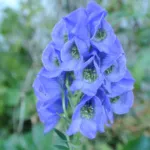 Azure Monkshood (Aconitum carmichaelii) care guideAconitum carmichaelii
 Monkshood (Aconitum ‘Stainless Steel’)Aconitum 'Stainless Steel'
 Monkshood (Aconitum ‘Bressingham Spire’)Aconitum 'Bressingham Spire'
 Golden full moon maple (Acer shirasawanum ‘Aureum’)Acer shirasawanum 'Aureum'
 Globosum (Acer platanoides ‘Globosum’)Acer platanoides 'Globosum'
 Striped maple (Acer pensylvanicum) care guideAcer pensylvanicum