
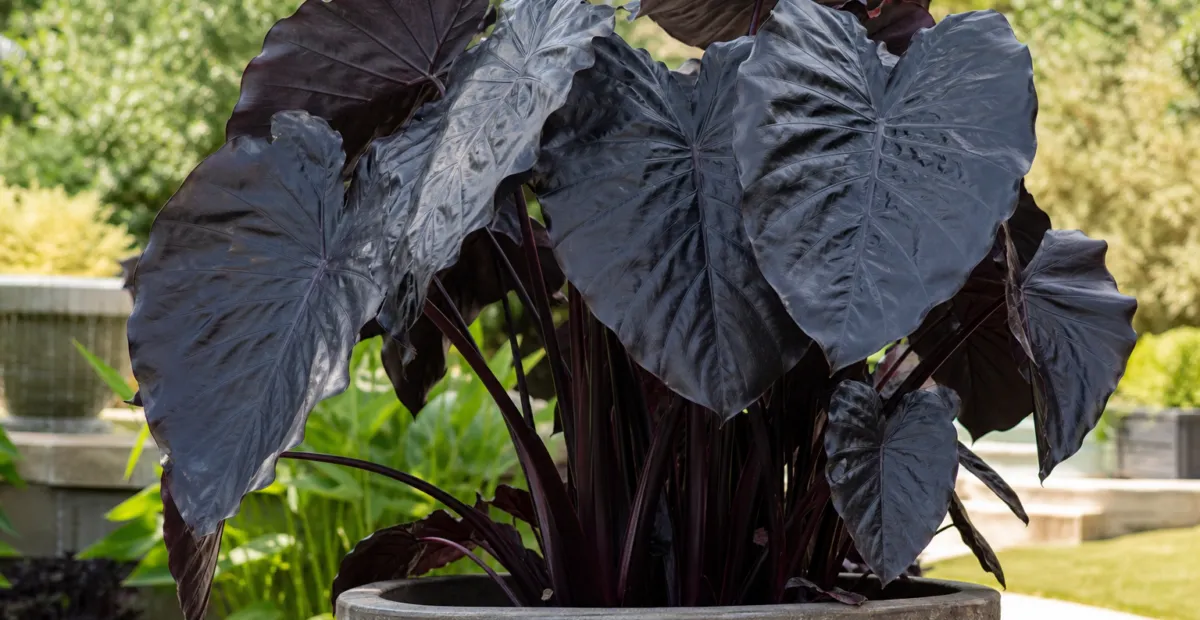
 AI-generated illustration
Black Coral (Colocasia esculenta ‘Black Coral’) short overview
Colocasia esculenta 'Black Coral' is a dramatic elephant ear cultivar from the Royal Hawaiian Series, prized for enormous, glossy leaves in deep purple-black tones and dark burgundy petioles. It forms a bold, upright clump for containers, beds, rain gardens and pond margins. Keep the soil evenly moist and provide sun to partial shade. Treat it as a tender perennial or overwinter the corm where winter freezes are severe.
Taxonomic classification
Black Coral (Colocasia esculenta ‘Black Coral’) care guide
Light and placement
Give full sun to partial shade, with morning or filtered afternoon light in hot inland climates. A sheltered south-, east- or west-facing position works well; protect large leaves from strong wind. Too little light can produce weaker petioles and less intense color, while harsh reflected heat with inadequate water may scorch or curl the leaves.
Watering and humidity
Water deeply whenever the surface begins to dry, keeping the root zone consistently moist during active growth. Container plants may need frequent watering in summer; do not allow them to stand in stagnant water unless the setup is intentionally designed for aquatic conditions. Reduce watering substantially after dormancy or while stored indoors, and keep dormant corms nearly dry.
Soil and growing medium
Use fertile, humus-rich soil that holds moisture without remaining stagnant. A loam amended with compost works well; in containers, choose a moisture-retentive but well-drained potting mix. The species tolerates a broad pH range, from mildly acidic through mildly alkaline, so extreme pH correction is usually unnecessary.
Feeding
Feed during active spring and summer growth with a balanced controlled-release fertilizer or a diluted liquid fertilizer according to the product label. Plants in containers and very wet, fast-growing beds may need more regular nutrition than plants in rich ground soil. Do not fertilize dormant, chilled or recently divided corms until new growth is established.
Growth and habit
This warm-season perennial expands from an underground corm and develops a substantial basal clump. Growth is strongest with heat, moisture and regular nutrition. In windy sites, shelter reduces torn leaves and helps preserve the cultivar’s architectural appearance. In cold climates, growth ends with frost and the corm can be lifted for storage.
Planting and repotting
Plant outdoors after the danger of frost has passed and soil has warmed. Set the corm with the growing point upward and cover it with about 1–2 inches of soil; avoid deep planting. Space plants about 3 feet apart for a substantial clump, allowing extra room where exceptionally large leaves are desired.
Repot container plants in spring as growth resumes, moving them into a heavy, wide-based container one size larger. Handle the corm and emerging shoots carefully, and refresh compacted mix without burying the crown deeply. Large specimens may be divided rather than repeatedly upsized.
Propagation and pruning
Propagation
Propagate by division of the corm or rhizomatous offsets in spring when active growth begins. Separate naturally formed pups with a clean knife, ensuring each division has viable roots or a healthy growing point. Seed is possible for the species but is not a dependable way to reproduce this named cultivar true to type.
Pruning
Remove yellowing, frost-damaged or badly torn leaves at the base with clean shears. Cutting individual leaves does not encourage branching, so limit pruning to hygiene and appearance. After frost blackens the foliage, cut the top growth down only after it has collapsed, then protect or lift the corm.
Overwintering
In zones with freezing winters, move containers indoors before frost or lift the corm after foliage declines. Store clean, dry corms in a cool, dark, frost-free place in barely dry peat, vermiculite or similar material. Resume warmth and modest moisture in spring, increasing watering after shoots emerge.
Uses
Use as a dramatic foliage specimen in large containers, tropical borders, rain gardens and sheltered pond margins. It can provide strong contrast with chartreuse, silver or pink plants. Although the species is an important food crop when properly processed, this ornamental cultivar should not be harvested for eating unless its identity, preparation and food-production suitability are specifically confirmed.
Appearance
The defining feature is its oversized, glossy, corrugated foliage in unusually dark purple-black tones. Leaves are heart-shaped to arrow-shaped, strongly veined and held on stout dark burgundy petioles. Unlike many Alocasia leaves, Colocasia foliage commonly angles or droops downward, helping distinguish the genus in mixed elephant-ear plantings.
Flowering
This cultivar is grown primarily for foliage, and inflorescences are infrequent and usually hidden by the leaves. When produced, the aroid inflorescence consists of a pale spathe surrounding a spadix with separate female and male flower zones. The display is small and not ornamental compared with the foliage.
Pollination and visitors
The species produces inconspicuous aroid inflorescences with separate female and male flower zones. Available horticultural references describe little or no nectar value for this cultivar, while broader aroid research indicates small insects can be involved in Colocasia pollination. Treat animal visitation as occasional rather than as a major pollinator-garden feature.
Diseases and pests
Diseases
Watch for root or corm rot when soil remains cold and saturated, especially in containers without adequate drainage. Remove damaged tissue, improve drainage, avoid overwatering dormant plants and sanitize tools. Leaf-spot symptoms may occur under prolonged wet, crowded conditions; improve air movement and remove badly affected leaves.
Pests
Aphids, whiteflies, spider mites and caterpillars may appear, particularly on stressed container plants. Check leaf undersides and new growth regularly, rinse small infestations with water and use insecticidal soap according to its label when necessary. Avoid chronic drought, which can encourage mite problems, and remove severely damaged foliage.
Related diseases and pests
Only Plant Doctor profiles whose host data indicate this plant may be affected are shown here.


Toxicity and pollen
Raw plant tissues contain insoluble calcium oxalate crystals that can cause immediate burning, oral irritation, swelling, drooling, vomiting or difficulty swallowing if chewed. Thorough cooking is used for edible taro tissues, but ornamental material should not be eaten. Wear gloves when handling damaged tissue and keep pieces away from children and pets.
- Pollination / pollen
- Insect-associated pollen; not typically wind-dispersed in large amounts
Colocasia flowers are not known for abundant airborne pollen exposure in ordinary garden use, and the cultivar is rarely grown for flowering. Because direct allergy studies for ‘Black Coral’ are lacking, a low airborne-pollen concern is more defensible than a claim of zero risk. The plant’s more important exposure hazard is calcium oxalate irritation from chewing plant tissue.
Native habitat
The species is native to tropical and subtropical regions of Asia and is associated with moist ground, wetlands, stream margins and cultivated water gardens. It performs best in warm conditions with dependable soil moisture. In the United States, the ornamental cultivar is usually managed as a tender perennial, seasonal accent or overwintered container plant.
Interesting fact
‘Black Coral’ belongs to the Royal Hawaiian Series and was developed through the University of Hawaii. Its dark leaves generally retain their color better in strong light than some older purple-leaved cultivars. The plant is a named ornamental cultivar of a species also grown worldwide as the food crop taro.
Frequently asked questions (FAQ)
The most relevant questions about this plant, with short and direct answers.
🌱Quick care
How do you care for Colocasia esculenta 'Black Coral'?⌄
Give it full sun to partial shade, fertile moisture-retentive soil, and consistent moisture throughout the growing season. Protect the plant from freezing temperatures and strong winds.
How much sun does Colocasia esculenta 'Black Coral' need?⌄
Colocasia esculenta 'Black Coral' grows in full sun to partial shade. Full sun generally produces the darkest, richest leaf color, while afternoon shade can help reduce stress in very hot or dry locations.
How often should you water Black Coral elephant ear?⌄
Water whenever the soil surface begins to dry, keeping the root zone evenly moist to wet. Container plants and plants in full sun may need water daily during hot, dry weather.
How big does Colocasia esculenta 'Black Coral' get?⌄
A mature plant commonly reaches about 3 to 4 feet tall and 3 to 4 feet wide in favorable conditions. Plants grown as seasonal annuals or in smaller containers may remain shorter.
Is Black Coral elephant ear perennial?⌄
It is a frost-tender perennial in warm climates but is often grown as an annual in colder parts of the United States. In areas with freezing winters, lift the corm or move the container indoors for winter storage.
🌤️Environment and placement
Can Colocasia esculenta 'Black Coral' grow in a water garden?⌄
Yes, it is well suited to pond margins, rain gardens, and other consistently wet locations. It can tolerate wet soil, but container or garden soil should still provide enough structure to prevent stagnant, sour conditions around the roots.
Can Black Coral elephant ear grow in full sun?⌄
Yes, Black Coral can grow in full sun when its soil stays consistently moist. If the leaves scorch or wilt repeatedly, provide afternoon shade or increase irrigation.
Can Colocasia esculenta 'Black Coral' grow indoors?⌄
Yes, it can be grown indoors in a bright, warm room with high humidity and evenly moist soil. Indoor plants may grow more slowly and can attract spider mites, aphids, or whiteflies.
What USDA hardiness zones can grow Black Coral elephant ear outdoors?⌄
Black Coral is generally listed for USDA Zones 7 through 11, although winter survival in Zone 7 depends on local temperatures, drainage, and protective mulch. In colder zones, overwinter the corm indoors.
Does Black Coral elephant ear need high humidity?⌄
High humidity supports larger, healthier foliage, especially indoors. In dry homes, brown leaf edges or curling can be reduced with a humidifier, plant grouping, or a sheltered location away from heating vents.
💧Care and problems
Why are the leaves on my Black Coral elephant ear turning yellow?⌄
Yellow leaves commonly result from overwatering in poorly drained soil, underwatering, cold stress, or natural aging. Check the roots and soil moisture, and remove only leaves that are fully yellow or damaged.
Why is my Colocasia esculenta 'Black Coral' wilting?⌄
Wilting usually indicates insufficient moisture, heat stress, root damage, or cold exposure. Water thoroughly and check that the soil remains moist, while avoiding a damaged or rotting corm.
Why are Black Coral elephant ear leaves turning green?⌄
Leaves may appear greener when light levels are low or when new foliage has not fully developed its mature color. Move the plant gradually toward brighter light while keeping the soil consistently moist.
What fertilizer is best for Black Coral elephant ear?⌄
Use a balanced fertilizer during active growth, following the product label for dose and frequency. Regular feeding in spring and summer supports the vigorous foliage, but stop or greatly reduce fertilizer when growth slows in fall and winter.
What pests attack Colocasia esculenta 'Black Coral'?⌄
Common pests include spider mites, aphids, and whiteflies, particularly on plants grown indoors or under glass. Inspect leaf undersides regularly and treat infestations promptly with a suitable labeled product.
Does Black Coral elephant ear need pruning?⌄
Routine pruning is not required. Remove yellow, torn, or frost-damaged leaves at the base with clean tools, and wear gloves because the sap may irritate skin.
🪴Planting and repotting
When should you plant Black Coral elephant ear outdoors?⌄
Plant it outdoors after the danger of frost has passed and nighttime temperatures are reliably warm. In much of the United States, this is late spring, but the timing depends on the local climate and USDA zone.
What soil is best for Colocasia esculenta 'Black Coral'?⌄
Use fertile, humus-rich soil that retains moisture while draining excess water. Compost-rich loam is suitable, and heavier wet soil can work if it does not remain stagnant or develop an unpleasant odor.
How deep should you plant a Black Coral elephant ear corm?⌄
Plant the corm with the growing point facing upward and cover it with roughly 1 to 2 inches of soil. Avoid planting too deeply, especially in cool or poorly drained ground, because the corm may rot before growth begins.
Can Colocasia esculenta 'Black Coral' grow in a container?⌄
Yes, it grows very well in a large, heavy container with drainage holes. Choose a pot wide enough for its mature spread, use moisture-retentive potting mix, and expect to water more often during hot weather.
How often should you repot Black Coral elephant ear?⌄
Repot it when roots fill the container, the plant becomes unstable, or the soil dries unusually quickly. Move it into a container only modestly larger and repot during active growth for the fastest recovery.
✂️Propagation and pruning
How do you propagate Colocasia esculenta 'Black Coral'?⌄
Propagate it by dividing offsets or sections of the rhizome or corm that contain a viable growing point. Allow cut surfaces to dry briefly, then plant divisions in warm, moist medium.
Can you grow Black Coral elephant ear from seed?⌄
Seed propagation is possible for the species, but named cultivars such as 'Black Coral' may not come true from seed. Division is the more reliable way to reproduce the same foliage characteristics.
Can you divide a Black Coral elephant ear plant?⌄
Yes, divide the plant during active growth when offsets or rhizome sections are visible. Each division should include a healthy piece of corm or rhizome and at least one growing point.
How do you overwinter Black Coral elephant ear?⌄
Before a hard freeze, bring the container indoors or lift the corm after foliage declines, remove excess soil, and store it in a cool, dry, frost-free place. Keep stored corms from freezing and inspect them periodically for rot.
Should you cut back Black Coral elephant ear before winter?⌄
Cut back foliage after frost damages it or before storing the plant indoors. Leave healthy foliage in place while the plant is still actively growing, because premature cutting can reduce energy reserves.
⚠️Toxicity and safety
Is Colocasia esculenta 'Black Coral' poisonous to dogs and cats?⌄
Yes, it is toxic to dogs and cats if eaten because the tissues contain insoluble calcium oxalates. Chewing may cause intense mouth irritation, drooling, swelling, vomiting, or difficulty swallowing; contact a veterinarian or poison-control service if ingestion occurs.
Is Black Coral elephant ear poisonous to people?⌄
Yes, raw tissues can irritate the mouth, throat, skin, and eyes because of insoluble calcium oxalates. Wear gloves when handling damaged plant parts and keep the plant away from children and anyone likely to eat it.
Can you eat Black Coral elephant ear?⌄
Do not eat 'Black Coral' as an ornamental plant unless you have authoritative guidance for proper identification and preparation. Raw colocasia tissues are irritating, and cooking methods used for edible taro do not make an ornamental cultivar automatically safe.
🌸Flowering and special interest
Does Colocasia esculenta 'Black Coral' flower?⌄
It can produce the typical arum-like spathe and spadix, but flowering is uncommon and not ornamental compared with its foliage. Flowers may be hidden among the leaves, particularly when the plant is grown as a seasonal annual.
What do Black Coral elephant ear flowers look like?⌄
The flowers are small and arranged on a spadix enclosed by a pale spathe, with yellow to golden tones reported for the inflorescence. The plant is primarily valued for its glossy, dark foliage rather than its flowers.
Similar plants
 Azure Monkshood (Aconitum carmichaelii) care guideAconitum carmichaelii
 Monkshood (Aconitum ‘Stainless Steel’)Aconitum 'Stainless Steel'
 Monkshood (Aconitum ‘Bressingham Spire’)Aconitum 'Bressingham Spire'
 Golden full moon maple (Acer shirasawanum ‘Aureum’)Acer shirasawanum 'Aureum'
 Globosum (Acer platanoides ‘Globosum’)Acer platanoides 'Globosum'
 Striped maple (Acer pensylvanicum) care guideAcer pensylvanicum