
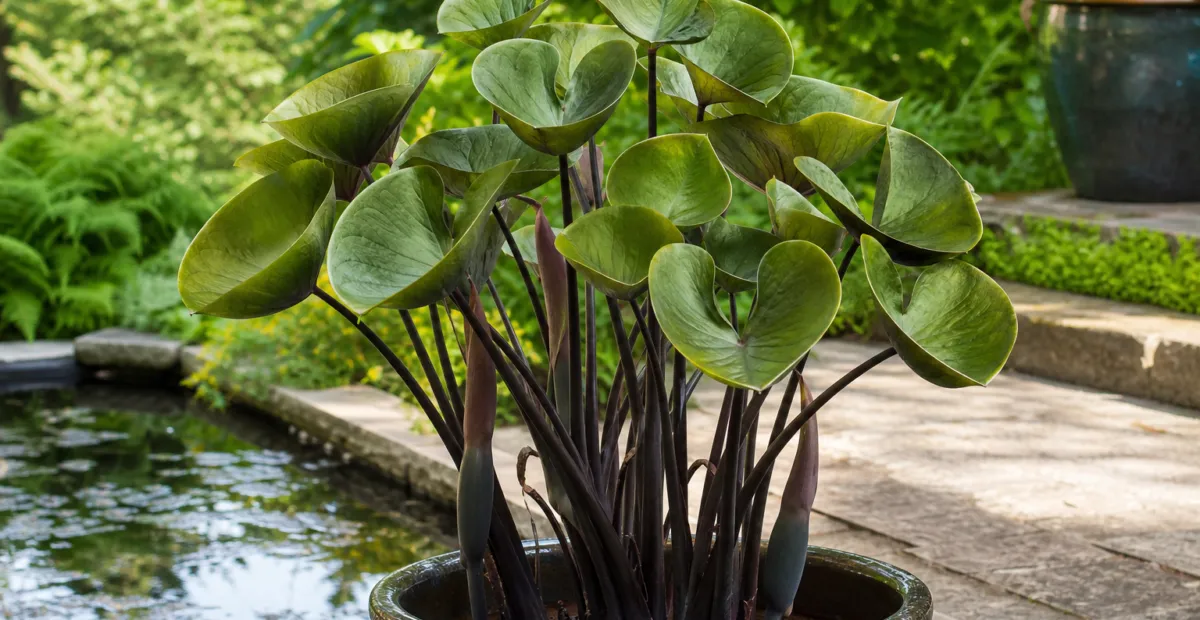
 AI-generated illustration
Colocasia ‘Coffee Cups’ short overview
Colocasia 'Coffee Cups' is a bold elephant ear cultivar prized for its nearly black stems and unusual olive-green leaves that rise into deep cups. The clumping plant grows rapidly in warm weather when given rich, moisture-retentive soil and bright sun to partial shade. It works beautifully as a summer container, pond-edge, or tropical border accent, but its corm must be protected from freezing in much of the United States.
Taxonomic classification
Colocasia ‘Coffee Cups’ care guide
Light and placement
Give full sun to partial shade, with morning sun or bright filtered afternoon light in very hot climates. A sheltered east or south-facing site is suitable; protect leaves from strong winds, which can shred them. Pale, stretched growth and long weak petioles indicate insufficient light, while bleached patches, crispy edges, or sudden scorch suggest excessive sun or inadequate acclimation.
Watering and humidity
Keep the root zone consistently moist during active growth, watering deeply whenever the surface begins to dry rather than allowing repeated drought. Container plants may need water daily in hot weather. Reduce watering in fall as growth slows, then keep stored corms dry. High humidity improves appearance, but good airflow is still important.
Soil and growing medium
Use fertile, organic-rich soil that stays evenly moist but does not remain stagnant around the corm. A loamy mix amended with compost is suitable; in containers, combine moisture-retentive organic material with enough coarse structure for drainage. A slightly acidic to neutral reaction is appropriate. Pond-edge plants may tolerate wetter conditions than container specimens, but the corm should not sit in cold, stagnant water.
Feeding
Feed during active growth from late spring through summer with a balanced, water-soluble fertilizer at half strength every 2–4 weeks, or use a controlled-release product according to its label. Compost or aged organic matter can supplement fertility. Do not fertilize dormant, chilled, recently divided, or severely drought-stressed plants.
Growth and habit
This is a vigorous, warm-season clumper that develops from a corm and produces a dense crown of long petioles. Growth accelerates once temperatures rise, especially with steady moisture and adequate nutrition. The plant can be used as a seasonal centerpiece in cold climates; removing spent or damaged leaves helps maintain a clean crown without trying to force a compact habit.
Planting and repotting
Plant outdoors after the danger of frost has passed and soil has warmed above about 60°F. Set the corm approximately 3–4 inches deep with the growing point upward, or transplant a young plant at the same depth it was growing. Allow roughly 3–5 feet between large landscape specimens; reduce spacing for containers or seasonal displays. Keep newly planted specimens consistently moist while they establish.
Repot in spring when new growth begins, moving the corm or rooted plant into a container only modestly larger than the previous one. Use a heavy pot to prevent the large foliage from tipping the plant. Handle the corm and roots with gloves if skin irritation is a concern, and water thoroughly after transplanting.
Propagation and pruning
Propagation
Divide established corms or separate offsets in spring as growth resumes. Each division should retain a healthy bud and a portion of the corm. Keep divisions warm and evenly moist while roots develop. Seed propagation is not a dependable way to preserve this named cultivar because seedlings may not come true.
Pruning
Remove yellowing, torn, or frost-damaged leaves at the base with clean pruners. Cut foliage back after frost kills the top growth if the corm will be stored or protected in place. Avoid removing healthy leaves during active growth because the plant relies on them to build corm reserves.
Overwintering
In Zones 8–11, protect the corm with a thick mulch layer in a sheltered, well-drained location, recognizing that severe or prolonged freezes can still cause losses. In colder areas, dig the corm after the first frost or before hard freezing, let it dry briefly, and store it in barely moist peat, vermiculite, or paper in a cool, dark, frost-free place. Resume potting in spring.
Uses
Use as a bold foliage focal point in large containers, tropical borders, sheltered beds, rain gardens, and pond margins. It is especially effective where the dark stems and cupped leaves can be viewed closely. Although the species has food uses after proper processing, this ornamental cultivar should not be eaten unless a reliable edible source specifically confirms its identity and preparation.
Appearance
The identifying feature is the strongly cupped, upward-facing leaf blade, which resembles a goblet or coffee cup and may tip accumulated rainwater when the petiole bends. Leaves are broad, heart-shaped, waxy, and olive green. Long petioles range from dark brown-purple to nearly black, giving the plant a distinctive architectural silhouette.
Flowering
This cultivar is grown primarily for foliage, and flowering is infrequent. Like other Colocasia, it can produce a small arum-type inflorescence consisting of a spathe surrounding a spadix, usually during warm, vigorous growth. The flowers are not considered a major ornamental feature, and a dependable U.S. flowering calendar for this exact cultivar is not documented.
Pollination and visitors
No reliable cultivar-specific documentation establishes a characteristic animal pollinator or visitor group. The inflorescence is uncommon and the plant is principally selected for foliage, so pollinator attraction is best treated as unknown rather than assumed.
Diseases and pests
Diseases
Prevent problems by avoiding cold, saturated soil, providing good air movement, and removing damaged foliage. Watch for fungal leaf spots, soft corm rot, and stem or root problems when plants remain cool and waterlogged. Remove affected leaves promptly; improve drainage and sanitation, and discard severely rotted corms rather than propagating from them.
Pests
Scout for spider mites, aphids, thrips, and caterpillars, especially on stressed or greenhouse-grown plants. Rinse foliage, improve humidity and air circulation, and remove heavily damaged leaves. Use insecticidal soap or another labeled treatment only when needed, following the product label and avoiding applications to heat-stressed plants.
Related diseases and pests
Only Plant Doctor profiles whose host data indicate this plant may be affected are shown here.
 PestGreenhouse thripsHeliothrips haemorrhoidalis
 DiseaseRhizopus soft rotRhizopus stolonifer
 DiseaseBacterial soft rotPectobacterium carotovorum
 PestGreen Peach AphidMyzus persicae
 PestGreen Apple AphidAphis pomi
 DiseaseAlternaria leaf spot and fruit rotAlternaria alternata
 Environmental stressWaterlogging
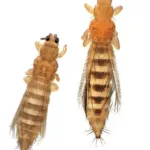 PestOnion thripsThrips tabaci Lindeman
Toxicity and pollen
Colocasia esculenta contains insoluble calcium oxalate crystals that can cause immediate burning, pain, swelling, drooling, vomiting, and difficulty swallowing if plant material is chewed or swallowed. The named cultivar should be treated with the same caution. Keep corms, leaves, and cut pieces away from children and pets; edible taro preparations require appropriate cooking and are not equivalent to eating ornamental plant tissue raw.
Reliable cultivar-specific information about airborne pollen release and allergy significance is unavailable. Because flowering is infrequent and the inflorescences are not a prominent seasonal feature, no confident U.S. pollen-risk rating can be assigned. Avoid handling any flowering structures if they trigger irritation, and manage general plant contact separately from pollen concerns.
Native habitat
The species is associated with warm, humid tropical and subtropical environments and commonly grows in fertile, moist soils, wet margins, and cultivated water-rich settings. The named cultivar is horticultural rather than a wild population, so its natural distribution should be attributed to the species, not to 'Coffee Cups' itself.
Interesting fact
The cupped leaves can collect rainwater until their weight causes a petiole to bend and release it. 'Coffee Cups' is described as a clumping cultivar rather than a running type. Its dark stems create strong contrast with the olive-green foliage. The cultivar is widely marketed as a warm-season landscape and container plant.
Frequently asked questions (FAQ)
The most relevant questions about this plant, with short and direct answers.
🌱Quick care
What is Colocasia 'Coffee Cups' known for?⌄
Colocasia 'Coffee Cups' is known for olive-green, dramatically cupped leaves held on tall, dark stems. The leaves can collect rainwater and tip it out when full, making this cultivar especially distinctive in the landscape.
How big does Colocasia 'Coffee Cups' get?⌄
Colocasia 'Coffee Cups' commonly grows about 4 to 6 feet tall and wide in warm, favorable conditions. Plants usually stay smaller in containers or where the growing season is short.
Is Colocasia 'Coffee Cups' a perennial or an annual?⌄
Colocasia 'Coffee Cups' is a perennial in USDA Zones 8 through 11, although the foliage dies back with frost. In colder zones, grow it as a summer annual or lift and store the tubers indoors.
🌤️Environment and placement
Does Colocasia 'Coffee Cups' need full sun or shade?⌄
Colocasia 'Coffee Cups' grows in full sun to partial shade, with consistently moist soil. Morning sun or filtered light can be preferable in very hot areas if intense afternoon exposure causes leaf scorch.
Can Colocasia 'Coffee Cups' grow in wet soil?⌄
Yes, Colocasia 'Coffee Cups' tolerates consistently wet conditions and can grow near ponds, bog gardens, or in containers with reliable moisture. Use fertile soil that retains water but still drains enough to prevent stagnant, foul conditions around the tuber.
Where should I plant Colocasia 'Coffee Cups' in my yard?⌄
Plant Colocasia 'Coffee Cups' in a warm, sheltered spot with sun to partial shade and dependable moisture. It works well as a back-of-border focal plant, beside water features, or in a large tropical-style container.
Can Colocasia 'Coffee Cups' grow indoors?⌄
Colocasia 'Coffee Cups' can be overwintered indoors, but it needs very bright light, warmth, humidity, and evenly moist soil. Its mature size and high water requirement usually make it more practical as an outdoor summer plant than a permanent houseplant.
Is Colocasia 'Coffee Cups' wind tolerant?⌄
Colocasia 'Coffee Cups' performs best with some protection from strong wind. Large leaves can tear, and tall petioles may bend or topple when exposed to repeated gusts, especially when the foliage is wet.
💧Care and problems
How often should I water Colocasia 'Coffee Cups'?⌄
Water Colocasia 'Coffee Cups' whenever the soil surface begins to dry, keeping the root zone evenly moist throughout active growth. Do not allow a container-grown plant to dry out completely, because drought stress quickly causes drooping and damaged leaf edges.
What soil is best for Colocasia 'Coffee Cups'?⌄
Use fertile, moisture-retentive, well-drained loam enriched with organic matter. The soil should stay moist or wet without becoming compacted and airless around the tuber.
How often should I fertilize Colocasia 'Coffee Cups'?⌄
Feed Colocasia 'Coffee Cups' during active spring and summer growth with a balanced slow-release fertilizer or regular dilute liquid fertilizer. Consistent nutrition supports its rapid growth, especially in containers, but avoid applying concentrated fertilizer to dry soil.
Why are the leaves on my Colocasia 'Coffee Cups' turning yellow?⌄
Yellow leaves can result from overwatering in poorly drained soil, cold temperatures, nutrient deficiency, or normal aging of older foliage. Check drainage and temperature first, then adjust feeding only if new growth is pale or the plant is actively growing.
Why are the leaves on my Colocasia 'Coffee Cups' curling or drooping?⌄
Curling or drooping usually indicates drought stress, cold conditions, transplant shock, root damage, or insufficient light. Water thoroughly, keep the plant warm and sheltered, and inspect the roots if the soil is wet but the foliage remains limp.
What pests attack Colocasia 'Coffee Cups'?⌄
Common pests include aphids, whiteflies, and spider mites. Inspect leaf undersides regularly and rinse or wipe foliage to remove light infestations, while improving air circulation and using a labeled treatment when necessary.
What diseases affect Colocasia 'Coffee Cups'?⌄
Potential problems include soft rot, bacterial blight, corm or root rot, and dasheen mosaic virus. Prevent many issues by avoiding cold, stagnant, waterlogged conditions, removing badly damaged tissue, and starting with healthy planting material.
🪴Planting and repotting
When should I plant Colocasia 'Coffee Cups' outdoors?⌄
Plant Colocasia 'Coffee Cups' outdoors after the danger of frost has passed and the soil has warmed. Warm temperatures are important for quick establishment, so delay planting if nights remain consistently chilly.
How deep should I plant Colocasia 'Coffee Cups' tubers?⌄
Plant Colocasia 'Coffee Cups' tubers about 4 inches deep, with the growing point oriented upward. In heavy or poorly drained soil, plant slightly shallower and improve the bed so excess water does not remain around the tuber.
Can Colocasia 'Coffee Cups' grow in a container?⌄
Yes, Colocasia 'Coffee Cups' grows well in a large container with fertile, moisture-retentive potting mix and drainage holes. Choose a heavy pot to reduce tipping, and expect to water more often than an in-ground plant.
How far apart should I plant Colocasia 'Coffee Cups'?⌄
Space Colocasia 'Coffee Cups' about 3 to 6 feet apart, depending on the desired effect and growing conditions. Use wider spacing in warm climates where plants can reach their full mature size.
✂️Propagation and pruning
How do you propagate Colocasia 'Coffee Cups'?⌄
Propagate Colocasia 'Coffee Cups' primarily by dividing its clumping tubers or offsets. Separate sections with healthy roots and shoots during dormancy or in early spring, then replant them in warm, moist growing conditions.
Does Colocasia 'Coffee Cups' spread by runners?⌄
Colocasia 'Coffee Cups' is generally described as a clumping cultivar rather than an aggressive runner-former. It can still expand into a substantial mound as the tuber produces offsets, so allow adequate space.
How do I overwinter Colocasia 'Coffee Cups' in a cold climate?⌄
After frost kills the foliage, cut back the stems, dig the tubers, remove soil, and let them dry briefly. Store them in a dark, cool, dry location around 35 to 45°F, protected from freezing, then replant after frost danger passes.
Can I leave Colocasia 'Coffee Cups' in the ground over winter?⌄
Leave Colocasia 'Coffee Cups' in the ground only where winter conditions remain within its reliable hardiness range and the tubers are protected from freezing. In colder parts of the United States, lift and store the tubers or grow the plant as an annual.
Should I cut back Colocasia 'Coffee Cups' in fall?⌄
Yes, cut the stems back after frost has naturally ended the foliage or when you are preparing the plant for dormancy. Do not remove healthy leaves too early, because they continue supplying energy to the tuber while temperatures remain warm.
⚠️Toxicity and safety
Is Colocasia 'Coffee Cups' toxic to people?⌄
Yes, Colocasia 'Coffee Cups' is toxic if chewed or swallowed raw and can cause painful irritation of the mouth and digestive tract. Keep tubers, leaves, and plant sap away from children and pets, and wear gloves when handling if your skin is sensitive.
Is Colocasia 'Coffee Cups' edible like taro?⌄
No, Colocasia 'Coffee Cups' should not be treated as an edible taro crop. Although some Colocasia species are cultivated as food after specialized preparation, this ornamental cultivar is labeled as harmful if ingested and should not be eaten.
What should I do if someone chews Colocasia 'Coffee Cups'?⌄
Remove any plant material from the mouth, rinse gently, and contact Poison Control or a medical professional for advice. Seek urgent care for trouble breathing, severe swelling, persistent vomiting, or difficulty swallowing.
🌸Flowering and special interest
Does Colocasia 'Coffee Cups' flower?⌄
Colocasia 'Coffee Cups' can produce aroid-type flowers, but it is grown primarily for its foliage and flowering is not dependable or especially showy. Warm temperatures, strong growth, and adequate light make flowering more likely.
When does Colocasia 'Coffee Cups' bloom?⌄
When it blooms, Colocasia 'Coffee Cups' generally flowers during the warm growing season, often in summer. Individual plants may not bloom every year, particularly when grown in short-season climates or kept indoors.
Similar plants
 Azure Monkshood (Aconitum carmichaelii) care guideAconitum carmichaelii
 Monkshood (Aconitum ‘Stainless Steel’)Aconitum 'Stainless Steel'
 Monkshood (Aconitum ‘Bressingham Spire’)Aconitum 'Bressingham Spire'
 Golden full moon maple (Acer shirasawanum ‘Aureum’)Acer shirasawanum 'Aureum'
 Globosum (Acer platanoides ‘Globosum’)Acer platanoides 'Globosum'
 Striped maple (Acer pensylvanicum) care guideAcer pensylvanicum