
 Source:
 Golden polypody (Phlebodium aureum) short overview
Golden polypody is an evergreen tropical fern prized for its arching blue-green fronds and unusual creeping rhizomes covered in golden scales. In the United States it is most often grown indoors, in hanging baskets, or outdoors in frost-free and mild climates. Give it bright filtered light, steady but not soggy moisture, high humidity, and a loose, sharply draining acidic mix that allows the rhizomes to remain partly exposed.
Taxonomic classification
Golden polypody (Phlebodium aureum) care guide
Light and placement
Place in bright filtered light, such as an east-facing window or several feet back from a bright south- or west-facing window. It tolerates partial shade but becomes more open and less strongly colored in very dim conditions. Direct hot sun can bleach or scorch fronds; pale, elongated growth suggests insufficient light, while crisp brown patches suggest excess sun or dryness.
Watering and humidity
Water thoroughly when the upper inch of mix begins to dry, then let excess drain completely. Keep the medium lightly and consistently moist but never saturated; the rhizomes tolerate brief drying better than prolonged wetness. Water less often in cool, low-light winter conditions, and increase humidity with a humidifier or grouped plants when indoor air is dry.
Soil and growing medium
Use a loose, airy mix that drains quickly but retains some moisture: peat-free ericaceous mix or fine bark blended with perlite and a little compost. Slightly acidic conditions are suitable, though the plant tolerates near-neutral mixes. Avoid dense garden soil and containers that stay waterlogged.
Feeding
Feed during active growth with a balanced liquid houseplant fertilizer diluted to half strength about monthly. Water the plant first if the medium is dry, and reduce or stop feeding in low-light winter conditions. Do not fertilize a newly divided, stressed, or root-damaged plant until it resumes growth.
Growth and habit
A creeping rhizome produces fronds at intervals, creating a spreading or cascading display rather than a tight upright clump. The rhizomes naturally travel across the surface of the medium and should not be buried. Remove only damaged fronds and give the plant room to expand.
Planting and repotting
Plant outdoors only after the danger of frost has passed in a protected, humid site. Set the root mass at its original level and leave creeping rhizomes partly exposed. Allow room for arching fronds and surface spread, while avoiding locations exposed to harsh afternoon sun or drying wind.
Repot in spring when the container is crowded or the mix has decomposed. Move only one pot size larger, use a shallow container with excellent drainage, and keep the creeping rhizomes at the surface rather than burying them.
Propagation and pruning
Propagation
Divide healthy creeping rhizomes in spring or early summer, ensuring each section has viable rhizome and growing points. Pot divisions in a porous, lightly moist medium and keep them warm and humid until new fronds appear. Spore propagation is possible but slow and specialist in practice.
Pruning
No routine pruning is needed. Remove yellow, brown, or badly damaged fronds at the base with clean scissors. Avoid cutting healthy rhizomes or trimming frond tips merely to control size, since repeated tip cutting leaves unattractive edges.
Overwintering
Bring containers indoors before temperatures approach 50°F, especially before frost. Keep the plant in bright filtered light, away from radiators, heating vents, and cold drafts. Reduce fertilizer in winter while maintaining moderate moisture and humidity. In mild Zones 10–13, protect outdoor plants from freezes and drying winds.
Uses
Primarily an ornamental foliage fern for indoor containers, hanging baskets, shaded patios, conservatories, and frost-free woodland gardens. Its spreading habit and exposed golden rhizomes make it useful as a textural accent. It has no flowers or edible crop value.
Appearance
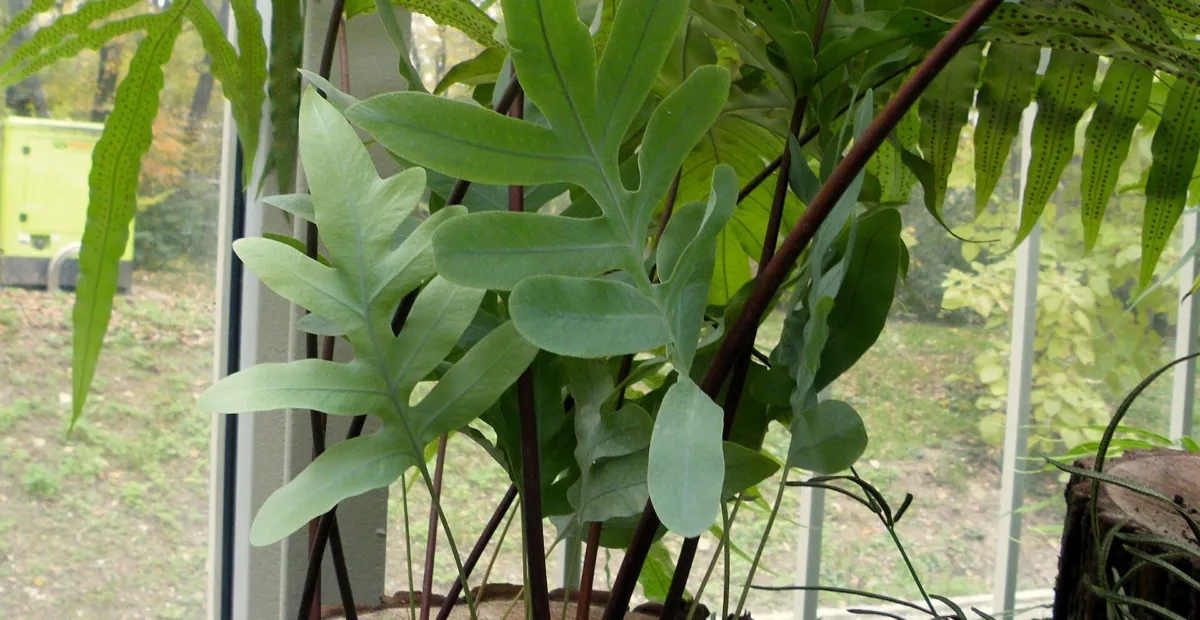
The plant is identified by long arching to pendent fronds divided into deep lobes, often with a blue-green or glaucous cast. Creeping rhizomes are thick and densely covered with conspicuous golden to reddish-brown scales, giving the plant a furry, textured appearance. Round sori occur in rows on the undersides of mature frond segments.
Pollination and visitors
No animal pollinator or nectar interaction is expected. Like other ferns, this species reproduces by spores rather than flowers and does not depend on insect, bird, or mammal pollination.
Phlebodium aureum photos
Click any photo for a larger view. Source, author and license are shown separately.
Diseases and pests
Diseases
Crown rot and root rot are the main concerns, especially in stagnant or saturated media. Use a porous mix, drain excess water promptly, and avoid wetting the crown repeatedly. Remove badly damaged tissue with clean tools and improve air circulation before considering treatment.
Pests
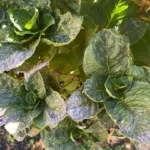
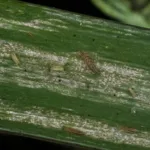
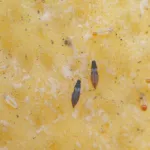
Watch for spider mites, thrips, Florida fern caterpillar, and fungus gnats. Inspect fronds and rhizomes regularly, isolate affected plants, wash foliage when appropriate, and correct dry air or excessive moisture. Use labeled controls only when necessary and follow the product directions.
Related diseases and pests
Only Plant Doctor profiles whose host data indicate this plant may be affected are shown here.
Toxicity and pollen
No well-established evidence identifies Phlebodium aureum as a major poisonous houseplant. Because fern toxicity data can be incomplete and individual reactions are possible, prevent chewing, avoid ingesting plant material or growing media, and seek medical or veterinary advice after significant exposure or symptoms.
- Pollination / pollen
- Airborne fern spores, not pollen
Ferns do not produce pollen. Phlebodium aureum releases spores from sori on mature fronds; these are not pollen grains, although airborne spores can bother particularly sensitive people in enclosed or poorly ventilated spaces.
Native habitat
Native from the southeastern United States through the Caribbean, Mexico, Central America, and tropical South America. It commonly occupies humid forests, swamps, hammocks, tree crotches, logs, palm leaf bases, and other sites where organic debris accumulates with good drainage.
Interesting fact
The species epithet aureum means “golden,” referring to the scales on its creeping rhizomes. Its fronds may appear green, blue-green, or glaucous. In nature it commonly grows epiphytically, including among old palm leaf bases, but it can also grow on humus-rich ground or rocky surfaces.
Frequently asked questions (FAQ)
The most relevant questions about this plant, with short and direct answers.
🌱Quick care
What is the best light for golden polypody?⌄
Golden polypody grows best in bright filtered light or partial shade. Protect it from strong direct midday sun, which can scorch fronds, although gentle morning or late-afternoon sun may be tolerated.
How often should I water Phlebodium aureum?⌄
Water Phlebodium aureum when the surface of the mix feels slightly dry, then let excess water drain completely. Keep the medium lightly and evenly moist, but never leave the rhizome or roots sitting in soggy soil.
Is golden polypody easy to grow indoors?⌄
Yes, golden polypody is generally adaptable indoors when given filtered light, a loose fast-draining mix, and consistent but moderate moisture. It usually handles occasional short drying better than prolonged waterlogging.
🌤️Environment and placement
Where should I place a golden polypody indoors?⌄
Place golden polypody near an east- or north-facing window, or several feet from a brighter south- or west-facing window with filtered light. Keep it away from heating vents, air conditioners, and hot glass.
Does Phlebodium aureum need high humidity?⌄
Phlebodium aureum prefers moderate to high humidity, but it can adapt to average indoor conditions if watering is consistent. Brown tips, curling fronds, or crispy edges often indicate dry air combined with insufficient moisture.
Can golden polypody grow in a bathroom?⌄
Golden polypody can grow well in a bright bathroom because humidity is often higher there. The room still needs adequate filtered light and good air circulation to reduce the risk of crown or root rot.
Can golden polypody grow outdoors in the United States?⌄
Golden polypody can grow outdoors year-round in warm, frost-free parts of the United States, especially USDA Zones 9b–11. In cooler areas, grow it in a container and move it indoors before temperatures approach freezing.
What temperature is too cold for Phlebodium aureum?⌄
Phlebodium aureum is frost-tender and should be protected from freezing temperatures. A brief light frost may be tolerated in a sheltered location, but prolonged exposure to temperatures near or below 32°F can damage fronds and rhizomes.
💧Care and problems
Why are my golden polypody’s fronds turning brown?⌄
Brown fronds or tips are commonly caused by dry soil, low humidity, harsh direct sun, or salt buildup. Check moisture and light first, then trim fully damaged fronds and improve humidity without keeping the pot waterlogged.
Why are my Phlebodium aureum fronds curling?⌄
Curling fronds usually indicate underwatering, low humidity, or excessive heat. Water thoroughly when the mix has partly dried, move the plant away from drafts and hot windows, and provide steadier moisture.
Why is my golden polypody turning yellow?⌄
Yellowing fronds often result from overwatering, poor drainage, root stress, or insufficient light. Let the mix dry slightly between waterings, confirm that the pot drains freely, and inspect the rhizome and roots for soft, rotting tissue.
Why is my golden polypody losing fronds?⌄
Golden polypody may lose fronds after drought, transplanting, sudden environmental changes, cold exposure, or root problems. Correct the growing conditions and remove only completely dead fronds; healthy new growth can emerge from the rhizome.
How do I prevent root rot in Phlebodium aureum?⌄
Prevent root rot by using a loose, organic, acidic mix in a pot with drainage holes and watering only when the surface has begun to dry. Never allow the pot to stand in water, and keep the creeping rhizome from being buried.
Does golden polypody need fertilizer?⌄
Golden polypody benefits from light feeding during active growth, using a balanced houseplant fertilizer diluted to half strength. Avoid heavy applications, especially in winter, because excess fertilizer salts can brown the frond edges.
What pests attack Phlebodium aureum?⌄
Common pests include spider mites, thrips, fungus gnats, and fern caterpillars. Inspect fronds and the growing medium regularly, isolate affected plants, and treat infestations with an appropriate houseplant control method.
Can I mist golden polypody?⌄
Occasional misting may provide brief surface moisture, but it does not reliably raise room humidity. A humidifier, grouping plants, or a naturally humid room is usually more effective, while good air circulation helps limit fungal problems.
🪴Planting and repotting
What soil does golden polypody need?⌄
Golden polypody needs a loose, organic, acidic, fast-draining mix that holds some moisture without becoming compacted. A quality fern or epiphyte mix amended with materials such as bark and perlite is generally suitable.
Should the fuzzy rhizomes of Phlebodium aureum be buried?⌄
No, keep the fuzzy creeping rhizomes resting on or just above the surface of the mix. Burying them or keeping them constantly wet can restrict air circulation and encourage rhizome rot.
When should I repot golden polypody?⌄
Repot golden polypody when the pot is crowded, drainage has declined, or the rhizomes are spilling well over the edge, preferably during active growth. Choose a container only slightly larger than the current one.
What type of pot is best for Phlebodium aureum?⌄
Use a shallow or moderately sized pot with drainage holes and a porous, fast-draining mix. A hanging basket can work especially well because it accommodates the spreading rhizomes and displays the cascading fronds.
Can golden polypody grow mounted on wood?⌄
Yes, golden polypody can be grown as an epiphyte mounted on cork, wood, or another suitable surface if its rhizome is secured without being buried. Mounted plants require close attention to watering because they dry faster than potted plants.
✂️Propagation and pruning
How do I propagate golden polypody?⌄
The easiest way to propagate golden polypody is to divide a healthy creeping rhizome into sections, ensuring each division has roots and at least one growing point. Pot divisions in a loose, lightly moist mix and keep them in filtered light.
Can Phlebodium aureum be grown from spores?⌄
Yes, Phlebodium aureum can be grown from spores produced on the undersides of mature fronds, but this method is slow and more technical than rhizome division. Division is usually the practical choice for home growers.
Can I propagate golden polypody from a frond cutting?⌄
No, an ordinary frond cutting will not normally produce a new golden polypody plant because growth comes from the rhizome. Propagate by dividing the rhizome or by sowing mature spores instead.
How should I prune Phlebodium aureum?⌄
Prune Phlebodium aureum by cutting yellow, brown, or completely damaged fronds off at their base with clean scissors. Avoid trimming healthy green fronds unnecessarily, and do not cut back the creeping rhizomes merely because they extend beyond the pot.
⚠️Toxicity and safety
Is golden polypody toxic to cats and dogs?⌄
Golden polypody has no documented significant toxicity, but it should still not be eaten. Keep it away from pets and children because ingesting plant material can cause choking or mild digestive upset even when a plant is not considered poisonous.
Is Phlebodium aureum safe to touch?⌄
Yes, Phlebodium aureum is generally safe to touch during routine care. Wash your hands after handling potting mix or plant material, and avoid rubbing your eyes or ingesting any part of the plant.
🌸Flowering and special interest
Does golden polypody produce flowers?⌄
No, golden polypody does not produce flowers because it is a fern. It reproduces through spores, which appear in rounded sori on the undersides of mature fronds.
What are the brown or orange spots under golden polypody fronds?⌄
The brown, orange, or yellowish spots under mature golden polypody fronds are usually sori, the structures that produce spores. They are a normal part of fern reproduction and are not necessarily a pest or disease.
Why is my golden polypody not producing spores?⌄
Young or stressed golden polypody plants may not produce visible sori, and many cultivated plants produce them only after reaching maturity. Strong filtered light, suitable moisture, and stable growing conditions support normal frond development, but spore production is not guaranteed indoors.
Similar plants
 Azure Monkshood (Aconitum carmichaelii) care guideAconitum carmichaelii
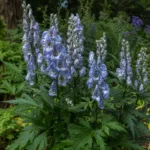 Monkshood (Aconitum ‘Stainless Steel’)Aconitum 'Stainless Steel'
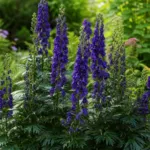 Monkshood (Aconitum ‘Bressingham Spire’)Aconitum 'Bressingham Spire'
 Golden full moon maple (Acer shirasawanum ‘Aureum’)Acer shirasawanum 'Aureum'
 Globosum (Acer platanoides ‘Globosum’)Acer platanoides 'Globosum'
 Striped maple (Acer pensylvanicum) care guideAcer pensylvanicum