
 Source:
 Anisocampium niponicum short overview
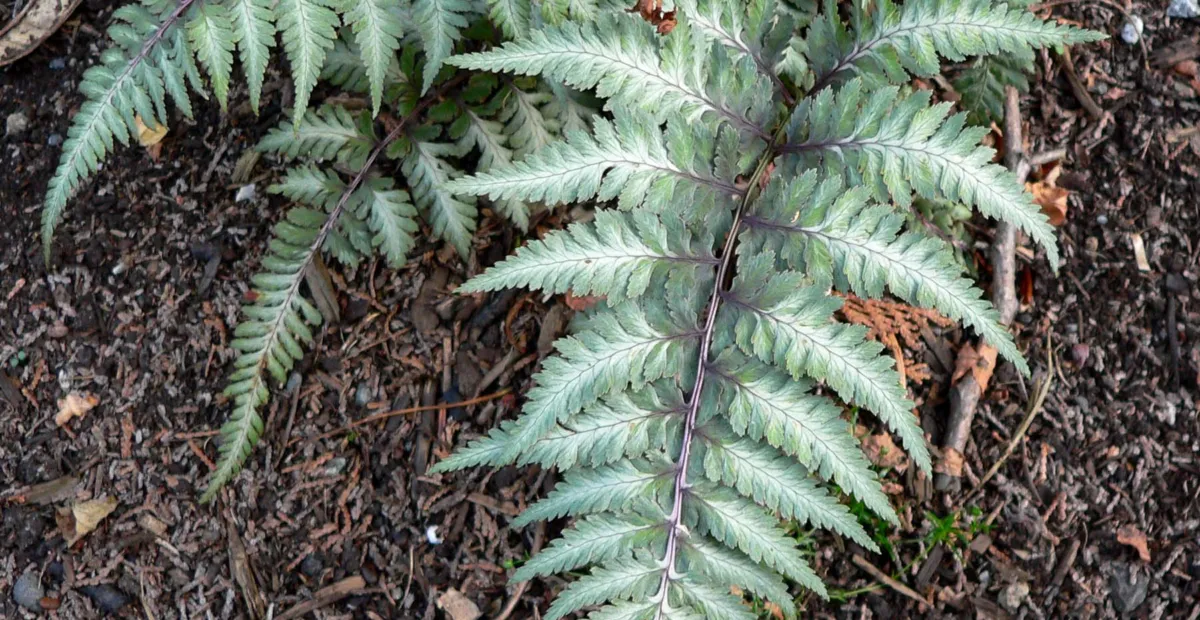
Anisocampium niponicum is a deciduous woodland fern grown for its elegant, finely divided fronds rather than flowers. The species forms a slowly expanding clump and can show silver-green blades with burgundy or purple tones along the rachis and stipes, especially in suitable shade. In United States gardens, it performs best in evenly moist, humus-rich soil with protection from harsh afternoon sun and drying winds.
Taxonomic classification
Anisocampium niponicum care guide
Light and placement
Give bright filtered light, partial shade or light shade, ideally beneath deciduous trees or on a north- or east-facing side of a building. Gentle morning sun can improve frond coloration, but hot afternoon sun may bleach or scorch the blades. Too little light can produce weaker, greener fronds and a looser habit; too much light usually appears as faded color, browned margins and rapid wilting.
Watering and humidity
Water deeply when the upper inch of soil begins to dry, aiming for steady moisture rather than repeated shallow sprinkling. Check containers more often during hot weather and reduce frequency after fronds die back, while preventing the rhizome from becoming bone-dry. Water at the soil surface in the morning when possible. Good drainage remains essential because saturated crowns can rot.
Soil and growing medium
Use a moisture-retentive but airy soil rich in leaf mold, compost or other well-decomposed organic matter. A loam-based woodland soil is suitable when it drains freely and does not remain stagnant. Slightly acidic to neutral conditions are generally appropriate. Avoid compacted clay, drought-prone sand and sites where water routinely pools around the crown.
Feeding
Top-dress in spring with a thin layer of finished compost or leaf mold. If growth is weak, use a balanced, slow-release fertilizer at the low end of the label rate after new fronds begin expanding. Avoid heavy nitrogen feeding, fresh manure and late-season fertilization, which can produce soft growth and reduce winter readiness.
Growth and habit
This herbaceous perennial forms a compact, slowly enlarging clump from a short, creeping to ascending rhizome. Fronds emerge from the crown and die back after the growing season. Consistent moisture and a light organic mulch help establishment; avoid deep planting or repeated disturbance of the crown.
Planting and repotting
Plant in spring or early fall while temperatures are moderate. Set the crown level with the surrounding soil rather than burying it. Space plants about 18–24 inches apart for airflow and a natural clump. Mulch lightly with shredded leaves or compost, keeping mulch away from the crown, and water regularly through the first growing season.
Repot container-grown plants in spring as new growth begins, moving only one container size up. Use a loose, organic, moisture-retentive mix with reliable drainage. Handle the rhizome and crown gently, keep the crown at its original level, and water thoroughly after transplanting. Repot only when the root mass has filled the container or the mix has broken down.
Propagation and pruning
Propagation
Division is the most practical method for gardeners and is best done in early spring as growth resumes or in early fall. Separate portions with a healthy crown and rhizome, replant immediately and keep evenly moist. Spore propagation is possible but slow and requires sterile technique, controlled moisture and patience through the gametophyte stage.
Pruning
Cut back old fronds in late winter or very early spring before new croziers unfurl. Remove individual damaged fronds during the season if needed, but avoid cutting into the crown or pulling emerging shoots. Leaving a light layer of clean leaf litter can provide useful winter protection.
Overwintering
Leave healthy old fronds in place through winter where they help protect the crown, then cut them back before spring growth. Apply a light leaf mulch after the ground cools, especially in exposed or colder sites. Container plants have less root insulation than those in the ground; move them to a sheltered location or insulate the container during severe freezes.
Uses
Primarily an ornamental foliage fern for shaded borders, woodland plantings, foundation beds and containers. It is useful where a fine-textured, seasonally colorful fern is wanted, but it is not a documented culinary or medicinal crop. Keep it away from locations where children or pets routinely chew garden plants.
Appearance
Fronds are arching, ovate to oblong and finely divided into pinnate or bipinnate segments. The blade commonly contrasts with a dark reddish-brown to purple rachis and stipe, creating the painted effect associated with cultivated forms. New fronds unfurl from the crown and the entire above-ground display is seasonal rather than evergreen.
Pollination and visitors
No animal pollinator attraction is expected because the species has no flowers. Reproduction occurs through spores, with fertilization dependent on water films at the gametophyte stage rather than visits from bees, butterflies or other flower visitors.
Anisocampium niponicum photos
Click any photo for a larger view. Source, author and license are shown separately.
Diseases and pests
Diseases
Reduce disease pressure by avoiding overhead irrigation, stagnant wetness and crowded planting. Remove badly damaged or collapsed fronds and clear old debris in late winter or early spring. Crown or rhizome problems are most likely in poorly drained soil; improve drainage rather than applying routine fungicides.
Pests
Watch for slugs and snails on emerging fronds, especially in damp beds. Hand-pick or use barriers where appropriate, remove hiding debris and avoid broad-spectrum insecticides. Scale or occasional chewing damage may occur, but healthy plants generally need monitoring rather than routine treatment.
Related diseases and pests
Only Plant Doctor profiles whose host data indicate this plant may be affected are shown here.

Toxicity and pollen
No authoritative evidence of significant toxicity for this exact species was identified in the reviewed sources. That absence is not proof that ingestion is harmless. Prevent children and pets from chewing ornamental plants, and seek medical or veterinary advice after a substantial or symptomatic ingestion.
- Pollination / pollen
- Airborne fern spores, not pollen
Ferns do not produce pollen. Anisocampium niponicum releases spores from sori on fertile fronds; spores are not pollen and can become airborne when mature. People with respiratory sensitivities should avoid deliberately disturbing large quantities of dry fern spores, although a specific allergy risk for this species was not established.
Native habitat
The species is associated with moist, shaded woodland and forest-edge environments in East Asia, including Japan and neighboring regions. It favors humus-rich soils, filtered light and sheltered conditions where leaf litter helps moderate moisture and temperature. Garden performance declines in exposed, hot or chronically waterlogged sites.
Interesting fact
The species has been treated under the widely used synonym Athyrium niponicum. Its ornamental color is concentrated in the frond blade and rachis rather than in flowers. Like other ferns, it alternates between a visible sporophyte and a tiny gametophyte generation.
Frequently asked questions (FAQ)
The most relevant questions about this plant, with short and direct answers.
🌱Quick care
What is Anisocampium niponicum?⌄
Anisocampium niponicum is a deciduous woodland fern in the family Athyriaceae, native to parts of East Asia. It is also widely treated in horticultural references under the synonym Athyrium niponicum.
How much light does Anisocampium niponicum need?⌄
Anisocampium niponicum grows best in partial shade to shade. It can tolerate gentle morning light, but strong afternoon sun may scorch the fronds, especially when the soil is dry.
How often should I water Anisocampium niponicum?⌄
Water Anisocampium niponicum whenever the soil surface begins to dry so the root zone stays evenly moist. Do not allow the soil to become waterlogged, because consistently poor drainage can damage the rhizome.
Is Anisocampium niponicum cold hardy?⌄
Yes, Anisocampium niponicum is cold hardy when established in suitable garden conditions. Its deciduous fronds die back in cold weather, while the underground rhizome remains dormant and resprouts in the growing season.
How large does Anisocampium niponicum get?⌄
Anisocampium niponicum commonly forms a clump roughly 1 to 2 feet tall and wide, although size varies by cultivar and growing conditions. Rich soil and steady moisture generally support fuller growth.
🌤️Environment and placement
Can Anisocampium niponicum grow in full shade?⌄
Anisocampium niponicum can grow in full shade if the site is not excessively dry. Growth may be less vigorous and foliage color less pronounced than in bright, filtered shade.
Can Anisocampium niponicum tolerate morning sun?⌄
Yes, Anisocampium niponicum usually tolerates mild morning sun, particularly in cooler climates. Protect it from intense afternoon sun and keep the soil consistently moist.
What soil is best for Anisocampium niponicum?⌄
Use humus-rich, moisture-retentive loam that drains well for Anisocampium niponicum. Incorporating compost or leaf mold can improve organic matter and moisture retention without creating stagnant, waterlogged soil.
Does Anisocampium niponicum prefer acidic soil?⌄
Anisocampium niponicum generally performs well in slightly acidic to neutral, organic-rich soil. Exact pH is usually less important than reliable moisture, good drainage, and abundant organic matter.
Where should I plant Anisocampium niponicum in a yard?⌄
Plant Anisocampium niponicum in a sheltered woodland bed, shaded border, or north- or east-facing location with filtered light. Avoid exposed sites with hot sun, drying wind, or reflected heat from pavement.
Can Anisocampium niponicum grow in a rain garden?⌄
Anisocampium niponicum can work in a rain-garden edge or other site with periodic moisture, provided the soil drains between heavy rains. It is not a good choice for a permanently saturated or ponded location.
💧Care and problems
Why are the fronds of my Anisocampium niponicum turning brown?⌄
Brown fronds on Anisocampium niponicum are most often caused by dry soil, hot sun, drying wind, or low humidity. Move the plant to deeper or filtered shade, water thoroughly, and add a light organic mulch.
Why is my Anisocampium niponicum wilting?⌄
Wilting usually means Anisocampium niponicum is experiencing insufficient moisture or root stress. Check whether the soil is dry or saturated, then correct the watering and drainage problem rather than watering automatically.
How do I keep Anisocampium niponicum from drying out?⌄
Keep Anisocampium niponicum in shade, water deeply during dry spells, and apply about 2 inches of organic mulch without covering the crown. Grouping it with other moisture-loving shade plants can also reduce moisture loss.
Does Anisocampium niponicum need fertilizer?⌄
Anisocampium niponicum usually needs little fertilizer when grown in fertile, compost-enriched soil. If growth is weak, apply a balanced, slow-release fertilizer in spring according to the product label, avoiding heavy feeding.
What pests affect Anisocampium niponicum?⌄
Slugs and snails may chew Anisocampium niponicum, especially in cool, damp gardens. Inspect plants at night or after rain and use habitat management or a labeled control appropriate for the garden.
Is Anisocampium niponicum deer resistant?⌄
Anisocampium niponicum is often considered relatively resistant to deer browsing, but no plant is completely deer-proof. Pressure can vary with local deer populations and available food.
🪴Planting and repotting
When should I plant Anisocampium niponicum?⌄
Plant Anisocampium niponicum in spring or early fall when temperatures are moderate and the soil is workable. Water it regularly until new roots are established, especially during the first growing season.
How do I plant Anisocampium niponicum?⌄
Set Anisocampium niponicum at the same depth it was growing in its container, with the crown at or just above soil level. Backfill with amended soil, water thoroughly, and mulch lightly while keeping mulch away from the crown.
Can Anisocampium niponicum be grown in a container?⌄
Yes, Anisocampium niponicum can grow in a container with drainage holes and a moisture-retentive but airy potting mix. Containers dry out faster than garden soil, so check moisture frequently and protect the pot from excessive heat.
How often should I repot Anisocampium niponicum?⌄
Repot Anisocampium niponicum when the container is crowded, the rhizome is pressing against the pot, or the mix has degraded. Moving it into a slightly larger container every few years is usually sufficient.
✂️Propagation and pruning
How do you propagate Anisocampium niponicum?⌄
Anisocampium niponicum is propagated mainly by spores or by dividing established rhizomes. Division is generally the more practical method for gardeners because fern spores require a moist, controlled propagation setup and patience.
Can Anisocampium niponicum be divided?⌄
Yes, established Anisocampium niponicum can be divided when dormant or during cool weather. Separate sections with viable rhizome and roots, replant them promptly, and keep the divisions evenly moist while they recover.
Can Anisocampium niponicum be grown from spores?⌄
Yes, Anisocampium niponicum can be grown from spores, but the process is slower and more specialized than division. Spores are sown on a sterile, consistently moist medium and need suitable humidity and light for germination.
Should I cut back Anisocampium niponicum?⌄
Cut back Anisocampium niponicum in late winter or early spring before new fronds emerge, removing old, collapsed foliage at the base. Avoid damaging the crown, and do not remove healthy green fronds during the growing season unnecessarily.
⚠️Toxicity and safety
Is Anisocampium niponicum toxic to people or pets?⌄
Anisocampium niponicum has no documented significant toxicity to people or pets, but evidence is limited. Prevent eating ornamental plants and contact a medical or veterinary professional if a substantial amount is consumed or symptoms occur.
Is Anisocampium niponicum safe to plant around children and dogs?⌄
Anisocampium niponicum is generally regarded as a low-concern ornamental plant around children and dogs. Because formal toxicity evidence is limited, supervise children and pets and avoid intentional ingestion.
🌸Flowering and special interest
Does Anisocampium niponicum produce flowers?⌄
No, Anisocampium niponicum does not produce flowers or seeds in the usual flowering-plant sense. It is a fern that reproduces through spores formed on the undersides of mature fronds.
When does Anisocampium niponicum emerge in spring?⌄
Anisocampium niponicum typically sends up new croziers in spring after winter dormancy. Emergence time depends on local temperatures, so plants in colder USDA zones may appear later than those in mild regions.
Similar plants
 Azure Monkshood (Aconitum carmichaelii) care guideAconitum carmichaelii
 Monkshood (Aconitum ‘Stainless Steel’)Aconitum 'Stainless Steel'
 Monkshood (Aconitum ‘Bressingham Spire’)Aconitum 'Bressingham Spire'
 Golden full moon maple (Acer shirasawanum ‘Aureum’)Acer shirasawanum 'Aureum'
 Globosum (Acer platanoides ‘Globosum’)Acer platanoides 'Globosum'
 Striped maple (Acer pensylvanicum) care guideAcer pensylvanicum