
 Source:
 He bead fe (Onoclea sensibilis) short overview
he bead fe (Onoclea sensibilis) is a deciduous fern for moist, shaded areas in the United States. Its broad, light-green sterile fronds contrast with upright fertile fronds that develop bead-like brown segments and persist after the leafy growth fades. The species spreads by creeping rhizomes and spores, making it useful for naturalistic woodland plantings, rain gardens, wetland margins, and erosion-prone ground where soil remains rich and consistently moist.
Taxonomic classification
He bead fe (Onoclea sensibilis) care guide
Light and placement
Grow in partial shade to shade, ideally beneath open woodland canopy or on a north- or east-facing site with filtered light. It can tolerate brighter conditions only when soil moisture is dependable. Bleached, scorched, or rapidly collapsing fronds indicate excessive sun, heat, or drought; weak, sparse growth may indicate excessively dark conditions.
Watering and humidity
Keep the soil consistently moist, especially during establishment, summer heat, and periods of drying wind. Water deeply when the surface begins to lose moisture rather than applying frequent shallow sprinkles. Mulch with leaf mold or compost to reduce evaporation, but keep mulch from covering the crown. Outdoor humidity generally needs no special management.
Soil and growing medium
Use rich, moisture-retentive soil with good structure and drainage. Loam or clay amended with organic matter suits the species well. Slightly acidic conditions are generally preferred; avoid allowing the root zone to become persistently dry, compacted, or excessively alkaline.
Feeding
In fertile garden soil, apply a thin layer of compost or leaf mold in spring. If growth is weak, use a balanced, slow-release fertilizer at label rate after new fronds begin expanding. Do not overfertilize or feed drought-stressed, dormant, or newly divided plants.
Growth and habit
The plant forms a spreading colony from creeping rhizomes and can gradually occupy broad patches in favorable moist soil. It is relatively low maintenance once established, but drought, hot exposure, and early frost can cause the leafy fronds to deteriorate quickly.
Planting and repotting
Plant in spring or early fall while the soil is workable and moisture is dependable. Set the rhizome at its original depth, with the crown level with the soil surface. Water thoroughly after planting and maintain even moisture during establishment. Allow room for gradual colony formation.
Container-grown plants can be moved in spring before vigorous frond expansion. Use a moisture-retentive but aerated potting mix and a container with drainage holes. Repot only when the rhizome mass has filled the container, since frequent disturbance is unnecessary.
Propagation and pruning
Propagation
Divide creeping rhizomes in spring or early fall, ensuring each division has viable roots and a growing point. Spores can be sown on a sterile, consistently moist medium; fern propagation from spores requires more time and careful moisture management than rhizome division.
Pruning
Cut back collapsed sterile fronds after frost or in late winter before new growth begins. Leave attractive fertile fronds through winter if desired, then remove them before spring expansion. Use clean tools and avoid damaging emerging crowns.
Overwintering
Plants are cold hardy over much of the United States, but the leafy fronds can blacken or collapse after the first frost. In late fall, leave fertile fronds for winter interest or cut back damaged foliage. Container plants should be protected from repeated freeze-thaw cycles by sinking the pot or moving it to an unheated sheltered location.
Uses
Useful as a textural groundcover and foliage plant in moist woodland gardens, rain gardens, shaded naturalistic beds, wetland margins, and pond edges. Its persistent fertile fronds add winter structure. It is not recommended as a culinary or medicinal plant without authoritative species-specific guidance.
Appearance
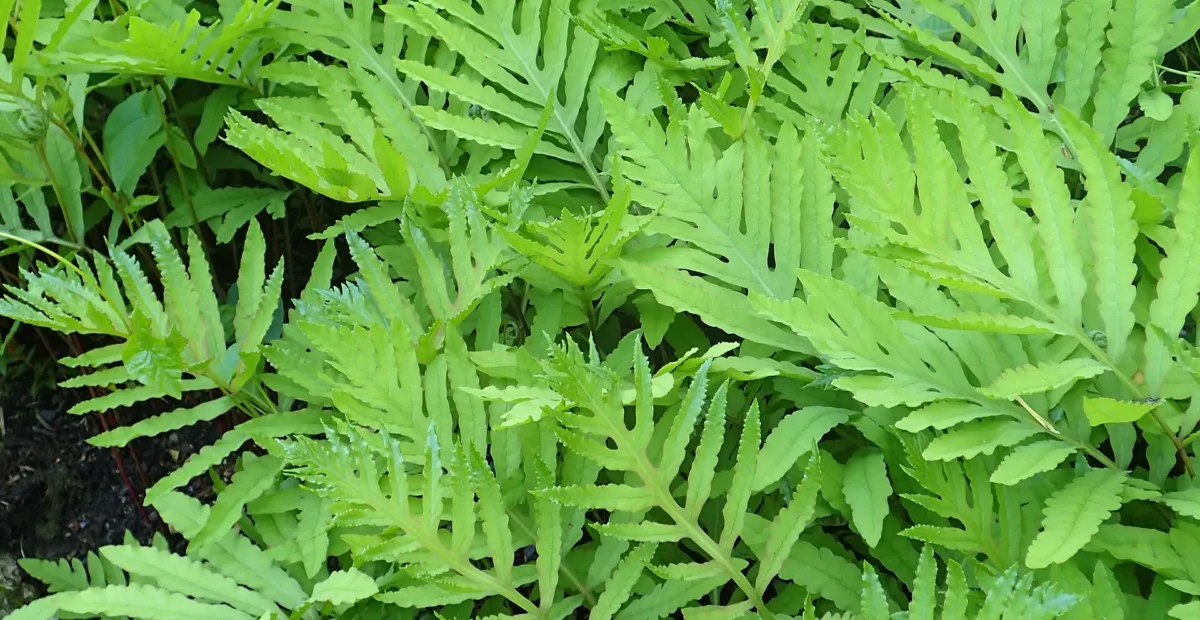
Sterile fronds are broad, upright to arching, pinnately divided, and often triangular or deltoid in outline. The leaflets are relatively broad with wavy margins and conspicuous netted veins. Fertile fronds are shorter, narrower, upright, and brown, with bead-like segments that distinguish the species from many other native ferns.
Pollination and visitors
This fern does not produce flowers or nectar. Reproduction occurs through spores, so animal pollinator attraction is not applicable. The dense colonies can nevertheless provide ground-level cover and habitat structure for small organisms.
Onoclea sensibilis photos
Click any photo for a larger view. Source, author and license are shown separately.
Diseases and pests
Diseases
Generally low disease pressure when grown in suitable conditions. Improve air circulation without exposing plants to drying conditions, remove badly damaged fronds, and avoid prolonged stagnant wetness in containers. Persistent decline is more often associated with drought, heat, frost, or unsuitable exposure than with disease.
Pests
Monitor stressed plants for slugs, snails, and occasional chewing damage. Hand-pick pests, reduce hiding places, and keep weeds from crowding the crown. Avoid broad-spectrum insecticides where the fern is part of a wildlife planting.
Related diseases and pests
Only Plant Doctor profiles whose host data indicate this plant may be affected are shown here.

Toxicity and pollen
No reliable, species-specific authoritative toxicity classification was located in the reviewed horticultural and botanical sources. Do not assume edibility or complete safety from that absence of evidence. Prevent ingestion of unfamiliar plant material, supervise children and pets around garden plants, and seek professional advice after a suspected exposure.
- Pollination / pollen
- Spores, not pollen
Ferns do not produce pollen. Onoclea sensibilis releases spores from fertile fronds instead. Spores are not equivalent to airborne pollen, but sensitive individuals may still wish to avoid inhaling visible spore dust during handling of dry fertile fronds.
Native habitat
Native populations occur in eastern North America and eastern Asia, especially in moist woodlands, wet meadows, low open ground, river shores, wetlands, and woodland edges. It favors rich, moist soils and commonly behaves as a wetland-associated fern.
Interesting fact
The fertile fronds are much shorter and structurally different from the leafy sterile fronds. Their bead-like segments can remain conspicuous through winter. The species name refers to the plant's sensitivity to frost and drought, which can rapidly damage the green fronds.
Frequently asked questions (FAQ)
The most relevant questions about this plant, with short and direct answers.
🌱Quick care
What is he bead fe (Onoclea sensibilis)?⌄
Onoclea sensibilis is a deciduous perennial fern in the Onocleaceae family, commonly grown for its broad green sterile fronds and beadlike fertile fronds. It is best suited to consistently moist, organically rich soil in partial shade or shade.
How much light does Onoclea sensibilis need?⌄
Onoclea sensibilis grows best in partial shade to shade. It can tolerate more sun only when the soil stays reliably moist, while hot, dry exposure can scorch or kill its fronds.
How often should I water Onoclea sensibilis?⌄
Water Onoclea sensibilis whenever the soil surface begins to dry so the root zone remains consistently moist. Do not allow newly planted ferns to experience drought, especially during hot weather.
Is Onoclea sensibilis easy to grow?⌄
Yes, Onoclea sensibilis is generally easy to grow when given shade, moisture, and organic-rich soil. Its main challenges are drought, drying wind, and uncontrolled spreading in favorable wet conditions.
🌤️Environment and placement
Where should I plant Onoclea sensibilis?⌄
Plant Onoclea sensibilis in a shaded or partly shaded spot with rich, moist loam or clay amended with organic matter. Rain gardens, woodland edges, streamside beds, and damp naturalized areas are especially suitable.
Can Onoclea sensibilis grow in full shade?⌄
Yes, Onoclea sensibilis tolerates full shade and can remain vigorous there if the soil stays moist. Growth may be more open or slower than in bright filtered shade.
Can Onoclea sensibilis grow in full sun?⌄
Onoclea sensibilis can tolerate full sun in some situations, but only when moisture is consistently available. In ordinary garden soil, full sun increases the risk of drought stress and damaged fronds.
Does Onoclea sensibilis tolerate wet soil?⌄
Yes, Onoclea sensibilis tolerates very moist to wet soil, provided the site is not stagnant or permanently oxygen-deprived. Improve drainage if water remains motionless around the crown for long periods.
What soil is best for Onoclea sensibilis?⌄
The best soil for Onoclea sensibilis is rich, moisture-retentive loam or clay containing plenty of organic matter. Avoid sharply drying, sandy soil unless it is heavily amended and irrigated.
What USDA zones can grow Onoclea sensibilis?⌄
Onoclea sensibilis is broadly cold hardy across much of the United States, with references listing USDA Hardiness Zones 2 through 10. Local moisture and summer heat are often more limiting than winter cold.
💧Care and problems
Why is my Onoclea sensibilis turning brown after frost?⌄
Onoclea sensibilis has frost-sensitive sterile fronds that can turn brown and collapse soon after the first frost. This seasonal dieback is normal, while the darker fertile fronds may remain upright through winter.
Why are the fronds of Onoclea sensibilis wilting?⌄
Wilting usually indicates insufficient moisture, excessive sun, drying wind, or root disturbance. Move or shade the plant if needed and keep the soil consistently moist while it recovers.
Does Onoclea sensibilis need fertilizer?⌄
Onoclea sensibilis usually needs little fertilizer when planted in rich soil containing organic matter. A light spring application of a balanced, slow-release fertilizer is sufficient if growth is weak.
What pests or diseases affect Onoclea sensibilis?⌄
Onoclea sensibilis has relatively few serious garden pest problems and is considered resistant to deer browsing. Poor growth is more often caused by drought, unsuitable light, stagnant water, or competition from surrounding plants.
Is Onoclea sensibilis invasive or aggressive?⌄
Onoclea sensibilis can spread aggressively by creeping rhizomes when moisture and growing conditions are favorable. Give it room, install a root barrier, or divide expanding clumps to keep it from overtaking smaller plants.
🪴Planting and repotting
When is the best time to plant Onoclea sensibilis?⌄
Plant Onoclea sensibilis in spring or early fall when temperatures are moderate and soil moisture is dependable. Water thoroughly after planting and maintain even moisture while the rhizomes establish.
How far apart should I plant Onoclea sensibilis?⌄
Space Onoclea sensibilis about 2 to 3 feet apart for a naturalized planting, allowing room for its creeping rhizomes to expand. Use closer spacing only when establishing a quicker groundcover effect.
Can Onoclea sensibilis grow in clay soil?⌄
Yes, Onoclea sensibilis can grow well in moist clay soil, especially when it contains organic matter. Avoid compacted clay that stays stagnant, and improve structure with compost rather than creating a sharply drained pocket.
✂️Propagation and pruning
How do you propagate Onoclea sensibilis?⌄
The easiest way to propagate Onoclea sensibilis is by dividing its creeping rhizomes in spring or early fall. It can also be grown from spores, but spore propagation is slower and more specialized.
Can Onoclea sensibilis be grown from spores?⌄
Yes, Onoclea sensibilis can be grown from spores collected from its mature beadlike fertile fronds. Spore propagation requires consistently moist, sterile conditions and is less practical than rhizome division for most gardeners.
When should I divide Onoclea sensibilis?⌄
Divide Onoclea sensibilis in early spring or fall when temperatures are mild and the soil is moist. Separate sections of healthy creeping rhizome with attached roots and replant them immediately.
Should I cut back Onoclea sensibilis in fall?⌄
You may cut back collapsed sterile fronds in late fall or early spring, but leaving the upright fertile fronds provides winter structure and allows spores to mature. Remove damaged foliage before new growth begins if a tidier appearance is preferred.
⚠️Toxicity and safety
Is Onoclea sensibilis toxic to people?⌄
The human toxicity of Onoclea sensibilis is not sufficiently classified by species-specific evidence, so it should not be eaten. Keep plant material away from children and consult a poison-control or medical professional after ingestion.
Is Onoclea sensibilis safe for horses and livestock?⌄
Onoclea sensibilis should be kept away from horses and livestock because it has been reported as toxic when eaten, particularly in substantial amounts. Do not use it in pastures or areas where animals can freely browse.
Is Onoclea sensibilis deer resistant?⌄
Yes, Onoclea sensibilis is generally considered resistant to deer browsing. Deer resistance is not absolute, especially when other food is scarce or young plants are newly installed.
🌸Flowering and special interest
Does Onoclea sensibilis produce flowers?⌄
No, Onoclea sensibilis does not produce flowers because it is a fern. It reproduces with spores formed on separate, shorter fertile fronds.
What are the brown beadlike stalks on Onoclea sensibilis?⌄
The brown beadlike stalks are fertile fronds that contain the plant’s spore-producing structures. They are shorter and more rigid than the green sterile fronds and can persist through winter.
When does Onoclea sensibilis release spores?⌄
Onoclea sensibilis typically forms fertile fronds in summer and fall, while the beadlike structures may retain spores through winter and release them the following spring. Timing varies somewhat with region and weather.
Similar plants
 Azure Monkshood (Aconitum carmichaelii) care guideAconitum carmichaelii
 Monkshood (Aconitum ‘Stainless Steel’)Aconitum 'Stainless Steel'
 Monkshood (Aconitum ‘Bressingham Spire’)Aconitum 'Bressingham Spire'
 Golden full moon maple (Acer shirasawanum ‘Aureum’)Acer shirasawanum 'Aureum'
 Globosum (Acer platanoides ‘Globosum’)Acer platanoides 'Globosum'
 Striped maple (Acer pensylvanicum) care guideAcer pensylvanicum