
 Source:
 Mas (Dryopteris filix ‘Mas’) short overview
Dryopteris filix 'Mas' is an editor-supplied horticultural identity within the male-fern complex, but reliable sources do not provide a clearly separate cultivar description. The safest growing guidance therefore follows well-documented Dryopteris filix-mas behavior: a robust, deciduous woodland fern with upright, finely divided green fronds. Give it filtered light to shade, evenly moist humus-rich soil, shelter from drying winds, and room to form a substantial clump.
Taxonomic classification
Mas (Dryopteris filix ‘Mas’) care guide
Light and placement
Best in bright filtered light, dappled shade, or full shade. An east-facing or north-facing bed, woodland edge, or position under an open canopy is suitable. Morning sun can be tolerated where soil stays moist, but hot afternoon sun and drying wind may scorch fronds. Pale, bleached, or crispy fronds suggest excessive light or drought; weak, widely spaced growth may indicate very dark conditions.
Watering and humidity
Water deeply when the upper inch of soil begins to dry, then maintain steady moisture rather than alternating drought and saturation. Increase frequency during hot weather and the first growing season; reduce only when rainfall is reliable or growth has slowed in cool weather. Mulch with leaf mold or compost, keeping it off the crown. Good drainage remains essential.
Soil and growing medium
Use a moisture-retentive but free-draining soil rich in leaf mold, compost, or other organic matter. Loam and clay can work if drainage is improved. The species tolerates acid through neutral and somewhat alkaline conditions, but avoid chronically waterlogged soil around the crown.
Feeding
Top-dress with compost or leaf mold in spring. If growth is weak, apply a balanced, slow-release fertilizer at label rate as fronds begin expanding. Avoid heavy feeding, fresh manure, and fertilizer applied to dry soil, since excessive salts or lush soft growth can damage roots and fronds.
Growth and habit
Forms an upright, crown-centered clump of arching to erect fronds. Established plants are generally low maintenance, but the crown should not be buried or allowed to dry repeatedly. Shelter from strong wind helps preserve frond quality, and old fronds can be cleared as new growth emerges.
Planting and repotting
Plant in spring or fall while temperatures are moderate. Set the crown at soil level rather than burying it. Allow about 3 feet between plants for the species’ usual mature spread, adjusting only when a dense mass planting is intended. Water consistently during the first growing season until new growth is established.
Repot or transplant in early spring, before vigorous frond expansion, when the crown is easiest to handle. Use a container only slightly larger than the root mass and a moisture-retentive, organic fern mix with reliable drainage. Keep the crown at its original level and water thoroughly after moving.
Propagation and pruning
Propagation
Division is the most practical method for maintaining a named garden selection. Divide established crowns in early spring or early fall, ensuring each section has healthy roots and growing points. Spores can also be sown on a sterile, consistently moist surface, but fern spore propagation is slower and may not reproduce a selected cultivar true to type.
Pruning
Cut old, brown, or wind-damaged fronds to the crown in late winter or early spring before new croziers unfurl. Avoid cutting healthy green fronds during the growing season, because they contribute to crown energy reserves.
Overwintering
In USDA Zones 4–6, leave healthy fronds in place through winter where they help shelter the crown, then remove them before spring growth. A loose mulch of leaves can moderate freeze-thaw cycles, but do not bury the crown deeply. In containers, protect the root ball from prolonged freezing and drying rather than bringing the plant into a warm indoor room.
Uses
Use as a structural foliage plant in shaded borders, woodland gardens, naturalized plantings, under shrubs, and cool fern collections. It is also suitable for shaded containers when evenly watered. Do not present it as an edible or medicinal plant; ingestion precautions are appropriate.
Appearance
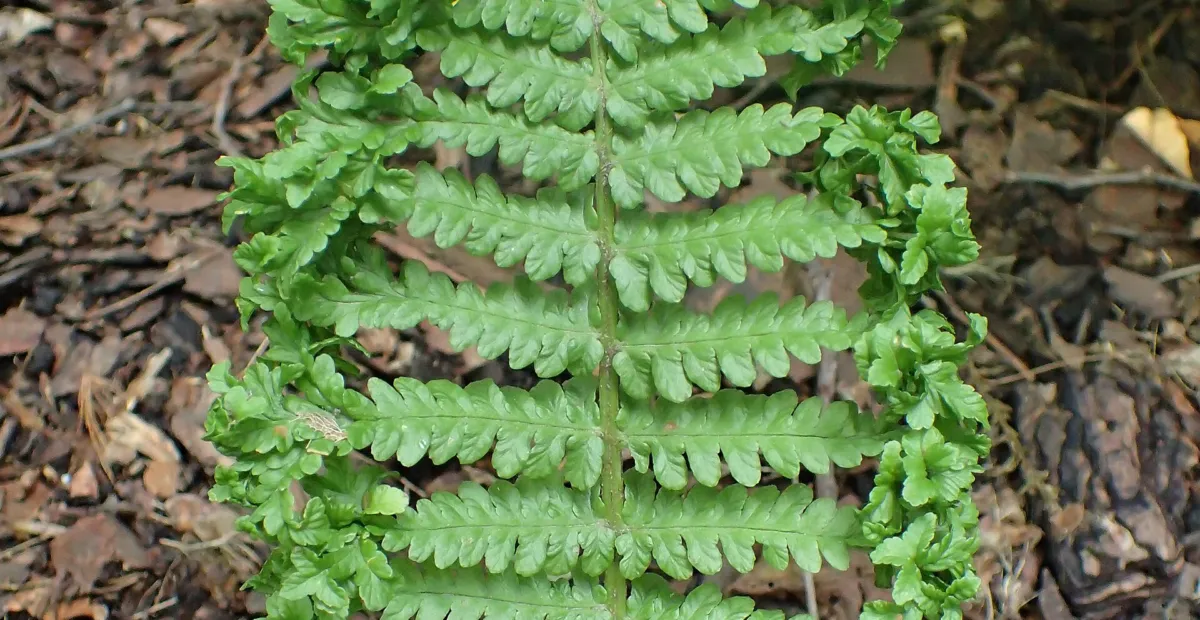
The documented species has stiff, lance-shaped, bipinnate to bipinnate-pinnatifid fronds arranged in an upright shuttlecock-like crown. Stipes and rhizomes are covered with conspicuous brown scales. The dull-green foliage may turn coppery before dying back. Because 'Mas' lacks a reliable cultivar description, distinctive deviations from the species cannot be confirmed.
Pollination and visitors
No flowers are produced, and no dependable animal pollinator or floral-visitor association was found. Reproduction is by spores, not animal-mediated pollination.
Dryopteris filix 'Mas' photos
Click any photo for a larger view. Source, author and license are shown separately.
Diseases and pests
Diseases
Generally trouble-free when grown in suitable shade and moisture. Watch for crown or root problems in persistently waterlogged soil and remove badly damaged fronds. Improve air circulation, avoid overhead irrigation late in the day, and keep fallen debris from smothering the crown.
Pests
Slugs and snails may nibble emerging fronds, especially in damp gardens. Inspect new growth, reduce hiding places, and use proportionate controls where needed. Scale or other occasional pests are best managed by improving plant vigor and removing heavily affected fronds; serious pest pressure is not characteristic.
Related diseases and pests
Only Plant Doctor profiles whose host data indicate this plant may be affected are shown here.

Toxicity and pollen
The exact 'Mas' identity has not been independently evaluated in the sources located. Dryopteris filix-mas has a documented history of toxic compounds in its rhizome and should not be eaten or used medicinally without qualified professional guidance. Keep plant material away from children and pets, avoid ingestion, and seek poison or veterinary advice after suspected consumption.
- Pollination / pollen
- Airborne fern spores, not pollen
Ferns do not produce pollen. This plant releases spores from fertile fronds, generally in late summer and fall. Fern spores can be airborne, and sensitive individuals may experience respiratory or skin reactions, although cultivar-specific allergy evidence for 'Mas' is unavailable.
Native habitat
The species is associated with temperate Northern Hemisphere woodland, forest margins, rocky slopes, and other cool, mesic habitats. It commonly grows in humus-rich soils with dependable moisture and can tolerate substantial shade. North American populations occur in several regions, but local status varies.
Interesting fact
The epithet filix-mas means “male fern” and reflects an old comparison with lady fern. Ferns reproduce with spores rather than seeds or flowers. Mature fertile fronds can release large quantities of spores in late summer and fall. The species can hybridize with related Dryopteris ferns, complicating identification.
Frequently asked questions (FAQ)
The most relevant questions about this plant, with short and direct answers.
🌱Quick care
What is Dryopteris filix 'Mas'?⌄
Dryopteris filix 'Mas' is a hardy deciduous wood fern grown for its upright, finely divided green fronds. The supplied name appears to represent the male-fern group associated with Dryopteris filix-mas, rather than a widely documented separate cultivar.
How much light does Dryopteris filix 'Mas' need?⌄
Give it filtered light, dappled shade, or full shade. It can tolerate brighter conditions only when the soil stays consistently moist and the plant is protected from harsh afternoon sun.
How often should I water Dryopteris filix 'Mas'?⌄
Water when the soil surface begins to dry, keeping the root zone evenly moist but not waterlogged. Increase watering during hot, dry weather and while newly planted plants are establishing.
Is Dryopteris filix 'Mas' hardy outdoors?⌄
Yes, Dryopteris filix 'Mas' is a cold-hardy outdoor fern in suitable climates. Winter survival depends on the local climate, drainage, snow cover, and protection from drying winds.
🌤️Environment and placement
Where should I plant Dryopteris filix 'Mas'?⌄
Plant it in a shaded or woodland-style location with moisture-retentive, humus-rich, well-drained soil. A site beneath trees or alongside other shade plants works well if it does not become persistently soggy.
Can Dryopteris filix 'Mas' grow in deep shade?⌄
Yes, it can grow in deep shade, although growth may be slower and the fronds may be less full. Filtered or dappled shade generally provides a stronger display.
Can Dryopteris filix 'Mas' tolerate morning sun?⌄
Yes, morning sun is usually acceptable if the soil remains evenly moist. Avoid intense afternoon sun, which can scorch or dehydrate the fronds.
Does Dryopteris filix 'Mas' need protection from wind?⌄
Yes, shelter it from strong and drying winds when possible. Wind can tear the fronds and cause moisture loss, especially in exposed gardens.
What soil is best for Dryopteris filix 'Mas'?⌄
Use moisture-retentive, humus-rich, well-drained soil containing compost, leaf mold, or other organic matter. The soil should hold moisture without remaining saturated around the crown.
How much space does Dryopteris filix 'Mas' need?⌄
Allow about 3 feet of space for a mature plant unless a smaller form is confirmed. Extra room improves air circulation and prevents neighboring plants from crowding the crown.
💧Care and problems
Why are the fronds of Dryopteris filix 'Mas' turning brown?⌄
Brown fronds usually indicate drought stress, excessive sun, drying wind, or natural seasonal decline. Check soil moisture first, then move or shade the plant if it receives intense direct sun.
Why is Dryopteris filix 'Mas' wilting even though the soil is wet?⌄
Wilting in wet soil can indicate poor drainage, crown or root damage, or heat stress rather than a lack of water. Improve drainage and inspect the crown for rot before watering again.
Should I fertilize Dryopteris filix 'Mas'?⌄
Usually, a yearly spring mulch of compost or leaf mold is sufficient. Avoid heavy fertilizer, which can damage roots and encourage weak, overly soft growth.
Is Dryopteris filix 'Mas' low maintenance?⌄
Yes, it is generally low maintenance once established in suitable shade and moist soil. Routine care mainly involves watering during dry spells, mulching, and removing old or damaged fronds.
What pests affect Dryopteris filix 'Mas'?⌄
Outdoor plants are generally relatively pest-resistant, though slugs, snails, and occasional chewing insects may damage young fronds. Monitor new growth and use controls appropriate for the affected pest.
🪴Planting and repotting
When is the best time to plant Dryopteris filix 'Mas'?⌄
Plant it in spring or fall when temperatures are mild and the soil is workable. Spring planting gives the fern a full growing season to establish before winter.
How do I plant Dryopteris filix 'Mas' in the garden?⌄
Dig a hole slightly wider than the root ball, set the crown at the same depth it was growing, backfill with humus-rich soil, and water thoroughly. Mulch around—but not directly over—the crown to conserve moisture.
Can Dryopteris filix 'Mas' grow in a container?⌄
Yes, it can grow in a container large enough for its crown and mature spread. Use a moisture-retentive but well-drained potting mix, keep the container shaded, and do not let it dry out completely.
How often should I repot Dryopteris filix 'Mas'?⌄
Repot only when the container is crowded, the root mass has filled the pot, or watering becomes difficult. Move it into a slightly larger container in spring and avoid burying the crown.
✂️Propagation and pruning
How can I propagate Dryopteris filix 'Mas'?⌄
Propagation is possible by division or spores. Division is the more practical method for gardeners because it produces established plants sooner and preserves the parent plant’s characteristics.
When should I divide Dryopteris filix 'Mas'?⌄
Divide it in spring as new growth begins, when the plant can recover quickly. Separate portions with healthy roots and a crown, then replant them immediately in moist soil.
Can Dryopteris filix 'Mas' be grown from spores?⌄
Yes, it can be grown from mature spores, but fern-spore propagation is slow and requires consistently moist, sterile conditions. The resulting plants may take considerable time to reach garden size.
Should I cut back Dryopteris filix 'Mas' in fall?⌄
Remove dead or badly damaged fronds in late fall or early spring, depending on how tidy you want the garden to look. Leaving healthy old fronds over winter can provide some crown protection.
⚠️Toxicity and safety
Is Dryopteris filix 'Mas' poisonous to people?⌄
Yes, it should be treated as potentially harmful if ingested, particularly the rhizomes. Do not eat any part of the plant or use it as an herbal remedy.
Is Dryopteris filix 'Mas' safe around pets?⌄
Because ingestion may be harmful, keep the plant away from pets that chew garden plants. Contact a veterinarian or poison-control service promptly if a pet consumes it.
Can children touch Dryopteris filix 'Mas'?⌄
Touching the fern is not generally the primary concern, but children should be taught not to eat it. Wash hands after handling garden plants and supervise children around the plant.
🌸Flowering and special interest
Does Dryopteris filix 'Mas' produce flowers?⌄
No, Dryopteris filix 'Mas' is a fern and does not produce flowers. It reproduces through spores formed in sori on the undersides of mature fronds.
When does Dryopteris filix 'Mas' produce spores?⌄
Mature fronds may develop sori during the growing season, with spores ripening later in the season. The timing varies with climate and growing conditions.
Why does Dryopteris filix 'Mas' lose its fronds in winter?⌄
The plant is generally deciduous, so older fronds naturally decline as temperatures fall. New fronds emerge from the crown when growth resumes in spring.
Similar plants
 Azure Monkshood (Aconitum carmichaelii) care guideAconitum carmichaelii
 Monkshood (Aconitum ‘Stainless Steel’)Aconitum 'Stainless Steel'
 Monkshood (Aconitum ‘Bressingham Spire’)Aconitum 'Bressingham Spire'
 Golden full moon maple (Acer shirasawanum ‘Aureum’)Acer shirasawanum 'Aureum'
 Globosum (Acer platanoides ‘Globosum’)Acer platanoides 'Globosum'
 Striped maple (Acer pensylvanicum) care guideAcer pensylvanicum