
 Source:
 Adiantum ‘Capillus Veneris’ short overview
Adiantum 'Capillus Veneris' is an exact horticultural identity associated with Adiantum capillus-veneris, a delicate rhizomatous maidenhair fern. It produces finely divided green fronds on polished dark stems and needs consistently moist, humus-rich soil, gentle filtered light, and humid conditions. This shade-loving fern is best grown in a protected garden site or as a houseplant outside reliably mild climates.
Taxonomic classification
Adiantum ‘Capillus Veneris’ care guide
Light and placement
Provide bright filtered light, dappled shade, or deep shade. An east-facing window with gentle morning sun can work indoors; outdoors, place it under open tree canopy or beside a shaded, moist wall. Direct midday or afternoon sun can scorch the fronds, while very dim conditions produce weak, sparse growth. Pale, crispy edges suggest excessive light or dryness; stretched, thin growth suggests insufficient light.
Watering and humidity
Keep the medium evenly and consistently moist, watering thoroughly when the surface just begins to lose its sheen and allowing excess water to drain. Never let the root ball dry completely, but do not leave the pot standing in water. Water more frequently during active growth and heat, less often in cool winter conditions while maintaining moisture. Humidity is important, especially indoors; use a humidifier or group plants rather than relying on constant misting.
Soil and growing medium
Use a moisture-retentive but porous mix rich in organic matter, such as quality potting soil amended with leaf mold, fine compost, or peat-free organic material. The species commonly grows in moist limestone crevices and generally tolerates neutral to alkaline conditions. Drainage must remain good; stagnant, airless soil encourages rhizome decline.
Feeding
Feed during active growth with a balanced, water-soluble houseplant fertilizer diluted to about one-quarter to one-half the label strength every 4–6 weeks. Alternatively, incorporate a small amount of mature compost or worm castings when refreshing the mix. Do not fertilize a drought-stressed, newly divided, recently repotted, or dormant plant; flush the container periodically to limit salt buildup.
Growth and habit
This is a clumping, short-creeping rhizomatous fern that gradually expands by producing fronds from closely spaced growing points. Growth is usually strongest when moisture, humidity, and temperatures are steady. The plant can recover from occasional frond loss if the rhizome remains healthy, but repeated drying commonly causes rapid browning and dieback.
Planting and repotting
Plant outdoors in spring after severe freezes have passed, or establish container plants whenever active growth is beginning. Set the rhizome at the soil surface rather than burying the crown. Space plants about 12 to 24 inches apart, allowing the short creeping rhizomes to expand. Keep the root zone evenly moist while new fronds establish.
Repot only when the container is densely root-filled or the mix has broken down. Move the plant into a slightly larger pot in spring, disturbing the fragile rhizome as little as possible. Use a shallow, well-drained container and water thoroughly after repotting. Avoid frequent unnecessary transplanting, which can cause frond loss.
Propagation and pruning
Propagation
Division is the practical method for cultivated plants. In spring, separate a healthy clump so each division retains part of the creeping rhizome and viable growing points, then pot immediately in moist medium. Spores can also be sown on a sterile, moist surface, but fern spore propagation is slower and requires more controlled humidity and cleanliness.
Pruning
Remove yellow, brown, or collapsed fronds at the base with clean scissors. Cut back damaged foliage after a drying incident only when it is clearly dead; healthy green fronds still support recovery. Do not shear routinely, because the plant has a delicate crown and new growth emerges from the rhizome.
Overwintering
In regions with unreliable winter survival, grow it in a container and move it indoors before frost. Provide bright indirect light, high humidity, and stable temperatures around 60–75°F. Reduce watering slightly in winter but never allow the rhizome to dry. Outdoor plants in mild climates benefit from a sheltered, protected microclimate and a thick organic mulch that does not cover the crown.
Uses
Primarily an ornamental fern for shaded woodland plantings, moist rock crevices, conservatories, terrariums, and indoor containers. It is useful where fine texture and a soft arching habit are desired. Historical medicinal and culinary references exist for the species, but they do not establish safe home use and are not a recommendation for ingestion.
Appearance
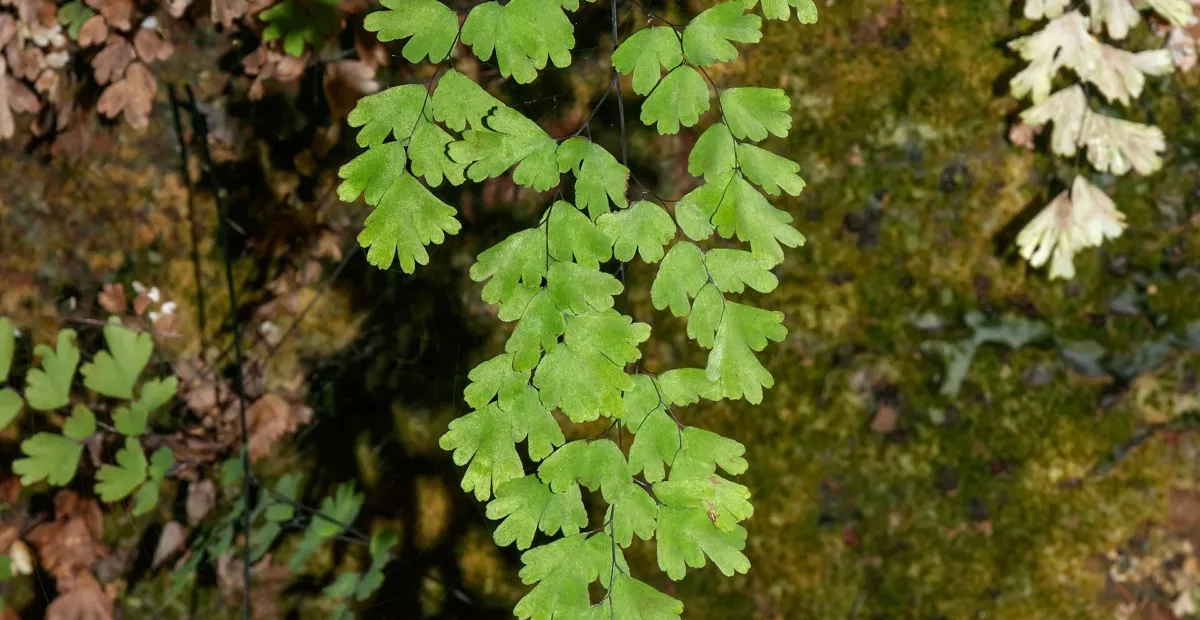
Fronds are finely divided, delicate, and typically bipinnate to tripinnate, with small fan-shaped pinnules that have wedge-shaped bases and irregularly lobed tips. The slender rachises and stipes are polished dark brown to black, creating the characteristic maidenhair contrast. Fronds arch or droop from a compact clump and arise from a short creeping rhizome.
Pollination and visitors
As a fern, this plant does not produce flowers or nectar and is not documented here as an animal-pollinated plant. Its reproductive structures are sori that release spores, so no characteristic bee, butterfly, moth, or other animal visitor group is assigned.
Adiantum 'Capillus Veneris' photos
Click any photo for a larger view. Source, author and license are shown separately.
Diseases and pests
Diseases
The main prevention is avoiding waterlogged soil, poor air movement, and overhead wetting in cool conditions. Watch for crown or rhizome rot when the plant stays saturated, and remove collapsed tissue promptly with sterile tools. Good sanitation and a fresh, porous growing medium are preferable to routine fungicide use.
Pests
Inspect for scale, mealybugs, aphids, and fungus gnats, especially indoors. Remove visible pests manually or with a gentle water spray where practical, and isolate affected plants. Avoid harsh repeated sprays because the delicate fronds scorch easily. Reduce fungus gnat breeding by allowing only the surface to dry slightly while keeping the root zone consistently but not excessively wet.
Related diseases and pests
Only Plant Doctor profiles whose host data indicate this plant may be affected are shown here.
 DiseasePhytophthora cactorum crown, collar, root and fruit rotPhytophthora cactorum
 DiseaseRhizopus soft rotRhizopus stolonifer
 PestMealy Plum AphidHyalopterus pruni (Geoffroy, 1762)
 DiseasePhytophthora root and crown rotPhytophthora nicotianae
 DiseaseRhizoctonia DiseasesRhizoctonia solani Kühn
 Environmental stressWaterlogging
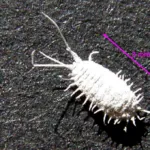 PestObscure mealybugPseudococcus viburni
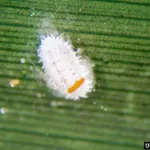 PestCitrus mealybugPlanococcus citri
Toxicity and pollen
No species-specific toxic effect was identified in the authoritative sources checked for this exact identity. Because the quoted cultivar was not independently documented, this should not be treated as a formal guarantee of edibility or pet safety. Prevent pets and children from chewing ornamental plants, and seek professional advice after significant ingestion or any symptoms.
- Pollination / pollen
- Airborne fern spores, not pollen
Ferns do not produce pollen; they reproduce with spores. This plant may release airborne spores when sori mature, but reliable plant-specific clinical allergy-risk data were not found. People with known mold or environmental-spore sensitivity should use ordinary caution when handling mature, dusty fronds or cleaning heavily sporulating plants.
Native habitat
Across its broad native range, the species occupies humid, warm-temperate to tropical habitats, especially moist limestone ledges, spring-fed banks, stream margins, caves, and damp masonry. It favors sheltered sites with dependable atmospheric and root-zone moisture, filtered light, and often mineral-rich or calcareous substrates.
Interesting fact
The genus name refers to foliage that resists wetting, so water can bead on the pinnules. The species is naturally associated with moist limestone rocks, springs, stream margins, and damp wall crevices. Its dark, polished rachises contrast strongly with its finely divided pale-green foliage. Named horticultural forms occur because the species is naturally variable in frond division and size.
Frequently asked questions (FAQ)
The most relevant questions about this plant, with short and direct answers.
🌱Quick care
How do I care for Adiantum 'Capillus Veneris'?⌄
Grow Adiantum 'Capillus Veneris' in bright filtered or shaded light, evenly moist humus-rich soil, and a protected, humid location. Avoid both drying out and waterlogged soil, because its delicate fronds can decline quickly under either stress.
Is Adiantum 'Capillus Veneris' an indoor or outdoor plant?⌄
Adiantum 'Capillus Veneris' can be grown indoors or outdoors, depending on climate and protection. Indoors, provide filtered light and humidity; outdoors, use a sheltered, shady site with reliably moist, well-drained soil.
🌤️Environment and placement
How much light does Adiantum 'Capillus Veneris' need?⌄
It needs bright filtered light to shade. Gentle morning light may be tolerated, but strong direct midday or afternoon sun can scorch the thin fronds.
Where should I place Adiantum 'Capillus Veneris' indoors?⌄
Place it near a bright window with sheer-curtain filtering, such as an east- or north-facing window. Keep it away from heating vents, air-conditioning drafts, and hot direct sunlight.
Does Adiantum 'Capillus Veneris' need high humidity?⌄
Yes, it grows best in moderate to high humidity with stable moisture. A humid room, bathroom with suitable light, plant cabinet, or humidifier can be more reliable than occasional misting.
What temperature is best for Adiantum 'Capillus Veneris'?⌄
Keep it in a mild, stable environment and protect it from cold drafts and freezing temperatures. Outdoor frost tolerance varies by site, so container-grown plants are safer in areas with regular hard freezes.
Can Adiantum 'Capillus Veneris' grow outdoors in the United States?⌄
It can grow outdoors in suitable protected regions of the United States, especially in moist shaded sites. Local winter temperatures, humidity, drainage, and exposure determine whether it remains evergreen, dies back, or needs seasonal protection.
💧Care and problems
How often should I water Adiantum 'Capillus Veneris'?⌄
Water whenever the surface is beginning to dry, keeping the root zone evenly moist but not saturated. Check more frequently during hot, dry weather and reduce watering somewhat during cool periods without allowing the plant to dry completely.
Why is my Adiantum 'Capillus Veneris' turning brown and crispy?⌄
Brown, crispy fronds usually indicate dry soil, low humidity, hot direct sun, or drying air. Move the plant to filtered light, restore even moisture, and improve humidity, but remove fronds that are fully dead.
Why is my Adiantum 'Capillus Veneris' losing its leaves?⌄
Frond loss commonly follows drought, low humidity, temperature stress, or sudden changes in light and location. Correct the growing conditions and check the roots for persistent sogginess before watering again.
Can Adiantum 'Capillus Veneris' recover after drying out?⌄
It may recover if the rhizome and roots remain alive, even when many fronds have collapsed. Reestablish steady moisture, filtered light, and humidity, then wait for new growth rather than keeping the soil constantly waterlogged.
Should I mist Adiantum 'Capillus Veneris'?⌄
Misting is not essential and provides only temporary humidity. Consistent room humidity, a humidifier, or a naturally humid growing area is generally more effective; always maintain good air circulation around wet foliage.
What soil is best for Adiantum 'Capillus Veneris'?⌄
Use a moisture-retentive, humus-rich, well-drained mix that stays evenly damp without becoming compacted. A neutral to alkaline medium is suitable, reflecting the limestone-associated habitats where this species often grows.
Does Adiantum 'Capillus Veneris' need fertilizer?⌄
Feed lightly during active growth with a balanced fertilizer diluted below the label’s full strength. Avoid heavy applications or fertilizing very dry soil, because delicate roots can be damaged by concentrated salts.
🪴Planting and repotting
How do I plant Adiantum 'Capillus Veneris' outdoors?⌄
Plant it in a shaded or filtered-light site with humus-rich, moisture-retentive soil and dependable drainage. Rock crevices, shaded walls, woodland edges, and moist streamside-style locations can work when the crown is not buried.
Can Adiantum 'Capillus Veneris' grow in a pot?⌄
Yes, it grows well in containers when the potting mix remains evenly moist but drains freely. Choose a container with drainage holes and avoid placing the pot where it will heat up or dry rapidly.
When should I repot Adiantum 'Capillus Veneris'?⌄
Repot in early spring or when the mix has broken down, drainage has slowed, or the plant has outgrown its container. Move it into only a slightly larger pot and keep the crown at its original depth.
✂️Propagation and pruning
How do I propagate Adiantum 'Capillus Veneris'?⌄
The most practical home method is division of a mature clump with attached rhizome sections, roots, and growing points. Propagation from spores is also possible but is slower and requires consistently sterile, moist conditions.
Can I grow Adiantum 'Capillus Veneris' from spores?⌄
Yes, it can be grown from spores collected from mature sori on the undersides of fronds. Sow them on the surface of a clean, moist, neutral-to-alkaline medium and maintain high humidity until the tiny plants develop.
How should I prune Adiantum 'Capillus Veneris'?⌄
Remove completely brown, yellow, or damaged fronds at their base with clean scissors. Avoid cutting healthy green fronds unnecessarily, and prune lightly so the plant retains enough foliage to support regrowth.
⚠️Toxicity and safety
Is Adiantum 'Capillus Veneris' toxic to cats or dogs?⌄
No documented toxicity was found for Adiantum 'Capillus Veneris', but cultivar-specific safety evidence is limited. Prevent pets from chewing any ornamental plant and contact a veterinarian if ingestion causes symptoms.
🌸Flowering and special interest
Does Adiantum 'Capillus Veneris' produce flowers?⌄
No, Adiantum 'Capillus Veneris' is a fern and does not produce flowers. It reproduces through spores formed in sori along the undersides or margins of mature fronds.
Similar plants
 Azure Monkshood (Aconitum carmichaelii) care guideAconitum carmichaelii
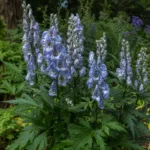 Monkshood (Aconitum ‘Stainless Steel’)Aconitum 'Stainless Steel'
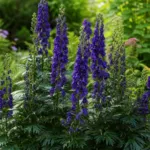 Monkshood (Aconitum ‘Bressingham Spire’)Aconitum 'Bressingham Spire'
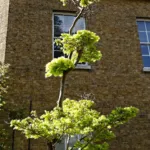 Golden full moon maple (Acer shirasawanum ‘Aureum’)Acer shirasawanum 'Aureum'
 Globosum (Acer platanoides ‘Globosum’)Acer platanoides 'Globosum'
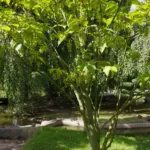 Striped maple (Acer pensylvanicum) care guideAcer pensylvanicum