
 Source:
 Maidenhair spleenwort (Asplenium trichomanes) short overview
Maidenhair spleenwort is a petite rock fern prized for its narrow, finely divided fronds and glossy dark rachises. In the United States it occurs in sheltered cliff crevices, talus, and rocky outcrops, including both limestone and noncalcareous sites. Give it cool, filtered light, dependable moisture, and a sharply drained mineral substrate. It is an excellent choice for shaded rock gardens, stone walls, alpine troughs, and woodland containers.
Taxonomic classification
Maidenhair spleenwort (Asplenium trichomanes) care guide
Light and placement
Provide bright filtered light, partial shade, or shade. An east-facing exposure, north-facing wall, or dappled woodland site is usually safer than direct afternoon sun. Too much light causes bleached or crisp fronds and rapid drying; too little light may produce sparse, weak growth. Shelter from hot reflected heat and drying wind.
Watering and humidity
Keep the root zone consistently but moderately moist. Water deeply when the surface begins to dry, then let excess drain completely; do not leave the pot standing in water. Check more often during hot weather and less often in cool, dormant periods. A humid microclimate helps, but drainage remains essential.
Soil and growing medium
Use a gritty, sharply drained mineral mix containing small stones, coarse sand, and a modest amount of organic matter. The species grows on both acidic and calcareous rock, so the ideal pH is not narrowly fixed; match the substrate to the local form or source population. Avoid dense, waterlogged compost and containers without drainage.
Feeding
Feed sparingly. In spring and during active growth, top-dress with a small amount of finished compost or apply a balanced liquid fertilizer diluted to one-quarter or one-half strength. Do not fertilize dry, newly divided, dormant, or heat-stressed plants, and avoid heavy nitrogen that produces weak, lush growth.
Growth and habit
This small fern forms tufts from a short, often branched creeping stem. Established plants are persistent but not fast-growing, and their narrow fronds suit confined crevices better than open borders. Keep competing roots and vigorous groundcovers away from the crown; maintenance is mainly removal of damaged fronds and protection from drying.
Planting and repotting
Plant in spring or early fall when temperatures are moderate. Set the crown at the soil surface rather than burying it, and wedge the root ball or rhizome securely into a rock crevice so it cannot shift. Allow about 6–12 inches between plants, adjusting for the narrow form and local moisture conditions.
Repot only when the root mass has clearly filled its container or the substrate has compacted. Move it in cool weather, handle the short rhizome gently, and use a shallow pot with a gritty, well-drained mix. Re-establish in bright shade and keep evenly moist while new growth resumes.
Propagation and pruning
Propagation
Propagation is normally from spores, which are collected from mature sori and sown on a sterile, moist surface. Germination and the gametophyte stage require patience and careful moisture control. Established clumps may sometimes be divided when the rhizome branches, but small divisions can be slow to recover.
Pruning
Remove dead, browned, or badly damaged fronds at the base with clean scissors. In evergreen or mild climates, retain healthy fronds through winter; in colder areas, tidy old growth in late winter or early spring before fresh fronds expand. Avoid cutting into the crown or removing healthy fertile fronds unnecessarily.
Overwintering
In the ground, protect the crown from repeated freeze-thaw exposure and drying winter wind with a light mulch of leaf mold or fine bark, keeping the crown uncovered. Container plants are more vulnerable: place them in an unheated sheltered area or sink the pot into the ground and monitor moisture during thaws.
Uses
Use this fern in shaded rock gardens, alpine troughs, limestone walls, crevice plantings, and small woodland containers. Its compact scale and dark glossy rachises provide texture where larger ferns are unsuitable. No culinary or medicinal use is recommended here because reliable safety and efficacy support for this exact taxon was not established.
Appearance
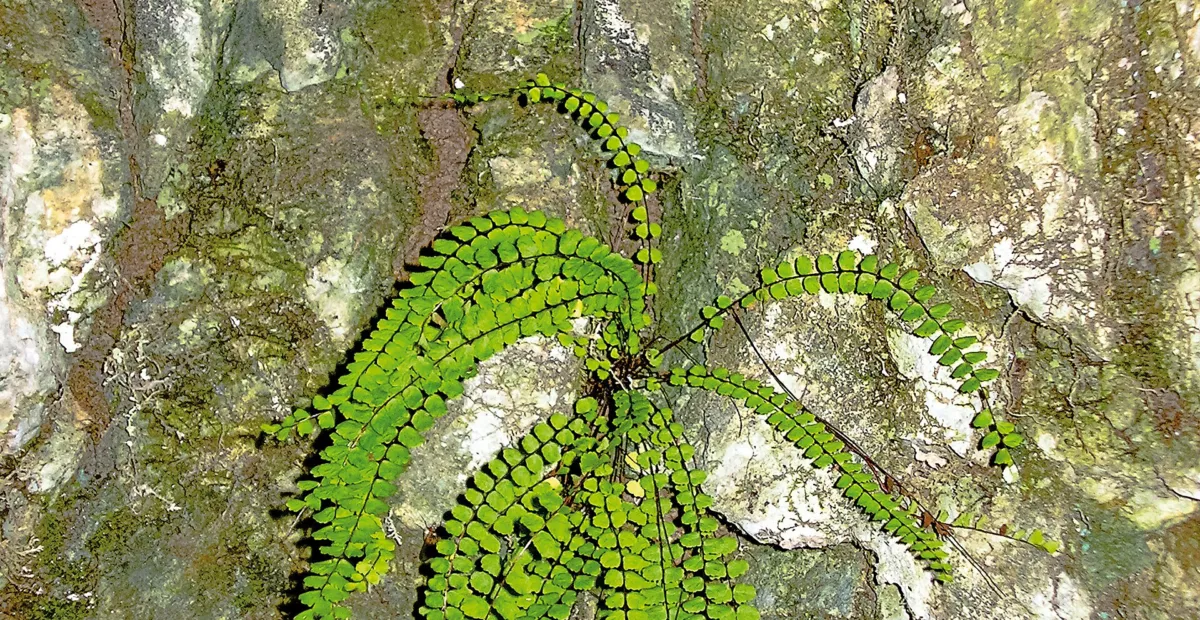
Fronds are narrow, linear, and once-pinnate, with roughly 15–35 pairs of small oblong to oval pinnae. The rachis and petiole are characteristically shiny reddish brown to nearly black. Fertile fronds bear elongated sori in several pairs on the undersides of the pinnae, while the fronds remain similar in overall form.
Pollination and visitors
This is a fern and does not produce flowers or nectar. Reproduction occurs through spores rather than animal pollination, so it should not be marketed as a pollinator plant.
Asplenium trichomanes photos
Click any photo for a larger view. Source, author and license are shown separately.
Diseases and pests
Diseases
The main risks are crown or rhizome rot in stagnant, saturated media and occasional fungal spotting under persistently wet, poorly ventilated conditions. Use clean containers, avoid overhead watering, provide drainage, and remove badly damaged fronds. Do not use broad-spectrum fungicides unless a diagnosis supports them.
Pests
Scale insects, aphids, and slugs may occasionally affect container-grown plants, especially when stressed or kept in dense humid conditions. Inspect fronds and crown regularly, improve airflow, remove slugs by hand or with habitat-based controls, and isolate infested containers. Avoid harsh sprays on delicate fronds.
Related diseases and pests
Only Plant Doctor profiles whose host data indicate this plant may be affected are shown here.


Toxicity and pollen
No reliable, species-specific evidence establishing clinically important toxicity to people or pets was located in the reviewed botanical sources. Because fern identification and exposure reports can be confused with other plants, prevent ingestion of ornamental material and contact a medical or veterinary professional if symptoms follow consumption.
- Pollination / pollen
- Airborne spores, not pollen
Ferns do not produce pollen; they release spores from sporangia on the undersides of fertile fronds. Airborne fern spores can occur seasonally, but species-specific clinical allergy risk for Asplenium trichomanes is not well established. Sensitive people should avoid handling dry, heavily sporing fronds if they notice respiratory irritation.
Native habitat
Across its broad range, the species occupies moist cliff crevices, talus, rock outcrops, and protected cracks. North American populations occur on both noncalcareous acidic rocks and limestone or dolomite. Shade, cool rock surfaces, and reliable moisture are more important than deep soil, while exposed hot sites and stagnant wetness are unfavorable.
Interesting fact
The species is a taxonomic complex containing diploid and tetraploid cytotypes in North America. Its fronds have a distinctive lustrous reddish-brown to black rachis. It can grow on both acidic rocks such as sandstone and granite and calcareous rocks such as limestone and dolomite. Sori occur in several pairs on each pinna.
Frequently asked questions (FAQ)
The most relevant questions about this plant, with short and direct answers.
🌱Quick care
What is maidenhair spleenwort?⌄
Maidenhair spleenwort is a small, evergreen fern known scientifically as Asplenium trichomanes. It forms compact rosettes of delicate green pinnae on wiry dark stems and usually grows in shaded rock crevices.
Is Asplenium trichomanes a true maidenhair fern?⌄
No, Asplenium trichomanes is not a true maidenhair fern in the genus Adiantum. It is a spleenwort fern whose common name refers to its fine, delicate appearance.
How big does maidenhair spleenwort get?⌄
Maidenhair spleenwort usually stays about 3 to 7 inches tall and wide. Its compact size makes it suitable for rock gardens, shaded walls, troughs, and small containers.
🌤️Environment and placement
How much light does maidenhair spleenwort need?⌄
Maidenhair spleenwort grows best in filtered light, dappled shade, or deep shade. Protect it from intense afternoon sun, which can scorch or dry its small fronds.
Can maidenhair spleenwort grow in full shade?⌄
Yes, maidenhair spleenwort tolerates full shade, especially where the site remains cool and evenly moist. Some filtered light can support stronger growth, but direct midday sun is usually unsuitable.
Where should I plant Asplenium trichomanes outdoors?⌄
Plant Asplenium trichomanes in a cool, shaded rock garden, rock wall, shaded crevice, or woodland-style bed. A sheltered site protected from drying winter and early-spring winds is especially useful.
Can maidenhair spleenwort grow between rocks?⌄
Yes, growing between rocks is one of the best ways to imitate its natural habitat. Use a narrow pocket containing gritty, humus-rich material that drains well but does not dry out quickly.
What USDA zones can grow maidenhair spleenwort?⌄
Maidenhair spleenwort is broadly cold-hardy and can grow across much of the United States, with reported suitability from approximately USDA Zones 3 through 9. Local performance depends on moisture, shelter, and the plant’s particular form.
Does maidenhair spleenwort prefer acidic or alkaline soil?⌄
The preferred soil reaction varies among forms and populations, so maidenhair spleenwort can grow in acidic, neutral, or alkaline conditions. Good drainage, consistent moisture, and a rocky, humus-rich structure are more important than targeting one exact pH.
💧Care and problems
How often should I water maidenhair spleenwort?⌄
Water maidenhair spleenwort whenever the growing medium begins to dry, keeping it evenly moist but never waterlogged. Check containers more often during hot or dry weather because small root zones can dry quickly.
Can maidenhair spleenwort dry out between waterings?⌄
Maidenhair spleenwort should not be allowed to become thoroughly dry for extended periods. Brief surface drying may be tolerated in a well-established plant, but repeated drought stress can cause fronds to brown and decline.
Why are my maidenhair spleenwort fronds turning brown?⌄
Brown fronds usually indicate drying, low humidity, excessive sun, transplant stress, or damaged older growth. Check the root zone first, improve moisture consistency and shade, and remove only fronds that are fully dead.
Why is my Asplenium trichomanes losing leaves?⌄
Leaf loss commonly follows drought, heat, sudden environmental change, or waterlogged roots. Keep the plant cool, shaded, and evenly moist with good drainage; healthy rhizomes may produce new fronds after conditions improve.
Does maidenhair spleenwort need high humidity?⌄
Maidenhair spleenwort benefits from naturally humid conditions, particularly indoors or in dry climates. Consistent root moisture, shade, and good air circulation are generally more important than misting the fronds.
Does maidenhair spleenwort need fertilizer?⌄
Maidenhair spleenwort usually needs little fertilizer when grown in a humus-rich, well-drained medium. If growth is weak, use a very dilute balanced fertilizer during active growth, because excessive feeding can damage its shallow roots.
Is maidenhair spleenwort difficult to grow?⌄
Maidenhair spleenwort is hardy once established but can be difficult to establish in ordinary garden soil. It performs best when its natural conditions—cool shade, steady moisture, excellent drainage, and a rocky crevice—are closely reproduced.
What pests affect maidenhair spleenwort?⌄
Maidenhair spleenwort generally has few serious pest problems. Slugs and snails may chew fronds in damp outdoor settings, while indoor plants can occasionally experience common moisture-related pest or disease issues.
🪴Planting and repotting
What soil is best for maidenhair spleenwort?⌄
Use a gritty, rocky, well-drained medium enriched with leaf mold, compost, or other humus. The soil should hold moisture without becoming dense or saturated, because the plant naturally grows in narrow rock pockets.
Can maidenhair spleenwort grow in a container?⌄
Yes, maidenhair spleenwort grows well in a small container with drainage holes and a gritty, moisture-retentive mix. Place the container in filtered light or shade and monitor it closely because containers dry faster than ground plantings.
How do I plant maidenhair spleenwort in a rock wall?⌄
Set the rhizome into a cool, shaded crevice filled with a small amount of gritty humus-rich material, keeping the crown at or just above the surface. Water gently during establishment and prevent the pocket from drying completely.
When is the best time to plant maidenhair spleenwort?⌄
Plant maidenhair spleenwort during a cool, mild period, such as spring or fall, when the soil can remain evenly moist. Avoid planting during heat waves, severe drought, or periods of hard freezing.
Does maidenhair spleenwort need repotting?⌄
Repot maidenhair spleenwort only when its container is crowded, the medium has broken down, or drainage has declined. Move it into a slightly larger pot and disturb the compact rhizome and roots as little as possible.
✂️Propagation and pruning
How do you propagate maidenhair spleenwort?⌄
Maidenhair spleenwort can be propagated by spores or by dividing established rhizomes. Division is generally the more practical method for gardeners, while spore propagation requires sterile conditions, steady moisture, and patience.
Can maidenhair spleenwort be propagated from spores?⌄
Yes, maidenhair spleenwort reproduces naturally by spores produced in sori on fertile fronds. Spore propagation is possible, but it is slower and more technically demanding than dividing a healthy established plant.
Can I divide maidenhair spleenwort?⌄
Yes, divide maidenhair spleenwort when an established plant has multiple rhizome sections with roots and growing points. Replant divisions immediately in a moist, gritty medium and protect them from drying while they recover.
Should I prune maidenhair spleenwort?⌄
Routine pruning is not necessary for maidenhair spleenwort. Remove individual brown or damaged fronds at the base with clean scissors, while avoiding injury to emerging curled fronds and the central crown.
⚠️Toxicity and safety
Is maidenhair spleenwort toxic to dogs or cats?⌄
No species-specific toxicity classification is established for Asplenium trichomanes. Because fern identification can be mistaken and individual animals may react differently, prevent pets from chewing unknown plants and contact a veterinarian if symptoms occur.
🌸Flowering and special interest
Does maidenhair spleenwort produce flowers?⌄
No, maidenhair spleenwort does not produce flowers or fruits. Like other ferns, it reproduces through spores, which develop in sori on the undersides of fertile fronds.
What are the brown spots under maidenhair spleenwort fronds?⌄
The brown spots are sori, which are groups of spore-producing structures typical of ferns. They are a normal reproductive feature and are not usually a sign of disease.
Similar plants
 Azure Monkshood (Aconitum carmichaelii) care guideAconitum carmichaelii
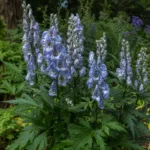 Monkshood (Aconitum ‘Stainless Steel’)Aconitum 'Stainless Steel'
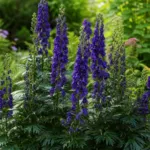 Monkshood (Aconitum ‘Bressingham Spire’)Aconitum 'Bressingham Spire'
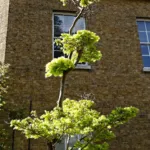 Golden full moon maple (Acer shirasawanum ‘Aureum’)Acer shirasawanum 'Aureum'
 Globosum (Acer platanoides ‘Globosum’)Acer platanoides 'Globosum'
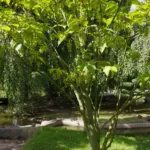 Striped maple (Acer pensylvanicum) care guideAcer pensylvanicum