
 Source:
Helenium ‘Moerheim Beauty’ short overview
Helenium ‘Moerheim Beauty’ is a historic hybrid sneezeweed valued for its rich copper-red to orange-red flower heads and velvety dark centers. This upright, clump-forming perennial blooms from late summer into fall and performs best in full sun with fertile, consistently moist soil. Use it in borders, rain gardens, meadow-style plantings, pond edges, or as a long-lasting cut flower, while allowing room for its spreading habit and providing support if needed.
Taxonomic classification
Helenium ‘Moerheim Beauty’ care guide
Light and placement
Give full sun, ideally at least 6 hours of direct light, with open exposure and good air movement. Morning through afternoon sun supports sturdy stems and heavier flowering. Too little light produces weaker, taller growth and fewer flowers; excessive heat is usually manageable if the soil stays evenly moist. In very hot regions, some afternoon protection can reduce stress without placing the plant in deep shade.
Watering and humidity
Water deeply when the upper soil begins to dry, keeping the root zone consistently moist through active growth and flowering. Increase irrigation during hot, windy weather and reduce it after leaf dieback, while still preventing prolonged drought. Water at the base rather than wetting foliage repeatedly. Moisture is especially important in sandy soils and newly planted divisions.
Soil and growing medium
Plant in fertile loam or clay-loam that retains moisture without remaining stagnant around the crown. A humus-rich soil is helpful, especially in warmer or drier sites. Good drainage is important in winter, because persistent cold wetness can damage the roots. A near-neutral to slightly acidic soil is suitable; avoid deliberately liming unless a soil test indicates a need.
Feeding
Work compost into the planting area before planting, then apply a balanced slow-release perennial fertilizer in spring only if growth is weak or soil fertility is low. Avoid heavy nitrogen feeding and repeated high-strength fertilization, which can produce excessive, floppy growth and fewer sturdy flowering stems. Do not fertilize drought-stressed or waterlogged plants.
Growth and habit
The plant forms an upright, branching clump of rigid stems and can become more floriferous when given steady moisture and adequate spacing. It usually stands better than many tall heleniums, but exposed sites or rich soil may still call for support. Early-summer tip pruning can create shorter, more branched plants, although timing and cultivar response affect the result.
Planting and repotting
Plant nursery divisions or containers in spring or early fall, setting the crown at the same level as in its original pot. Space plants about 18–24 inches apart for a full clump while allowing airflow. Water deeply during establishment and mulch lightly, keeping mulch away from the crown. Spring planting is preferable in colder regions or where winter drainage is poor.
Container-grown plants can be moved into a larger pot when roots fill the current container, preferably in spring. Use a moisture-retentive but well-drained potting mix and choose a heavy container to reduce wind rocking. This perennial is generally best planted in the ground, where roots stay cooler and moisture is more stable.
Propagation and pruning
Propagation
Division is the most dependable method and is best done in spring or early fall when the clump is actively growing but not flowering heavily. Divide congested plants every three to four years, retaining vigorous crowns with healthy roots. Seed may be possible, but seedlings will not reliably reproduce the named cultivar.
Pruning
Remove spent flower heads to tidy the plant and potentially encourage additional flowering. Cut stems back after flowering or in late winter before new growth begins. If a shorter, sturdier plant is desired, lightly shorten shoots in early summer, but late or severe cutting can reduce flowering and delay recovery.
Overwintering
Leave the dormant stems standing through winter if they provide shelter and visual structure, then cut them back before spring growth. In cold regions, a light mulch can buffer freeze-thaw cycles, but keep the crown from staying saturated. The main winter risk is often wet soil and poor drainage rather than cold alone.
Uses
Use in sunny mixed borders, prairie or meadow plantings, rain gardens, pond margins, naturalized areas, and cutting gardens. The rigid stems and warm flower colors combine well with ornamental grasses and other late-season perennials. It is not recommended for culinary or medicinal use, and historical folk uses should not be treated as medical advice.
Appearance
The cultivar has dark green, alternate, lance-shaped leaves on rigid green stems that may show winged edges. Its upright clumps carry branching, flat-topped flower clusters. The most distinctive identification feature is the contrast between copper-red rays and a prominent velvety dark brown-red, dome-shaped center. Foliage is herbaceous and dies back after the growing season.
Flowering
The flower heads are composed of ray florets surrounding a prominent rounded disk of tiny central florets. ‘Moerheim Beauty’ is an early-to-midseason helenium in some trials, while other US references place its strongest display from August into October. Individual rays may deepen or fade toward burnt orange as the flower ages. Deadheading can extend the display, but spent heads may also provide late-season structure.
Pollination and visitors
Helenium flower heads provide nectar and pollen for a range of late-season flower visitors. Reliable references document butterflies and broader insect-pollinator activity for Helenium, while garden observations and trial guidance also identify bees and hoverflies as visitors. No single pollinator species is sufficiently documented here for a cultivar-specific Latin name.
Helenium 'Moerheim Beauty' photos
Click any photo for a larger view. Source, author and license are shown separately.
Diseases and pests
Diseases
Powdery mildew, leaf spot, rust, and occasional fungal or environmental leaf disorders can occur, especially where foliage stays crowded or wet. Give plants full sun and adequate spacing, water at the soil line, and remove badly affected foliage. Avoid overhead irrigation late in the day. Improve air circulation rather than relying on routine fungicide applications.
Pests
Watch for aphids, slugs, caterpillars, and spittlebugs. Remove pests by hand or use targeted, least-disruptive controls when needed. Avoid broad-spectrum insecticides during bloom because the flower heads attract visiting insects. Clean up heavily infested or diseased foliage and maintain spacing to reduce sheltered, humid conditions.
Related diseases and pests
Only Plant Doctor profiles whose host data indicate this plant may be affected are shown here.
 DiseaseMaple powdery mildewSawadaea bicornis
 DiseaseCucurbit Powdery MildewPodosphaera xanthii (Castagne) U. Braun & Shishkoff
 DiseaseRose powdery mildewPodosphaera pannosa
 DiseaseApple Powdery MildewPodosphaera leucotricha
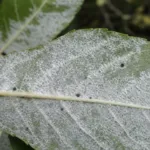 DiseaseAsh Powdery MildewPhyllactinia fraxini (DC.) Fuss
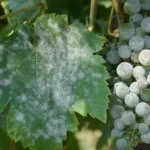 DiseaseGrape Powdery MildewErysiphe necator Schwein. (synonym: Uncinula necator)
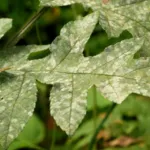 DiseaseApiaceae Powdery MildewErysiphe heraclei
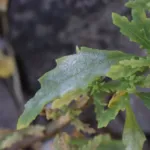 DiseaseBeet powdery mildewErysiphe betae (synonym commonly used in U.S. literature: Erysiphe polygoni)
Toxicity and pollen
The underlying Helenium autumnale group is documented as poisonous if eaten in large quantities and can cause contact dermatitis; reported compounds include sesquiterpene lactones. Evidence specific to this named cultivar is limited, so avoid treating the plant as edible, wear gloves when handling if skin is sensitive, and prevent substantial ingestion by children and pets. Seek professional advice after significant exposure.
- Typical season
- Typically late summer through fall in the United States
- Pollination / pollen
- Insect-dispersed composite-flower pollen
This is an insect-pollinated composite rather than a wind-pollinated plant, so airborne pollen exposure is generally less predictable and likely lower than for wind-pollinated grasses or trees. However, insect-pollinated flowers are not automatically allergy-free, and sensitive people may react to pollen or plant contact. Cultivar-specific clinical allergy data are unavailable.
Native habitat
The parent species Helenium autumnale is associated with moist meadows, stream edges, wet ground, pond margins, and other open habitats in North America. The cultivar itself is a garden hybrid rather than a wild population. Reproduce its ecological preferences with full sun, moisture-retentive fertile soil, and reliable summer water while avoiding stagnant winter conditions.
Interesting fact
‘Moerheim Beauty’ was bred in the Netherlands by Bonne Ruys and dates from around 1930. Its dark domed centers contrast strongly with the copper-red rays. The cultivar has been listed under both species-level and hybrid Helenium classifications. It is widely used as a late-season border and cut-flower perennial.
Frequently asked questions (FAQ)
The most relevant questions about this plant, with short and direct answers.
🌱Quick care
What is Helenium 'Moerheim Beauty' commonly called?⌄
Helenium 'Moerheim Beauty' is commonly called sneezeweed. It is a hardy, clump-forming herbaceous perennial in the daisy family, Asteraceae.
Is Helenium 'Moerheim Beauty' a perennial?⌄
Yes, Helenium 'Moerheim Beauty' is a herbaceous perennial. Its foliage dies back in winter and regrows from the crown in spring.
How much sun does Helenium 'Moerheim Beauty' need?⌄
Helenium 'Moerheim Beauty' needs full sun, ideally at least 6 hours of direct light daily. Insufficient sun can reduce flowering and make stems less sturdy.
How often should I water Helenium 'Moerheim Beauty'?⌄
Water Helenium 'Moerheim Beauty' regularly enough to keep the soil consistently moist but not waterlogged. It needs extra water during dry spells, especially while establishing and during flowering.
What USDA hardiness zones are suitable for Helenium 'Moerheim Beauty'?⌄
Helenium 'Moerheim Beauty' is generally suitable for USDA Hardiness Zones 3 through 8. Local winter exposure, drainage, and snow cover can affect performance at the coldest or warmest edges of that range.
How large does Helenium 'Moerheim Beauty' get?⌄
Helenium 'Moerheim Beauty' typically grows about 2 to 3 feet tall and 1 to 2 feet wide. Height can vary with soil fertility, moisture, pruning, and support.
🌤️Environment and placement
What soil is best for Helenium 'Moerheim Beauty'?⌄
Plant Helenium 'Moerheim Beauty' in fertile, moisture-retentive, well-drained loam or clay-loam. It tolerates a range of soil types, but it performs poorly when the soil becomes persistently dry.
Can Helenium 'Moerheim Beauty' grow in clay soil?⌄
Yes, Helenium 'Moerheim Beauty' can grow in clay soil if it retains moisture without staying saturated. Incorporate organic matter and improve drainage if the clay remains heavy and waterlogged.
Can Helenium 'Moerheim Beauty' grow in wet soil?⌄
Helenium 'Moerheim Beauty' tolerates moist to wet conditions better than many perennials, provided excess water can drain. Avoid stagnant, poorly drained sites where the crown may rot.
Can Helenium 'Moerheim Beauty' grow in a container?⌄
Yes, Helenium 'Moerheim Beauty' can grow in a large container with drainage holes, fertile potting mix, and full sun. Container plants dry out faster than garden plants and need more frequent watering.
Is Helenium 'Moerheim Beauty' good for pollinators?⌄
Yes, the flowers of Helenium 'Moerheim Beauty' attract butterflies, bees, and other beneficial insects. Leaving some spent flower heads in place can also provide late-season garden interest.
Is Helenium 'Moerheim Beauty' deer resistant?⌄
Helenium 'Moerheim Beauty' is often considered deer resistant, although no perennial is completely deer-proof. Hungry deer may still browse it, particularly when other food is scarce.
💧Care and problems
How do I keep Helenium 'Moerheim Beauty' from flopping?⌄
Keep Helenium 'Moerheim Beauty' in full sun, avoid excessive fertilizer, and provide support if stems lean. Cutting the plant back in early summer can encourage branching and produce shorter, sturdier growth.
Should I fertilize Helenium 'Moerheim Beauty'?⌄
Use only modest fertilization for Helenium 'Moerheim Beauty', such as compost or a balanced fertilizer applied according to the label. Excess nitrogen can produce tall, weak stems and fewer flowers.
Why is my Helenium 'Moerheim Beauty' not blooming?⌄
The most common causes are insufficient sunlight, drought stress, excessive nitrogen, or a recently divided or newly planted clump that is still establishing. Move or improve care only after checking light and soil moisture first.
What pests affect Helenium 'Moerheim Beauty'?⌄
Helenium 'Moerheim Beauty' is generally low-maintenance but may occasionally be affected by aphids, slugs, caterpillars, or spittlebugs. Inspect new growth and treat only when damage is significant.
What diseases can affect Helenium 'Moerheim Beauty'?⌄
Helenium 'Moerheim Beauty' can occasionally develop leaf spot, rust, mildew, or other foliage problems when conditions are stressful. Improve air circulation, avoid wetting the foliage, and remove badly affected leaves.
Does Helenium 'Moerheim Beauty' need regular watering in summer?⌄
Yes, summer watering is important because Helenium 'Moerheim Beauty' flowers best in evenly moist soil. Do not allow newly planted clumps or container plants to dry out completely.
🪴Planting and repotting
When should I plant Helenium 'Moerheim Beauty' in the United States?⌄
Plant Helenium 'Moerheim Beauty' in spring after the ground can be worked or in early fall, allowing roots to establish before severe winter. In hot climates, fall planting is often easier on new plants.
How far apart should I plant Helenium 'Moerheim Beauty'?⌄
Space Helenium 'Moerheim Beauty' about 18 to 24 inches apart for good air circulation and room to form clumps. Use wider spacing if the site is very fertile or the plants are expected to grow large.
Can I plant Helenium 'Moerheim Beauty' near a pond or rain garden?⌄
Yes, Helenium 'Moerheim Beauty' suits sunny rain gardens, pond margins, and other sites with reliably moist soil. Plant it above the permanently saturated zone so the crown still has access to oxygen.
Can Helenium 'Moerheim Beauty' be grown from bare roots?⌄
Yes, Helenium 'Moerheim Beauty' is commonly sold as a bare-root perennial. Plant the crown at the recommended depth, keep the soil evenly moist, and expect establishment growth before full performance.
✂️Propagation and pruning
How do I propagate Helenium 'Moerheim Beauty'?⌄
Propagate Helenium 'Moerheim Beauty' most reliably by division in spring or fall. Basal cuttings taken in spring are another option, while seed may not reproduce the named cultivar faithfully.
When should I divide Helenium 'Moerheim Beauty'?⌄
Divide Helenium 'Moerheim Beauty' in spring as new growth begins or in early fall. Dividing every 3 to 4 years can help maintain vigor and prevent the clump from becoming crowded.
Can Helenium 'Moerheim Beauty' be grown from seed?⌄
It can produce viable seed, but seedlings may differ from Helenium 'Moerheim Beauty' because it is a named cultivar. Use division or cuttings when you need plants that retain the parent’s characteristics.
Should I cut back Helenium 'Moerheim Beauty' in early summer?⌄
Cutting Helenium 'Moerheim Beauty' back in early summer is optional but can encourage branching, reduce height, and limit the need for staking. Do this at least several weeks before its usual flowering period.
Should I deadhead Helenium 'Moerheim Beauty'?⌄
Deadhead Helenium 'Moerheim Beauty' to tidy the plant and potentially prolong flowering. Leave some spent flowers if you prefer seed heads and late-season structure.
⚠️Toxicity and safety
Is Helenium 'Moerheim Beauty' toxic to people or pets?⌄
Helenium 'Moerheim Beauty' contains compounds that may be harmful if eaten in quantity and may irritate sensitive skin. Keep children and pets from chewing the plant, and wear gloves when handling it if you are prone to skin reactions.
Does Helenium 'Moerheim Beauty' cause sneezing or hay fever?⌄
Despite the name sneezeweed, Helenium 'Moerheim Beauty' is not generally considered a major cause of hay fever because its pollen is mainly carried by insects. Individual allergies can vary, so avoid handling it if it causes irritation.
🌸Flowering and special interest
When does Helenium 'Moerheim Beauty' bloom?⌄
Helenium 'Moerheim Beauty' usually blooms from late summer into early fall, often from August through October in temperate gardens. The exact timing depends on climate, planting date, and local growing conditions.
What color are the flowers of Helenium 'Moerheim Beauty'?⌄
The flowers of Helenium 'Moerheim Beauty' are rich coppery red to bronze-red with prominent dark brown central cones. Color may appear deeper in cool conditions and more orange as flowers age.
Is Helenium 'Moerheim Beauty' good for cut flowers?⌄
Yes, Helenium 'Moerheim Beauty' makes a useful cut flower with strong stems and warm late-season color. Cut stems when the flowers are mostly open and remove foliage that would sit below the water line.
Can Helenium 'Moerheim Beauty' rebloom after deadheading?⌄
Deadheading may extend the flowering display, but reliable second flowering is not guaranteed. Consistent moisture, full sun, and removing faded blooms promptly give the best chance of continued flowering.
Similar plants
 Helenium ‘Fuego’Helenium 'Fuego'
 Southern Sneezeweed (Helenium flexuosum) care guideHelenium flexuosum
 Helenium ‘Waltraut’Helenium 'Waltraut'
 Helenium ‘Ruby Tuesday’Helenium 'Ruby Tuesday'
 Sneezeweed ‘Sahin’s Early Flowerer’ (Helenium ‘Sahin’s Early Flowerer’)Helenium 'Sahin's Early Flowerer'
 Sneezeweed (Helenium autumnale) care guideHelenium autumnale