
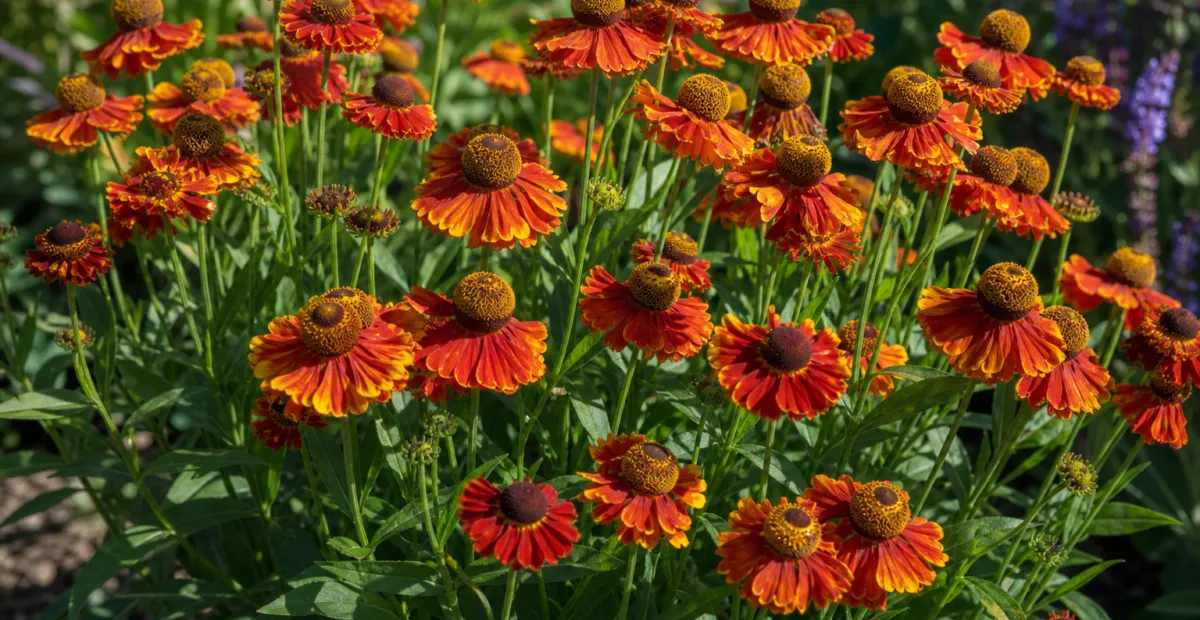
 AI-generated illustration
Helenium ‘Fuego’ short overview
Helenium ‘Fuego’ is a compact sneezeweed from the Mariachi Series, valued for its long display of fiery orange-red flower heads edged and banded with golden yellow around dark brown centers. The upright, well-branched perennial reaches about 18–20 inches tall and spreads 20–24 inches wide. Grow it in full sun with evenly moist, well-drained soil. It is useful in sunny borders, containers, pollinator plantings, and as a cut flower.
Taxonomic classification
Helenium ‘Fuego’ care guide
Light and placement
Give the plant full sun, ideally with at least 6 hours of direct light and morning-to-afternoon exposure. A bright south- or west-facing border is suitable if soil moisture is maintained. Too little light produces weaker stems, fewer flowers, and a looser habit; excessive heat combined with dry soil can cause wilting, scorched foliage, and premature flower decline.
Watering and humidity
Water deeply when the top inch of soil begins to dry, keeping the root zone evenly moist during active growth and flowering. Newly planted specimens may need water several times weekly during hot, dry weather. Reduce watering after dormancy, but do not allow containers or shallow soils to become bone-dry. Water at the base to keep foliage dry and reduce disease pressure.
Soil and growing medium
Use fertile, well-drained soil that remains evenly moist without becoming waterlogged. A loam amended with compost is suitable. Avoid dense, poorly drained clay unless it is improved with organic matter and drainage. A slightly acidic to neutral soil reaction is appropriate; no special acidic amendment is normally needed.
Feeding
Apply a thin layer of compost or a balanced slow-release perennial fertilizer in spring as growth begins. Avoid heavy nitrogen feeding, which can produce lush, weak growth and reduce flower performance. Do not fertilize drought-stressed, newly divided, or dormant plants; water first and feed only during active growth.
Growth and habit
‘Fuego’ forms a compact, upright, well-branched clump rather than a loose, tall stand. Strong branching supports abundant flower production, but spring staking or a late-spring cutback can be useful in exposed sites. Remove spent flower stems to tidy the plant and encourage continued flowering; leave some late-season structure if seedheads are desired.
Planting and repotting
Plant nursery transplants in spring after the soil can be worked, or in early fall where plants have time to root before freezing weather. Set the crown level with the surrounding soil, water deeply, and mulch lightly while keeping mulch away from the stems. Allow about 18–24 inches between plants, depending on whether a solid drift or more open clump is desired.
Repot container-grown plants in spring when roots fill the pot. Move into a container only one size larger, use a moisture-retentive but well-drained potting mix, and keep the crown at its previous depth. Water thoroughly after transplanting and avoid letting the container dry severely during the first growing season.
Propagation and pruning
Propagation
Commercial production is associated with tissue culture and unrooted cuttings. Home gardeners may also divide established clumps in spring, although division is less commonly emphasized for this particular compact cultivar. Use clean material, keep divisions from drying, and establish them in evenly moist soil.
Pruning
Cut back in late spring if a shorter, sturdier plant is wanted; this may delay flowering slightly. Remove spent stems after the main display or leave some standing for winter structure and wildlife interest. Cut remaining stems to the ground in late winter or early spring before new growth resumes.
Overwintering
Plants are hardy outdoors across the listed USDA zones. After frost, leave a few stems standing for winter interest or cut them back once dormant. In containers, protect roots from repeated freeze-thaw cycles by moving pots to a sheltered location or insulating the container; do not keep the plant warm indoors unless necessary.
Uses
Use ‘Fuego’ in sunny border fronts or middles, containers, mass plantings, late-season pollinator gardens, and cut-flower arrangements. Its compact habit makes it useful where taller heleniums would overwhelm nearby plants. It is ornamental only; do not use it as food or medicine.
Appearance
The plant has dark green, narrow-to-lance-shaped foliage on branching stems and a dense, compact outline. Flower heads are the key identification feature: orange-red rays are marked by yellow-gold rings or tips and surround a prominent dark brown cone. The cultivar’s strong branching creates a fuller appearance than many taller, more open heleniums.
Flowering
This cultivar produces numerous daisy-like flower heads over a long mid- to late-summer display that commonly continues into early fall. The ray florets show a fiery orange-red coloration with yellow-gold rings or tips, surrounding a raised dark brown central cone. Strong branching helps the compact plant carry many flowers, and cutting back in late spring can produce a shorter, sturdier clump with slightly delayed bloom.
Pollination and visitors
The open flower heads provide accessible nectar and pollen for bees, bumblebees, and butterflies. Heleniums are insect-pollinated rather than wind-pollinated, and the cultivar is marketed for pollinator-friendly planting. Visitor abundance varies with local habitat, weather, and the availability of other flowers.
Diseases and pests
Diseases
Good air circulation, full sun, and steady soil moisture help limit foliar problems. Watch for powdery mildew or leaf spotting during humid weather, especially where plants are crowded or stressed. Remove badly affected foliage, water at the soil line, clean up spent foliage at season’s end, and avoid routine fungicide use unless a disease is confirmed and spreading.
Pests
Inspect new growth for aphids and foliage for spider mites, particularly when plants are drought-stressed. Heleniums can also be browsed by slugs in persistently wet sites. Encourage beneficial insects, improve growing conditions, remove heavily infested leaves, and use targeted, least-disruptive controls only when necessary.
Related diseases and pests
Only Plant Doctor profiles whose host data indicate this plant may be affected are shown here.
 DiseaseMaple powdery mildewSawadaea bicornis
 DiseaseCucurbit Powdery MildewPodosphaera xanthii (Castagne) U. Braun & Shishkoff
 DiseaseRose powdery mildewPodosphaera pannosa
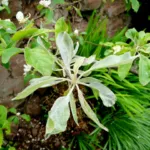 DiseaseApple Powdery MildewPodosphaera leucotricha
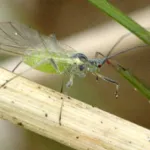 PestGreen Peach AphidMyzus persicae
 Environmental stressSalt stress
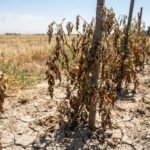 Environmental stressHeat stress
 Environmental stressDrought stress
Toxicity and pollen
No reliable cultivar-specific evidence was found establishing significant toxicity to people or pets. As with many ornamental plants, sap, foliage, or flower parts may cause minor irritation or stomach upset if eaten in quantity. Do not consume the plant, and supervise children and pets around unfamiliar plant material.
- Typical season
- Usually July through September in much of the United States
- Pollination / pollen
- Primarily insect-carried pollen
The flowers release pollen primarily during insect visits, so airborne pollen exposure is expected to be lower than for wind-pollinated plants. It is not appropriate to claim zero allergy risk: sensitive people may still react to pollen, plant contact, or nearby floral debris, especially during heavy bloom.
Native habitat
The cultivar is a cultivated selection of Helenium associated with the North American sneezeweed group. Its parentage reflects plants adapted to sunny, open habitats and soils that can remain moist during the growing season. In gardens, it performs best in fertile beds with reliable moisture, rather than dry, sharply drought-prone sites.
Interesting fact
‘Fuego’ belongs to the compact Mariachi Series and was introduced by Dutch breeder Arie Blom. Its flowers create concentric color bands, with orange-red petals and golden-yellow halos around dark cones. The cultivar was selected for strong branching and a relatively short garden stature compared with many heleniums.
Frequently asked questions (FAQ)
The most relevant questions about this plant, with short and direct answers.
🌱Quick care
What is Helenium 'Fuego'?⌄
Helenium 'Fuego' is a compact, cold-hardy perennial sneezeweed in the Asteraceae family. It forms a bushy clump with warm orange, red, and yellow daisy-like flowers.
How much sun does Helenium 'Fuego' need?⌄
Helenium 'Fuego' needs full sun, ideally at least 6 hours of direct sunlight daily. Insufficient light can reduce flowering and make stems weaker.
Is Helenium 'Fuego' a perennial?⌄
Yes, Helenium 'Fuego' is a herbaceous perennial that returns from its crown each year. It becomes dormant in winter and regrows in spring.
How tall does Helenium 'Fuego' get?⌄
Helenium 'Fuego' typically grows about 20 to 30 inches tall and can spread roughly 20 to 36 inches wide. Its compact habit usually makes staking unnecessary.
🌤️Environment and placement
What USDA hardiness zones are suitable for Helenium 'Fuego'?⌄
Helenium 'Fuego' is generally suitable for USDA Zones 3 through 9. Actual performance depends on winter drainage, snow cover, and local growing conditions.
What soil is best for Helenium 'Fuego'?⌄
The best soil for Helenium 'Fuego' is fertile, evenly moist, and well-drained loam. It can tolerate clay, sand, and a range of soil pH values if drainage is adequate.
Can Helenium 'Fuego' grow in clay soil?⌄
Yes, Helenium 'Fuego' can grow in clay soil if it is improved with organic matter and does not remain waterlogged. Heavy, poorly drained clay may cause root problems.
Can Helenium 'Fuego' grow in a container?⌄
Yes, Helenium 'Fuego' can be grown in a large container with drainage holes and fertile, moisture-retentive potting mix. Choose a container at least 12 inches wide and deep for a young plant.
Is Helenium 'Fuego' good for pollinators?⌄
Yes, the open flowers of Helenium 'Fuego' can provide nectar and pollen for bees, butterflies, and other flower-visiting insects. Leave some faded flower heads standing if you want additional garden habitat.
💧Care and problems
How often should I water Helenium 'Fuego'?⌄
Water Helenium 'Fuego' whenever the top inch of soil begins to dry, keeping the root zone evenly moist. Water more often during hot, dry weather and during the first growing season.
Does Helenium 'Fuego' tolerate drought?⌄
Helenium 'Fuego' has limited drought tolerance and performs best with consistent moisture. Established plants may withstand short dry periods, but prolonged drought can reduce flowering and vigor.
Does Helenium 'Fuego' need fertilizer?⌄
Helenium 'Fuego' usually needs only moderate fertility and does not require heavy feeding. Apply compost or a balanced perennial fertilizer in spring if the soil is poor.
Does Helenium 'Fuego' need staking?⌄
Helenium 'Fuego' usually does not need staking because it is a compact selection with sturdy stems. Plants may still need support if grown in excessive shade, very rich soil, or exposed wind.
Why is my Helenium 'Fuego' not blooming?⌄
The most common causes are insufficient sunlight, drought stress, or excessive nitrogen fertilizer. Move or grow it in full sun and keep the soil evenly moist throughout the growing season.
What problems affect Helenium 'Fuego'?⌄
Helenium 'Fuego' is generally trouble-free but may develop powdery mildew or leaf spot in crowded, humid, or poorly ventilated conditions. Provide spacing, good air circulation, and water at the soil level.
🪴Planting and repotting
When should I plant Helenium 'Fuego' in the United States?⌄
Plant Helenium 'Fuego' in spring after the soil can be worked or in early fall, allowing time for roots to establish before hard frost. In hot climates, fall planting is often easier on new plants.
How far apart should Helenium 'Fuego' be planted?⌄
Space Helenium 'Fuego' about 18 to 24 inches apart, adjusting for the mature spread and desired visual density. Good spacing improves airflow and reduces the risk of foliar disease.
How do I plant Helenium 'Fuego'?⌄
Plant Helenium 'Fuego' at the same depth as it was growing in its nursery container, then water deeply. Amend only poor soil and avoid burying the crown under mulch or excess soil.
Can Helenium 'Fuego' be planted near a pond or rain garden?⌄
Helenium 'Fuego' can grow near a pond or in a rain-garden edge if the soil stays moist but drains between waterings. Do not place it where the crown remains submerged or permanently saturated.
✂️Propagation and pruning
How do you propagate Helenium 'Fuego'?⌄
Propagate Helenium 'Fuego' primarily by dividing established clumps in spring or fall. Each division should include healthy roots and several shoots from the crown.
Can Helenium 'Fuego' be grown from seed?⌄
Helenium 'Fuego' can produce seed, but seedlings may not retain the parent plant’s exact flower color, habit, or other cultivar traits. Division or licensed nursery plants are more reliable for maintaining this cultivar.
When should I divide Helenium 'Fuego'?⌄
Divide Helenium 'Fuego' in early spring as new growth begins or in early fall after flowering. Divide clumps every two to three years if they become crowded or lose vigor.
Should Helenium 'Fuego' be cut back?⌄
Cut Helenium 'Fuego' back to the ground in late winter or early spring before new growth emerges. Removing spent stems also helps tidy the plant and may reduce overwintering disease debris.
Should I deadhead Helenium 'Fuego'?⌄
Yes, deadheading Helenium 'Fuego' can encourage additional blooms and keep the plant looking neat. Leave some seed heads if you prefer winter interest or want to provide habitat for insects.
⚠️Toxicity and safety
Is Helenium 'Fuego' toxic to dogs or cats?⌄
Cultivar-specific toxicity information for Helenium 'Fuego' is uncertain, and no significant toxicity has been firmly established for this cultivar. Prevent pets and children from eating ornamental plants and contact a veterinarian or poison service if ingestion occurs.
Is Helenium 'Fuego' safe to eat or use medicinally?⌄
No, Helenium 'Fuego' should not be eaten or used medicinally because this ornamental cultivar has not been established as safe for consumption. Handle plant material normally and avoid using it as a home remedy.
🌸Flowering and special interest
When does Helenium 'Fuego' bloom?⌄
Helenium 'Fuego' generally blooms from mid to late summer into early fall. The exact timing varies with climate, planting date, sunlight, and summer temperatures.
What color are Helenium 'Fuego' flowers?⌄
Helenium 'Fuego' produces warm orange to red ray petals with yellow or gold tones around a brown central cone. Flower colors may vary slightly with age and growing conditions.
Is Helenium 'Fuego' good for cut flowers?⌄
Yes, Helenium 'Fuego' is suitable for cut-flower arrangements because its sturdy stems and colorful blooms hold well. Cut stems when the flowers are open but the central cones are still relatively fresh.
Similar plants
 Sneezeweed (Helenium autumnale) care guideHelenium autumnale
 Helenium ‘Sombrero’Helenium 'Sombrero'
 Sneezeweed ‘Kanaria’ (Helenium ‘Kanaria’)Helenium 'Kanaria'
 Helenium ‘Waltraut’Helenium 'Waltraut'
 Helenium ‘Feuersiegel’Helenium 'Feuersiegel'
 Igelow’s sneezeweed (Helenium bigelovii) care guideHelenium bigelovii