
 Source:
Helenium ‘Feuersiegel’ short overview
Helenium ‘Feuersiegel’ is a tall, late-summer perennial with upswept yellow petals boldly marked in fiery red around a green-to-brown central disk. Bred by Karl Foerster and introduced in 1959, this clump-forming cultivar suits sunny borders, prairie-style plantings, wildlife gardens, and cut-flower beds. Keep soil evenly moist, provide good drainage, and consider support in exposed gardens. Helenium ‘Feuersiegel’ is an upright, clump-forming herbaceous perennial bred by Karl Foerster and introduced in 1959. It produces upswept yellow rays marked with broad red-orange bands around a green-to-brown disk from late July through September.
Taxonomic classification
Helenium ‘Feuersiegel’ care guide
Light and placement
Give full sun, ideally six or more hours of direct light, with the strongest exposure from the south or west. Sun produces the best flowering and sturdier stems. Too little light causes stretched growth, fewer flower heads, and weaker support; severe heat combined with dry soil can scorch foliage or shorten flowering.
Watering and humidity
Water deeply when the upper soil begins to dry, keeping the root zone evenly moist rather than alternating between drought and saturation. Water more often during hot, windy weather and less during cool autumn conditions. Mulch helps conserve moisture, but keep it off the crown. Supplemental humidity is not needed outdoors.
Soil and growing medium
Use fertile soil that holds consistent moisture while draining excess water. Loam, clay, sand, or chalk can work if amended appropriately. Avoid chronically dry ground. The cultivar tolerates a broad pH range, from acidic through alkaline, but performs best in a well-prepared garden soil rich in organic matter.
Feeding
Apply compost or a balanced slow-release perennial fertilizer in spring if the soil is poor. Use modest rates: excessive nitrogen can produce weak, floppy stems and abundant foliage at the expense of sturdy flowering. Do not fertilize drought-stressed plants, and avoid routine late-season feeding.
Growth and habit
This cultivar forms an upright, densely branched clump and can become visually top-heavy while flowering. Staking is useful in exposed sites. A light early-summer cutback can encourage branching and reduce height, while regular deadheading can extend the display.
Planting and repotting
Plant in spring or early fall at the same depth as the nursery container, with the crown level with the surrounding soil. Space plants about 18–24 inches apart, allowing room for the upright clump to broaden. Water deeply during establishment and mulch lightly, keeping mulch away from the crown.
Container-grown plants can be moved in spring or early fall. Use a sturdy, well-drained container and refresh the upper soil or divide the clump when it becomes crowded. Because this is a tall perennial, choose a pot large enough to prevent wind tipping and do not allow the root ball to dry repeatedly.
Propagation and pruning
Propagation
For a true-to-type plant, divide established clumps in spring or fall. Basal cuttings may be rooted in spring under protected conditions. Seed is not a dependable way to reproduce the named cultivar because seedlings may not retain its characteristics.
Pruning
Deadhead spent flower heads to prolong the display and reduce unwanted seed formation. Cut the perennial stems back to the ground in late fall or early spring. In early summer, a light cutback can produce a shorter, bushier plant with stronger branching.
Overwintering
Leave healthy stems standing through winter if desired for structure and wildlife, then cut them down in late winter or early spring before new growth accelerates. In colder areas, a light mulch after the ground freezes can protect newly planted crowns, but avoid wet winter conditions around the crown.
Uses
Useful for sunny perennial borders, prairie-inspired plantings, wildlife gardens, cottage gardens, and cut-flower production. Its height gives late-season structure, while the warm bicolored flower heads combine well with grasses, asters, rudbeckias, and other autumn perennials. Do not use as food or medicine.
Appearance
The plant has upright green stems and alternate, dark green lance-shaped leaves with toothed margins. Flower heads are regularly arranged in the upper branching, with yellow rays marked by a broad red-orange band and a central disk that matures from green-yellow to chocolate brown. Lower foliage may decline with age.
Flowering
Flower heads appear from late July into September in the United States, with flowering often extending when spent blooms are removed. Each head has upswept, slightly curled rays around a conspicuous central disk that changes from green-yellow to brown as it matures.
Pollination and visitors
The flower heads provide nectar and pollen for insect visitors. Helenium flowers are characteristically visited by bees, bumblebees, butterflies, hoverflies, beetles, and wasps; the conspicuous disk presents accessible rewards late in the season.
Helenium 'Feuersiegel' photos
Click any photo for a larger view. Source, author and license are shown separately.
Diseases and pests
Diseases
Good air circulation and consistent moisture help reduce powdery mildew and leaf spot. Rust may also occur. Remove badly affected foliage, avoid overhead watering late in the day, and clear diseased debris in fall. Monitor rather than spraying routinely.
Pests
Usually relatively trouble-free, but inspect for aphids and occasional chewing insects. Remove heavily infested shoots, encourage beneficial insects, and use targeted controls only if damage is substantial. Avoid stressing plants with prolonged drought, which can worsen general pest pressure.
Related diseases and pests
Only Plant Doctor profiles whose host data indicate this plant may be affected are shown here.
 DiseaseMaple powdery mildewSawadaea bicornis
 DiseaseCucurbit Powdery MildewPodosphaera xanthii (Castagne) U. Braun & Shishkoff
 DiseaseRose powdery mildewPodosphaera pannosa
 DiseaseApple Powdery MildewPodosphaera leucotricha
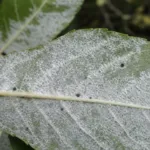 DiseaseAsh Powdery MildewPhyllactinia fraxini (DC.) Fuss
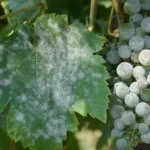 DiseaseGrape Powdery MildewErysiphe necator Schwein. (synonym: Uncinula necator)
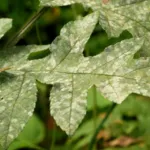 DiseaseApiaceae Powdery MildewErysiphe heraclei
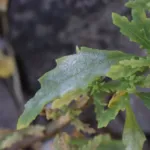 DiseaseBeet powdery mildewErysiphe betae (synonym commonly used in U.S. literature: Erysiphe polygoni)
Toxicity and pollen
Helenium autumnale, the species commonly associated with sneezeweed cultivars, is listed by university extension sources as poisonous if eaten in large quantities and capable of causing contact dermatitis. The exact toxicity profile of ‘Feuersiegel’ has not been independently established, so prevent ingestion and wear gloves if skin irritation occurs.
- Typical season
- July–September in much of the United States
- Pollination / pollen
- Heavy, insect-carried pollen
Despite the common name sneezeweed, Helenium pollen is primarily insect-carried rather than released as light, windborne pollen. This gives the plant low airborne-allergy relevance, although direct contact with flowers or plant material may bother unusually sensitive individuals.
Native habitat
The Helenium lineage is associated with sunny, seasonally moist North American meadows, wet fields, stream edges, and other open habitats. ‘Feuersiegel’ is a cultivated selection rather than a wild population, but it retains the preference for fertile soil that does not dry excessively.
Interesting fact
‘Feuersiegel’ was introduced by German nurseryman Karl Foerster in 1959. The cultivar received the RHS Award of Garden Merit. Its central disk changes from green-yellow to chocolate brown as the flower matures. The name is associated with a fiery or flame-like appearance.
Frequently asked questions (FAQ)
The most relevant questions about this plant, with short and direct answers.
🌱Quick care
What is Helenium 'Feuersiegel'?⌄
Helenium 'Feuersiegel' is a cold-hardy, clump-forming perennial sneezeweed with reddish-brown to deep yellow daisy-like flowers. It is a tall garden cultivar associated with Karl Foerster and is grown mainly for late-season color.
How much sun does Helenium 'Feuersiegel' need?⌄
Helenium 'Feuersiegel' needs full sun, ideally at least 6 hours of direct sunlight daily. Strong light helps produce sturdier stems and better flowering.
How often should I water Helenium 'Feuersiegel'?⌄
Water Helenium 'Feuersiegel' whenever the soil surface begins to dry, keeping the root zone evenly moist. Do not leave it in stagnant water because consistently waterlogged soil can damage the roots.
What soil is best for Helenium 'Feuersiegel'?⌄
The best soil is fertile, moisture-retentive but well-drained loam. It can also grow in clay, sand, or chalk if the soil holds adequate moisture and drains reliably.
Is Helenium 'Feuersiegel' perennial?⌄
Yes, Helenium 'Feuersiegel' is a herbaceous perennial that dies back in winter and regrows from the crown in spring. It is cold-hardy across much of the United States, depending on local winter conditions.
🌤️Environment and placement
What USDA hardiness zone is Helenium 'Feuersiegel' suitable for?⌄
Helenium 'Feuersiegel' is generally suitable for cold-climate perennial gardens, with reliable hardiness commonly reported around USDA Zones 3 through 8. Exact performance can vary with drainage, snow cover, exposure, and the plant’s source.
How tall does Helenium 'Feuersiegel' get?⌄
Helenium 'Feuersiegel' commonly reaches about 4 feet tall in favorable garden conditions. Give it enough room for a tall, upright clump and consider support in exposed sites.
How wide does Helenium 'Feuersiegel' spread?⌄
Helenium 'Feuersiegel' usually forms a clump about 12 to 20 inches wide, although mature size varies with soil fertility, moisture, and growing season length. Avoid crowding it against neighboring plants.
Can Helenium 'Feuersiegel' grow in clay soil?⌄
Yes, Helenium 'Feuersiegel' can grow in clay soil if it is fertile and drains excess water. Improve compact clay with organic matter and avoid planting where winter or spring water remains stagnant.
Can Helenium 'Feuersiegel' grow in wet soil?⌄
Helenium 'Feuersiegel' prefers evenly moist soil and can tolerate more moisture than many perennials, but it still needs drainage. Wet, airless soil is more likely to cause root problems than moist soil that drains freely.
Is Helenium 'Feuersiegel' good for pollinators?⌄
Yes, the open flower heads of Helenium 'Feuersiegel' can provide nectar and pollen for bees, butterflies, and other flower-visiting insects. Its late-summer to early-fall flowering period can extend garden resources after many perennials finish.
Can Helenium 'Feuersiegel' be grown in a container?⌄
Helenium 'Feuersiegel' can be grown temporarily in a large container, but it is usually better in the ground because it becomes tall and needs consistent moisture. Use a heavy pot with drainage and protect the roots from extreme winter temperatures.
💧Care and problems
Why is my Helenium 'Feuersiegel' wilting?⌄
Wilting usually means the plant is too dry, especially in hot weather or light soil. Check the root-zone moisture first, then water deeply and improve moisture retention while ensuring the site still drains well.
Why is Helenium 'Feuersiegel' flopping?⌄
Helenium 'Feuersiegel' may flop because of excessive shade, rich fertilization, dry soil, wind, or its naturally tall growth. Grow it in full sun, avoid excessive nitrogen, keep it evenly watered, and stake it or use a support ring if needed.
Should I pinch back Helenium 'Feuersiegel'?⌄
Pinching the growing tips in late spring can produce shorter, bushier plants with sturdier stems and more branching. The tradeoff is that flowering may begin somewhat later.
Does Helenium 'Feuersiegel' need fertilizer?⌄
Helenium 'Feuersiegel' usually needs only moderate fertility rather than heavy feeding. Apply compost or a balanced perennial fertilizer in spring if the soil is poor, because excessive nitrogen can encourage weak leafy growth and reduce flowering.
What pests affect Helenium 'Feuersiegel'?⌄
Helenium 'Feuersiegel' is generally relatively pest-free, although aphids and other common garden pests may occasionally appear. Inspect new growth and flower stems, particularly when plants are stressed by drought.
What diseases affect Helenium 'Feuersiegel'?⌄
Leaf spot and powdery mildew can affect Helenium 'Feuersiegel', especially in crowded or poorly ventilated conditions. Provide adequate spacing, water the soil rather than the foliage, and remove badly affected leaves.
Why are the leaves on my Helenium 'Feuersiegel' turning brown?⌄
Brown leaves are commonly caused by drought, heat stress, or disease, and older foliage can also decline naturally before flowering. Check soil moisture, improve air circulation, and remove leaves with spreading spots.
🪴Planting and repotting
When should I plant Helenium 'Feuersiegel'?⌄
Plant Helenium 'Feuersiegel' in spring or early fall, when the soil is workable and temperatures are moderate. Spring planting gives the roots a long establishment period, while fall planting should be completed several weeks before the ground freezes.
How far apart should I plant Helenium 'Feuersiegel'?⌄
Space Helenium 'Feuersiegel' about 18 to 24 inches apart, adjusting for the mature clump size and the look you want. Wider spacing improves air circulation, while closer spacing creates a fuller display after the plants establish.
How deep should Helenium 'Feuersiegel' be planted?⌄
Plant Helenium 'Feuersiegel' at the same depth as it was growing in its nursery container. Keep the crown at soil level because planting it too deeply can encourage crown or stem problems.
Can Helenium 'Feuersiegel' be planted near a pond?⌄
Yes, Helenium 'Feuersiegel' can work well near a pond or rain garden if the soil remains moist but is not permanently stagnant. Place it in full sun and keep the crown out of standing water.
✂️Propagation and pruning
How do I propagate Helenium 'Feuersiegel'?⌄
Propagate Helenium 'Feuersiegel' mainly by division or basal cuttings rather than seed. Division in spring or fall produces plants that retain the cultivar’s characteristic flower color and form.
Can I grow Helenium 'Feuersiegel' from seed?⌄
You can try growing it from seed, but seedlings may not come true to the named cultivar. Division or cuttings are more reliable when you want plants matching 'Feuersiegel'.
When should I divide Helenium 'Feuersiegel'?⌄
Divide Helenium 'Feuersiegel' in spring as new growth begins or in early fall. Division is most useful when the clump becomes crowded, weak in the center, or less floriferous.
Should I deadhead Helenium 'Feuersiegel'?⌄
Yes, deadheading Helenium 'Feuersiegel' can prolong the flowering display and improve its appearance. Remove spent flower heads before seed formation, unless you want to leave them for winter structure or limited self-sowing.
When should I cut back Helenium 'Feuersiegel'?⌄
Cut Helenium 'Feuersiegel' back after flowering or in late winter to early spring before new growth resumes. Leaving some stems over winter can provide structure, but remove diseased debris before spring growth.
⚠️Toxicity and safety
Is Helenium 'Feuersiegel' toxic to dogs and cats?⌄
Helenium 'Feuersiegel' should be treated as potentially toxic if eaten in quantity by pets or people. Keep plant material away from children and animals, and contact a veterinarian or poison-control service if a significant amount is swallowed.
Can Helenium 'Feuersiegel' cause skin irritation?⌄
Yes, Helenium foliage or sap may irritate the skin of sensitive people. Wear gloves when handling the plant and wash exposed skin after pruning or dividing it.
🌸Flowering and special interest
When does Helenium 'Feuersiegel' bloom?⌄
Helenium 'Feuersiegel' typically blooms from late summer into early fall. The exact timing depends on latitude, temperature, sunlight, and whether the plant was pinched earlier in the season.
What do the flowers of Helenium 'Feuersiegel' look like?⌄
The flowers have daisy-like rays with yellow and reddish-brown coloration surrounding a brown central disk. The amount and intensity of red can vary with growing conditions, including light and temperature.
How can I make Helenium 'Feuersiegel' bloom more?⌄
Give Helenium 'Feuersiegel' full sun, steady moisture, and moderate fertility, and remove spent flowers regularly. Avoid excessive nitrogen and severe drought, both of which can reduce or weaken flowering.
Is Helenium 'Feuersiegel' good as a cut flower?⌄
Yes, Helenium 'Feuersiegel' is suitable as a cut flower because its upright stems and warm flower colors work well in late-season arrangements. Cut stems when the flowers are opening and remove lower foliage before placing them in water.
Similar plants
 Rosilla (Helenium puberulum) care guideHelenium puberulum
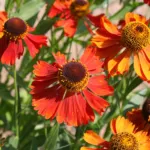 Helenium ‘Moerheim Beauty’Helenium 'Moerheim Beauty'
 Helenium ‘Sombrero’Helenium 'Sombrero'
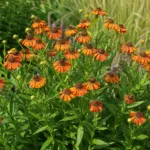 Helenium ‘Waltraut’Helenium 'Waltraut'
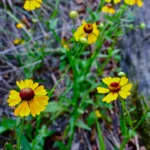 Southern Sneezeweed (Helenium flexuosum) care guideHelenium flexuosum
 Sneezeweed ‘Kanaria’ (Helenium ‘Kanaria’)Helenium 'Kanaria'