
 Source:
 Sneezeweed ‘Sahin’s Early Flowerer’ (Helenium ‘Sahin’s Early Flowerer’) short overview
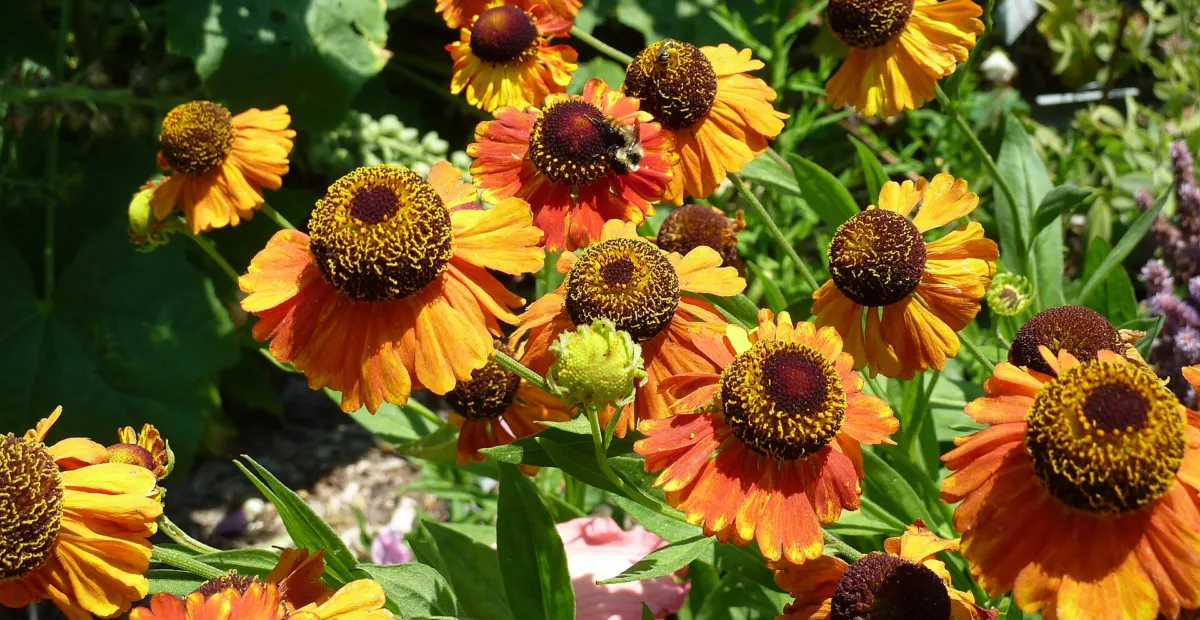
Helenium 'Sahin's Early Flowerer' is a long-flowering garden perennial valued for its upright habit and changing flower colors. Its single, daisy-like heads open in rich red and develop orange, yellow, and copper tones around prominent dark centers, with individual blooms varying from one another. Plant it in full sun and fertile, consistently moist but well-drained soil. It suits mixed borders, prairie-style plantings, wildlife gardens, containers, and cut-flower arrangements.
Taxonomic classification
Sneezeweed ‘Sahin’s Early Flowerer’ (Helenium ‘Sahin’s Early Flowerer’) care guide
Light and placement
Give the plant full sun, ideally with at least 6 hours of direct light and good morning-to-afternoon exposure. East-, south-, or west-facing positions are suitable. Too little light produces weaker stems, fewer flowers, and more lodging; intense heat is manageable when the root zone stays evenly moist.
Watering and humidity
Water deeply when the upper inch of soil begins to dry, aiming for steady moisture rather than alternating drought and saturation. Increase watering during hot, dry weather and reduce it after dormancy, while avoiding chronically wet winter soil. Mulch can moderate root-zone moisture, but keep it away from the crown.
Soil and growing medium
Use fertile soil that holds moisture without becoming waterlogged. Loam is ideal, but the cultivar tolerates clay, sand, chalk, and a broad pH range. Improve compacted clay with organic matter while preserving reliable drainage; do not allow the root zone to remain stagnant in winter.
Feeding
Top-dress with compost in spring or apply a balanced, slow-release perennial fertilizer as growth begins. Feed only when plants are actively growing and soil moisture is adequate. Avoid excessive nitrogen, which can produce weak, leafy growth and increase lodging; do not fertilize drought-stressed or waterlogged plants.
Growth and habit
Plants form an upright, clump-forming perennial with branching flowering stems. Staking may be useful in exposed sites or rich soil, although timely trimming can encourage shorter, more branched plants and reduce lodging. The cultivar can be relatively short-lived, so periodic division helps maintain vigorous clumps.
Planting and repotting
Plant in spring or fall in the United States, setting the crown at the same level as it was in its nursery pot. Space plants about 18–24 inches apart, allowing room for the clump to develop. Water deeply after planting and maintain consistent moisture during the first growing season.
Container-grown plants can be moved up one pot size in spring when roots fill the container. Use a moisture-retentive but well-drained, peat-free potting mix and ensure the container has drainage holes. Replant promptly after division or transplanting and keep evenly watered while re-establishing.
Propagation and pruning
Propagation
Divide established clumps in spring or fall, or take basal cuttings from fresh spring growth. This hybrid is also seed-propagated, but seedlings may not reproduce the parent’s exact color pattern or other cultivar traits. Division and cuttings are preferable when uniform plants are required.
Pruning
Deadhead spent flower heads to prolong the display and reduce self-sowing. For a shorter, more branched plant, trim stems before flowering, commonly several weeks ahead of the expected bloom period. Cut back old stems after flowering or in late winter before new growth begins.
Overwintering
Leave the dormant stems standing over winter for structure and wildlife cover, or cut them back in late winter. In colder areas, a light mulch after the ground freezes can protect the crown, but avoid heavy, wet mulch directly over it. Container plants need extra insulation because roots are more exposed to freezing.
Uses
Use in sunny perennial borders, prairie and cottage-style plantings, wildlife gardens, gravel gardens, containers, and cut-flower displays. Its late-season color helps extend ornamental interest and provides documented value for pollinator-focused planting. It is not recommended as an edible or medicinal plant.
Appearance
The plant has dark green, narrow lanceolate leaves arranged along upright stems. Its most distinctive feature is the succession of single flower heads with prominent rounded dark-brown centers and ray florets marked in changing red, orange, yellow, and copper tones. The overall effect is fiery and variable rather than uniform.
Flowering
This hybrid produces numerous single flower heads from mid-summer until frost in many U.S. gardens. Ray florets can open reddish or coppery and shift toward orange and yellow as weather and flower age change. The dark, rounded central disc is conspicuous, and individual heads often show different color patterns.
Pollination and visitors
The open flower heads provide accessible floral resources for bees, bumblebees, butterflies, and moths. Horticultural sources specifically describe this cultivar as attractive to bees, butterflies, and moths, while related Helenium species are documented as pollinator and butterfly plants.
Diseases and pests
Diseases
Leaf spot and wilt diseases may occur, especially where foliage stays wet or air circulation is poor. Remove affected leaves, water at the soil line, avoid overcrowding, and clear diseased debris. Rotate or replace badly affected plants rather than repeatedly applying broad-spectrum treatments.
Pests
Slugs and snails may damage young growth; tortrix moths and stem eelworms are occasional reported problems. Inspect plants regularly, remove hiding places, improve spacing, and use locally appropriate, least-toxic controls only when damage is significant.
Toxicity and pollen
Direct cultivar-specific toxicology information is limited. Helenium autumnale is documented as poisonous if large quantities are ingested and may cause contact dermatitis; the flowers, leaves, and seeds are implicated. Handle sensitized plants with gloves and prevent children and pets from chewing the plant. Seek professional advice after significant ingestion.
- Typical season
- During flowering, typically June through October or until frost
- Pollination / pollen
- Insect-carried pollen; not typically wind-dispersed
Although the plant produces pollen, Helenium flowers are insect-pollinated rather than adapted to broadcast pollen on the wind. Airborne exposure is therefore generally low, but sensitive people can still react to direct flower contact or pollen carried indoors on cut stems. The common name does not mean the plant is a typical hay-fever weed.
Native habitat
The Helenium background includes moist meadows, wet prairies, stream margins, pond edges, and other sunny habitats in North America. In cultivation, the hybrid performs best where roots remain reliably moist during growth but are not saturated in winter.
Interesting fact
The cultivar was developed at the Sahin trial grounds in the Netherlands and introduced in the 1990s. Its flower colors can change noticeably with temperature and age. It received the RHS Award of Garden Merit and is notable for flowering unusually late in the season.
Frequently asked questions (FAQ)
The most relevant questions about this plant, with short and direct answers.
🌱Quick care
What is Helenium 'Sahin's Early Flowerer'?⌄
Helenium 'Sahin's Early Flowerer' is a clump-forming herbaceous perennial commonly sold as sneezeweed 'Sahin's Early Flowerer'. It produces warm orange, yellow, and red daisy-like flowers over a long summer-to-fall season.
How much sun does Helenium 'Sahin's Early Flowerer' need?⌄
Helenium 'Sahin's Early Flowerer' needs full sun, ideally at least 6 hours of direct light daily. Adequate sun helps it produce stronger stems and heavier flowering.
How often should I water Helenium 'Sahin's Early Flowerer'?⌄
Water it regularly enough to keep the soil evenly moist, especially during its first growing season and extended dry spells. Avoid constantly soggy soil because the roots still need good drainage.
Is Helenium 'Sahin's Early Flowerer' easy to grow?⌄
Yes, it is generally an easy perennial for a sunny garden when planted in fertile, consistently moist but well-drained soil. Young plants need extra attention to watering and protection from slugs and snails.
🌤️Environment and placement
What soil is best for Helenium 'Sahin's Early Flowerer'?⌄
Plant it in fertile, moisture-retentive but well-drained soil. It can grow in clay, loam, sand, or chalk and tolerates acidic, neutral, and alkaline conditions if moisture is adequate.
Can Helenium 'Sahin's Early Flowerer' grow in clay soil?⌄
Yes, it can grow in clay soil provided the site does not remain waterlogged. Improve heavy clay with organic matter and choose a location where excess water can drain away.
Can Helenium 'Sahin's Early Flowerer' tolerate drought?⌄
It has limited drought tolerance and performs best with steady moisture. Established plants may survive short dry periods, but prolonged dryness can reduce flowering and cause wilting.
Does Helenium 'Sahin's Early Flowerer' need support?⌄
It may need support in windy locations or when grown in very fertile, moist conditions that encourage tall growth. A discreet stake or nearby plant support can help keep the stems upright.
Can Helenium 'Sahin's Early Flowerer' grow in a container?⌄
Yes, it can be grown in a large container with drainage holes, fertile potting mix, full sun, and regular watering. Container plants dry out faster than plants in the ground and may need winter protection in colder areas.
How large does Helenium 'Sahin's Early Flowerer' get?⌄
It typically grows about 20 to 40 inches tall and 4 to 20 inches wide, although size varies with climate, soil, and moisture. Allow enough room for an upright clump to develop without crowding.
💧Care and problems
Why is my Helenium 'Sahin's Early Flowerer' wilting?⌄
The most common cause is soil that has become too dry, particularly in full sun or in a container. Water deeply and maintain even moisture, while checking that poor drainage or damaged roots are not also contributing.
How do I keep Helenium 'Sahin's Early Flowerer' from flopping?⌄
Grow it in full sun, avoid excessive nitrogen fertilizer, and provide support before the stems become tall. A partial late-spring cutback can also produce shorter, sturdier stems and stagger flowering.
What pests affect Helenium 'Sahin's Early Flowerer'?⌄
It is generally relatively pest-free, but slugs and snails can damage young growth. Monitor new shoots regularly and use a garden-safe control method if feeding becomes significant.
What diseases affect Helenium 'Sahin's Early Flowerer'?⌄
Leaf spot can occasionally affect Helenium 'Sahin's Early Flowerer', especially in crowded or poorly ventilated conditions. Remove badly affected leaves, water at the soil line, and improve spacing and airflow.
🪴Planting and repotting
When should I plant Helenium 'Sahin's Early Flowerer' in the United States?⌄
Plant it in spring after the soil can be worked or in early fall while the soil remains warm. Avoid planting during extreme summer heat unless you can provide reliable irrigation.
How far apart should I plant Helenium 'Sahin's Early Flowerer'?⌄
Space plants about 18 to 24 inches apart to allow the clumps to expand and to improve air circulation. Use the wider spacing in rich, moist soil where growth is likely to be vigorous.
Can Helenium 'Sahin's Early Flowerer' be planted near a pond or rain garden?⌄
It can suit a moist garden edge or rain-garden margin if the soil drains between periods of rain. Do not place it in standing water or permanently saturated ground.
Should I mulch Helenium 'Sahin's Early Flowerer'?⌄
Yes, apply a thin layer of organic mulch to conserve moisture and moderate soil temperature. Keep mulch a few inches away from the crown to reduce the risk of rot.
✂️Propagation and pruning
How do I propagate Helenium 'Sahin's Early Flowerer'?⌄
The most reliable method is division of the clump in spring or fall, with each division retaining healthy roots and growing points. Basal cuttings taken from new spring growth are another documented method.
Can Helenium 'Sahin's Early Flowerer' be grown from seed?⌄
Seed may produce plants, but seedlings may not retain the exact characteristics of this named cultivar. Use division or basal cuttings when maintaining the distinctive 'Sahin's Early Flowerer' form matters.
How often should I divide Helenium 'Sahin's Early Flowerer'?⌄
Divide it when the clump becomes crowded, loses vigor, or begins flowering poorly, usually every few years rather than on a strict schedule. Spring or early fall division allows the plant to re-establish before temperature extremes.
When should I deadhead Helenium 'Sahin's Early Flowerer'?⌄
Deadhead spent flowers throughout the blooming season to improve the display and encourage additional side blooms. Cut the flower stem back to a healthy side shoot or leaf junction.
Should I cut Helenium 'Sahin's Early Flowerer' back in fall?⌄
Yes, you can cut the dead stems back to a few inches above the crown after flowering or after frost. Leaving some stems until late winter can provide winter structure and shelter for small wildlife.
What is the Chelsea chop for Helenium 'Sahin's Early Flowerer'?⌄
The Chelsea chop is a late-spring cutback that shortens some stems by about one-third to one-half. Applied selectively, it can reduce flopping and extend the flowering period, although the shortened stems usually bloom later.
⚠️Toxicity and safety
Is Helenium 'Sahin's Early Flowerer' toxic to people or pets?⌄
Treat it as a plant of moderate safety concern if eaten in quantity, and do not use it as an edible plant. Handling may also cause contact dermatitis in sensitive people, so wear gloves when working with it and seek medical or veterinary advice after ingestion.
Can Helenium 'Sahin's Early Flowerer' cause skin irritation?⌄
Yes, contact with the plant may cause dermatitis in susceptible people. Wear gloves, long sleeves, and avoid touching your face while pruning or dividing it.
🌸Flowering and special interest
When does Helenium 'Sahin's Early Flowerer' bloom?⌄
It is one of the earlier heleniums and generally begins blooming in early to mid-summer, continuing into fall when conditions are favorable. Exact timing varies with USDA zone, spring temperatures, and pruning.
What color are the flowers of Helenium 'Sahin's Early Flowerer'?⌄
The flowers combine yellow, orange, and burnt-orange to red tones around a prominent central cone. Individual blooms can vary in how strongly the warm red and orange markings appear.
Is Helenium 'Sahin's Early Flowerer' good for pollinators?⌄
Yes, its open daisy-like flowers provide accessible nectar and pollen for bees, butterflies, and other flower-visiting insects. Avoid broad-spectrum insecticides while it is in bloom.
Is Helenium 'Sahin's Early Flowerer' good as a cut flower?⌄
Yes, the sturdy flowering stems work well in summer and fall arrangements. Cut stems when the outer petals have opened but the central cone is still relatively fresh.
Similar plants
 Double Trouble sneezeweed (Helenium ‘Double Trouble’)Helenium 'Double Trouble'
 Sneezeweed (Helenium autumnale) care guideHelenium autumnale
 Helenium ‘Sombrero’Helenium 'Sombrero'
 Helenium ‘Moerheim Beauty’Helenium 'Moerheim Beauty'
 Helenium ‘Feuersiegel’Helenium 'Feuersiegel'
 Sneezeweed ‘Kanaria’ (Helenium ‘Kanaria’)Helenium 'Kanaria'