
 Source:
 Helenium ‘Ruby Tuesday’ short overview
Helenium 'Ruby Tuesday' is a compact, late-season sneezeweed with deep ruby-red flower heads, sturdy stems, and a long display from midsummer into early fall. This hardy herbaceous perennial suits sunny borders, containers, prairie-style plantings, and cut-flower gardens when given fertile, consistently moist, well-drained soil. Its domed centers provide useful nectar for butterflies and other flower-visiting insects.
Taxonomic classification
Helenium ‘Ruby Tuesday’ care guide
Light and placement
Give this cultivar at least 6 hours of direct sun, with a south- or west-facing position preferred for best flowering. Full morning and afternoon light helps maintain compact stems and rich flower color. Insufficient light can cause weak, stretched growth and fewer flowers; very hot reflected light may scorch foliage if soil dries out.
Watering and humidity
Water deeply when the upper inch of soil begins to dry, then allow excess water to drain. Keep the root zone evenly moist during active growth and flowering; do not let container plants dry out repeatedly. Reduce watering in cool fall weather, but never leave the crown in standing water. Extra humidity is unnecessary outdoors.
Soil and growing medium
Use fertile loam, sandy loam, or improved clay that holds moisture without remaining waterlogged. Good drainage is important because winter-wet soil can weaken crowns. Helenium tolerates acidic, neutral, or mildly alkaline conditions, with a slightly acidic to neutral soil generally suitable.
Feeding
Incorporate finished compost before planting, then apply a balanced slow-release perennial fertilizer in spring if growth is weak or soil is poor. Avoid heavy nitrogen feeding, which can produce lush foliage at the expense of sturdy flowering. Do not fertilize during drought, extreme heat, or after growth has begun to shut down in fall.
Growth and habit
The plant forms a compact, clump-forming perennial with upright to slightly outward-spreading stems. Strong peduncles generally hold the flower heads above the foliage without routine staking, although exposed sites or unusually tall growth may benefit from support. Divide older clumps when flowering vigor declines.
Planting and repotting
Plant in spring after the soil can be worked, or in early fall while the ground remains warm. Set the crown at the same depth as in its nursery pot; do not bury the stem base. Space plants about 18–24 inches apart, water deeply after planting, and maintain even moisture while roots establish.
Move container plants into a slightly larger pot when roots fill the current container, preferably in spring. Use a moisture-retentive but well-drained perennial mix and avoid burying the crown. Divide congested plants during spring or early fall rather than repeatedly disturbing them in hot weather.
Propagation and pruning
Propagation
Propagate reliably by division in spring or early fall, separating healthy crowns with roots attached. Basal or terminal cuttings are documented for maintaining the cultivar true to type. Seed is not recommended for cultivar uniformity because named selections may not reproduce their traits consistently.
Pruning
Deadhead spent flowers to prolong the display and direct energy toward further buds. After flowering, cut back lightly if mildew is a concern, then remove remaining stems in late winter or early spring before new growth emerges. Leave some seedheads over winter only if their structure is desired.
Overwintering
This perennial is cold hardy in much of the United States, but hardiness depends on drainage and local exposure. In colder areas, apply a light mulch after the ground freezes rather than covering the crown heavily while soil is warm. Container plants are more vulnerable to root freezing and should be sheltered or insulated.
Uses
Use it in sunny perennial borders, cottage and prairie-style plantings, pollinator gardens, and large containers. The sturdy flower stems are useful for cutting. It is ornamental rather than culinary, and no food or medicinal use should be assumed.
Appearance
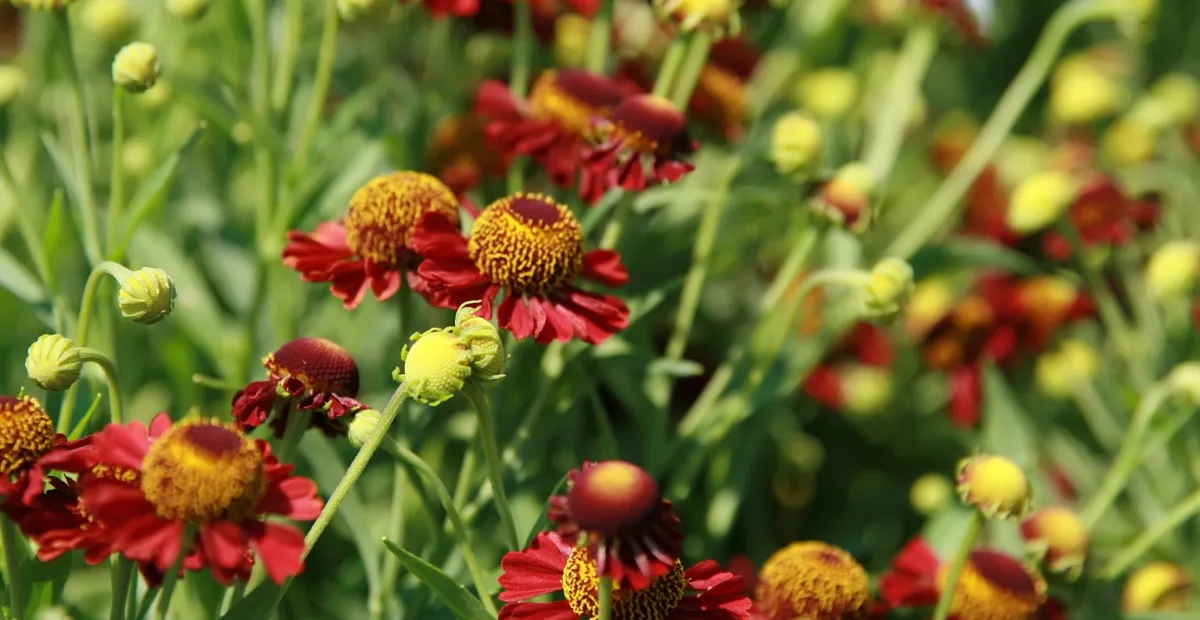
Leaves are narrow, lance-shaped, and green, arranged along upright branching stems. The cultivar’s distinctive feature is its compact habit and dark red ray florets held above the foliage on sturdy peduncles. Flower centers combine dark mahogany or bronze tones with small yellow disk florets, creating a button-like contrast.
Flowering
This cultivar produces many terminal flower heads on strong, branching stems. The dark red ray florets surround a rounded center that may show mahogany, bronze, and yellow tones as the flowers mature. Regular deadheading can extend the display and encourage additional side-shoot flowering.
Pollination and visitors
The flower heads provide nectar and pollen resources for butterflies, bees, bumblebees, and other flower-visiting insects. Helenium flowers are insect-pollinated; their relatively heavy, sticky pollen is adapted for transport on visiting insects rather than wind dispersal.
Diseases and pests
Diseases
Provide full sun, airflow, and steady rather than erratic moisture to reduce powdery mildew and leaf-spot risk. Remove badly affected foliage and clear fallen leaves at season’s end. Avoid overhead watering late in the day. Rust can occur, especially where foliage stays wet for long periods.
Pests
Young plants may attract slugs and snails; inspect foliage and protect new growth where needed. Aphids can occasionally gather on soft shoots. Use hand removal, habitat-based control, or a targeted low-impact treatment only when damage is significant. Good spacing and airflow help prevent secondary problems.
Related diseases and pests
Only Plant Doctor profiles whose host data indicate this plant may be affected are shown here.
 DiseaseMaple powdery mildewSawadaea bicornis
 DiseaseCucurbit Powdery MildewPodosphaera xanthii (Castagne) U. Braun & Shishkoff
 DiseaseRose powdery mildewPodosphaera pannosa
 DiseaseApple Powdery MildewPodosphaera leucotricha
 DiseaseAsh Powdery MildewPhyllactinia fraxini (DC.) Fuss
 DiseaseGrape Powdery MildewErysiphe necator Schwein. (synonym: Uncinula necator)
 DiseaseApiaceae Powdery MildewErysiphe heraclei
 DiseaseBeet powdery mildewErysiphe betae (synonym commonly used in U.S. literature: Erysiphe polygoni)
Toxicity and pollen
Some horticultural databases describe Helenium as poisonous if ingested, while authoritative plant-specific toxicity evidence for this cultivar is limited. Treat the plant as unsuitable for consumption, keep clippings away from children and pets, and seek professional advice after ingestion or an unusual reaction. Handling may irritate sensitive skin.
- Typical season
- Flowering season, usually July through September in the United States
- Pollination / pollen
- Heavy, insect-carried pollen
As an insect-pollinated Asteraceae, this cultivar is not expected to contribute pollen to the air in the same way as wind-pollinated grasses, ragweed, or many trees. Airborne exposure is likely low, but sensitive people can still react to direct contact, flower handling, or unusual individual sensitivity.
Native habitat
The cultivar is a garden hybrid rather than a wild population, originating from breeding work in the Netherlands. Heleniums are associated with sunny open habitats and moist soils, including meadows, wet prairies, and streamside conditions. In cultivation, avoid both severe drought and stagnant winter moisture.
Interesting fact
The cultivar was selected by Petrus Thomas Damen in Hillegom, Netherlands.
The U.S. cultivar patent identifies strong peduncles as a key trait.
The flowers are described as sterile in the original breeding objective.
Ray florets may become more reflexed and coppery as they age.
Frequently asked questions (FAQ)
The most relevant questions about this plant, with short and direct answers.
🌱Quick care
How do you care for Helenium 'Ruby Tuesday'?⌄
Grow Helenium 'Ruby Tuesday' in full sun and fertile, moderately moist, well-drained soil. Water regularly to keep the soil evenly moist, especially during establishment and dry spells.
Is Helenium 'Ruby Tuesday' easy to grow?⌄
Yes, Helenium 'Ruby Tuesday' is generally an easy-care, long-lived perennial when grown in full sun with consistent moisture and good drainage. It has relatively few serious pest problems.
🌤️Environment and placement
How much sun does Helenium 'Ruby Tuesday' need?⌄
Helenium 'Ruby Tuesday' needs full sun, preferably at least 6 hours of direct sunlight daily. Insufficient light can reduce flowering and make stems weaker or more prone to flopping.
What soil is best for Helenium 'Ruby Tuesday'?⌄
The best soil is fertile, moist but well-drained loam, sand, or improved clay. Avoid permanently waterlogged soil, but do not allow the plant to dry out for extended periods.
How much water does Helenium 'Ruby Tuesday' need?⌄
Provide moderate, consistent moisture and keep the soil evenly moist rather than alternating between drought and saturation. Water deeply during prolonged hot or dry weather, particularly while the plant is becoming established.
Can Helenium 'Ruby Tuesday' grow in clay soil?⌄
Yes, Helenium 'Ruby Tuesday' can grow in clay soil if it is improved with organic matter and drains reasonably well. Heavy, compacted clay should be amended to prevent standing water around the roots.
What USDA hardiness zone is Helenium 'Ruby Tuesday' suitable for?⌄
Helenium 'Ruby Tuesday' is very cold hardy and can tolerate temperatures of about -30°F. Exact performance depends on winter conditions, drainage, snow cover, and the protection provided by the planting site.
Can Helenium 'Ruby Tuesday' grow in a container?⌄
Yes, Helenium 'Ruby Tuesday' can grow in a large container with drainage holes, fertile potting mix, and regular watering. Containers dry out and freeze more quickly than garden soil, so they need closer winter and summer monitoring.
💧Care and problems
How often should you water Helenium 'Ruby Tuesday'?⌄
Water when the soil surface begins to dry, aiming to keep the root zone evenly moist. Frequency varies with weather and soil, but newly planted specimens usually need more frequent watering than established plants.
Does Helenium 'Ruby Tuesday' need fertilizer?⌄
Helenium 'Ruby Tuesday' usually needs only moderate fertility, so incorporate compost before planting and avoid excessive nitrogen. Too much fertilizer can produce lush foliage with weaker stems and fewer flowers.
Why is Helenium 'Ruby Tuesday' wilting?⌄
Wilting is most often caused by dry soil, heat stress, or root problems from poor drainage. Check soil moisture at root depth, water thoroughly if dry, and improve drainage if the soil remains saturated.
Does Helenium 'Ruby Tuesday' need staking?⌄
Helenium 'Ruby Tuesday' is a compact cultivar and often stands without support, but staking may help in windy sites, rich soil, or after heavy rain. A discreet support is best installed before flowering stems become tall.
What problems affect Helenium 'Ruby Tuesday'?⌄
Helenium 'Ruby Tuesday' is generally trouble-free, but leaf spot, powdery mildew, and weak growth can occur when foliage stays wet, air circulation is poor, or the plant experiences drought. Water at the soil line and avoid overcrowding.
🪴Planting and repotting
When should you plant Helenium 'Ruby Tuesday'?⌄
Plant Helenium 'Ruby Tuesday' in spring or early fall, allowing enough time for roots to establish before extreme heat or hard freezes. In colder regions, spring planting can reduce winter establishment risk.
How far apart should Helenium 'Ruby Tuesday' be planted?⌄
Space Helenium 'Ruby Tuesday' about 12 to 18 inches apart, depending on the desired density and growing conditions. Allowing air movement around the clumps helps limit mildew and leaf-spot problems.
Can Helenium 'Ruby Tuesday' be transplanted?⌄
Yes, Helenium 'Ruby Tuesday' can be transplanted successfully in spring or early fall. Lift as much of the root system as possible, replant at the original depth, and keep the soil evenly moist while it recovers.
✂️Propagation and pruning
How do you propagate Helenium 'Ruby Tuesday'?⌄
Propagate Helenium 'Ruby Tuesday' primarily by dividing established clumps or by taking suitable basal cuttings in spring. Seed is not the best method for preserving this named cultivar because seedlings may not come true to type.
When should Helenium 'Ruby Tuesday' be divided?⌄
Divide Helenium 'Ruby Tuesday' in early spring as new growth begins or in early fall. Separate healthy sections with roots and growing points, then replant them promptly and water well.
How do you prune Helenium 'Ruby Tuesday'?⌄
Deadhead spent flowers to encourage a longer display, then cut the plant back after flowering or in late winter to early spring. Pinching or cutting back stems earlier in the season can create a shorter, bushier plant but may delay flowering.
⚠️Toxicity and safety
Is Helenium 'Ruby Tuesday' poisonous to dogs, cats, or people?⌄
Helenium 'Ruby Tuesday' should be treated as potentially toxic if eaten, because Helenium plants contain compounds that can cause illness when consumed in quantity. Keep pets and children from eating the leaves, stems, flowers, or seeds, and contact a poison professional or veterinarian if ingestion occurs.
Is Helenium 'Ruby Tuesday' deer resistant?⌄
Helenium 'Ruby Tuesday' is often considered deer and rabbit resistant because its foliage is bitter, but no plant is completely browse-proof. Hungry animals may still sample it, especially when other food is scarce.
🌸Flowering and special interest
When does Helenium 'Ruby Tuesday' bloom?⌄
Helenium 'Ruby Tuesday' generally blooms from mid to late summer into early fall, with timing varying by climate and weather. The flowers are deep ruby-red or burgundy around mahogany centers and are attractive to pollinators.
How tall does Helenium 'Ruby Tuesday' get?⌄
Helenium 'Ruby Tuesday' typically grows about 18 to 30 inches tall and forms a compact clump. Height can vary with soil fertility, moisture, pruning, and local growing conditions.
Does Helenium 'Ruby Tuesday' attract bees and butterflies?⌄
Yes, the open daisy-like flowers of Helenium 'Ruby Tuesday' provide nectar and pollen for bees, butterflies, and other pollinators. Plant it in full sun for the strongest flowering display.
Is Helenium 'Ruby Tuesday' good for cut flowers?⌄
Yes, Helenium 'Ruby Tuesday' is suitable for cut-flower arrangements. Harvest sturdy stems when the flowers are opening, remove foliage below the waterline, and place the stems in clean water.
Similar plants
 Saucer Magnolia (Magnolia soulangeana) care guideMagnolia soulangeana
 Magnolia × loebneri ‘Merrill’Magnolia × loebneri 'Merrill'
 Magnolia loebneri care guideMagnolia loebneri
 Sweetbay magnolia (Magnolia virginiana) care guideMagnolia virginiana
 Star magnolia (Magnolia stellata) care guideMagnolia stellata
 Magnolia sprengeri care guideMagnolia sprengeri