 AI-generated illustration
 Caladium ‘Strawberry Star’ short overview
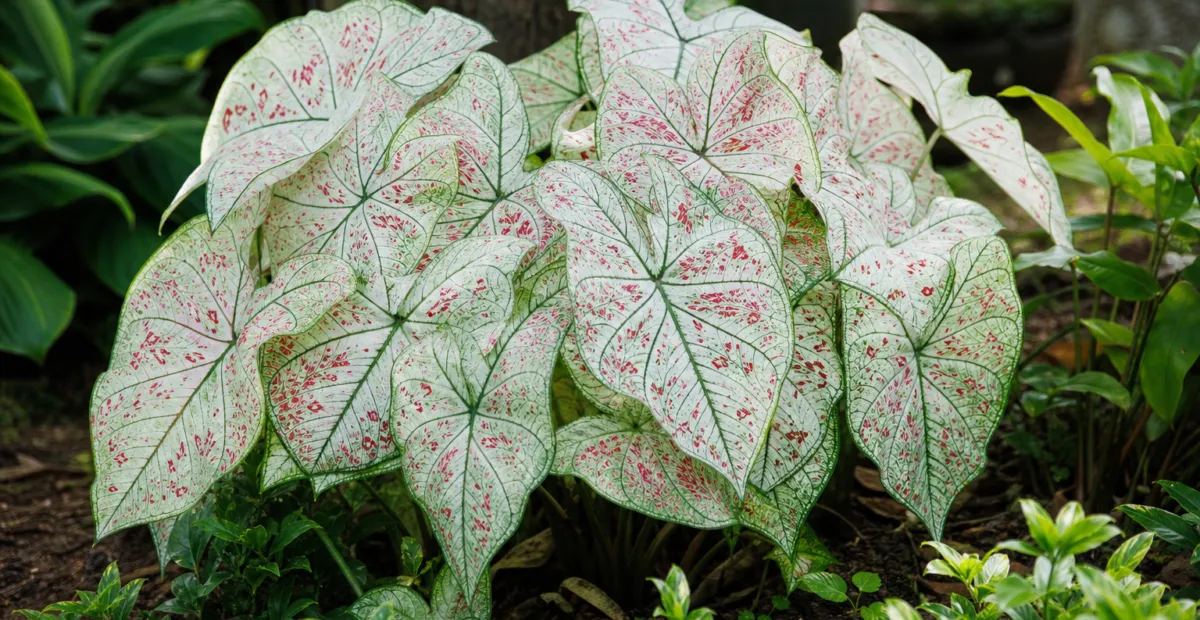
Caladium 'Strawberry Star' is a vigorous fancy-leaf caladium prized for large, pale leaves marked with dark green veins and irregular strawberry-red speckles. It can brighten shaded borders and containers, while its stronger sun tolerance allows more placement flexibility than many older caladiums. Give it warmth, evenly moist but well-drained soil, and protection from cold. In most of the United States, lift and store the tubers before frost for replanting the following spring.
Taxonomic classification
Caladium ‘Strawberry Star’ care guide
Light and placement
Give bright filtered light, partial shade, or gentle morning sun. This cultivar is marketed as more sun tolerant than many caladiums, but intense all-day afternoon sun can scorch pale leaves, especially if soil dries. Too little light may produce weaker, elongated growth and less vivid patterning. An east-facing site or a bright patio with afternoon protection is a reliable choice.
Watering and humidity
Keep the root zone consistently moist during active growth, watering deeply when the surface begins to dry rather than allowing repeated wilt. Do not leave containers standing in water. Reduce watering gradually as leaves yellow in fall, then keep dormant tubers dry enough to avoid rot. Humidity is helpful indoors, but improved drainage is more important than misting.
Soil and growing medium
Use a loose, organic-rich mix that holds moisture without becoming saturated. A peat- or coir-based container mix amended with compost and perlite works well. In beds, improve sandy or compacted soil with organic matter while preserving drainage. Caladiums generally perform well in acidic to mildly acidic soils; prolonged waterlogging increases tuber-rot risk.
Feeding
Feed during active leaf growth with a balanced liquid fertilizer diluted to half strength every 2–4 weeks, or use a controlled-release product according to its label. Water before applying soluble fertilizer. Stop feeding as foliage declines in fall; do not fertilize dormant, recently lifted, or cold-stressed tubers.
Growth and habit
This cultivar forms a vigorous clump from a tuber, producing a succession of leaves during warm weather. Growth slows sharply in cool conditions and the foliage naturally declines into dormancy in fall. Larger tubers generally produce fuller plants with more leaves rather than changing the cultivar’s basic habit.
Planting and repotting
Plant outdoors only after frost danger has passed and soil temperatures are consistently about 60–70°F. Set the puckered or eye-bearing side upward, usually with about 2 inches of soil over the tuber; some extension guidance allows 3–5 inches in loose soil. Space about 8–12 inches apart for a fuller bed.
Repot dormant tubers or actively growing plants only when needed, using a container with drainage holes. Choose a pot broad enough for the clump and avoid burying the tuber excessively. Handle the roots and emerging shoots gently because new growth is brittle.
Propagation and pruning
Propagation
Propagate primarily by dividing healthy tubers during dormancy or just before spring planting, ensuring each section retains a viable bud or eye. Keep cuts clean and allow freshly divided pieces to dry briefly before planting. Seed propagation is possible in Caladium generally but does not reliably reproduce a named cultivar.
Pruning
No routine pruning is needed. Remove yellowing or damaged leaves at the base with clean shears, especially as the plant enters dormancy. Do not cut healthy foliage prematurely because it helps replenish the tuber. Remove spent or diseased material from the growing area.
Overwintering
Before frost, allow foliage to decline naturally, reduce watering, then lift the tubers after the leaves yellow. Clean off loose soil, dry them in a shaded, ventilated place, and store in dry peat, vermiculite, or similar material at roughly 50–60°F. In the warmest parts of Zones 8b–11, tubers may overwinter in the ground, but protection from cold, wet soil improves reliability.
Uses
Primarily an ornamental foliage plant for shaded beds, tropical-style plantings, containers, patios, balconies, and indoor displays. Its pale leaves work well against dark green companions. It is not an edible plant, and all parts should be treated as toxic because of calcium oxalates.
Appearance
The cultivar has large fancy-leaf, arrow- to heart-shaped blades with a pale white or lightly green background, dark green primary veins, and irregular pink-red to strawberry-red spots. Pattern intensity can vary with light, nutrition, temperature, and leaf age. Upright petioles rise directly from the tuber, giving the plant a clean clumping form.
Flowering
The ornamental value is overwhelmingly in the foliage. Like other cultivated caladiums, this plant may rarely produce a small arum-type inflorescence consisting of a spadix enclosed by a spathe, but flowering is inconspicuous and not a reliable seasonal display. Exact flowering timing for this cultivar is not well documented.
Pollination and visitors
No reliable cultivar-specific documentation was found for animal visitors to the inconspicuous inflorescences. Caladium flowers are not grown for pollinator value, so attraction is best treated as unknown rather than assumed.
Diseases and pests
Diseases
The main concern is tuber and root rot, favored by cool, wet soil and poor drainage. Plant only in warm soil, avoid standing water, and discard soft or decayed tubers. Good air circulation and clean planting material reduce problems. Leaf spotting or collapse should prompt inspection for excessive moisture, cold injury, or damaged tubers.
Pests
Slugs, snails, caterpillars, mites, mealybugs, and grasshoppers may damage foliage, although serious infestations are uncommon. Inspect leaf undersides and new growth, remove large pests by hand, and keep foliage from remaining wet overnight when possible. Avoid unnecessary broad-spectrum insecticides, especially where beneficial insects are present.
Related diseases and pests
Only Plant Doctor profiles whose host data indicate this plant may be affected are shown here.
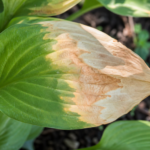 Environmental stressLeaf sunburn
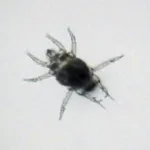 PestBroad mitePolyphagotarsonemus latus (Banks)
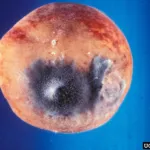 DiseaseRhizopus soft rotRhizopus stolonifer
 DiseaseBacterial soft rotPectobacterium carotovorum
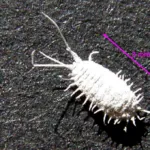 PestObscure mealybugPseudococcus viburni
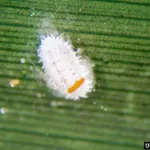 PestCitrus mealybugPlanococcus citri
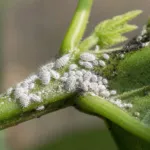 PestCotton mealybugPhenacoccus solenopsis Tinsley
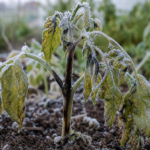 Environmental stressFreeze injury
Toxicity and pollen
Caladium tissues contain insoluble calcium oxalates that can cause immediate mouth, tongue, and lip irritation, swelling, drooling, vomiting, and difficulty swallowing if chewed. Sap may irritate skin. Keep tubers, leaves, and plant debris away from children and pets; wear gloves when planting or cutting and wash hands afterward.
- Pollination / pollen
- Pollen confined to rare, inconspicuous inflorescences; airborne relevance undocumented
Caladium is an angiosperm that can produce pollen within its rarely seen inflorescences, but the flowers are inconspicuous and cultivar-specific airborne-pollen data are lacking. Do not treat the absence of allergy reports as proof of zero risk; avoid contact with sap and plant material if sensitive.
Native habitat
The cultivated caladium group derives from tropical and subtropical American arum relatives associated with warm, humid environments and organic, moisture-retentive soils. Garden performance depends on warm soil, regular moisture, and drainage; cold or persistently wet conditions can damage dormant tubers.
Interesting fact
The cultivar is protected by U.S. Plant Patent PP24,681.
Frequently asked questions (FAQ)
The most relevant questions about this plant, with short and direct answers.
🌱Quick care
What is Caladium 'Strawberry Star'?⌄
Caladium 'Strawberry Star' is a fancy-leaved caladium grown for its large, heart-shaped, light green to white leaves marked with pink or red speckles and dark green veins. It typically reaches about 18 inches tall and wide.
Is Caladium 'Strawberry Star' an annual or perennial?⌄
Caladium 'Strawberry Star' is a tender perennial in warm climates, but it is commonly grown as an annual in colder parts of the United States. Its tubers can be lifted and stored indoors before frost.
How much light does Caladium 'Strawberry Star' need?⌄
Caladium 'Strawberry Star' grows in sun to partial shade, with the best placement depending on local conditions. Morning sun or filtered light is generally safer than intense hot afternoon sun, especially in the South.
How often should I water Caladium 'Strawberry Star'?⌄
Water Caladium 'Strawberry Star' whenever the soil surface begins to dry, keeping the root zone evenly moist but not waterlogged. Container plants and plants in hot, bright locations may need water more often.
How big does Caladium 'Strawberry Star' get?⌄
Caladium 'Strawberry Star' usually grows about 18 inches tall and 18 inches wide, although size varies with warmth, moisture, light, and tuber size. Its upright leaves form a compact, mounding display.
🌤️Environment and placement
Can Caladium 'Strawberry Star' grow in full sun?⌄
Caladium 'Strawberry Star' can tolerate considerable sun when gradually acclimated, but full sun may scorch or fade the leaves in hot climates. Provide afternoon protection if the foliage develops crisp edges or bleached patches.
Is Caladium 'Strawberry Star' good for shade?⌄
Yes, Caladium 'Strawberry Star' performs well in partial shade and can brighten a shaded bed or patio container. Very deep shade may reduce vigor and make the plant produce less colorful foliage.
Can I grow Caladium 'Strawberry Star' indoors?⌄
Yes, Caladium 'Strawberry Star' can be grown indoors in a warm room with bright, filtered light and evenly moist, well-drained soil. Avoid cold drafts, heating vents, and poorly lit locations.
What temperature is best for Caladium 'Strawberry Star'?⌄
Caladium 'Strawberry Star' prefers warm conditions and should be protected from temperatures below about 60°F. Growth slows in cool soil, and frost can kill the foliage and damage the tuber.
Can Caladium 'Strawberry Star' survive frost?⌄
No, Caladium 'Strawberry Star' is frost tender. In areas that experience frost, move containers indoors or dig and store the tubers after the foliage naturally declines.
Is Caladium 'Strawberry Star' suitable for containers?⌄
Yes, Caladium 'Strawberry Star' grows well in containers, patio pots, window boxes, and hanging baskets. Use a container with drainage holes and check moisture regularly because pots dry out faster than garden soil.
💧Care and problems
What soil is best for Caladium 'Strawberry Star'?⌄
Use rich, loose, well-drained soil that retains consistent moisture without becoming soggy. A quality potting mix amended with organic matter works well for containers, while compacted clay should be improved before planting.
Why are the leaves of my Caladium 'Strawberry Star' turning brown?⌄
Brown edges or patches usually indicate drought stress, excessive direct sun, low humidity, or cold exposure. Check the soil moisture and light first, and remove badly damaged leaves once the cause has been corrected.
Why is my Caladium 'Strawberry Star' wilting?⌄
Wilting is commonly caused by dry soil, heat, root damage, or the plant entering dormancy. Water when the soil surface is dry, but do not keep the pot saturated because waterlogged tubers can rot.
Why are Caladium 'Strawberry Star' leaves turning yellow?⌄
Yellow leaves may result from overwatering, poor drainage, cool conditions, nutrient stress, or natural dormancy. If the soil is wet, improve drainage and allow the surface to dry slightly before watering again.
How do I keep the pink speckles on Caladium 'Strawberry Star' vibrant?⌄
Provide bright filtered light or gentle morning sun, steady moisture, and warm temperatures to support strong coloration. Excessive shade may reduce color, while harsh sun can bleach or scorch the leaves.
Should I fertilize Caladium 'Strawberry Star'?⌄
Yes, light feeding during active growth can support larger, healthier foliage. Use a balanced slow-release fertilizer or a diluted complete liquid fertilizer according to the product label, and avoid overfertilizing.
What pests affect Caladium 'Strawberry Star'?⌄
Caladium 'Strawberry Star' may attract aphids, spider mites, thrips, or whiteflies, particularly indoors or under hot, dry conditions. Inspect leaf undersides and treat early with a strong water spray or a labeled insecticidal soap.
🪴Planting and repotting
When should I plant Caladium 'Strawberry Star' tubers?⌄
Plant Caladium 'Strawberry Star' tubers outdoors after the danger of frost has passed and the soil has warmed to at least about 65°F. In much of the United States, this is late spring, but timing varies by USDA hardiness zone.
How deep should I plant Caladium 'Strawberry Star' tubers?⌄
Plant the tubers about 1 to 2 inches deep with the eyes or buds facing upward. If the orientation is unclear, plant the tuber on its side rather than forcing it into an uncertain position.
How far apart should I plant Caladium 'Strawberry Star'?⌄
Space Caladium 'Strawberry Star' tubers about 8 to 12 inches apart for individual plants with good airflow. Closer spacing can create a fuller mass but may increase competition and reduce air circulation.
Can I plant Caladium 'Strawberry Star' tubers directly in the ground?⌄
Yes, plant them directly in the ground once the soil is warm and frost danger has passed. Choose a location with rich, moisture-retentive but well-drained soil, and avoid sites that remain waterlogged.
How do I overwinter Caladium 'Strawberry Star' tubers?⌄
In climates colder than its frost-free growing range, dig the tubers after the foliage yellows and dies back naturally, then let them dry and store them in a cool, dark, frost-free place. Pack them in dry peat moss, vermiculite, or shredded paper and inspect them periodically for rot.
✂️Propagation and pruning
Can Caladium 'Strawberry Star' be propagated from leaves?⌄
No, a leaf cutting alone will not reliably produce a new Caladium 'Strawberry Star' plant. Propagation is normally done by dividing viable tubers, while seed is less dependable for preserving the exact cultivar characteristics.
How do I divide Caladium 'Strawberry Star' tubers?⌄
Divide the tuber during dormancy or before planting by cutting it into sections that each contain at least one healthy bud or eye. Allow cut surfaces to dry briefly, then plant the divisions in warm, well-drained soil.
Should I cut off Caladium 'Strawberry Star' flowers?⌄
You may remove the small spathe-and-spadix flowers if you want the plant to direct more energy toward foliage. Flower removal is optional because Caladium 'Strawberry Star' is primarily valued for its leaves.
⚠️Toxicity and safety
Is Caladium 'Strawberry Star' toxic to pets?⌄
Yes, Caladium 'Strawberry Star' is toxic if chewed because it contains insoluble calcium oxalates. Keep it away from dogs, cats, and other pets, and contact a veterinarian promptly if ingestion occurs.
Is Caladium 'Strawberry Star' poisonous to people?⌄
Yes, all parts of Caladium 'Strawberry Star' can irritate the mouth, throat, skin, and digestive system if chewed or swallowed. Keep it away from children, wear gloves when handling damaged tissue or tubers, and wash your hands afterward.
🌸Flowering and special interest
Does Caladium 'Strawberry Star' produce flowers?⌄
Yes, Caladium 'Strawberry Star' can produce a small, hooded flower structure typical of aroids, but it is not showy. The plant is grown mainly for its colorful foliage rather than for flowering.