

Turnip moth (Agrotis segetum)
Agrotis segetumTurnip moth (Agrotis segetum) overview
Agrotis segetum, commonly called the turnip moth, is an Old World noctuid whose caterpillars act as cutworms. They feed at night on seedlings, foliage, petioles, stems and roots, then hide in soil during the day. In the United States, a suspected finding deserves careful confirmation because this species is not generally considered established; several native Agrotis and other noctuid species cause similar damage.
Typical conditions
Overview
The turnip moth is an Old World agricultural pest in the family Noctuidae. Its caterpillars are commonly described as cutworms because they hide in the upper soil layer by day and feed on nearby plants at night.
Young larvae can scrape or window-feed leaves. Older larvae commonly attack seedlings, petioles and stem bases, causing plants to wilt or collapse. On root and tuber crops, feeding produces shallow or deep irregular holes. The adult is a dull brown to gray moth, but reliable species identification often requires examination of wing pattern, genitalia or DNA because several related noctuid moths look similar.
Although records occur in pest-risk and interception literature, A. segetum is not generally regarded as established in the United States. A suspected occurrence should therefore be documented and reported through the appropriate state plant regulatory office or USDA APHIS channel rather than assumed to be a common U.S. cutworm.
Symptoms and identification
- Young seedlings may be cut cleanly at or just below the soil line and wilt suddenly.
- Leaves may show irregular chewing, missing margins, or small translucent “windowpane” areas where tissue has been scraped.
- Petiole and stem feeding can cause detached leaves, lodging, girdling or plant death.
- Roots, swollen taproots and tubers may contain superficial pits or larger irregular cavities.
- Damage is usually noticed in scattered patches, with fresh injury appearing after dark.
- Larvae are often absent during daytime inspection because they curl beneath soil clods, debris or the soil surface.
These symptoms overlap with damage from other Agrotis, Noctua and related cutworms, so plant injury alone cannot confirm A. segetum.
Causes and spread
Damage is caused by larval chewing, not by a pathogen. Females lay eggs singly or in small groups on weeds, crop foliage, stems or near the soil surface. Newly hatched larvae often feed first on weeds and then move to adjacent crop plants.
Risk increases where seedbeds are heavily weedy before planting, where volunteer plants and crop residues provide shelter, and where dense young crops are established in warm, relatively dry conditions. Larvae generally move short distances, while adults can spread locally by flight. International movement of infested soil, plant material or other commodities is a potential pathway of concern, which is particularly relevant to U.S. quarantine protection.
Life cycle and persistence
Adults are nocturnal moths. Females may lay approximately 800–1,200 eggs, singly or in small groups, on suitable vegetation or soil surfaces. Depending on temperature and region, eggs hatch after several days to about two weeks.
Early larvae feed above ground, often at night. As they grow, they become soil-dwelling cutworms that hide shallowly during the day and sever or damage plants after dark. Mature larvae pupate in the soil. The number of generations varies widely with latitude and climate: one generation may occur in cooler regions, while two or more can occur in warmer areas. Overwintering commonly occurs as a late larva, although developmental stages and timing vary geographically.
Treatment and control
First confirm that the injury is from a cutworm and, where relevant, confirm the species. Search the soil to a depth of about 1–2 inches around damaged plants during the day or inspect plants after dark with a flashlight. Hand-pick and destroy larvae in home gardens, replace badly severed seedlings, and keep the planting area free of sheltering debris.
For larger plantings, base intervention on scouting rather than on the presence of a single moth. Treating exposed, young larvae is generally more effective than attempting to reach older larvae below the soil surface. Protect beneficial insects, avoid broad-spectrum applications when not justified, and follow crop-specific integrated pest management recommendations from the relevant state Extension program.
A suspected exotic occurrence should be reported before moving potentially infested plants, soil or growing media.
Low-impact and biological control
- Hand-pick larvae at night or from beneath soil clods during daylight.
- Use weed management, shallow cultivation and removal of crop debris to reduce egg-laying and hiding sites.
- Encourage ground beetles, spiders, predatory bugs, birds and parasitoids by maintaining non-sprayed habitat away from the crop and avoiding unnecessary broad-spectrum insecticides.
- Biological products based on entomopathogenic nematodes or Bacillus thuringiensis may be useful in some situations, particularly against exposed young caterpillars, but performance depends on species, formulation, timing, moisture and legal product labeling.
- Physical collars and localized barriers can protect valuable seedlings without treating the whole bed.
Do not assume that a biological product labeled for another cutworm species will provide equivalent control of A. segetum.
Prevention
- Remove weeds and volunteer crop plants several weeks before sowing or transplanting, while avoiding leaving freshly cut vegetation on the soil surface.
- Inspect beds before planting and cultivate shallowly where appropriate to expose larvae and pupae to predators, while following soil-conservation requirements.
- Use vigorous transplants, maintain even irrigation and avoid leaving young plants stressed or sparsely established.
- Clear crop debris after harvest and manage field margins without creating dense, unmanaged shelter immediately beside the crop.
- Inspect seedlings at dusk and at dawn. Examine soil beneath damaged plants for curled larvae and collect specimens for confirmation.
- Use physical stem collars or barriers around individual high-value transplants when practical; bury the lower edge slightly and keep the collar clear of foliage.
- In the United States, preserve photographs and specimens and contact your state plant regulatory official or USDA APHIS if A. segetum is suspected.
Interesting facts
- The species name segetum is associated with cultivated fields and crops.
- The caterpillar and adult moth have different common-name contexts: the adult is the turnip moth, while the damaging larva is a cutworm.
- Turnip moth larvae can feed on both above-ground tissues and underground plant parts, allowing one species to damage seedlings, roots and tubers.
- Infested plants can release herbivore-induced odors that attract parasitoids such as Microplitis mediator, an interaction studied in cotton systems.
- Because several noctuid cutworms have overlapping appearance and damage, a field diagnosis based only on a severed seedling is unreliable.
Use only pesticide products legally authorized for the specific crop and cutworm problem in the United States and in your state. Follow the current product label exactly, including crop site, target pest, rate, preharvest interval, reentry interval, protective equipment and restrictions protecting pollinators and aquatic organisms. Because older larvae feed in soil and species identification may be uncertain, consult current state Extension or agricultural commissioner guidance before selecting any treatment.
Affected plants
The plants below are linked to this problem by structured host-plant data. The list updates automatically as new plant profiles are added.
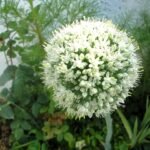 Onion (Allium cepa) care guideAllium cepa
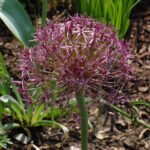 Allium christophii care guideAllium christophii
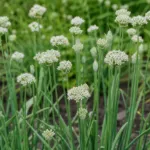 Bunching onion (Allium fistulosum) care guideAllium fistulosum
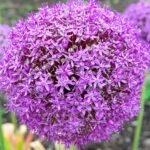 Giant Allium (Allium giganteum) care guideAllium giganteum
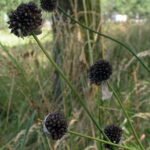 Ornamental onion (Allium) care guideAllium
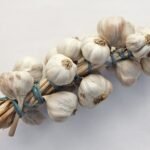 Garlic (Allium sativum) care guideAllium sativum
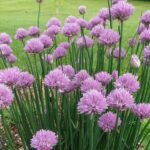 Chives (Allium schoenoprasum) care guideAllium schoenoprasum
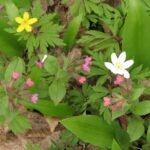 Ransoms (Allium ursinum) care guideAllium ursinum
 Beet (Beta vulgaris) care guideBeta vulgaris
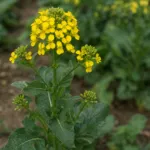 Ethiopian Rape (Brassica carinata) care guideBrassica carinata
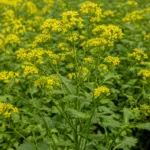 Brown Mustard (Brassica juncea) care guideBrassica juncea
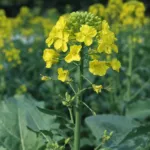 Rapeseed (Brassica napus) care guideBrassica napus