Source:
Hosta ‘Shade Fanfare’ short overview
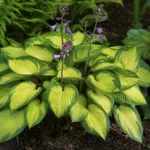
Hosta ‘Shade Fanfare’ is a vigorous, medium-sized perennial selected by Paul Aden in 1986 as a sport of ‘Flamboyant’. Its heart-shaped leaves open bright green to chartreuse with broad yellow-cream margins that mature toward white, forming a luminous clump. Pale lavender flowers rise on tall scapes in early to midsummer. Give it rich, evenly moist soil and partial shade, with protection from harsh afternoon heat.
Taxonomic classification
Hosta ‘Shade Fanfare’ care guide
Light and placement
Grow in bright filtered light, partial shade, or light shade. An east-facing bed or a site with morning sun and afternoon protection is suitable; the cultivar can tolerate more sun than many hostas when soil stays moist. Bleached leaves, brown margins, or scorched patches indicate excessive heat or sun. Small, weak leaves and muted growth suggest overly dense shade or root competition.
Watering and humidity
Water deeply when the upper inch of soil begins to dry, aiming for steady moisture rather than repeated shallow sprinkling. Increase frequency during hot weather, windy periods, and the first season after planting. Morning irrigation is preferable; avoid keeping foliage wet overnight. Container plants need more frequent checks than in-ground clumps.
Soil and growing medium
Use fertile, humus-rich soil that holds steady moisture without becoming stagnant. A loam amended with compost is ideal. Hostas tolerate a broad pH range, from slightly acidic through slightly alkaline, but perform poorly in compacted, waterlogged ground. Mulch lightly to conserve moisture while keeping it away from the crown.
Feeding
Top-dress with compost in spring or apply a balanced slow-release perennial fertilizer as new shoots emerge. Avoid heavy nitrogen, which can produce soft, lush foliage and increase pest or disease problems. Stop routine feeding by late summer so growth can mature before dormancy.
Growth and habit
Forms a dense, spreading mound from short underground rhizomes and becomes more substantial with age. Growth is generally vigorous after establishment. Keep competing roots and aggressive groundcovers away from the crown, and divide only when the clump becomes crowded or needs rejuvenation.
Planting and repotting
Plant in spring or early fall, setting the crown at soil level with roots spread outward. Space about 30–36 inches apart for a substantial clump; wider spacing is appropriate where a broad groundcover effect is desired. Water deeply after planting and maintain consistent moisture during the first growing season.
Repot container plants in spring as growth begins, moving them into a pot only one size larger. Refresh exhausted mix and keep the crown at the same depth. Containers dry and freeze faster than garden soil, so use a moisture-retentive but well-drained perennial mix and monitor watering closely.
Propagation and pruning
Propagation
Propagate by division in spring as shoots emerge or in early fall. Lift the clump, separate crowns with several shoots and healthy roots, and replant promptly. Seed does not preserve the named cultivar’s variegation and is useful mainly for breeding.
Pruning
Remove yellowing foliage after frost or once it collapses in late fall. Cut spent flower scapes near the base if a tidier appearance is preferred. Avoid cutting healthy foliage early, since it continues replenishing the crown before dormancy.
Overwintering
Leave foliage in place until it collapses naturally after frost, then remove it to reduce hiding places for pests. Established plants are very cold hardy in the ground. Containers need extra protection because roots experience colder temperature swings; move them to a sheltered location or insulate the pot without bringing the plant into a warm indoor room.
Uses
A reliable ornamental foliage plant for shade borders, woodland gardens, foundation beds, path edges, and large containers. The bright variegation adds contrast beneath trees and among darker-leaved perennials. It is not recommended as a culinary plant because this named cultivar is documented as toxic to dogs and cats.
Appearance
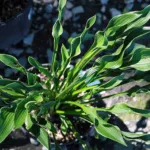
The plant forms a broad mound of heart-shaped leaves with bright green, chartreuse, or pale green centers and wide irregular cream margins. New growth may show stronger yellow tones, while margins commonly lighten as the season progresses. Mature leaves can develop modest corrugation. Upright scapes carry pale lavender flowers above the foliage.
Flowering
Pale lavender, bell-shaped flowers are borne in terminal racemes on upright scapes above the foliage. Bloom is usually concentrated from June into July in much of the United States, although timing shifts with latitude and weather. Flowering is ornamental rather than the cultivar’s main display feature.
Pollination and visitors
The pale lavender flowers are documented as attractive to bees. This is a nectar-and-pollen resource during the summer flowering period, although the cultivar is primarily grown for its foliage.
Hosta 'Shade Fanfare' photos
Click any photo for a larger view. Source, author and license are shown separately.
Diseases and pests
Diseases
Watch for crown rot in persistently wet soil, foliar fungal spotting during prolonged wet weather, and virus symptoms such as distorted or streaked leaves. Improve drainage, avoid overhead irrigation, remove badly affected foliage, and buy virus-free divisions. Do not compost plants suspected of Hosta Virus X.
Pests
Slugs and snails are the main pests, rasping holes in emerging and mature leaves. Reduce hiding places, water in the morning, keep mulch loose and away from the crown, and hand-pick or trap pests. Use an iron-based slug bait where needed, following the product label and protecting pets and wildlife.
Related diseases and pests
Only Plant Doctor profiles whose host data indicate this plant may be affected are shown here.
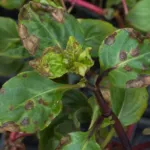 DiseaseImpatiens necrotic spot virus diseaseImpatiens necrotic spot orthotospovirus
 DiseaseSouthern blightAthelia rolfsii
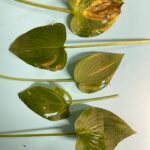 PestStrawberry foliar nematodeAphelenchoides fragariae
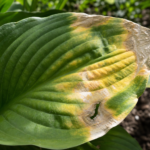 Environmental stressExcess light stress
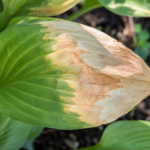 Environmental stressLeaf sunburn
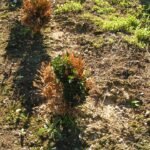 DiseasePhytophthora root and crown rotPhytophthora nicotianae
Toxicity and pollen
Hostas contain saponins and are recognized as toxic to dogs and cats if eaten; reported signs include vomiting, diarrhea, and depression. The cultivar should be treated as potentially toxic by ingestion even though risk depends on the amount consumed. Prevent pets from chewing foliage and contact a veterinarian after suspected ingestion.
- Typical season
- June–July
- Pollination / pollen
- Insect-borne flower pollen
Hosta pollen is released from exposed anthers within insect-visited flowers and is not generally regarded as a major airborne seasonal allergen. Individual sensitivity is still possible, and people with known pollen allergies should avoid handling flowers if symptoms occur.
Native habitat
Hostas are temperate woodland-edge perennials associated with moist, humus-rich soils and filtered light. The named cultivar is a garden selection rather than a wild population, so its natural distribution is not applicable; its cultural requirements reflect the moist, shaded habitats of its Hosta ancestry.
Interesting fact
‘Shade Fanfare’ was introduced by Paul Aden in 1986 as a sport of ‘Flamboyant’. Its margins commonly shift from yellow-cream in spring toward cream-white later in the season. The cultivar is considered more sun-tolerant than many hostas when roots remain cool and moist.
Frequently asked questions (FAQ)
The most relevant questions about this plant, with short and direct answers.
🌱Quick care
What is Hosta 'Shade Fanfare' like?⌄
Hosta 'Shade Fanfare' is a medium-sized, clump-forming perennial with light green to chartreuse leaves edged in creamy yellow or white. It produces pale lavender flowers in summer and is grown primarily for its bright variegated foliage.
How big does Hosta 'Shade Fanfare' get?⌄
Hosta 'Shade Fanfare' typically grows about 16 to 20 inches tall and 24 to 50 inches wide at maturity. Final size varies with soil moisture, growing conditions, and the plant’s age.
Is Hosta 'Shade Fanfare' easy to grow?⌄
Yes, Hosta 'Shade Fanfare' is generally an easy-care perennial when grown in partial to light shade with consistently moist, well-drained soil. Its main routine problems are usually slugs, snails, and drought stress.
🌤️Environment and placement
How much light does Hosta 'Shade Fanfare' need?⌄
Hosta 'Shade Fanfare' grows best in partial shade to light shade, such as morning sun with afternoon shade or bright filtered light. Avoid intense afternoon sun, especially in hot climates, because it can scorch the leaves.
Can Hosta 'Shade Fanfare' grow in full shade?⌄
Yes, Hosta 'Shade Fanfare' can grow in full shade, but it may develop more slowly and flower less heavily. Bright, indirect light or dappled shade usually gives the best foliage color and overall performance.
Can Hosta 'Shade Fanfare' tolerate morning sun?⌄
Yes, Hosta 'Shade Fanfare' can usually tolerate gentle morning sun, particularly when the soil stays evenly moist. Protect it from strong late-day sun, which is more likely to bleach or scorch the foliage.
What USDA zones are suitable for Hosta 'Shade Fanfare'?⌄
Hosta 'Shade Fanfare' is reported as hardy across approximately USDA Zones 3 through 8, with some references extending its tolerance more broadly. Local heat, winter exposure, and moisture conditions can affect performance.
What soil is best for Hosta 'Shade Fanfare'?⌄
The best soil for Hosta 'Shade Fanfare' is rich, humus-bearing, moisture-retentive, and well drained. Loamy soil improved with compost is ideal, but the plant can tolerate a range of soil types if drainage and moisture are managed.
How much water does Hosta 'Shade Fanfare' need?⌄
Hosta 'Shade Fanfare' needs evenly moist soil, especially during active growth and hot weather. Water deeply when the surface begins to dry, and do not allow the planting bed to remain waterlogged.
💧Care and problems
Why are the leaves of my Hosta 'Shade Fanfare' turning brown?⌄
Brown leaf edges on Hosta 'Shade Fanfare' are commonly caused by drought, hot sun, wind, or root stress. Keep the soil consistently moist, add mulch, and provide more afternoon shade if the damage follows exposure to strong light.
Why is my Hosta 'Shade Fanfare' not growing well?⌄
Poor growth is often caused by insufficient moisture, excessive sun, compacted soil, root competition, or slug damage. Improve the soil with organic matter, maintain even moisture, and check the plant regularly for pests.
How do I protect Hosta 'Shade Fanfare' from slugs and snails?⌄
Reduce slug and snail damage by keeping the area free of hiding debris, watering at the soil line, and inspecting plants after dark or during damp weather. Barriers, hand-picking, and labeled slug controls can also help when damage is severe.
Do deer eat Hosta 'Shade Fanfare'?⌄
Yes, deer commonly browse Hosta 'Shade Fanfare' because hostas are generally highly attractive to deer. Use fencing, repellents, or another reliable deer-management strategy if the plant is grown in an area with deer pressure.
Should I fertilize Hosta 'Shade Fanfare'?⌄
A spring application of compost or a balanced slow-release fertilizer is usually sufficient for Hosta 'Shade Fanfare' in fertile soil. Avoid excessive nitrogen, which can produce soft growth and may reduce the plant’s ornamental balance.
🪴Planting and repotting
When should I plant Hosta 'Shade Fanfare' in the United States?⌄
Plant Hosta 'Shade Fanfare' in spring or early fall while temperatures are moderate and the soil is workable. Spring planting gives roots a long establishment period, while early fall planting should be completed several weeks before the ground freezes.
How far apart should I plant Hosta 'Shade Fanfare'?⌄
Space Hosta 'Shade Fanfare' about 24 to 36 inches apart for individual plants, allowing more room if you want the mature clumps to remain distinct. Tighter spacing can be used for mass planting, but it increases competition as plants mature.
Can Hosta 'Shade Fanfare' be grown in a container?⌄
Yes, Hosta 'Shade Fanfare' can be grown in a container with drainage holes and rich, moisture-retentive potting mix. Choose a wide container that can accommodate its spreading root system and monitor moisture more often than you would in the ground.
How do I plant Hosta 'Shade Fanfare'?⌄
Plant Hosta 'Shade Fanfare' with the crown at soil level and the roots spread through a wide planting hole. Backfill with improved soil, water thoroughly, and apply a light mulch layer without covering the crown.
✂️Propagation and pruning
How do I divide Hosta 'Shade Fanfare'?⌄
Divide Hosta 'Shade Fanfare' by lifting the clump and separating it into sections with roots and several growing points attached. Division is easiest in early spring or early fall, followed by thorough watering while the divisions establish.
Can Hosta 'Shade Fanfare' be grown from seed?⌄
Hosta 'Shade Fanfare' can produce seed, but seedlings may not reproduce the parent plant’s exact variegation or appearance. Division is the preferred method when you want new plants that remain true to this cultivar.
When is the best time to divide Hosta 'Shade Fanfare'?⌄
The best times to divide Hosta 'Shade Fanfare' are early spring as shoots emerge or early fall after the hottest weather has passed. Avoid dividing during hot, dry conditions unless you can provide careful aftercare.
Should I cut back Hosta 'Shade Fanfare' in fall?⌄
Cut back Hosta 'Shade Fanfare' after frost has caused the foliage to collapse, or remove the dead leaves in late winter or early spring. Leaving healthy foliage in place until dormancy can help the plant store energy for the following season.
⚠️Toxicity and safety
Is Hosta 'Shade Fanfare' toxic to dogs?⌄
Yes, Hosta 'Shade Fanfare' is toxic to dogs if eaten and may cause gastrointestinal upset. Keep dogs from consuming the leaves, flowers, or other plant parts, and contact a veterinarian if ingestion occurs.
Is Hosta 'Shade Fanfare' toxic to cats?⌄
Yes, Hosta 'Shade Fanfare' is toxic to cats if eaten and may cause gastrointestinal symptoms. Prevent access to the plant and seek veterinary advice promptly if a cat consumes it.
Is Hosta 'Shade Fanfare' safe for people?⌄
Hosta 'Shade Fanfare' is not generally regarded as poisonous to people, but it should not be eaten as a garden plant. Keep plant material away from children and avoid consuming any cultivar unless it has been specifically grown and identified for culinary use.
🌸Flowering and special interest
When does Hosta 'Shade Fanfare' bloom?⌄
Hosta 'Shade Fanfare' generally blooms in early to mid-summer, often from June into July depending on local conditions. Its flowers are pale lavender and are carried above the foliage on upright scapes.
What color are the flowers on Hosta 'Shade Fanfare'?⌄
The flowers of Hosta 'Shade Fanfare' are pale lavender to mauve-lilac. They provide seasonal interest, although the cultivar is primarily valued for its bright, cream-edged foliage.
Should I remove the flower stalks from Hosta 'Shade Fanfare'?⌄
Remove the flower stalks from Hosta 'Shade Fanfare' after blooming if you prefer a tidier appearance or want to emphasize the foliage. Leaving them in place does not usually harm the plant, provided spent stalks are removed later.