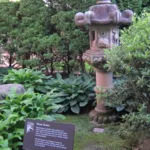
AI-generated illustration
Hosta ‘Island Breeze’ short overview
Hosta 'Island Breeze' is a compact, mounding perennial selected for vivid yellow leaves with broad green margins and distinctive red petioles in spring. In midsummer, upright scapes rise above the foliage with dark lavender, funnel-shaped flowers. It performs best in partial to full shade with evenly moist, organic soil and works well in shaded borders, woodland plantings, and containers across a wide range of USDA Hardiness Zones.
Taxonomic classification
Hosta ‘Island Breeze’ care guide
Light and placement
Grow in partial shade to shade, ideally with bright morning light and protection from intense afternoon sun. In hotter climates, deeper shade helps preserve the yellow-and-green contrast and limits scorch. Too much sun may bleach or scorch leaves; excessively dark conditions can shift the centers toward chartreuse and reduce vigor.
Watering and humidity
Water deeply when the upper inch of soil begins to dry, keeping the root zone evenly moist during leaf expansion and summer flowering. Increase frequency during hot, dry weather and reduce it after dormancy begins. Container plants dry faster than in-ground plants and may need frequent checks. Avoid standing water around the crown.
Soil and growing medium
Use fertile, organic soil that holds moisture without becoming stagnant. A loam enriched with compost is suitable, provided drainage remains good. The cultivar tolerates a range from slightly acidic to neutral soil; avoid compacted, chronically waterlogged ground, especially in containers.
Feeding
Apply a thin layer of compost in spring or use a balanced slow-release fertilizer at label strength as growth begins. Avoid heavy nitrogen feeding, which can produce soft foliage and encourage pest damage. Stop routine fertilizing by late summer so plants can harden before dormancy.
Growth and habit
This long-lived, herbaceous perennial forms a dense rhizomatous clump with a mounded habit. Growth is moderate, and the plant emerges from dormancy in spring before producing a summer flower display. Divide only when needed; mature clumps generally need little intervention beyond watering, mulching, and pest monitoring.
Planting and repotting
Plant in spring or early fall, setting the crown at soil level rather than burying it. Spread the roots across the planting hole, water thoroughly, and mulch lightly without covering the crown. Allow about 18 inches between plants for a compact display and good air movement.
Repot container plants in early spring as growth begins, moving them into fresh, moisture-retentive potting mix. Choose a container with drainage holes and only modestly increase the pot size. Divide and refresh crowded plants when the clump has filled the container.
Propagation and pruning
Propagation
Propagate by division in early spring or early fall, separating rhizomatous crowns with viable buds and roots. Commercial production is also by sterile tissue culture. Seed can form after pollination but will not reliably reproduce the named cultivar.
Pruning
Cut flower scapes after flowering if seed production is not desired, or leave them until frost for seasonal structure. Remove yellowing foliage after a hard freeze and clear debris from the crown. Do not cut healthy leaves during the growing season solely for appearance.
Overwintering
Leave the crown outdoors in the ground in Zones 3–9. After hard frost, remove collapsed foliage and apply a light mulch in colder or exposed sites, keeping mulch away from the crown. Containers are more vulnerable to root freezing; place them in a sheltered location or overwinter dormant pots in an unheated protected space.
Uses
Use ‘Island Breeze’ as a bright foliage accent in shaded borders, woodland gardens, foundation plantings, and containers. Its compact mound and tall lavender scapes provide contrast among dark-leaved or blue-leaved hostas. It is ornamental only and should not be treated as an edible or medicinal plant.
Appearance
Leaves are broad, ovate, and slightly sinuous, with bright yellow centers, broad dark green margins, and visible parallel veins. Young growth shows distinctive red petioles or red stippling near the leaf bases. The foliage forms a tidy mound, while greenish scapes rise above it to carry dark lavender flowers.
Flowering
The flowers are perfect, funnel-shaped, and carried in upright racemes above the leaf mound. Dark lavender blooms generally appear from mid-July into mid-August in Michigan trial conditions, with individual flowers lasting about one to two days. Scapes may reach about 28 inches, noticeably taller than the foliage.
Pollination and visitors
Hosta flowers produce nectar and pollen and are visited by insects, including bees, bumblebees, and other flower-visiting insects. Cultivar-specific visitor records are limited, so no single pollinator species is assigned.
Diseases and pests
Diseases
Good air circulation, moderate spacing, and removal of damaged foliage help reduce foliar disease. Avoid prolonged wetness on leaves and remove spent foliage after frost. The cultivar has no documented disease resistance beyond typical hosta performance; monitor for crown or root problems in poorly drained soil.
Pests
Slugs and snails are the main routine pests, especially in damp beds. Inspect foliage at dusk or after rain, reduce hiding places, and use barriers or labeled controls when necessary. Deer and rabbits may also browse hostas; physical protection is often more reliable than repellents.
Related diseases and pests
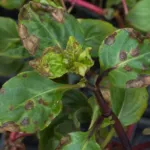
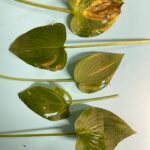
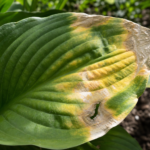
Only Plant Doctor profiles whose host data indicate this plant may be affected are shown here.

Toxicity and pollen
Hostas contain saponins and are listed by the ASPCA as toxic to dogs and cats if eaten. Typical signs include gastrointestinal upset such as vomiting or diarrhea. Keep pets from consuming leaves, flowers, or other plant parts and contact a veterinarian if ingestion is suspected. Evidence for serious human toxicity from ordinary garden contact is limited, but the plant should not be eaten.
- Typical season
- July to August during flowering
- Pollination / pollen
- Insect-carried pollen
The flowers release pollen during summer bloom, but hosta is not generally treated as a major airborne-allergen source. Its insect-pollinated flowers typically keep pollen close to the floral structures rather than dispersing it widely in the wind. Sensitive people should still avoid handling flowers if they notice symptoms.
Native habitat
Hostas are adapted to cool, moist woodland and woodland-edge conditions in East Asia. In cultivation, ‘Island Breeze’ performs best where soil stays evenly moist, summers are not excessively exposed, and foliage receives filtered light or shade. Morning light with afternoon shade is especially useful in warmer regions.
Interesting fact
‘Island Breeze’ is a sport of ‘Paradise Island’ and was patented as a distinct ornamental selection. Its leaf centers may shift toward chartreuse in deeper shade. The cultivar was selected for reduced bleaching compared with ‘Fire Island’.
Frequently asked questions (FAQ)
The most relevant questions about this plant, with short and direct answers.
🌱Quick care
What is Hosta 'Island Breeze'?⌄
Hosta 'Island Breeze' is a variegated, medium-size hosta with bright yellow centers, dark green margins, reddish petioles, and purple flowers. It is a hardy herbaceous perennial for partial shade to shade.
How big does Hosta 'Island Breeze' get?⌄
Hosta 'Island Breeze' typically grows about 12 inches tall and 18 inches wide, although mature spread may reach approximately 18–36 inches in favorable conditions. Its flower scapes can rise to about 28 inches.
What USDA hardiness zones are suitable for Hosta 'Island Breeze'?⌄
Hosta 'Island Breeze' is generally hardy in USDA Zones 3–9. In colder regions, the foliage dies back naturally in fall and regrows from dormant crowns in spring.
🌤️Environment and placement
Does Hosta 'Island Breeze' prefer sun or shade?⌄
Hosta 'Island Breeze' performs best in partial shade to full shade. A few hours of gentle morning sun can be beneficial, but strong afternoon sun may scorch its variegated leaves.
Can Hosta 'Island Breeze' grow in full shade?⌄
Yes, Hosta 'Island Breeze' can grow in full shade, especially where the area receives bright indirect light. Growth may be somewhat slower and the yellow centers may appear more chartreuse in deeper shade.
How much morning sun can Hosta 'Island Breeze' tolerate?⌄
Hosta 'Island Breeze' can usually tolerate several hours of mild morning sun if the soil stays evenly moist. Protect it from intense afternoon sun, particularly in hot climates.
What soil is best for Hosta 'Island Breeze'?⌄
Use fertile, organic, moisture-retentive soil that drains well. Incorporating compost or leaf mold can improve both moisture retention and soil structure without creating waterlogged conditions.
Can Hosta 'Island Breeze' grow under trees?⌄
Yes, it grows well beneath trees when it receives partial shade and does not have to compete excessively for water. Keep it away from dense tree roots when possible and water during dry periods.
💧Care and problems
How often should Hosta 'Island Breeze' be watered?⌄
Water Hosta 'Island Breeze' whenever the soil surface begins to dry, keeping the root zone consistently moist but not saturated. Plants may need more frequent watering during hot, dry weather or their first growing season.
Why are the leaves of my Hosta 'Island Breeze' turning brown?⌄
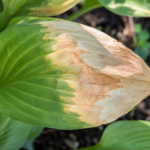
Brown leaf edges or patches usually indicate drought stress, excessive sun, heat, or wind exposure. Move container plants to brighter shade and provide deep, consistent watering while avoiding constantly soggy soil.
Why is Hosta 'Island Breeze' losing its bright yellow color?⌄
The yellow centers may become more chartreuse in heavier shade and paler or greener under stress. Excessive shade, seasonal changes, drought, or leaf age can all affect the intensity of the variegation.
Does Hosta 'Island Breeze' need fertilizer?⌄
Hosta 'Island Breeze' benefits from fertile soil and usually needs only a light, balanced fertilizer application in spring if growth is weak. Avoid heavy late-season feeding, which can encourage tender growth before dormancy.
Should I remove damaged leaves from Hosta 'Island Breeze'?⌄
Yes, remove badly torn, diseased, or frost-damaged leaves with clean scissors. Lightly damaged leaves can remain until they decline naturally, since they still contribute energy to the crown.
How do I protect Hosta 'Island Breeze' from slugs and snails?⌄
Reduce hiding places, avoid wet mulch touching the crown, and inspect plants regularly for feeding damage. Hand-picking, barriers, or a labeled slug control product can help when damage is persistent.
🪴Planting and repotting
When is the best time to plant Hosta 'Island Breeze'?⌄
Spring is an excellent time to plant Hosta 'Island Breeze', although container-grown plants can also be installed from spring through early fall while the ground is workable. Water thoroughly after planting.
How far apart should I plant Hosta 'Island Breeze'?⌄
Space Hosta 'Island Breeze' about 14–18 inches apart for individual plants to develop without crowding. Use wider spacing if you want each mound to remain visually distinct as it matures.
How deep should I plant Hosta 'Island Breeze'?⌄
Plant it with the crown and growing eyes just at or slightly below the soil surface. Do not bury the crown deeply, and water well to settle the soil around the roots.
Can Hosta 'Island Breeze' be grown in a container?⌄
Yes, Hosta 'Island Breeze' can grow in a container with drainage holes and fertile, moisture-retentive potting mix. Choose a container wide enough for its approximately 18-inch mature spread and monitor moisture closely.
✂️Propagation and pruning
Can Hosta 'Island Breeze' be divided?⌄
Yes, established Hosta 'Island Breeze' can be divided in early spring as shoots emerge or in early fall. Separate sections with healthy roots and at least one or two growing eyes, and replant them promptly.
When should I cut back Hosta 'Island Breeze'?⌄
Cut the foliage back after it has yellowed and died back naturally in fall, or after a hard freeze. Removing old foliage helps tidy the planting and reduces overwintering debris, but avoid cutting into the crown.
⚠️Toxicity and safety
Is Hosta 'Island Breeze' toxic to dogs and cats?⌄
Yes, Hosta 'Island Breeze' is moderately toxic if eaten by dogs or cats. Ingestion can cause gastrointestinal upset, so contact a veterinarian or animal poison service if a pet consumes the plant.
Is Hosta 'Island Breeze' deer resistant?⌄
No, Hosta 'Island Breeze' should not be considered deer resistant. Deer may browse the leaves, especially where natural food is limited, so fencing or a suitable deer deterrent may be needed.
🌸Flowering and special interest
When does Hosta 'Island Breeze' bloom?⌄
Hosta 'Island Breeze' usually blooms in midsummer to late summer. Its purple to lavender, bell-shaped flowers are held on taller reddish-green scapes above the foliage.
Should I remove the flowers from Hosta 'Island Breeze'?⌄
Remove the flower scapes after blooming if you prefer a tidier appearance or want the foliage to remain the main feature. Leaving the flowers in place does not normally harm the plant.
Do the flowers of Hosta 'Island Breeze' attract pollinators?⌄
The purple, bell-shaped flowers may attract hummingbirds and other flower-visiting pollinators. Their main ornamental value, however, is as a seasonal accent above the colorful foliage.