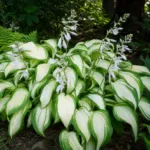
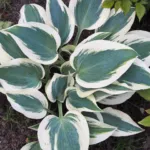
AI-generated illustration
Hosta ‘Gold Drop’ short overview
Hosta 'Gold Drop' is a compact, clump-forming hosta with smooth chartreuse to yellow heart-shaped leaves and summer spikes of pale lilac flowers. This small cultivar suits shaded borders, woodland gardens, edging and containers, with evenly moist, well-drained soil and protection from harsh afternoon sun. It is a useful foliage plant for small spaces, but pets should not be allowed to chew it because hostas contain saponins.
Taxonomic classification
Hosta ‘Gold Drop’ care guide
Light and placement
Grow in bright shade, dappled shade or gentle morning sun, especially with an east-facing or north-facing exposure. Avoid hot reflected light and intense afternoon sun, which can scorch the golden leaves. Too little light may produce greener, looser foliage; too much light causes bleached patches, brown margins and midday wilt.
Watering and humidity
Water deeply when the upper inch of soil begins to dry, keeping the root zone evenly moist but never saturated. Check containers and sandy soils more often, and reduce watering after foliage dies back in fall while preventing prolonged winter dryness. Water at the soil surface to keep leaves and crowns drier.
Soil and growing medium
Use fertile, humus-rich soil that holds steady moisture without becoming waterlogged. Loam or amended clay works well, and sandy soil should be improved with organic matter. Hosta tolerates acidic, neutral and mildly alkaline conditions, but drainage around the crown is essential.
Feeding
Apply a thin layer of compost or a balanced slow-release fertilizer in spring as shoots emerge. Feed lightly rather than heavily, because excess nitrogen can produce soft foliage and does not improve the compact habit. Stop routine feeding by late summer.
Growth and habit
Forms a tight, low mound of foliage and gradually enlarges into a dense clump. Its compact habit makes it useful at the front of plantings and in containers. Divide when the crown becomes crowded or when reduced vigor suggests congestion.
Planting and repotting
Plant in spring or early fall when the soil is workable. Set the crown at soil level, spread the roots outward, and water deeply during establishment. Allow about 12–18 inches between plants for a compact edging effect, or more space if a broader mound is desired.
Repot container plants in early spring as growth begins, moving them into a slightly wider pot with fresh, moisture-retentive but well-drained mix. Keep the crown at the same depth and water thoroughly after transplanting.
Propagation and pruning
Propagation
Divide established clumps in early spring as shoots emerge or in late summer. Lift the plant, separate crowns with healthy roots and shoots, and replant promptly. Seed will not reliably reproduce the named cultivar.
Pruning
Remove spent flower scapes after flowering if seed production is not wanted. Cut back frost-damaged or fully dead foliage after it collapses in fall, and clear debris to reduce overwintering pest and disease pressure.
Overwintering
Leave healthy foliage in place until it collapses naturally, then remove it after frost. Apply a light mulch in exposed or very cold sites, keeping mulch away from the crown. Container plants are more vulnerable to freeze-thaw damage; shelter pots or sink them into the ground for winter.
Uses
A compact ornamental foliage plant for shade borders, woodland gardens, rock gardens, containers and edging. It is not recommended as a pet-accessible edible plant because hostas contain saponins and are toxic to dogs and cats when eaten.
Appearance
The plant forms a low, tight mound of smooth, prominently veined leaves. Leaves are oval to heart-shaped, with sharply pointed tips and a chartreuse to dull-yellow color. Upright leafy scapes rise above the mound and carry nodding bell-shaped blooms.
Flowering
Upright leafy scapes rise above the foliage mound in summer and carry nodding, bell-shaped flowers. Reliable descriptions differ on whether the blooms are white, lilac or pale lavender; the cultivar is most consistently described in US horticultural sources as flowering in pale lilac to lavender.
Pollination and visitors
Horticultural sources describe hostas as attracting hummingbirds and other flower visitors; for this exact compact cultivar, evidence is strongest for general bird visitation rather than a documented pollinator species. The bell-shaped flowers provide summer nectar access.
Diseases and pests
Diseases
Avoid planting crowns in stagnant, saturated soil, which increases crown-rot risk. Remove badly diseased foliage and disinfect tools. Hostas can be affected by Hosta Virus X and other viruses; remove and discard infected plants rather than propagating them.
Pests
Slugs and snails may chew irregular holes in the leaves; deer and rabbits may also browse the foliage. Use barriers, hand-picking, habitat management or labeled controls as appropriate, and avoid excessive irrigation around the crown.
Related diseases and pests
Only Plant Doctor profiles whose host data indicate this plant may be affected are shown here.
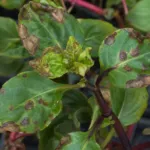 DiseaseImpatiens necrotic spot virus diseaseImpatiens necrotic spot orthotospovirus
 DiseaseSouthern blightAthelia rolfsii
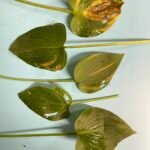 PestStrawberry foliar nematodeAphelenchoides fragariae
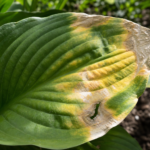 Environmental stressExcess light stress
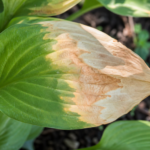 Environmental stressLeaf sunburn
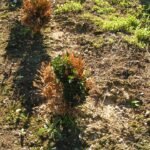 DiseasePhytophthora root and crown rotPhytophthora nicotianae
Toxicity and pollen
Hosta plants contain saponins and are listed by the ASPCA as toxic to dogs and cats. Ingestion commonly causes gastrointestinal upset such as vomiting, diarrhea or depression. Keep pets from chewing leaves, crowns or flowers and seek veterinary advice after ingestion.
- Typical season
- Summer flowering season
- Pollination / pollen
- Heavy, insect-carried pollen
Hosta is insect-pollinated, so its pollen is generally heavy and not readily dispersed through the air like wind-borne tree or grass pollen. Individual sensitivity is still possible, but this cultivar is not generally regarded as a major airborne pollen source.
Native habitat
Hostas are woodland-edge perennials associated with cool, shaded conditions, fertile soils and reliable moisture. The named cultivar is horticultural rather than a wild population, so its garden performance reflects selected hybrid parentage rather than a single native habitat.
Interesting fact
'Gold Drop' is a miniature hosta derived from Hosta venusta and 'August Moon'. Its smooth chartreuse leaves are reported to tolerate more sun than many hostas, although hot afternoon sun can still scorch them. The cultivar is valued primarily for foliage and compact edging performance.
Frequently asked questions (FAQ)
The most relevant questions about this plant, with short and direct answers.
🌱Quick care
How do you care for Hosta 'Gold Drop'?⌄
Grow Hosta 'Gold Drop' in part shade to shade, fertile moisture-retentive soil, and even moisture. Protect it from intense afternoon sun, keep the soil from drying out, and remove declining foliage after frost.
Is Hosta 'Gold Drop' a small or large hosta?⌄
Hosta 'Gold Drop' is a small, compact hosta that typically forms a mound about 6–12 inches tall and 12–18 inches wide. Mature size varies with soil, moisture, climate, and growing conditions.
What does Hosta 'Gold Drop' look like?⌄
Hosta 'Gold Drop' forms a dense mound of smooth, heart-shaped chartreuse to golden-yellow leaves with prominent veins. It produces upright scapes bearing pale lavender to lilac, bell-shaped flowers in summer.
What USDA zones can grow Hosta 'Gold Drop'?⌄
Hosta 'Gold Drop' is generally hardy in USDA Zones 3–8, although local performance can vary with winter exposure and snow cover. In warmer areas, provide deeper shade and consistent moisture.
🌤️Environment and placement
How much sun does Hosta 'Gold Drop' need?⌄
Hosta 'Gold Drop' grows best in part shade to full shade, especially with morning sun or filtered light. Some sources report useful sun tolerance, but hot afternoon sun can scorch or fade its golden foliage.
Can Hosta 'Gold Drop' grow in full shade?⌄
Yes, Hosta 'Gold Drop' can grow in full shade, but growth may be slower and the foliage color less bright. Filtered light or a few hours of gentle morning sun usually produces a fuller, better-colored plant.
What is the best soil for Hosta 'Gold Drop'?⌄
Use fertile, organically rich, moisture-retentive but well-drained soil for Hosta 'Gold Drop'. Improve poor soil with compost, but avoid locations that remain waterlogged around the crown.
How much water does Hosta 'Gold Drop' need?⌄
Keep Hosta 'Gold Drop' evenly moist, particularly during establishment, hot weather, and drought. Water deeply at the soil surface when the top inch begins to dry, and avoid repeatedly wetting the foliage.
Can Hosta 'Gold Drop' grow under trees?⌄
Yes, Hosta 'Gold Drop' can grow beneath trees if it receives enough light and supplemental water. Avoid planting directly in dense, dry root competition, and water regularly because tree roots can quickly deplete soil moisture.
💧Care and problems
Why are the leaves of my Hosta 'Gold Drop' turning brown?⌄
Brown edges or patches usually indicate drought stress, excessive sun, heat, wind, or leaf damage from slugs and hail. Keep the soil evenly moist, improve shade during hot afternoons, and inspect leaves for pests.
Why is my Hosta 'Gold Drop' not growing well?⌄
Poor growth is commonly caused by insufficient moisture, deep root competition, excessive sun, poor soil, or crown damage. Check drainage and watering first, then move the plant only during a suitable dormant or cool season.
How do you protect Hosta 'Gold Drop' from slugs?⌄
Reduce slug damage by keeping the planting area free of dense debris, watering at the soil line, and using a garden-approved slug control method when needed. Inspect plants regularly because slugs can quickly make ragged holes in the leaves.
Do deer and rabbits eat Hosta 'Gold Drop'?⌄
Yes, deer and rabbits commonly browse Hosta 'Gold Drop' and other hostas. Use fencing, repellents, or a protected planting area if these animals are active in your garden.
Should Hosta 'Gold Drop' be fertilized?⌄
Hosta 'Gold Drop' benefits from compost-enriched soil and a light application of balanced, slow-release fertilizer in spring. Avoid heavy late-season feeding, which can encourage tender growth before winter.
🪴Planting and repotting
When is the best time to plant Hosta 'Gold Drop'?⌄
Plant Hosta 'Gold Drop' in spring or early fall while temperatures are moderate and soil moisture is reliable. Spring planting is especially convenient because the plant can establish before summer heat.
How far apart should Hosta 'Gold Drop' be planted?⌄
Space Hosta 'Gold Drop' about 12–18 inches apart, depending on whether you want individual mounds or quicker coverage. Leave enough room for air circulation and the cultivar’s mature spread.
Can Hosta 'Gold Drop' be grown in a container?⌄
Yes, Hosta 'Gold Drop' is well suited to a container because of its compact size. Use a pot with drainage holes, moisture-retentive potting mix, and winter protection where the container may freeze more severely than garden soil.
How do you plant Hosta 'Gold Drop' correctly?⌄
Plant Hosta 'Gold Drop' with the crown at soil level and spread the roots outward rather than burying them deeply. Water thoroughly after planting and apply a thin mulch layer without covering the crown.
✂️Propagation and pruning
How do you propagate Hosta 'Gold Drop'?⌄
Propagate Hosta 'Gold Drop' primarily by division in early spring before the leaves unfurl or in early fall. Dig up the clump, separate sections with roots and buds, and replant them promptly at the original depth.
Can Hosta 'Gold Drop' be grown from seed?⌄
Hosta 'Gold Drop' can produce seed, but seedlings may not reproduce the named cultivar’s foliage or growth habit. Division is the reliable way to make new plants identical to the parent.
Should you cut back Hosta 'Gold Drop' in fall?⌄
Cut back Hosta 'Gold Drop' after frost has killed the foliage or when the leaves become collapsed and unsightly. Removing dead foliage helps tidy the planting and reduces places where pests may overwinter.
⚠️Toxicity and safety
Is Hosta 'Gold Drop' toxic to dogs and cats?⌄
Yes, Hosta 'Gold Drop' is toxic to dogs and cats if eaten. Ingestion can cause gastrointestinal upset, so keep pets away from the plant and contact a veterinarian promptly if consumption occurs.
🌸Flowering and special interest
When does Hosta 'Gold Drop' bloom?⌄
Hosta 'Gold Drop' usually blooms from June through August, depending on climate and growing conditions. Its pale lavender or lilac flowers rise above the foliage on scapes that are commonly about 10–15 inches tall.
Should you remove the flowers from Hosta 'Gold Drop'?⌄
Remove the flower scapes only if you prefer a foliage-focused appearance or want to prevent seed formation. Leaving the flowers does not normally harm the plant, and the lavender blooms add summer interest.