Source:
Hosta ‘Cherry Berry’ short overview
Hosta 'Cherry Berry' is a compact, clump-forming perennial prized for narrow leaves with creamy white centers, dark green margins and striking red petioles. Pale lavender flowers rise on reddish scapes in summer. Grow it in moist, well-drained soil in partial to full shade, where it brings strong foliage contrast to woodland borders, shaded beds and containers. Plants die back naturally in fall and return from dormant crowns in spring.
Taxonomic classification
Hosta ‘Cherry Berry’ care guide
Light and placement
Grow in partial shade to full shade, ideally with bright indirect or dappled light and protection from hot afternoon sun. An east- or north-facing position, or shade beneath high tree canopies, is suitable. Too much direct sun can scorch the pale leaf centers and cause wilt; overly deep shade may reduce vigor and flowering.
Watering and humidity
Water deeply when the upper inch of soil begins to dry, keeping the root zone evenly moist rather than constantly saturated. Check plants beneath trees more often because tree roots compete for moisture. Mulch lightly to reduce evaporation, but keep mulch away from the crown. Reduce watering after dormancy while preventing prolonged winter dryness in containers.
Soil and growing medium
Use fertile, humus-rich soil that holds consistent moisture without becoming waterlogged. Loam or amended clay is suitable, and sandy soil should be enriched with compost. Hostas tolerate acidic, neutral and mildly alkaline conditions, but steady moisture and good drainage are more important than precise pH.
Feeding
Apply a balanced slow-release fertilizer in early spring as growth begins, following the product label, or top-dress with compost. A second light feeding is optional in early summer in poor soil. Do not overfertilize late in the season, because lush late growth is more vulnerable to winter damage and may not improve the cultivar’s foliage quality.
Growth and habit
This cultivar forms a dense, low mound from a perennial crown and becomes dormant after frost. Its moderate growth rate and clumping habit make it easy to maintain in borders or containers. Divide only when the clump has filled its space; frequent division is unnecessary.
Planting and repotting
Plant in spring or early fall while the soil is workable. Set the crown at soil level, spreading the roots outward rather than burying them deeply. Space plants about 18–30 inches apart depending on the desired density, and water thoroughly during the first growing season while roots establish.
Repot container-grown plants in early spring as new shoots emerge, or after flowering in early fall. Move the plant into a container only one size larger and refresh compacted potting mix. Ensure the crown remains at the same depth and that excess water can drain freely.
Propagation and pruning
Propagation
Divide established clumps in early spring as shoots emerge or in late summer to early fall. Use a clean knife or spade and retain several buds with healthy roots on each division. Seed may be produced, but seedlings will not reliably reproduce the named cultivar.
Pruning
Remove spent flower scapes after flowering if seed capsules are not wanted. Allow foliage to yellow and die back naturally in fall, then remove dead leaves before or during early spring cleanup. Do not cut healthy foliage prematurely while it is still contributing energy to the crown.
Overwintering
Leave the crown in the ground outdoors in hardy regions. After foliage dies back, remove debris and apply a light mulch only where winters are severe or soil heaving is common. Container plants have less root insulation than garden plants; overwinter them in a protected, unheated location or insulate the pot without keeping the mix waterlogged.
Uses
Use as a foliage accent in shaded borders, woodland gardens, foundation plantings and mixed containers. The contrasting white centers and red petioles are especially effective near dark-leaved companions. Hosta foliage is sometimes eaten cooked in parts of East Asia, but this named ornamental cultivar should not be treated as a food crop, particularly because Hosta is toxic to dogs and cats.
Appearance
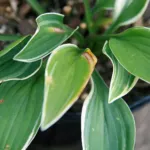
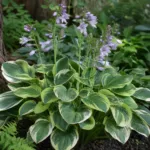
The cultivar is recognized by narrow lance-shaped leaves with reverse variegation: creamy white centers surrounded by dark green margins. Bright red petioles and reddish flower scapes provide the strongest identification features. The leaves rise from a compact basal clump, while the scapes extend above the foliage and carry pale lavender racemes.
Flowering
Pale lavender, funnel-shaped flowers are carried in terminal racemes on upright reddish scapes that rise above the foliage. The cultivar typically flowers in mid to late summer, with reported bloom around July and August. Flowering is ornamental and may produce red seed capsules when pollinated.
Pollination and visitors
Hosta flowers are documented as attractive to bees, butterflies and hummingbirds at the genus level. This cultivar’s open, pale lavender racemes can provide a summer nectar and pollen resource, but no pollinator species has been confirmed specifically for 'Cherry Berry'.
Hosta 'Cherry Berry' photos
Click any photo for a larger view. Source, author and license are shown separately.
Diseases and pests
Diseases
Watch for Hosta Virus X and other virus symptoms such as mottling, streaking, distorted leaves or unusual tissue collapse; remove and destroy affected plants rather than propagating them. Good sanitation, clean tools and purchasing healthy divisions reduce risk. Avoid overhead irrigation when foliage remains wet for long periods.
Pests
Slugs and snails commonly rasp irregular holes in the leaves, especially in cool, damp shade. Check plants at night, reduce hiding places and avoid excessive surface moisture. Container plants may also experience vine weevil damage. Deer and rabbits can browse the foliage; use physical barriers or appropriate localized repellents where needed.
Related diseases and pests
Only Plant Doctor profiles whose host data indicate this plant may be affected are shown here.
 DiseaseImpatiens necrotic spot virus diseaseImpatiens necrotic spot orthotospovirus
 DiseaseSouthern blightAthelia rolfsii
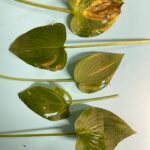 PestStrawberry foliar nematodeAphelenchoides fragariae
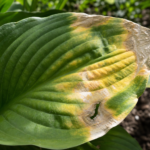 Environmental stressExcess light stress
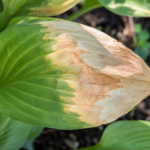 Environmental stressLeaf sunburn
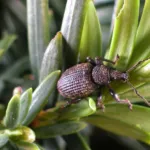 PestBlack Vine WeevilOtiorhynchus sulcatus
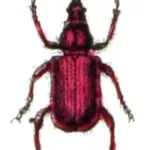 PestPeach weevilRhynchites bacchus
 DiseaseOnion downy mildewPeronospora destructor
Toxicity and pollen
Hosta is listed by the ASPCA as toxic to dogs and cats because of saponins, which can cause vomiting, diarrhea and depression if plant material is eaten. The available evidence is genus-level rather than specific to this cultivar. Keep plants away from pets that chew foliage and contact a veterinarian if ingestion causes symptoms.
- Typical season
- Summer during flowering
- Pollination / pollen
- Insect-carried floral pollen
The flowers release pollen during summer bloom, but Hosta is insect-pollinated and is not generally regarded as a major source of windborne seasonal pollen. Direct skin or respiratory sensitivity remains possible, so people with known flower allergies should use ordinary precautions around flowering plants.
Native habitat
Hosta cultivars derive from shade-adapted Asian hostas associated with moist woodland edges, forest margins and rich soils. In cultivation, they perform best where soil remains evenly moist but roots are not saturated, with shelter from hot afternoon sun and drying winds.
Interesting fact
Introduced by Bill and Eleanor Lachman in 1991.
Frequently asked questions (FAQ)
The most relevant questions about this plant, with short and direct answers.
🌱Quick care
What is Hosta 'Cherry Berry'?⌄
Hosta 'Cherry Berry' is a small, deciduous perennial hosta with narrow, white-centered leaves, dark green margins, red leaf stems, red flower scapes, and lavender-purple summer flowers.
How big does Hosta 'Cherry Berry' get?⌄
Hosta 'Cherry Berry' typically grows about 10–12 inches tall and 15–24 inches wide, although mature size varies with climate, soil, and growing conditions.
Is Hosta 'Cherry Berry' easy to grow?⌄
Yes, Hosta 'Cherry Berry' is generally easy to grow when planted in partial to full shade with fertile soil and consistent moisture.
Is Hosta 'Cherry Berry' evergreen?⌄
No, Hosta 'Cherry Berry' is deciduous and dies back to the ground after frost, then regrows from dormant crowns in spring.
🌤️Environment and placement
Does Hosta 'Cherry Berry' grow in shade?⌄
Yes, Hosta 'Cherry Berry' performs best in partial shade to shade, especially with protection from hot afternoon sun.
Can Hosta 'Cherry Berry' tolerate morning sun?⌄
Yes, it can tolerate gentle morning sun or dappled light if the soil remains evenly moist, but strong afternoon sun may scorch its pale leaves.
What USDA hardiness zones are suitable for Hosta 'Cherry Berry'?⌄
Hosta 'Cherry Berry' is commonly listed as hardy from USDA Zones 3 through 8 or 9, depending on the source and local growing conditions.
What soil is best for Hosta 'Cherry Berry'?⌄
Plant Hosta 'Cherry Berry' in fertile, moisture-retentive but well-drained soil enriched with organic matter.
Can Hosta 'Cherry Berry' grow in a container?⌄
Yes, Hosta 'Cherry Berry' grows well in a container with drainage holes, quality potting mix, and regular watering during the growing season.
Where should I plant Hosta 'Cherry Berry' in my yard?⌄
Place it in a sheltered, shaded border, woodland garden, edging bed, or container where its pale foliage and red stems can be seen clearly.
💧Care and problems
How often should I water Hosta 'Cherry Berry'?⌄
Water Hosta 'Cherry Berry' whenever the soil surface begins to dry, aiming for moderate, even moisture rather than constantly soggy soil.
Why are the leaves on my Hosta 'Cherry Berry' turning brown?⌄
Brown leaf edges usually indicate drought stress, excessive sun, heat, wind, or salt buildup; move the plant to a more sheltered location and keep the soil evenly moist.
Why is my Hosta 'Cherry Berry' losing its white leaf color?⌄
Pale centers can appear less distinct when the plant is stressed or grown in unsuitable light, while too much sun may bleach or scorch the foliage; bright shade and steady moisture usually preserve the contrast.
How do I protect Hosta 'Cherry Berry' from slugs?⌄
Reduce hiding places, avoid consistently wet debris around the crown, and use a slug-control method labeled for ornamental gardens if feeding damage appears.
Do deer eat Hosta 'Cherry Berry'?⌄
Yes, deer commonly browse hostas, including Hosta 'Cherry Berry'; use fencing, repellents, or another protective strategy where deer pressure is high.
Why does Hosta 'Cherry Berry' have holes in its leaves?⌄
Small ragged holes are most often caused by slugs or snails, although caterpillars, hail, and animal browsing can also damage hosta leaves.
Should I fertilize Hosta 'Cherry Berry'?⌄
Apply a moderate amount of balanced, slow-release fertilizer in spring if the soil is poor; avoid heavy feeding, which can produce soft growth and increase stress.
🪴Planting and repotting
When is the best time to plant Hosta 'Cherry Berry'?⌄
Plant Hosta 'Cherry Berry' in spring after the soil is workable or in early fall while the soil is still warm and the plant has time to establish before dormancy.
How do I plant Hosta 'Cherry Berry' in the ground?⌄
Dig a hole about twice as wide as the root ball, set the crown at the same depth it was growing, backfill with improved soil, water thoroughly, and add a light mulch layer without covering the crown.
How do I grow Hosta 'Cherry Berry' in a pot?⌄
Use a container with drainage holes that is slightly larger than the root ball, fill it with moisture-retentive potting mix, and place it in bright shade with regular watering.
How far apart should I plant Hosta 'Cherry Berry'?⌄
Space plants about 18–24 inches apart for individual specimens, adjusting the distance according to the mature width you want and the local growing conditions.
✂️Propagation and pruning
How do I propagate Hosta 'Cherry Berry'?⌄
Propagate Hosta 'Cherry Berry' by dividing established clumps in early spring before the leaves unfurl or in early fall.
Can Hosta 'Cherry Berry' be grown from seed?⌄
Yes, it can produce seed, but seedlings may not retain the cultivar’s distinctive leaf pattern; division is the reliable method for producing identical plants.
When should I divide Hosta 'Cherry Berry'?⌄
Divide it in early spring before full leaf expansion or in early fall, when cooler temperatures reduce transplant stress.
Should I cut back Hosta 'Cherry Berry' in fall?⌄
Remove collapsed or frost-damaged foliage in late fall or before new growth begins in spring, but do not cut into the dormant crown.
⚠️Toxicity and safety
Is Hosta 'Cherry Berry' toxic to dogs?⌄
Yes, Hosta 'Cherry Berry' should be treated as toxic to dogs if eaten because hostas contain saponins that can cause vomiting, diarrhea, or depression.
Is Hosta 'Cherry Berry' toxic to cats?⌄
Yes, Hosta 'Cherry Berry' is toxic to cats if eaten and may cause gastrointestinal upset or depression; contact a veterinarian if ingestion is suspected.
Are the red berries or seed pods of Hosta 'Cherry Berry' poisonous?⌄
Do not allow pets or children to eat the red seed pods or any other part of Hosta 'Cherry Berry', because the plant is considered toxic to dogs and cats when ingested.
🌸Flowering and special interest
When does Hosta 'Cherry Berry' bloom?⌄
Hosta 'Cherry Berry' generally blooms in mid to late summer, often during July and August in the United States.
What color are the flowers on Hosta 'Cherry Berry'?⌄
The flowers are usually lavender to violet-purple and appear on tall reddish flower scapes above the foliage.
Does Hosta 'Cherry Berry' produce red seed pods?⌄
Yes, Hosta 'Cherry Berry' can develop attractive cherry-red seed pods after flowering, and they may provide additional color into fall.
Should I remove the flowers from Hosta 'Cherry Berry'?⌄
Remove spent flower stalks if you prefer a tidier appearance, but leaving them in place is also acceptable and allows the plant to develop decorative seed pods.