
 Source:
 Mount Everest giant allium (Allium ‘Mount Everest’) short overview
Allium 'Mount Everest' is a tall, bulbous perennial prized for its clean white flower spheres and strong architectural presence. In late spring to early summer, sturdy, upright stems rise above strap-shaped gray-green leaves and carry dense umbels of starry florets. Plant the bulbs in full sun and sharply drained soil for reliable flowering, and use the cut stems fresh or dried. Like other ornamental alliums, the bulbs can be harmful to pets if eaten.
Taxonomic classification
Mount Everest giant allium (Allium ‘Mount Everest’) care guide
Light and placement
Give this cultivar full sun, ideally in an open bed with a south-, east- or west-facing aspect and little competition from overhanging foliage. Strong light supports sturdy stems and fuller umbels. Flopping or weak flowering can indicate insufficient light, while scorched foliage is more often caused by drought or heat than by excessive sun.
Watering and humidity
Water thoroughly after planting and during the first growing season whenever the upper few inches of soil dry. Once established, average garden rainfall is often sufficient, but provide supplemental water during prolonged spring drought. Reduce watering as the foliage yellows after bloom and keep dormant bulbs relatively dry; avoid frequent shallow irrigation and standing water.
Soil and growing medium
Use soil that drains freely after rain, with organic matter incorporated into poor sandy or compacted ground. Heavy clay should be loosened and amended with grit or other drainage-improving material rather than left waterlogged. The cultivar tolerates a broad pH range, so correction is usually unnecessary unless a soil test identifies a serious imbalance.
Feeding
Mix finished compost into the planting area before bulbs go in. In nutrient-poor beds, apply a balanced bulb fertilizer at planting or as shoots emerge, following the product label rather than using a heavy dose. Do not continue feeding after flowering has finished or while bulbs are entering dormancy; excessive nitrogen can promote foliage at the expense of sturdy flowering.
Growth and habit
This cultivar makes a seasonal clump from bulbs. Leaves emerge first, followed by tall, mostly leafless flowering stems; the basal foliage commonly declines during or after flowering. Allow leaves to yellow naturally so the bulb can replenish reserves. Dense plantings may eventually need lifting and division when flowering becomes crowded or uneven.
Planting and repotting
Plant firm bulbs point-up in fall, setting them deeply enough to anchor the tall stems and protect them from temperature swings. Choose a sunny site that does not stay wet in winter. Space bulbs in groups or drifts for visual impact, water once after planting if the soil is dry, and mark the location because the plants disappear during dormancy.
For containers, transplant or divide during fall dormancy when the foliage has died back. Use a deep pot with drainage holes and a gritty, well-drained bulb mix. Repot only when bulbs are crowded or the container medium has deteriorated; avoid disturbing actively growing plants unless necessary.
Propagation and pruning
Propagation
The practical method is division by offsets. Lift crowded clumps in early fall after the foliage has died back, separate firm offsets carefully, and replant them immediately at normal bulb depth. Seed propagation is possible for some alliums but is not a reliable way to reproduce a named cultivar true to type.
Pruning
No routine pruning is needed. Remove spent flowerheads if you want to prevent seed formation or prefer a cleaner appearance. Otherwise, leave the heads standing for late-season structure. Cut the foliage only after it has naturally yellowed and begun to collapse; removing it early can weaken flowering in the following year.
Overwintering
Leave bulbs outdoors in the ground in suitable USDA Zones 4–8, provided the soil drains well. A light winter mulch can help where freeze-thaw cycles are severe, but remove or thin it as growth begins. In colder or poorly drained sites, container bulbs need protection from prolonged freezing and winter saturation rather than warmth indoors.
Uses
Use in perennial borders, formal or cottage-style beds, gravel gardens, wildlife plantings and large containers with excellent drainage. The tall stems are useful as fresh or dried cut flowers. It is ornamental rather than a culinary crop; do not treat this named cultivar as an edible onion, and keep bulbs away from pets and children who may chew them.
Appearance
Gray-green, strap-shaped basal leaves accompany smooth, upright, ribbed-looking flowering stems. The identifying feature is the large, tightly packed white spherical umbel composed of numerous small star-shaped florets. The plant has a distinctly vertical, architectural outline and a mild onion-like scent when foliage or bulbs are bruised.
Flowering
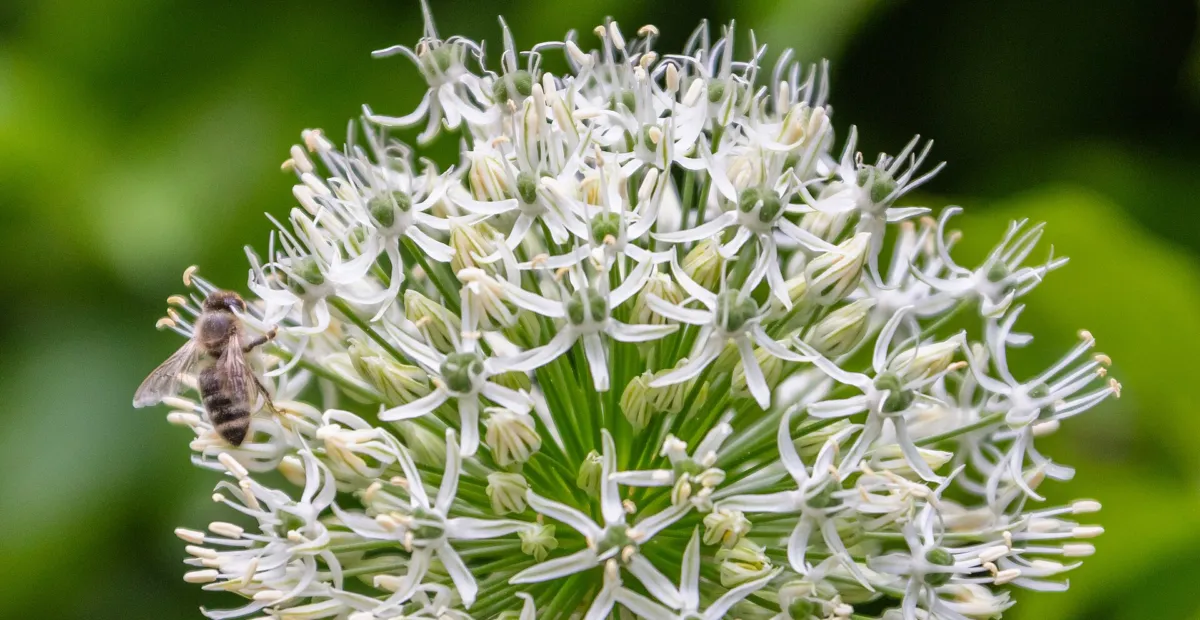
Flowering occurs in late spring or early summer, commonly May to June in much of the United States. Dozens of small white, six-petaled florets are packed into a rounded head on a tall stem. Flowerheads remain ornamental after the florets fade and can be left standing for seed display or removed for a tidier border.
Pollination and visitors
The exposed florets and abundant stamens provide accessible floral resources for insect visitors. Horticultural references specifically describe this cultivar as pollinator-friendly and note butterfly attraction; bees are also characteristic visitors to open allium umbels. The available evidence does not establish one particular pollinator species for this cultivar.
Allium 'Mount Everest' photos
Click any photo for a larger view. Source, author and license are shown separately.
Diseases and pests
Diseases
Poor drainage can encourage bulb rots, onion white rot and downy mildew. Plant only firm, healthy bulbs, provide air circulation, and avoid overhead irrigation or chronically wet soil. Remove badly diseased plants and do not replant susceptible alliums in the same contaminated area. Yellowing after flowering is normal; premature collapse with soft tissue is not.
Pests
Alliums are generally resistant to deer and are usually low-maintenance. Watch for onion thrips, bulb-feeding pests and slug damage on emerging foliage. Reduce hiding places, keep the planting area clean, and use targeted controls only when damage is substantial. Avoid routine broad-spectrum insecticides during bloom because the flowers provide resources for visiting insects.
Related diseases and pests
Only Plant Doctor profiles whose host data indicate this plant may be affected are shown here.
 PestOnion thripsThrips tabaci Lindeman
 DiseaseOnion downy mildewPeronospora destructor
 DiseaseRhizopus soft rotRhizopus stolonifer
 DiseaseBacterial soft rotPectobacterium carotovorum
 PestMelon thripsThrips palmi Karny
 PestChilli thripsScirtothrips dorsalis Hood
 DiseaseAllium rustPuccinia allii
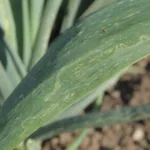 PestAllium leafminerPhytomyza gymnostoma Loew
Toxicity and pollen
The cultivar belongs to Allium, a genus in which bulbs and other tissues contain sulfur compounds that can harm dogs and cats if eaten. ASPCA guidance for Allium plants notes gastrointestinal upset and possible red-blood-cell damage after sufficient ingestion. Keep bulbs, discarded plant material and compost inaccessible to pets; seek veterinary advice after suspected ingestion.
- Typical season
- May–June in much of the United States
- Pollination / pollen
- Insect-released pollen from exposed stamens
This is an insect-pollinated ornamental with pollen presented within the flower, so it is not generally considered a major wind-borne seasonal allergen. Direct contact with flowers may still cause irritation or sensitization in susceptible people, and occupational exposure to ornamental plant pollen can occasionally provoke symptoms. People with known plant allergies should use gloves and avoid rubbing their eyes.
Native habitat
The cultivar is grown in open, sunny, well-drained garden settings that mimic the seasonal moisture pattern of many bulbous alliums: active growth in cool spring conditions followed by a drier summer dormancy. Its horticultural parentage is commonly linked with Allium stipitatum, a Central Asian bulbous species associated with continental climates and well-drained soils, but the named cultivar itself is garden-origin.
Interesting fact
The cultivar is often listed horticulturally as Allium stipitatum 'Mount Everest', although some references use the shorter name Allium 'Mount Everest'. Its white umbels create a strong contrast with purple alliums. The dried flowerheads can remain decorative after bloom, and the plant has received the RHS Award of Garden Merit.
Frequently asked questions (FAQ)
The most relevant questions about this plant, with short and direct answers.
🌱Quick care
What is Allium 'Mount Everest'?⌄
Allium 'Mount Everest' is a cold-hardy ornamental onion grown from a perennial bulb. It produces tall stems topped with rounded clusters of white, star-shaped flowers.
🌤️Environment and placement
How much sun does Allium 'Mount Everest' need?⌄
Plant Allium 'Mount Everest' in full sun, ideally with at least 6 hours of direct light daily. More sun generally supports stronger stems and better flowering.
What type of soil is best for Allium 'Mount Everest'?⌄
Use fertile, well-drained soil such as loam or sandy soil, or improve heavy clay with organic matter. Avoid locations that stay wet because persistent moisture can rot the bulbs.
What USDA hardiness zones can grow Allium 'Mount Everest'?⌄
Allium 'Mount Everest' is generally grown as a hardy perennial in USDA Zones 4 through 8, with some sellers listing Zone 9 in favorable conditions. Container bulbs may need extra winter protection in colder areas.
Can Allium 'Mount Everest' grow in partial shade?⌄
It may survive in light partial shade, but full sun is the reliable choice for strong flowering and upright stems. Avoid deep shade and sites with poorly draining soil.
💧Care and problems
How often should I water Allium 'Mount Everest'?⌄
Water moderately while the bulb is actively growing, allowing the soil to dry slightly between waterings. Once established and entering summer dormancy, it usually tolerates relatively dry conditions.
Is Allium 'Mount Everest' drought tolerant?⌄
Yes, established Allium 'Mount Everest' is fairly drought tolerant, especially after flowering and during summer dormancy. Water it during prolonged drought if the soil becomes completely dry and the plant is still actively growing.
Why are the leaves of Allium 'Mount Everest' turning yellow or brown before flowering?⌄
The foliage commonly yellows or develops brown tips before or during flowering as the bulb redirects energy to the flower stalk. Grow it among later-emerging perennials to hide the fading leaves.
Why is my Allium 'Mount Everest' not flowering?⌄
Poor flowering is most often linked to insufficient sun, wet soil, immature bulbs, or planting that is too shallow. Newly planted bulbs may need a season to establish before producing their best display.
Does Allium 'Mount Everest' need fertilizer?⌄
A fertile soil is usually sufficient, but a bulb fertilizer applied according to the label at planting or in early spring can support growth. Avoid excessive nitrogen, which may produce foliage at the expense of flowers.
Do Allium 'Mount Everest' stems need staking?⌄
Usually not, because the plant has naturally upright stems, but staking may help in windy locations or very rich, heavily watered soil. Planting in full sun also helps reduce weak, floppy growth.
🪴Planting and repotting
When should I plant Allium 'Mount Everest' bulbs?⌄
Plant the bulbs in fall, before the ground freezes and preferably after soil temperatures have cooled. Fall planting allows roots to develop before the spring flowering season.
How deep should I plant Allium 'Mount Everest' bulbs?⌄
Plant the bulbs about 6 to 8 inches deep, or roughly two to three times the bulb’s height, with the pointed end facing upward. Follow the supplier’s instructions if they specify a different depth for the bulb size.
How far apart should I plant Allium 'Mount Everest' bulbs?⌄
Space bulbs about 9 to 16 inches apart, depending on whether you want a dense group or more individual definition. Planting in drifts or clusters usually creates the strongest visual effect.
Can Allium 'Mount Everest' be grown in containers?⌄
Yes, it can grow in a large container with drainage holes and a well-drained potting mix. In colder USDA Zones 4 through 6, protect the container from repeated deep freezing because container bulbs are less insulated than bulbs in the ground.
✂️Propagation and pruning
Should I cut back Allium 'Mount Everest' after it flowers?⌄
Remove spent flower heads if you want a neater appearance or wish to limit self-seeding, but leave the foliage until it naturally yellows and dies back. The fading leaves continue feeding the bulb for the following year.
How do I propagate Allium 'Mount Everest'?⌄
Propagate it mainly by separating offsets from established bulbs during dormancy, usually in late summer or fall. Replant firm offsets at the same general depth as the parent bulb, although small offsets may take one or more seasons to flower.
When should I divide Allium 'Mount Everest' bulbs?⌄
Divide the bulbs during dormancy, typically after the foliage has died back in late summer or fall. Division is most useful when clumps become crowded or flowering declines despite good light and drainage.
Do Allium 'Mount Everest' bulbs multiply or spread?⌄
They can slowly form offsets and may occasionally self-seed if flower heads are left in place. They are generally clump-forming rather than aggressively spreading in typical home gardens.
Can Allium 'Mount Everest' naturalize in a garden?⌄
Yes, it can persist and gradually form clumps when planted in suitable, well-drained soil. Naturalization is most successful when bulbs are left undisturbed and the foliage is allowed to mature after flowering.
⚠️Toxicity and safety
Are Allium 'Mount Everest' bulbs toxic to dogs and cats?⌄
Yes, Allium 'Mount Everest' should be considered toxic if eaten by dogs or cats, with the bulb presenting the main concern. Keep bulbs and plant debris away from pets and contact a veterinarian promptly if ingestion occurs.
Is Allium 'Mount Everest' safe to touch?⌄
Routine gardening contact is generally not the primary risk, but the plant should not be eaten. Wear gloves when handling bulbs if you have sensitive skin, and wash your hands afterward.
Are Allium 'Mount Everest' flowers edible?⌄
No, do not use Allium 'Mount Everest' as an edible onion or garnish. It is an ornamental cultivar, and ingestion can be harmful, especially to pets.
Are Allium 'Mount Everest' bulbs deer and rabbit resistant?⌄
Allium 'Mount Everest' is generally avoided by deer and rabbits because of its onion-like chemistry and odor. However, resistance is not an absolute guarantee under severe browsing pressure.
🌸Flowering and special interest
How tall does Allium 'Mount Everest' grow?⌄
Allium 'Mount Everest' commonly reaches about 2½ to 3 feet tall, although height varies with bulb size and growing conditions. Its flower heads are typically about 4 to 6 inches wide.
When does Allium 'Mount Everest' bloom?⌄
It usually blooms in late spring to early summer, often from May into June in much of the United States. Exact timing varies with USDA zone, winter temperatures, and spring weather.
What color are Allium 'Mount Everest' flowers?⌄
The flowers are white to creamy white and arranged in large, rounded globes. Each head contains many small, star-shaped florets on a tall, leafless stem.
Can I use Allium 'Mount Everest' flowers as cut flowers?⌄
Yes, the long stems and durable white flower heads make Allium 'Mount Everest' useful as a fresh cut flower. Cut stems when the florets are opening, and the dried heads can also provide decorative interest.
Do pollinators visit Allium 'Mount Everest'?⌄
Yes, the flowers can attract bees, butterflies, and other pollinating insects. Planting several bulbs together provides a more noticeable nectar source during its late-spring bloom.
Similar plants
 Azure Monkshood (Aconitum carmichaelii) care guideAconitum carmichaelii
 Monkshood (Aconitum ‘Stainless Steel’)Aconitum 'Stainless Steel'
 Monkshood (Aconitum ‘Bressingham Spire’)Aconitum 'Bressingham Spire'
 Golden full moon maple (Acer shirasawanum ‘Aureum’)Acer shirasawanum 'Aureum'
 Globosum (Acer platanoides ‘Globosum’)Acer platanoides 'Globosum'
 Striped maple (Acer pensylvanicum) care guideAcer pensylvanicum