
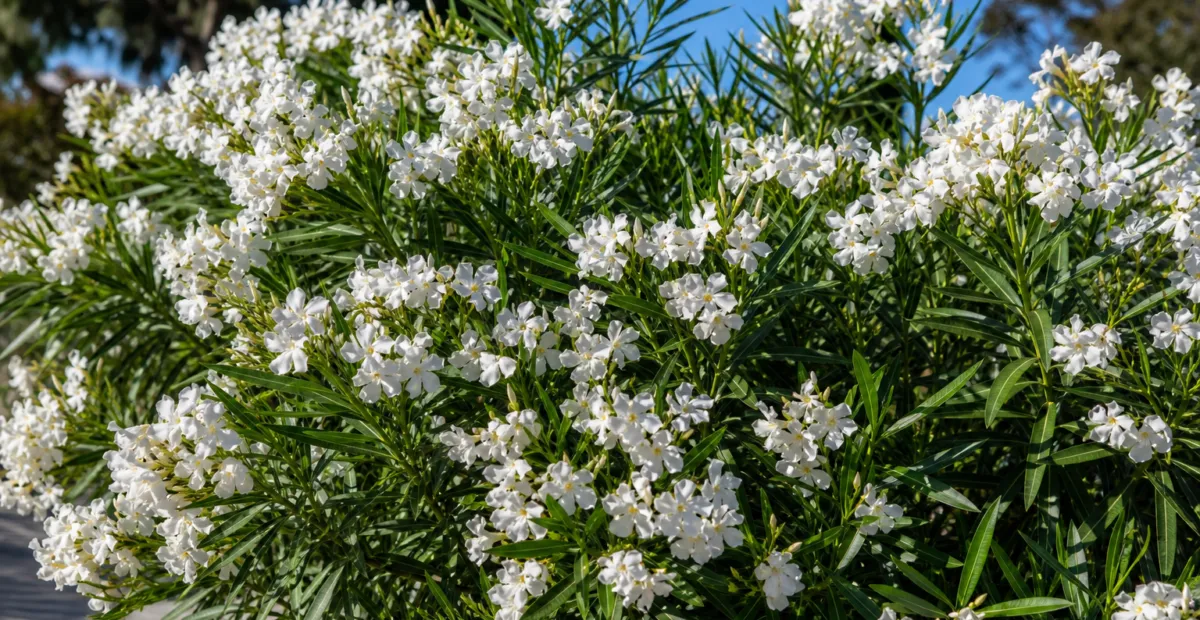
 AI-generated illustration
Sister Agnes (Nerium oleander ‘Sister Agnes’) short overview
Nerium oleander 'Sister Agnes' is a vigorous evergreen oleander prized for its abundant single, pure-white flowers and narrow, glossy dark-green foliage. In warm U.S. climates it can become a large rounded shrub or be trained as a small tree, screen, hedge, or container specimen. It thrives in full sun, tolerates drought, salt, heat, and varied soils, but all parts are highly toxic to people and pets.
Taxonomic classification
Sister Agnes (Nerium oleander ‘Sister Agnes’) care guide
Light and placement
Give full sun for the densest habit and heaviest flowering, ideally in a south- or west-facing position with at least 6 hours of direct light. It tolerates partial shade, but low light commonly causes lanky stems, weaker structure, and reduced bloom. In very hot regions, afternoon protection is acceptable if morning sun remains strong.
Watering and humidity
Water deeply and allow the upper soil to dry somewhat between irrigations once established. Provide regular irrigation during the first growing season and during prolonged summer drought, then reduce frequency because mature plants are highly drought tolerant. Containers dry faster and need more consistent watering, but saucers should not hold standing water.
Soil and growing medium
Use a well-drained soil or container mix that does not remain saturated. Oleander tolerates sandy, loamy, clay, acidic, neutral, and alkaline conditions, but drainage is important for reliable root health. Slightly alkaline to neutral soil is acceptable; avoid chronically waterlogged sites.
Feeding
Apply a balanced slow-release fertilizer or a light complete fertilizer in spring, especially for container plants or nutrient-poor sites. Avoid heavy nitrogen feeding, which can produce weak, leafy growth. Do not fertilize drought-stressed, freshly transplanted, or dormant plants; water before and after applying granular products.
Growth and habit
This is a fast-growing, vigorous evergreen that can develop a rounded shrub habit or be trained onto a central trunk. Regular light pruning maintains structure and screen density; remove young basal suckers when they divert energy from flowering. Branches can be brittle, so avoid weakly structured crowded growth.
Planting and repotting
Plant in spring after the danger of hard frost, setting the root ball at the same depth it grew in its nursery container. Allow about 5–7 feet between plants for a screen, with more space for an unpruned specimen. Water deeply during establishment, then reduce irrigation as roots mature.
Repot container plants in spring when roots fill the pot, moving up only one container size. Use a heavy, well-drained mix and protect the sap from skin and eyes. Large plants may be root-pruned conservatively or top-dressed instead of fully repotted.
Propagation and pruning
Propagation
Propagate from semi-ripe or softwood cuttings during active growth. Root cuttings in a clean, free-draining medium with steady moisture and bright indirect light until established. Seed can be used for species-level propagation, but seedlings will not reliably reproduce the named cultivar.
Pruning
Prune after the main flush of flowering or in spring to remove dead, damaged, crossing, or weak stems and to maintain the desired size. Thin crowded basal growth and remove suckers early. Wear gloves and eye protection, collect all debris, and never burn oleander trimmings.
Overwintering
In Zones 9A–11, protect plants from unusual freezes with frost cloth and by keeping container roots insulated. In colder regions, grow in a large container and move it indoors or into a bright, cool, frost-free space before temperatures fall below the plant’s tolerance. Reduce watering indoors and do not fertilize during winter dormancy.
Uses
Use ‘Sister Agnes’ as a warm-climate screen, hedge, specimen shrub, trained standard, parking-lot or roadside planting, patio container, or large architectural accent. It is useful where heat, drought, salt, and poor soil limit other shrubs. Do not use it in edible landscapes or where children, pets, or livestock can access fallen material.
Appearance
The plant has opposite or sometimes whorled, narrow lance-shaped leaves with a leathery texture and prominent midrib. Young stems are green and mature growth becomes woody; plants are commonly multi-trunked and may be trained as standards. Terminal flower clusters contrast strongly with the dark evergreen foliage.
Flowering
This cultivar bears terminal clusters of single, pure-white, five-lobed flowers. Bloom is strongest during warm weather and may continue for much of the year in USDA Zones 9b–11; flowering is reduced during winter in cooler Zone 9 locations. Plants in insufficient light become lanky and flower less.
Pollination and visitors
Species-level studies describe insect-mediated pollination with low visitation rates; larger bees and some moths are plausible visitors, but cultivar-specific visitor records are limited. The flowers are showy and nectarless, so this is not a dependable high-value pollinator plant.
Diseases and pests
Diseases
Oleander is generally resilient, but root problems can develop in persistently wet soil. Monitor for leaf scorch, dieback, and fungal issues after cold or drought stress. Remove affected material with disinfected tools and improve drainage; avoid unnecessary routine fungicide use.
Pests
Scale insects, aphids, and oleander caterpillars are the main concerns. Inspect new growth and leaf undersides regularly. Hand-remove small infestations or use a forceful water spray where appropriate; manage larger outbreaks with products labeled for the pest and plant, following the label. Oleander caterpillars can rapidly defoliate plants.
Related diseases and pests
Only Plant Doctor profiles whose host data indicate this plant may be affected are shown here.
 DiseaseXylella fastidiosa bacterial diseasesXylella fastidiosa
 PestBlack scaleSaissetia oleae
 PestObscure mealybugPseudococcus viburni
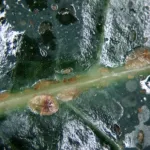 PestBrown Soft ScaleCoccus hesperidum
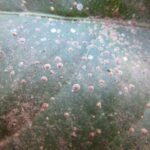 PestCalifornia red scaleAonidiella aurantii
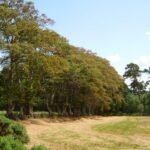 Environmental stressDrought stress
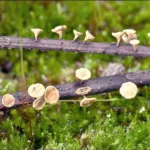 DiseaseAsh diebackHymenoscyphus fraxineus
 Environmental stressSalt stress
Toxicity and pollen
All parts contain cardiac glycosides and are poisonous if eaten, whether fresh or dried. Ingestion can cause gastrointestinal symptoms and dangerous heart-rhythm disturbances, potentially fatal in severe cases. Wear gloves when pruning, keep trimmings away from children and animals, and never burn the wood or foliage because smoke may be hazardous.
- Typical season
- Spring through fall during flowering
- Pollination / pollen
- Sticky, insect-transferred pollen
Oleander pollen is associated with insect pollination and can be sticky or aggregated rather than freely wind-dispersed. Direct cultivar-specific allergy evidence is limited, so low airborne relevance is a cautious horticultural assessment rather than a claim of zero allergy risk.
Native habitat
The species is associated with warm subtropical and Mediterranean-climate regions, often near seasonal streams, wadis, riverbanks, and other sites where roots can access moisture while shoots experience heat and drought. Cultivated plants tolerate dry, sunny, saline, and alkaline urban settings.
Interesting fact
‘Sister Agnes’ is recognized for single pure-white flowers and vigorous growth. Oleander flowers are showy but nectarless and rely on insect-mediated pollen transfer. The species can tolerate drought, salt exposure, poor soils, and urban conditions once established.
Frequently asked questions (FAQ)
The most relevant questions about this plant, with short and direct answers.
🌱Quick care
What is Nerium oleander 'Sister Agnes'?⌄
Nerium oleander 'Sister Agnes' is a fast-growing evergreen oleander cultivar with single, pure-white flowers and dark green, narrow leaves. It is commonly grown as a shrub, screen, specimen, or trained small tree.
How much sun does Nerium oleander 'Sister Agnes' need?⌄
Give Nerium oleander 'Sister Agnes' full sun, ideally at least 6 hours of direct light daily. It can tolerate some partial shade, but reduced light commonly causes leggier growth and fewer flowers.
How often should I water 'Sister Agnes' oleander?⌄
Water deeply when the soil begins to dry, especially during the first growing season and periods of extreme heat. Once established, it is drought tolerant, but regular deep watering during active growth supports stronger flowering.
Is 'Sister Agnes' oleander evergreen?⌄
Yes, Nerium oleander 'Sister Agnes' is generally evergreen in warm climates. Cold weather, hard freezes, or severe winter exposure can cause leaf drop and dieback.
🌤️Environment and placement
What USDA hardiness zones are suitable for 'Sister Agnes' oleander?⌄
Nerium oleander 'Sister Agnes' is best suited to USDA Zones 9A through 11. In colder areas, it may require container growing, winter protection, or overwintering in a frost-free location.
Can 'Sister Agnes' oleander survive a freeze?⌄
It can tolerate brief light frost but should be protected from hard freezes. Freezing temperatures may damage the foliage and stems, while prolonged or severe cold can kill the aboveground plant.
Can 'Sister Agnes' oleander grow near the coast?⌄
Yes, 'Sister Agnes' oleander tolerates salt spray and is suitable for many coastal landscapes. Plant it in well-drained soil and protect young plants from unusually cold coastal freezes.
What soil is best for Nerium oleander 'Sister Agnes'?⌄
Use well-drained sandy, loamy, or clay soil. The plant tolerates a broad range of soil conditions, but consistently waterlogged soil can cause root problems.
Can 'Sister Agnes' oleander grow in clay soil?⌄
Yes, it can grow in clay soil if drainage is adequate. Amend the planting area only as needed and avoid placing the plant in a low spot where water remains after rain.
How large does 'Sister Agnes' oleander get?⌄
In favorable landscapes, Nerium oleander 'Sister Agnes' commonly reaches about 10 to 18 feet tall and 10 to 15 feet wide. Size varies with climate, soil, pruning, and whether it is grown as a shrub or standard.
Is 'Sister Agnes' oleander suitable for a privacy screen?⌄
Yes, it can form a dense, fast-growing screen in warm climates. For a row planting, allow approximately 5 to 7 feet between plants, adjusting the spacing for the desired coverage and mature size.
💧Care and problems
Does 'Sister Agnes' oleander need fertilizer?⌄
Established plants usually need only light fertilization, often once in spring when grown in reasonably fertile soil. Avoid excessive nitrogen because it can promote soft leafy growth at the expense of flowering.
Why is my 'Sister Agnes' oleander not flowering?⌄
Insufficient sunlight, excessive shade, drought stress, hard pruning, or competing basal suckers can reduce flowering. Move or prune for better light, water during prolonged drought, and remove vigorous suckers at the base.
Why are the leaves on my 'Sister Agnes' oleander turning yellow?⌄
Yellow leaves can result from overwatering, poor drainage, nutrient stress, cold damage, or normal aging of older foliage. Check soil moisture and roots first, because oleander prefers drainage rather than constantly wet soil.
What pests commonly attack 'Sister Agnes' oleander?⌄
Scale insects and oleander caterpillars are the main reported pests. Oleander caterpillars can defoliate a plant rapidly, so inspect leaves and stems regularly and remove infestations promptly.
Can 'Sister Agnes' oleander be grown in a container?⌄
Yes, it grows well in a large container with drainage holes and a well-drained potting mix. Container plants dry and freeze more quickly than plants in the ground, so monitor watering and move them to protection before hard frost.
🪴Planting and repotting
When should I plant 'Sister Agnes' oleander?⌄
Plant it after the danger of hard frost has passed, preferably during spring in areas with cold winters. In warm, frost-free parts of the United States, fall planting can also work if the plant has time to establish before extreme heat or cold.
How do I plant Nerium oleander 'Sister Agnes'?⌄
Choose a sunny site with well-drained soil, dig a hole about as deep as the root ball and wider than its spread, and set the plant at the same depth it was growing. Water deeply after planting and maintain consistent moisture while roots establish.
Can 'Sister Agnes' oleander be trained as a small tree?⌄
Yes, it can be trained to a single trunk or grown as a multi-trunk small tree. Remove competing basal stems gradually and support the selected leader while it develops a strong structure.
✂️Propagation and pruning
How do you propagate 'Sister Agnes' oleander?⌄
Propagate 'Sister Agnes' oleander from stem cuttings, which generally preserve the cultivar's characteristics. Use healthy, nonflowering shoots, keep the cuttings warm and lightly moist, and handle all plant material with protective gloves.
Can 'Sister Agnes' oleander be grown from seed?⌄
It can produce seed, but seedlings may not reproduce the named cultivar accurately. Cuttings are preferred when you want plants that retain the typical 'Sister Agnes' flower color and growth characteristics.
When should I prune 'Sister Agnes' oleander?⌄
Prune in late winter or early spring to remove dead, damaged, weak, or crossing growth and to shape the plant. Avoid removing all young flowering stems at once, because severe pruning can reduce the current season's bloom.
How do I prune 'Sister Agnes' oleander without losing flowers?⌄
Thin and shorten selected branches rather than cutting the entire shrub back uniformly. Remove dead wood and spent flower structures, while retaining enough healthy young growth to support flowering.
⚠️Toxicity and safety
Is Nerium oleander 'Sister Agnes' poisonous?⌄
Yes, all parts of Nerium oleander 'Sister Agnes' are highly toxic if eaten. Keep it away from children and pets, wear gloves when pruning, and seek immediate expert help if any plant material is ingested.
Can I burn 'Sister Agnes' oleander trimmings?⌄
No, do not burn oleander trimmings because the smoke can contain toxic compounds. Bag or dispose of prunings according to local yard-waste rules, and keep the material away from children and animals.
Is 'Sister Agnes' oleander safe around dogs and cats?⌄
No, it is unsafe around dogs and cats because every part of the plant is toxic if chewed or swallowed. Place it where pets cannot access fallen leaves, flowers, branches, or seed pods.
Should I wear gloves when pruning 'Sister Agnes' oleander?⌄
Yes, wear gloves and avoid touching your eyes or mouth while handling the plant. Wash your hands and tools afterward, and keep sap and trimmings away from children and pets.
🌸Flowering and special interest
What color flowers does 'Sister Agnes' oleander have?⌄
Nerium oleander 'Sister Agnes' produces single, pure-white flowers, often with a pale or creamy throat. The flowers are especially showy in full sun.
When does 'Sister Agnes' oleander bloom?⌄
In warm, frost-free climates, it can bloom from late spring through fall and may flower nearly year-round. Blooming is usually reduced during winter and after cold damage.
Are 'Sister Agnes' oleander flowers fragrant?⌄
The flowers may have a pleasant fragrance, although fragrance intensity can vary with weather, plant conditions, and individual plants. Full sun and adequate moisture generally support the best flowering display.
Does 'Sister Agnes' oleander need deadheading?⌄
Deadheading is not essential, but removing spent flower clusters and developing dry fruit can improve appearance. Prune selectively so you do not remove too much new growth that would produce later flowers.
Similar plants
 Calypso (Nerium oleander ‘Calypso’)Nerium oleander 'Calypso'
 Variegata (Nerium oleander ‘Variegata’)Nerium oleander 'Variegata'
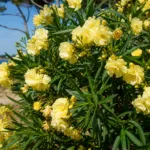 Double Yellow (Nerium oleander ‘Double Yellow’)Nerium oleander 'Double Yellow'
 Hardy Pink (Nerium oleander ‘Hardy Pink’)Nerium oleander 'Hardy Pink'
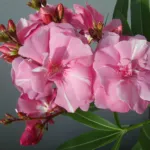 Splendens (Nerium oleander ‘Splendens’)Nerium oleander 'Splendens'
 Apple Blossom oleander (Nerium oleander ‘Apple Blossom’)Nerium oleander 'Apple Blossom'