 Source:
 Pink Banana (Musa velutina) short overview
Pink Banana is a compact, clumping banana species grown for its tropical foliage, vivid pink flower bracts, and unusual fuzzy pink fruit. Native to the eastern Himalayas and Assam, it grows quickly in warm, humid conditions and can flower within a growing season when given strong light, rich soil, steady moisture, and protection from wind. In much of the United States, it is best treated as a container plant or overwintered indoors.
Taxonomic classification
Pink Banana (Musa velutina) care guide
Light and placement
Grow Pink Banana in full sun where summers are warm, ideally in a sheltered south- or west-facing site protected from strong wind. In hot, dry climates, provide bright filtered afternoon light to reduce leaf scorch. Pale, slow-growing foliage usually indicates insufficient light; bleached patches, crisp margins, or shredded leaves suggest excessive exposure, heat, or wind.
Watering and humidity
Water deeply whenever the surface begins to dry, then allow excess water to drain completely. During active summer growth, containers may need frequent watering, especially in hot weather. Reduce watering in winter but do not allow the root ball to become completely dry. High humidity supports larger, cleaner leaves, although good air movement remains important.
Soil and growing medium
Use a fertile, humus-rich medium that holds moisture without becoming waterlogged. In containers, combine quality potting mix with compost or other organic matter and add drainage material if the mix stays soggy. A slightly acidic to neutral reaction is suitable. Compacted clay, stagnant water, and poorly drained soil increase the risk of root and corm problems.
Feeding
Feed from spring through late summer with a balanced liquid fertilizer at the label rate every 2 to 4 weeks, or use a controlled-release fertilizer according to its instructions. Heavy growth benefits from regular organic matter and adequate potassium. Do not fertilize dry, stressed, freshly repotted, or dormant plants; water first and resume feeding after active growth returns.
Growth and habit
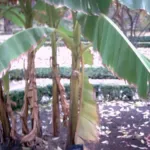
This banana forms a clump of upright false stems made from overlapping leaf sheaths. Individual stems are not woody and generally flower once before declining, while new shoots maintain the clump. Fast growth can quickly fill a container, so remove unwanted offsets or give the plant ample root space and a stable, sheltered position.
Planting and repotting
Plant after danger of frost in a warm, sheltered location. Dig a hole slightly wider than the root ball and set the plant at the same depth it occupied in its container. Backfill with improved soil, water thoroughly, and apply a light organic mulch without touching the pseudostem. Protect new plants from strong wind while they establish.
Repot in spring when roots fill the container or growth slows despite good care. Move to a heavy, stable container only one size larger, using a fertile, freely draining mix. Handle the root ball carefully, water thoroughly after repotting, and delay fertilizer until fresh growth resumes.
Propagation and pruning
Propagation
Propagate from fresh seed or by division of established offsets. Sow seed in a warm, consistently moist medium; germination can be uneven and may take time. Divide vigorous pups when they have formed their own roots and several leaves, preferably during active spring or summer growth.
Pruning
Remove yellowing or badly torn leaves at the base with clean tools. After a pseudostem has flowered and finished fruiting, cut it down once it is clearly declining, leaving healthy offsets to develop. Avoid cutting healthy leaves unnecessarily because bananas rely on their foliage for rapid growth.
Overwintering
In cold regions, move containers indoors before nights approach freezing. Provide the brightest available light, warmth, moderate humidity, and reduced but regular watering. Outdoor plants may be cut back after cold damage and heavily mulched in marginal climates, but dependable survival through freezing weather should not be expected.
Uses
Primarily an ornamental foliage and flowering plant for tropical-style beds, patios, conservatories, and large containers. In warm climates it can be used as an accent or informal clump. Sources describe the fruit as edible, but it is seedy and generally valued more for its unusual pink appearance than for eating quality; do not treat it as a standard dessert banana.
Appearance
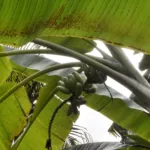
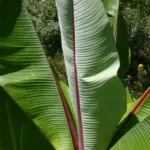
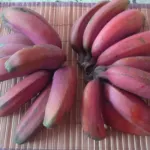
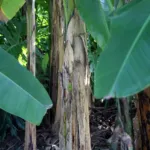
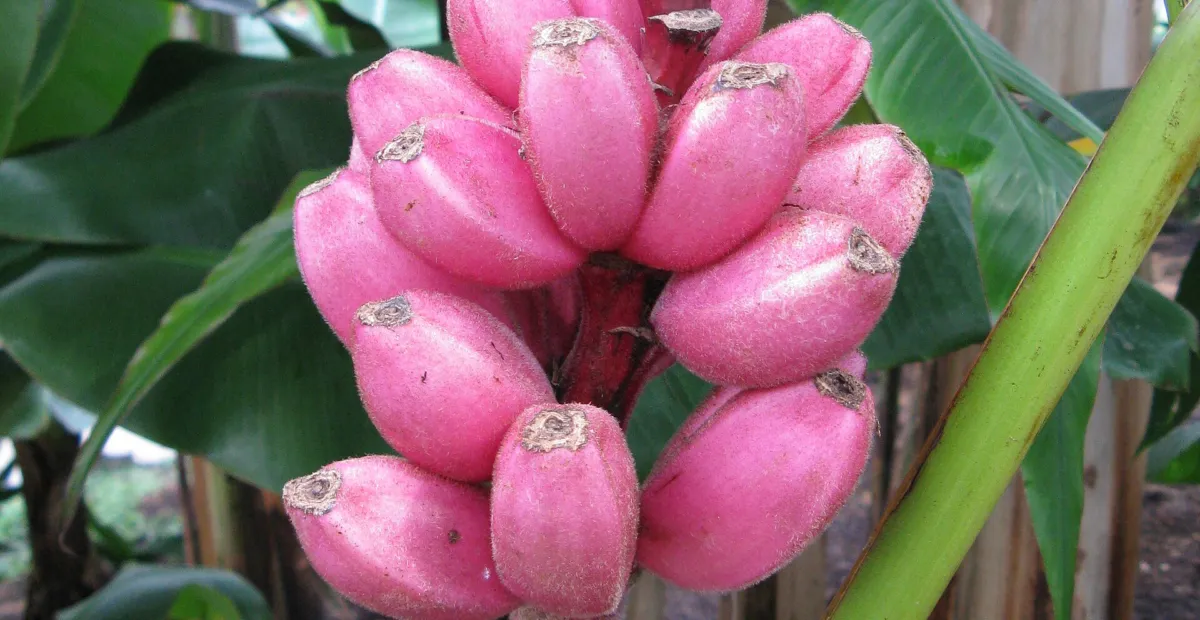
The plant has slender pseudostems and broad, paddle-shaped green leaves that emerge from the center of the clump. Showy pink bracts arch from the crown, followed by short, fuzzy pink fruits. The velvety fruit surface is a useful identification feature and distinguishes this species from many more common ornamental bananas.
Flowering
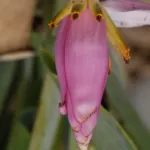
Flowering follows a period of vigorous vegetative growth, commonly in the warm season under outdoor cultivation. The inflorescence emerges from the crown on an arching spike, with colorful pink bracts providing most of the ornamental display. After fruiting, the flowering pseudostem gradually declines while offsets continue the clump.
Pollination and visitors
The flowers are structurally suited to insect visitation, but reliable species-level pollinator documentation for Musa velutina is limited. Do not assume strong bee or butterfly attraction without local observations. Fruit production may occur without clearly documented animal-pollination dependence.
Musa velutina photos
Click any photo for a larger view. Source, author and license are shown separately.
Diseases and pests
Diseases
Avoid persistently wet soil, overhead watering late in the day, and crowded placement. Watch for leaf-spot symptoms such as expanding brown or gray lesions and remove badly affected leaves. Improve air circulation and sanitation; use a labeled fungicide only when disease is confirmed and the product is appropriate for ornamental bananas.
Pests
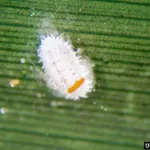
Red spider mites may appear on stressed plants, especially indoors in dry air. Inspect leaf undersides for stippling, webbing, or fine crawling pests. Rinse foliage, increase humidity without creating stagnant conditions, and use insecticidal soap or horticultural oil according to the product label after testing a small area.
Related diseases and pests
Only Plant Doctor profiles whose host data indicate this plant may be affected are shown here.
Toxicity and pollen
Reliable, species-specific veterinary and human toxicity evidence is limited. The fruit is described in horticultural references as edible, but it is seedy and not generally grown as a food crop. Prevent children and pets from chewing large amounts of plant material, and seek medical or veterinary advice if significant ingestion causes symptoms.
- Typical season
- During warm-season flowering
- Pollination / pollen
- Pollen is produced within the flowers; airborne-allergy behavior is not well documented.
Musa velutina produces pollen as a flowering plant, but dependable information on pollen dispersal and clinically relevant airborne allergy is limited. Its flowers are generally associated with insect-mediated reproduction rather than abundant windborne pollen. People with significant plant allergies should avoid direct contact with flowers and monitor personal reactions.
Native habitat
Musa velutina is native to the eastern Himalayan region and Assam, where it grows in warm subtropical environments. It favors fertile, organic, consistently moist soils with good drainage and protection from damaging winds. Its natural climate explains its preference for heat, humidity, and a long growing season in cultivation.
Interesting fact
The epithet velutina refers to the plant’s velvety or hairy pink fruit. The apparent trunk is a pseudostem formed from tightly overlapping leaf sheaths rather than woody tissue. Flowering stems generally decline after fruiting, while offsets continue the clump. Under strong warmth and light, this species can mature and fruit relatively quickly compared with many bananas.
Frequently asked questions (FAQ)
The most relevant questions about this plant, with short and direct answers.
🌱Quick care
What is Musa velutina?⌄
Musa velutina, commonly called Pink Banana, is a compact ornamental banana plant in the Musaceae family. It is grown for its tropical foliage, pink bracts, and small fuzzy pink fruit.
How much sunlight does Pink Banana need?⌄
Pink Banana grows best in full sun to bright filtered light. Provide at least 6 hours of direct sun outdoors when possible, while protecting indoor plants from harsh afternoon heat through glass.
How often should I water Musa velutina?⌄
Water Musa velutina whenever the soil surface begins to dry, keeping the root zone evenly moist but not waterlogged. Plants in containers and hot, sunny locations may need water more frequently.
What soil is best for Pink Banana?⌄
Use rich, well-drained, moisture-retentive soil containing plenty of organic matter. The soil should hold moisture while allowing excess water to drain freely from the root zone.
How big does Musa velutina get?⌄
Musa velutina typically reaches about 4 to 6 feet tall and 3 to 4 feet wide in garden conditions. Container-grown plants may remain smaller, especially when light, warmth, or root space is limited.
🌤️Environment and placement
Can Pink Banana grow outdoors in the United States?⌄
Pink Banana can grow outdoors year-round in warm parts of the United States, especially USDA Zones 9 through 11. In colder areas, it may die back after frost and resprout if the rhizome receives winter protection.
What USDA hardiness zone is Musa velutina?⌄
Musa velutina is commonly listed for USDA Hardiness Zones 7b through 11. In Zones 7b and 8, reliable survival and fruiting depend on a sheltered site and substantial winter protection.
Can Pink Banana survive frost?⌄
Pink Banana is frost tender above ground and should be protected from freezing temperatures. Frost can damage the leaves and pseudostem, while a well-mulched rhizome may survive and produce new growth in spring.
Can I grow Musa velutina in a container?⌄
Yes, Musa velutina grows well in a large container with drainage holes, rich soil, and consistent moisture. Container growing also makes it easier to move the plant indoors before freezing weather.
Can Pink Banana grow indoors?⌄
Pink Banana can be grown indoors near a bright window or under a strong grow light. Indoor plants need good humidity, even watering, air circulation, and enough warmth to maintain active growth.
Where should I plant Pink Banana outdoors?⌄
Plant Pink Banana in a sunny, sheltered location with rich, moist, well-drained soil. Protection from strong wind is important because its large leaves tear easily.
💧Care and problems
Why are the leaves of my Musa velutina turning brown?⌄
Brown leaves on Musa velutina are commonly caused by dry soil, low humidity, wind damage, cold exposure, or excessive fertilizer salts. Check moisture and roots first, then move container plants away from drafts and harsh heat.
Why are the leaves of my Pink Banana splitting?⌄
Leaf splitting is normal for banana plants and is often worsened by wind, rough handling, or dry conditions. It is usually cosmetic, although severe tearing can reduce the plant’s ability to photosynthesize.
Does Musa velutina need fertilizer?⌄
Musa velutina benefits from regular feeding during warm-season growth because it grows quickly and produces large leaves. Apply a balanced fertilizer according to the product label, and avoid heavy applications to dry soil.
What pests commonly affect Pink Banana?⌄
Common pests include spider mites, mealybugs, aphids, and scale insects. Inspect leaf undersides and leaf joints regularly, especially when the plant is grown indoors or under dry conditions.
Why is my Musa velutina not growing?⌄
Slow growth is usually caused by insufficient warmth, low light, dry soil, root problems, or winter dormancy. Move the plant into brighter light and warmth, maintain even moisture, and avoid fertilizing heavily while it is inactive.
Can Pink Banana be cut back for winter?⌄
Yes, Pink Banana can be cut back after frost damages the foliage, particularly in climates where the rhizome is overwintered outdoors. Leave protected crown tissue in place and cover the root zone with a thick layer of dry mulch.
🪴Planting and repotting
When should I plant Musa velutina outdoors?⌄
Plant Musa velutina outdoors after the danger of freezing weather has passed and the soil has warmed. In colder regions, start it in a container or plant it early enough to establish before fall.
How do I repot Pink Banana?⌄
Repot Pink Banana into a container only moderately larger than the current root ball, using rich, well-drained potting mix. Water thoroughly afterward and keep the plant in bright, warm conditions while it reestablishes.
How deep should I plant Musa velutina?⌄
Plant Musa velutina at the same depth it was growing in its nursery container. Burying the pseudostem too deeply can encourage rot, while exposed roots can dry out quickly.
How much space does Pink Banana need?⌄
Allow approximately 3 to 4 feet of width for a mature Pink Banana clump, with additional room if pups are retained. Give it enough clearance that the large leaves do not constantly rub against structures or walkways.
✂️Propagation and pruning
How do you propagate Musa velutina from seed?⌄
Propagate Musa velutina from mature, fully developed seeds planted in a warm, sterile, well-drained medium. Germination can be uneven, so maintain steady warmth and moisture without keeping the seed mix saturated.
Can Pink Banana be propagated from pups?⌄
Yes, Pink Banana can be propagated by separating rooted pups from the parent clump. Divide during active warm-season growth, keeping a portion of rhizome and healthy roots attached to each pup.
Can Musa velutina be propagated by division?⌄
Musa velutina can be propagated by division of its rhizome and offsets. Use a clean, sharp tool, replant divisions promptly, and keep them evenly moist while new roots and leaves develop.
Should I remove suckers from Pink Banana?⌄
Remove excess suckers if you want a tidier clump or stronger growth from the main pseudostem. Retain one or two healthy offsets if you want replacement stems or future propagation material.
⚠️Toxicity and safety
Is Musa velutina toxic to cats and dogs?⌄
The toxicity of Musa velutina specifically is not well established, so do not assume it is completely pet-safe. Keep pets from chewing the plant or fruit and contact a veterinarian or poison-control service if ingestion causes symptoms.
Is Pink Banana fruit safe to eat?⌄
Pink Banana fruit is reported to be edible when ripe, but it contains numerous hard black seeds and is not considered a practical eating banana. Do not eat fruit that is moldy, spoiled, or from a plant treated with non-food-safe chemicals.
🌸Flowering and special interest
When does Musa velutina bloom?⌄
Musa velutina commonly blooms in summer after a long warm growing season. A seed-grown or newly planted specimen may flower in roughly 9 to 12 months when it receives sufficient warmth, light, water, and nutrition.
What do Pink Banana flowers look like?⌄
Pink Banana produces cream to yellow flowers enclosed by showy pink bracts. The flowers appear in arching spikes and are followed by clusters of pink, velvety fruits.
Does Musa velutina produce edible bananas?⌄
Yes, Musa velutina produces technically edible fruit with soft, sweet, creamy flesh. However, the small bananas contain many hard black seeds, so they are usually grown mainly for ornamental interest.
How do I know when Pink Banana fruit is ripe?⌄
Pink Banana fruit is ripe when the fuzzy pink skin begins to split or peel open, exposing the pale flesh and dark seeds. Because the fruit deteriorates quickly after opening, inspect and use it promptly.
Does Pink Banana need pollination to produce fruit?⌄
Pink Banana generally does not require a second plant for fruit production. Warmth, adequate light, and a mature flowering pseudostem are more important for successful fruit development.