 Source:
 Musa basjoo short overview
Musa basjoo is a dramatic, cold-tolerant banana species grown in the United States for its huge tropical-looking leaves and clumping habit. It thrives in warmth, sun, rich moisture-retentive soil, and sheltered garden positions. The underground rhizome can survive substantial frost when deeply mulched, although leaves and pseudostems may die back each winter. Flowering and fruit development are possible only where the growing season is long enough.
Taxonomic classification
Musa basjoo care guide
Light and placement
Grow in full sun for the strongest growth, ideally with a south- or southeast-facing exposure sheltered from prevailing wind. Light afternoon shade is useful in very hot, dry climates. Too little light produces slower growth, weaker pseudostems, and smaller leaves; intense reflected heat combined with drought can scorch or tear foliage.
Watering and humidity
Water deeply and regularly during active growth, keeping the root zone evenly moist rather than alternating between drought and saturation. Large plants may need frequent irrigation during hot summer weather. Reduce watering in fall and winter, especially for containers, but do not allow overwintered rhizomes or stored pots to become completely dry.
Soil and growing medium
Use fertile, humus-rich soil that holds consistent moisture but drains freely. A loam amended with compost is ideal. Avoid compacted ground and sites that remain waterlogged around the rhizome. A slightly acidic to neutral soil reaction is suitable; extreme alkalinity can reduce nutrient availability.
Feeding
Feed from late spring through summer while the plant is actively producing leaves. Apply compost or a balanced slow-release fertilizer in spring, then supplement with a dilute complete fertilizer during vigorous growth if needed. Water after feeding. Stop routine fertilizing in early fall so soft new growth is not encouraged before cold weather.
Growth and habit
Growth is rapid during warm, wet weather, with new leaves emerging from a central pseudostem and offsets developing from the rhizome. Wind can split or shred the large blades without seriously harming the plant. Removing weak or frost-damaged pseudostems helps direct energy toward vigorous shoots and keeps the clump manageable.
Planting and repotting
Plant outdoors after the danger of hard spring frost has passed and soil has warmed. Set the plant at the same depth it was growing, keeping the pseudostem base level with the surrounding soil. Allow generous space for offsets and large leaves. Water deeply after planting and mulch around, but not directly against, the pseudostem.
Repot container plants in spring when roots fill the pot or growth becomes crowded. Move into a container only one or two sizes larger, using a sturdy, well-drained mix. Large plants are heavy and may become unstable, so use a broad, weighted pot. Container-grown plants need more frequent watering and winter protection than plants in the ground.
Propagation and pruning
Propagation
Most practically propagated by removing rooted offsets, or pups, from the rhizomatous clump in spring or early summer. Division is easiest when offsets have their own roots. Seed propagation is possible when viable seed is produced, but germination and juvenile growth are slower and less predictable than vegetative propagation.
Pruning
Cut frost-killed leaves and pseudostems back after winter, once the extent of damage is clear. In cold climates, leave a protected stem section if it remains firm and healthy, but remove soft, collapsing tissue. Thin excess offsets or damaged leaves with clean, sharp tools. Avoid unnecessary cutting during active summer growth.
Overwintering
After the first hard freeze, remove collapsed foliage and protect the rhizome with a deep, loose mulch of leaves, straw, or similar material. In colder sites, wrap or box in the remaining pseudostem area while keeping the crown ventilated enough to avoid rot. Move container plants to a cool, bright, frost-free location or protect the root ball from freezing.
Uses
Used primarily as a bold ornamental foliage plant, tropical-style accent, patio backdrop, or container specimen. It can create seasonal screening and architectural contrast in mixed borders. It is not generally grown in the United States as a dependable edible-fruit banana; fruit quality and maturity are unreliable in many climates.
Appearance
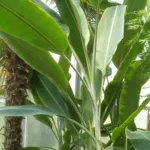
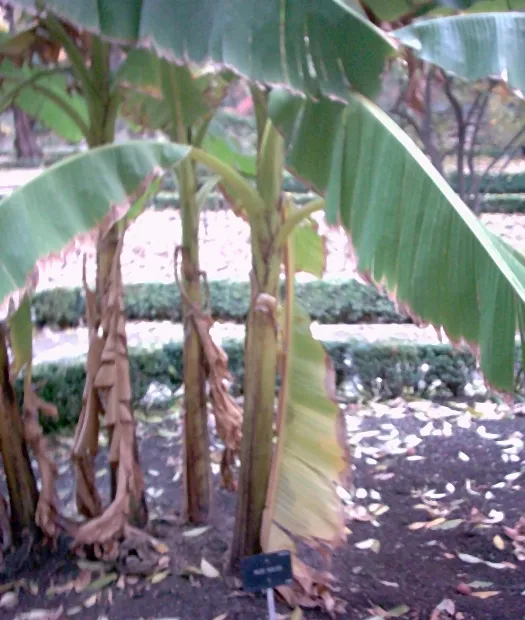
The plant forms tall, smooth, green pseudostems made from overlapping leaf sheaths. Its broad, paddle-shaped leaves create a strongly tropical appearance and are easily split by wind. Older clumps produce multiple stems from a spreading rhizome, giving the plant a dense, layered silhouette.
Flowering
Mature plants may produce a large pendulous inflorescence from the pseudostem after a sufficiently long, warm growing season. Female flowers occur first, followed by male flowers nearer the distal portion of the inflorescence. In much of the United States, winter dieback or a short season prevents flowering or fruit from reaching maturity.
Pollination and visitors
Species-specific documentation of characteristic animal visitors is limited in the reviewed sources. Banana inflorescences can have specialized pollination relationships in the genus, but a reliable primary visitor for Musa basjoo in United States gardens was not established.
Musa basjoo photos
Click any photo for a larger view. Source, author and license are shown separately.
Diseases and pests
Diseases
Reduce risk by providing drainage, spacing plants for airflow, removing badly damaged tissue, and avoiding prolonged wet foliage. Rhizome or pseudostem rot is favored by cold, saturated soil and poorly drained containers. Remove and discard severely rotted material; do not replant offsets from visibly diseased tissue.
Pests
Inspect undersides of leaves for spider mites, aphids, scale, and thrips, especially on stressed container plants. Maintain even moisture, rinse foliage when practical, and improve airflow. Remove heavily damaged leaves. Use targeted insecticidal soap or horticultural oil only according to the product label and avoid spraying in hot sun or onto drought-stressed foliage.
Toxicity and pollen
No strong species-specific evidence of serious toxicity was identified in the reviewed horticultural sources. Avoid treating the plant as edible by default: ornamental banana fruits may be seedy, fibrous, or unpalatable, and plant material can cause mechanical or digestive irritation in some individuals. Keep children and pets from chewing unfamiliar plant parts and seek professional advice after a suspected ingestion.
- Pollination / pollen
- Mostly locally released floral pollen; airborne relevance uncertain
Banana pollen is not generally treated as a major wind-dispersed seasonal pollen source, but exact allergenicity for Musa basjoo is poorly documented. Flowers may release pollen locally around the inflorescence. People with known plant allergies should avoid direct contact with flowers and monitor their own symptoms.
Native habitat
The species is associated with humid, warm-temperate to subtropical conditions in East Asia, especially Japan and adjacent regions. It favors sunny to lightly shaded sites with fertile, consistently moist soils and protection from drying winds. Cultivated plants tolerate colder conditions than many bananas because the rhizome can overwinter below ground.
Interesting fact
Musa basjoo is a giant herb, not a woody tree. Its apparent trunks are layered leaf sheaths called pseudostems. The underground rhizome can survive cold better than the exposed leaves and pseudostems. After a pseudostem flowers, it dies while new offsets continue the clump.
Frequently asked questions (FAQ)
The most relevant questions about this plant, with short and direct answers.
🌱Quick care
What is Musa basjoo?⌄
Musa basjoo is a cold-hardy banana plant in the Musaceae family, grown mainly for its large tropical-looking leaves rather than edible fruit. It is a fast-growing herbaceous perennial that regrows from an underground rhizome.
How much sun does Musa basjoo need?⌄
Grow Musa basjoo in full sun, although it can tolerate partial shade. At least 6 hours of direct sunlight usually produces the strongest growth and largest leaves.
How often should I water Musa basjoo?⌄
Water Musa basjoo regularly enough to keep the soil evenly moist during active growth. Do not let the soil dry out completely, but avoid standing water around the rhizome.
How fast does Musa basjoo grow?⌄
Musa basjoo grows rapidly in warm weather and can reach roughly 6 to 14 feet in a favorable season. Growth slows sharply in cool conditions and stops after frost damages the foliage.
🌤️Environment and placement
What USDA hardiness zones can grow Musa basjoo?⌄
Musa basjoo is commonly grown outdoors in USDA Zones 5 through 10 when the rhizome receives adequate winter protection. The leaves and pseudostems usually freeze in Zones 5 through 8, even when the underground plant survives.
Can Musa basjoo survive winter outdoors?⌄
Yes, Musa basjoo can survive winter outdoors in many parts of the United States if its rhizome is heavily mulched and protected from prolonged freezing. Above-ground growth commonly dies back after frost and regrows in spring.
Where should I plant Musa basjoo outdoors?⌄
Plant Musa basjoo in a sunny, sheltered location protected from strong winds. Large leaves tear easily, and a warm south-facing wall or protected garden corner can improve growth and winter survival.
What soil is best for Musa basjoo?⌄
Use fertile, humus-rich, moisture-retentive but well-drained loam for Musa basjoo. Incorporating compost can improve both moisture retention and drainage in ordinary garden soil.
Can Musa basjoo grow in a container?⌄
Yes, Musa basjoo grows well in a large container filled with fertile, well-drained potting mix. Choose a heavy pot because the mature plant can become tall and top-heavy.
How much space does Musa basjoo need?⌄
Allow at least 6 to 12 feet of space for Musa basjoo, with more room if you want a broad clump. Its leaves spread widely, and new pups can expand the planting over time.
💧Care and problems
Should I fertilize Musa basjoo?⌄
Fertilize Musa basjoo regularly during spring and summer to support its rapid growth. Follow the label rate for a balanced fertilizer or one intended for vigorous foliage plants, and avoid heavy feeding when the plant is dormant.
Why are my Musa basjoo leaves turning brown?⌄
Brown Musa basjoo leaves are often caused by drought, wind damage, low humidity, or cold exposure. Keep the soil consistently moist, protect the plant from strong winds, and remove leaves only when they are badly damaged.
Why are Musa basjoo leaves splitting?⌄
Musa basjoo leaves naturally split in wind, rain, or as they enlarge, so some tearing is normal. A sheltered planting site reduces damage but may not prevent it completely.
What pests affect Musa basjoo?⌄
Musa basjoo is generally trouble-free outdoors, but aphids, mealybugs, and spider mites can occur, especially on indoor or greenhouse plants. Inspect leaf undersides regularly and treat infestations promptly with an appropriate labeled product.
How do I overwinter Musa basjoo in the ground?⌄
After frost kills the foliage, cut the pseudostem back to about 2 feet and cover the base with a thick, dry layer of mulch. In colder areas, add a ventilated cage or wrap around the remaining stem while keeping excessive moisture away from the growing point.
When should I cut back Musa basjoo for winter?⌄
Cut back Musa basjoo after the first substantial frost has killed or badly damaged the leaves. Leaving a short section of pseudostem can provide additional protection for the central growing point, although the entire stem may still freeze.
How do I overwinter Musa basjoo in a pot?⌄
Move container-grown Musa basjoo indoors or into a frost-free space before hard freezing, because roots in pots are more exposed to cold than roots in the ground. Keep it cool and lightly moist during dormancy, or grow it in a bright room with reduced watering.
🪴Planting and repotting
When is the best time to plant Musa basjoo?⌄
Plant Musa basjoo outdoors after the danger of hard frost has passed and the soil has warmed. Spring and early summer give the rhizome the longest period to establish before winter.
How do I plant Musa basjoo in the ground?⌄
Set Musa basjoo at the same depth it was growing in its container, then backfill with fertile soil and water thoroughly. Mulch around the plant to conserve moisture, but keep mulch slightly away from the pseudostem to reduce rot risk.
How often should I repot Musa basjoo?⌄
Repot Musa basjoo when roots fill the container or approximately every 2 years for vigorous plants. Move it into a pot only a few inches wider than the previous one and use fresh, well-drained potting mix.
✂️Propagation and pruning
How do I propagate Musa basjoo?⌄
The easiest way to propagate Musa basjoo is by separating rooted pups from the parent clump. Seed propagation is possible but slower and less dependable for producing a uniform plant.
When should I divide Musa basjoo pups?⌄
Divide Musa basjoo pups in spring when active growth begins. Choose offsets with their own roots, separate them with a clean sharp tool, and keep the new divisions evenly moist while they establish.
Can I prune Musa basjoo during the growing season?⌄
Yes, remove damaged, yellow, or completely dead leaves from Musa basjoo at any time. Avoid cutting healthy leaves unnecessarily because the plant uses them to fuel rapid growth.
⚠️Toxicity and safety
Is Musa basjoo toxic to dogs, cats, or people?⌄
No strong species-specific toxicity evidence is established for Musa basjoo, and it is generally treated as a nonpoisonous ornamental plant. Pets and children should still not be encouraged to chew unknown plant material, and the inedible fruit should not be used as food.
Are Musa basjoo fruits edible?⌄
Musa basjoo fruits are generally considered inedible or unpalatable rather than a useful food crop. They may be small, seedy, and poorly developed, particularly where the growing season is short.
🌸Flowering and special interest
Does Musa basjoo flower?⌄
Yes, mature Musa basjoo plants can produce cream to yellow flowers, usually after a long, warm growing season. Flowering is more likely when the pseudostem survives winter instead of freezing back completely.
When does Musa basjoo bloom?⌄
Musa basjoo typically blooms in summer, although timing varies with climate, plant age, and winter protection. Plants in colder regions may spend their energy rebuilding foliage and never flower outdoors.
Will Musa basjoo produce bananas in the United States?⌄
Musa basjoo may produce fruit in warm areas or after several seasons of protected growth, but it is not usually grown for edible bananas in the United States. In cold-winter regions, the pseudostem often freezes before fruit can mature.
What happens to Musa basjoo after it flowers?⌄
The flowering pseudostem normally declines and dies after flowering and fruiting. New shoots from the underground rhizome then replace it and continue the clump.