 Source:
 Musa itinerans short overview
Musa itinerans is a striking wild banana native to moist forests and ravines from northeastern India through mainland Southeast Asia and southern China. It forms tall, yellow-green to aging purple pseudostems from a creeping, elongating rhizome, with enormous leaves and reddish, nectar-rich flower bracts. In the United States, it is primarily a protected or container-grown foliage plant because dependable outdoor performance requires warmth, moisture, and a long frost-free season.
Taxonomic classification
Musa itinerans care guide
Light and placement
Provide full sun to partial shade, ideally with morning or filtered afternoon light and shelter from strong winds. In hot, dry interiors, light afternoon shade can reduce leaf tearing and scorch. Small leaves, stretched petioles, and slow growth suggest insufficient light; bleached patches, crisp margins, or sudden leaf collapse suggest excessive exposure combined with heat or water stress.
Watering and humidity
Keep the root zone evenly moist during active growth, watering deeply when the surface begins to dry rather than giving frequent shallow sips. Increase irrigation during hot weather and reduce it in cool conditions, but do not allow the rhizome to remain saturated. High humidity supports broad, healthy leaves, especially indoors; pair humidity with air movement to limit fungal problems.
Soil and growing medium
Use a rich, moisture-retentive but aerated substrate that drains freely. A loam-based mix amended with compost or other stable organic matter suits vigorous growth. Keep the root zone evenly moist without allowing stagnant water around the rhizome. A slightly acidic to neutral reaction is appropriate; avoid heavily compacted or persistently waterlogged soil.
Feeding
Feed during active growth when the plant is warm and producing leaves. Apply a complete balanced fertilizer at the label rate, or use a controlled-release formulation supplemented with compost or other organic matter. Feed less often in cool weather and stop when growth has slowed substantially; fertilizer applied to cold, wet roots can contribute to damage.
Growth and habit
This banana develops a clumping habit from a creeping, extending rhizome. Individual pseudostems are short-lived after flowering and fruiting, while new shoots arise from the underground system. The spreading rhizome makes containment and periodic thinning useful in confined beds or containers. Strong growth depends on heat, abundant water, nutrition, and protection from wind.
Planting and repotting
Plant outdoors only after the danger of frost has passed and soil has warmed. Set the rhizome or container-grown plant at the same depth it was previously growing; do not bury the pseudostem. Allow generous room for clump expansion, protect the site from strong wind, and mulch around—but not directly against—the pseudostems.
Repot container plants when the root mass fills the pot or vigorous rhizome growth crowds the container. Move up only one pot size at a time, use a heavy container for stability, and disturb the rhizome as little as practical. Repot in spring as active growth resumes, then water thoroughly and keep the plant warm while it re-establishes.
Propagation and pruning
Propagation
Propagate from fresh seed or sections of the elongating rhizome bearing viable buds. Rhizome division is generally most practical for maintaining a known plant, while seed can produce variable offspring and may require warm, consistently moist conditions. Divide or take rhizome sections in spring or during warm active growth.
Pruning
Remove dead, frost-damaged, or badly torn leaves at the base with clean, sharp tools. After a pseudostem has flowered and finished fruiting, cut it down once it begins to decline so the rhizome can direct resources to new shoots. Avoid unnecessary cutting of healthy active pseudostems, which store energy for future growth.
Overwintering
In cold regions, bring container plants indoors or into a heated greenhouse before temperatures approach freezing. Reduce watering as growth slows, provide the brightest available light, and check regularly for mites. In marginal outdoor climates, protect the rhizome with deep dry mulch and wrap or shelter the pseudostem, but survival and regrowth are not dependable for the species as a whole.
Uses
Musa itinerans is chiefly useful as a dramatic tropical foliage specimen in warm-climate beds, courtyards, conservatories, and large containers. Its flowers and pseudostem are locally used as food in parts of Southwest China, but ordinary US gardeners should not assume the fruits or other parts are suitable for eating because forms are strongly seeded and species-specific culinary guidance is limited. It also has documented value as a wild banana genetic resource and wildlife food.
Appearance
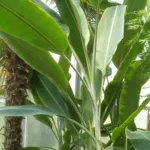
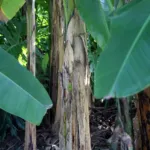
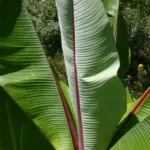
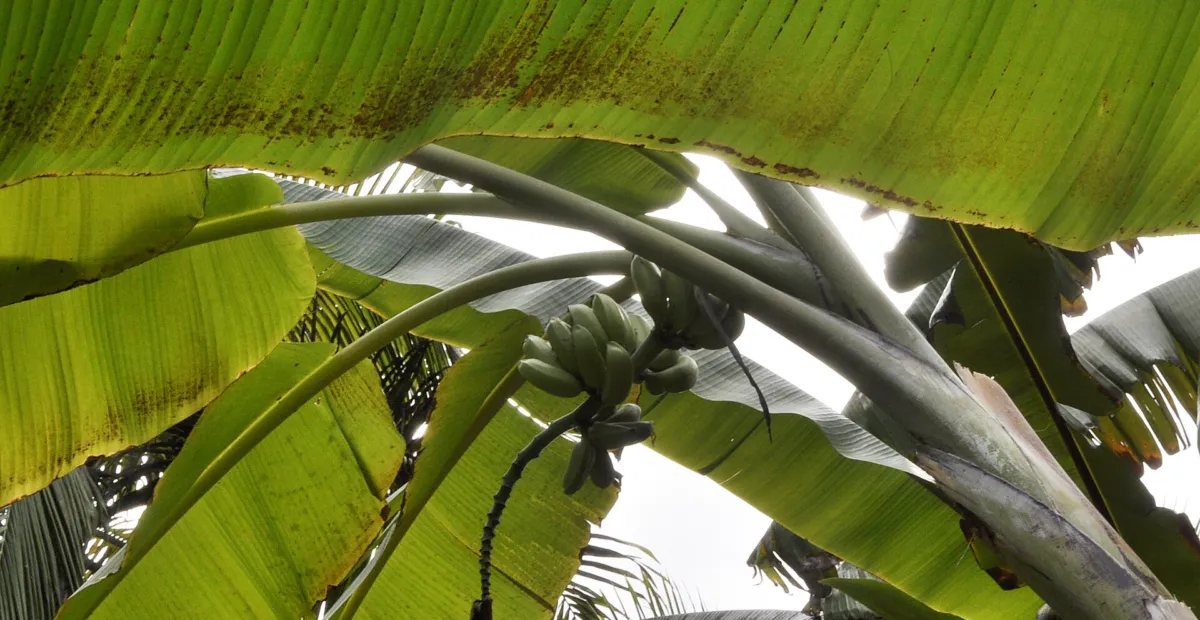
The plant has a banana-like pseudostem formed from tightly packed leaf sheaths, usually yellow-green and becoming purple with age. Leaves are exceptionally large, ovate-oblong, and often several feet long, with broad blades that can shred in wind. The underground rhizome is notably creeping and elongating, producing an increasingly mobile-looking clump.
Flowering
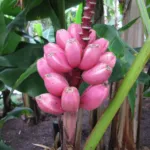
The inflorescence emerges from the top of the pseudostem as a large, dark reddish, tapered bud. Waxy bracts open successively to reveal whorled rows of tubular flowers along the stalk. Flowering is most likely in warm, long-season conditions; a documented seed-collection record reports flowering in August, but reliable timing in the United States is uncertain.
Pollination and visitors
Reliable species-specific pollinator records were not located. Musa flowers can produce nectar, but the available authoritative profile does not identify a confirmed primary animal pollinator for Musa itinerans, so pollinator attraction is left unknown rather than inferred.
Musa itinerans photos
Click any photo for a larger view. Source, author and license are shown separately.
Diseases and pests
Diseases
Use clean planting material, avoid overhead irrigation when foliage remains wet for long periods, and provide airflow around the clump. Watch for soft rot, leaf-spotting, and rhizome decay, especially in cold, saturated soil. Remove badly damaged tissue with clean tools and correct drainage or watering problems before using any treatment.
Pests
Inspect undersides of leaves and young growth for spider mites, aphids, thrips, scale, and chewing pests. Dry indoor air increases mite risk, while crowded, wet foliage encourages pest and disease problems. Improve airflow, rinse foliage when appropriate, isolate affected containers, and use targeted low-impact controls before resorting to broader insecticides.
Toxicity and pollen
Kew’s species profile lists no hazards, but detailed species-specific toxicology for humans and pets is limited. Avoid consuming unidentified plant material, and prevent exposure to sap or plant debris in sensitive individuals. The seeded fruits are important wildlife food, but this does not establish ordinary culinary safety for people or pets.
- Pollination / pollen
- Unknown; species-specific dispersal data unavailable
Musa itinerans is a flowering angiosperm, but species-specific airborne pollen and allergy studies were not located. Its flowers are not documented here as a significant US airborne-pollen source. Allergy relevance should therefore be considered unknown rather than assumed to be zero.
Native habitat
In nature it occurs in the understory of evergreen forests, moist ravines, and mountainous subtropical habitats, including sites reaching roughly 8,900 ft in elevation. It favors warm, humid conditions and fertile soils with dependable moisture. Wild populations may be small, and some Chinese varieties are considered conservation concerns because forest conversion threatens habitat.
Interesting fact
Its species name refers to the creeping, elongating rhizome that allows the plant to spread. Wild plants commonly reach 10–23 ft, while one variety can approach 39 ft. The fruits are seeded berries rather than seedless dessert bananas and are an important food for Asian elephants and other wildlife. Kew has conserved its seeds because the species may provide useful genetic material for future banana breeding.
Frequently asked questions (FAQ)
The most relevant questions about this plant, with short and direct answers.
🌱Quick care
Is Musa itinerans easy to grow?⌄
Musa itinerans is moderately easy to grow when given warmth, abundant moisture, fertile soil, and protection from hard frost. Its main challenges are rapid growth, wind damage, and winter survival outside mild climates.
How much sun does Musa itinerans need?⌄
Musa itinerans grows best in full sun to partial shade. In very hot, dry locations, afternoon shade can reduce leaf scorch, especially while the plant is young or container-grown.
How often should I water Musa itinerans?⌄
Water Musa itinerans frequently enough to keep the soil consistently moist but not waterlogged. Large plants in summer may need water several times per week, while container plants can dry out even faster.
What soil is best for Musa itinerans?⌄
Use rich, moisture-retentive, well-drained loam amended with compost or other organic matter. Avoid compacted soil that stays stagnant because continuously wet roots can rot.
How fast does Musa itinerans grow?⌄
Musa itinerans can grow rapidly during warm weather, particularly when watered and fertilized generously. Growth slows sharply in cool conditions and may stop after frost damage.
🌤️Environment and placement
Can Musa itinerans grow outdoors in the United States?⌄
Musa itinerans can grow outdoors year-round only in warm, frost-free parts of the United States. In colder areas, grow it in a container or protect the underground rhizome and expect the top growth to die back.
What USDA hardiness zone is Musa itinerans?⌄
The reliable USDA hardiness range for Musa itinerans is not firmly established and varies by form and winter protection. Treat it as a protected banana plant rather than assuming it has the cold tolerance of Musa basjoo.
Can Musa itinerans survive frost?⌄
Musa itinerans should be protected from frost because freezing temperatures can kill the leaves and damage the pseudostem. A well-mulched, established rhizome may resprout after light or brief cold, but survival is not guaranteed.
Where should I plant Musa itinerans outdoors?⌄
Plant Musa itinerans in a warm, sheltered site with full sun or partial shade and protection from strong wind. A location near a south-facing wall can provide extra heat in marginal climates.
Can Musa itinerans grow in shade?⌄
Musa itinerans can tolerate partial shade but usually grows more vigorously and develops stronger foliage with several hours of direct sun. Deep shade commonly produces slower, weaker growth.
Does Musa itinerans need wind protection?⌄
Yes, Musa itinerans benefits greatly from wind protection because its broad leaves tear easily. Wind damage is usually cosmetic, but severe exposure can reduce photosynthesis and desiccate the plant.
💧Care and problems
How do I fertilize Musa itinerans?⌄
Feed Musa itinerans during active growth with compost plus a balanced fertilizer or a fertilizer formulated for heavy-feeding tropical plants. Apply according to the product label and reduce feeding when growth slows in cool weather.
Why are the leaves of my Musa itinerans turning brown?⌄
Brown leaves on Musa itinerans are commonly caused by dry soil, low humidity, wind, intense heat, salt buildup, or cold injury. Keep the root zone evenly moist, flush container soil occasionally, and shelter the plant from drying wind.
Why is my Musa itinerans not growing?⌄
Slow growth usually results from cool temperatures, inadequate light, dry soil, root stress, or insufficient nutrients. Move container plants to a warmer brighter position and check that the roots are neither crowded nor waterlogged.
How do I protect Musa itinerans in winter?⌄
After the first damaging frost, remove collapsed foliage, keep the crown reasonably dry, and cover the base with a thick layer of loose mulch. In colder regions, overwinter the plant in a container or store a dormant rhizome above freezing.
Should I cut back Musa itinerans after frost?⌄
Cut back frost-damaged Musa itinerans foliage and pseudostems once the damage is clearly visible and the tissue has softened. Leave healthy, firm basal growth in place because it may help the plant recover.
Can Musa itinerans be grown indoors?⌄
Musa itinerans can be grown indoors in a large, bright container, but it needs substantial light, regular watering, humidity, and space. Growth is usually less vigorous indoors than outdoors during a warm growing season.
What pests attack Musa itinerans?⌄
Musa itinerans can be affected by common banana pests such as spider mites, aphids, mealybugs, scale, and thrips, especially under dry indoor conditions. Inspect leaf undersides regularly and treat infestations promptly with an appropriate labeled product.
Can overwatering kill Musa itinerans?⌄
Yes, overwatering can kill Musa itinerans when the soil remains saturated and roots lack oxygen. Water heavily when needed, but use drainage holes and allow excess water to escape freely.
🪴Planting and repotting
When should I plant Musa itinerans outdoors?⌄
Plant Musa itinerans outdoors after the danger of frost has passed and the soil has warmed. In the United States, the best timing is generally late spring, adjusted for local climate and elevation.
How much space does Musa itinerans need?⌄
Give Musa itinerans generous room because it can produce multiple shoots and spread through a rhizomatous root system. Allow at least 6 to 10 feet of width for a specimen that will be allowed to form a clump.
Can Musa itinerans grow in a container?⌄
Yes, Musa itinerans grows well in a sturdy, well-drained container large enough to support its vigorous roots and tall foliage. Container culture is especially useful for moving the plant indoors or into shelter before freezing weather.
How often should I repot Musa itinerans?⌄
Repot Musa itinerans when roots fill the container, drainage declines, or the plant becomes unstable. Moving it up one container size in spring is safer than placing a small root system into an excessively large pot.
Can Musa itinerans tolerate wet soil?⌄
Musa itinerans prefers consistently moist soil but does not reliably tolerate stagnant, waterlogged conditions. Plant it in moisture-retentive soil with good drainage, and avoid low spots where water pools.
✂️Propagation and pruning
How is Musa itinerans propagated?⌄
Musa itinerans is most practically propagated by separating rooted suckers or rhizome divisions from an established plant. Seed propagation is possible in principle but is less predictable and may require fresh seed and specialized germination conditions.
Does Musa itinerans produce suckers?⌄
Yes, Musa itinerans can produce suckers from its spreading rhizomatous system, sometimes at a noticeable distance from the parent plant. Remove unwanted shoots while small or allow selected ones to develop into a clump.
When is the best time to divide Musa itinerans?⌄
Divide Musa itinerans in spring or early summer when active growth and warm soil will help separated pieces establish. Each division should include a healthy bud and a substantial portion of rhizome or roots.
How do I prune Musa itinerans?⌄
Prune Musa itinerans mainly to remove dead, torn, diseased, or frost-damaged leaves and spent pseudostems. Do not remove healthy leaves unnecessarily because the plant needs them for rapid recovery and growth.
⚠️Toxicity and safety
Is Musa itinerans toxic to people or pets?⌄
No documented hazard was found for Musa itinerans, but species-specific toxicity information is limited. Prevent pets and children from chewing unfamiliar plant material, and seek professional advice if ingestion causes symptoms.
Are Musa itinerans leaves safe to handle?⌄
Musa itinerans leaves are generally handled as ordinary banana foliage and are not documented as hazardous. Gloves can still be useful because leaf edges, dried sheaths, and sap may irritate sensitive skin.
🌸Flowering and special interest
Does Musa itinerans flower?⌄
Yes, Musa itinerans is a flowering banana that produces an inflorescence after reaching sufficient maturity. Flowering is more likely in warm, long growing seasons and may be delayed or prevented by cool climates or repeated winter dieback.
Does Musa itinerans produce edible bananas?⌄
Musa itinerans can produce banana-like fruit, but ornamental plants in the United States may not flower or ripen fruit reliably. The fruit of a particular plant should not be assumed edible without verified identification and cultivar information.
How long does Musa itinerans take to flower?⌄
There is no dependable single flowering timetable for Musa itinerans because it varies with genetics, plant size, temperature, light, nutrition, and winter damage. Plants kept warm and growing continuously generally flower sooner than plants that die back each year.
Why is my Musa itinerans not flowering?⌄
Musa itinerans may fail to flower because the growing season is too short, temperatures are too cool, the plant is immature, or winter damage repeatedly resets growth. Strong light, abundant water, fertility, and a protected warm site improve the chance of flowering.