
 Source:
 Flowering Banana (Musa ornata) short overview
Flowering Banana (Musa ornata) is a tropical, clumping banana species prized for its upright pink bracts, orange-yellow flowers, bold foliage, and small seeded fruit. Native to the eastern Himalayas through Myanmar, it is grown in the United States mainly as a container, greenhouse, or frost-tender landscape ornamental. Give it warmth, bright light, rich well-drained soil, and consistent moisture.
Taxonomic classification
Flowering Banana (Musa ornata) care guide
Light and placement
Give Flowering Banana bright filtered light indoors or full sun to partial shade outdoors. Morning sun and light afternoon shade are useful in hot climates, while a south- or west-facing window or greenhouse position works indoors if heat and humidity are adequate. Pale, elongated leaves and slow growth suggest insufficient light; scorched margins, bleached patches, or wind-tattered leaves indicate excessive exposure or heat stress.
Watering and humidity
Water thoroughly when the upper inch of mix begins to dry, allowing excess water to drain completely. During warm, bright growth, the plant may need frequent watering; reduce the interval and quantity in cool indoor conditions or during dormant storage, but do not let the rhizome remain bone-dry for long periods. Good humidity helps foliage, but it does not replace proper drainage.
Soil and growing medium
Use a rich, moisture-retentive but well-drained mix with abundant organic matter. A loam-based container medium amended with compost works well, provided excess water can drain freely. Slightly acidic to neutral conditions are suitable; avoid chronically waterlogged or compacted soil, which can weaken the rhizome and encourage root problems.
Feeding
Feed during active spring and summer growth with a balanced, complete fertilizer at label strength or slightly diluted for containers. Regular feeding supports large leaves and flowering, but do not fertilize dry, wilted, newly repotted, or dormant plants. Reduce or stop feeding when light and temperature fall during indoor winter storage.
Growth and habit
Growth is vigorous in warm conditions and proceeds from a rhizomatous base that produces new suckers. Each pseudostem is monocarpic: it flowers and fruits once, then declines while offsets continue the clump. In containers, provide a heavy pot and rotate periodically so the plant develops evenly without becoming unstable.
Planting and repotting
Plant outdoors only after frost danger has passed and soil has warmed. Set the root ball at the same depth it was growing; do not bury the pseudostem. Allow generous space for the clump and protect it from strong winds. Establish with consistent moisture, then maintain an evenly moist root zone through warm weather.
Repot container plants when roots fill the pot or growth slows, preferably in spring as active growth resumes. Move up only one pot size at a time and use a sturdy container with generous drainage. Handle the rhizome and emerging suckers carefully, and water thoroughly after repotting while avoiding saturated, stagnant conditions.
Propagation and pruning
Propagation
Propagate from viable seed or by separating rooted suckers from the rhizomatous clump in warm weather. Seed-grown plants may vary in vigor and can take time to reach flowering size. Divide only offsets with an established root system, using clean tools and allowing cut surfaces to dry briefly before potting.
Pruning
Remove yellow, torn, or diseased leaves at the base with clean, sharp tools. After a pseudostem has flowered and fruit has matured or failed, cut it down close to the ground so established suckers can develop. Avoid annual severe cutting of immature plants if flowering is desired.
Overwintering
Before the first frost, move containers indoors or dig and pot outdoor plants. Keep the plant in a bright, warm room for continued growth, or cut the foliage back and store it in a cool, dark, frost-free location with only occasional moisture. Resume brighter light, watering, and feeding gradually in spring.
Uses
Primarily an ornamental foliage and flowering plant for tropical beds, patios, containers, conservatories, and greenhouses. The small fruit may be technically edible but is not usually valued as food because it is small and seed-filled. It is not supported here for medicinal use.
Appearance
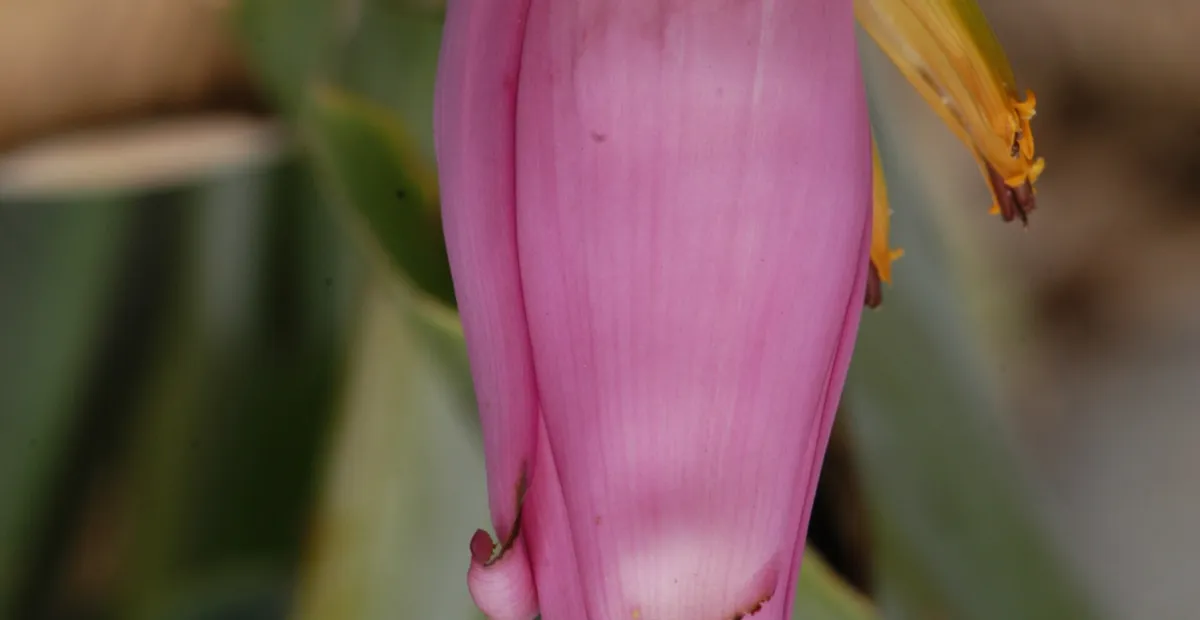
This banana forms a clump of upright pseudostems made from tightly overlapping leaf bases. The leaves are large, oblong, and paddle-shaped, with a prominent midrib and a tendency to tear in wind. Its most distinctive feature is the erect pink-bracted inflorescence, followed by small greenish-yellow to ornamental fruits. The plant has no true woody trunk.
Flowering
The inflorescence is held upright rather than pendant, with conspicuous pink to reddish bracts enclosing orange-yellow flowers. Female flowers occur toward the base of the inflorescence and male flowers toward the tip. Flowering is most likely after the plant is mature and well established; young or repeatedly cut-back plants may remain vegetative.
Pollination and visitors
Musa flowers can be visited by insects, birds, or bats in different regions, but reliable records specifically documenting the principal visitors of Musa ornata are limited. Do not treat general banana pollination information as a confirmed species-specific visitor list.
Musa ornata photos
Click any photo for a larger view. Source, author and license are shown separately.
Diseases and pests
Diseases
Maintain airflow, avoid constantly saturated soil, and remove badly damaged foliage. Banana plants can suffer from fungal leaf spots, root or rhizome rot, and vascular diseases, although serious disease pressure is generally lower in well-managed ornamental containers. Discard severely diseased plants rather than propagating from affected material.
Pests
Inspect undersides of leaves for spider mites, aphids, scale, mealybugs, thrips, and fruit flies, particularly indoors or in greenhouses. Improve airflow, isolate infested containers, and begin with water washing or manual removal. Use insecticidal soap or horticultural oil only according to the label and test sensitive foliage first.
Related diseases and pests
Only Plant Doctor profiles whose host data indicate this plant may be affected are shown here.
 PestCitrus mealybugPlanococcus citri
 DiseaseFusarium wiltFusarium oxysporum species complex
 PestBrown Soft ScaleCoccus hesperidum
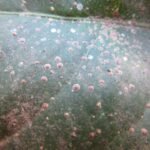 PestCalifornia red scaleAonidiella aurantii
 Environmental stressChilling injury
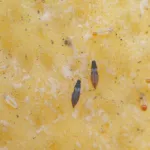 PestGreenhouse thripsHeliothrips haemorrhoidalis
 DiseaseRhizopus soft rotRhizopus stolonifer
 DiseaseAlternaria leaf spot and fruit rotAlternaria alternata
Toxicity and pollen
Authoritative species-specific toxicity evidence is limited. The fruit is described as edible but small and heavily seeded, while ornamental bananas are not generally treated as highly poisonous plants. Prevent ingestion of unidentified plant material, supervise children and pets, and seek medical or veterinary advice after a significant exposure or unusual reaction.
- Pollination / pollen
- Not well characterized; likely not a major wind-dispersed pollen source
Species-specific airborne-pollen and allergy studies were not located. Banana flowers are not typically presented as a major wind-dispersed pollen source, but insect-associated pollen exposure cannot be assumed to be zero. People with significant pollen sensitivity should avoid handling flowers if irritation occurs.
Native habitat
The species is native from the eastern Himalayas through Myanmar, where it occurs in wet tropical environments. It favors warm conditions, regular moisture, organic soils, and protection from drying winds. In the United States, outdoor cultivation is generally limited to frost-free climates or a single warm season followed by indoor protection.
Interesting fact
The species is a herbaceous perennial, not a woody tree, despite its tree-like appearance. Its pseudostem is formed by overlapping leaf bases and dies after flowering and fruiting. The small fruits contain many seeds, making the plant more ornamental than commercially useful as a banana crop. Repeatedly cutting plants down in autumn can delay or prevent flowering.
Frequently asked questions (FAQ)
The most relevant questions about this plant, with short and direct answers.
🌱Quick care
What is Musa ornata commonly called?⌄
Musa ornata is commonly called Flowering Banana. It is an ornamental banana plant grown mainly for its colorful pink bracts and yellow-orange flowers rather than for edible fruit.
Is Musa ornata a tree or a perennial?⌄
Musa ornata is a herbaceous, rhizomatous perennial, not a true tree. Its trunk-like structure is a pseudostem formed by overlapping leaf bases.
How big does Musa ornata get?⌄
Musa ornata commonly grows about 6–9 feet tall and 5–7 feet wide in suitable conditions. Container plants may remain smaller, especially when grown indoors.
🌤️Environment and placement
How much light does Musa ornata need?⌄
Give Musa ornata bright light to full sun, with protection from harsh afternoon heat when necessary. Indoor plants need the brightest available window or supplemental grow lighting.
Can Musa ornata grow indoors?⌄
Yes, Musa ornata can be grown indoors in a bright, spacious room or greenhouse. It needs strong light, consistent moisture, warmth, and enough room for its large leaves.
What USDA hardiness zone is Musa ornata?⌄
Musa ornata is generally suited to USDA Zones 9a–11b, but it is frost-tender and may not survive freezing weather. In colder parts of the United States, grow it in a container and overwinter it indoors.
Can Musa ornata stay outside year-round?⌄
Musa ornata can remain outdoors year-round only in reliably warm, frost-free areas. Move or protect container plants before the first frost because cold can quickly damage the foliage and pseudostem.
Does Musa ornata need humidity?⌄
Musa ornata grows best with moderate to high humidity, especially indoors. Dry air can contribute to brown leaf edges and may increase problems with spider mites.
Can Musa ornata tolerate wind?⌄
Musa ornata does not tolerate strong wind well because its large leaves tear easily. Plant it in a sheltered location or place containers where buildings, fences, or other plants provide protection.
💧Care and problems
How often should I water Musa ornata?⌄
Water Musa ornata whenever the soil surface begins to dry, keeping the root zone evenly moist but not waterlogged. Container plants may need frequent watering during hot, bright weather.
What soil is best for Musa ornata?⌄
Use rich, organic, well-drained soil that retains some moisture without becoming soggy. A high-quality potting mix amended with compost and a drainage component works well for containers.
How do I fertilize Musa ornata?⌄
Feed Musa ornata regularly during active growth with a balanced fertilizer used according to the product label. Reduce or stop feeding during cool, low-light winter conditions.
Why are Musa ornata leaves turning brown?⌄
Brown Musa ornata leaves can result from underwatering, dry air, intense heat, wind, cold exposure, or fertilizer buildup. Check soil moisture, humidity, light intensity, and drainage before changing the care routine.
Why are Musa ornata leaves splitting?⌄
Leaf splitting is common in Musa ornata and is often caused by wind, handling, or the large leaves naturally tearing as they expand. It is usually cosmetic if the plant continues producing healthy new growth.
What pests affect Musa ornata?⌄
Musa ornata may attract aphids, spider mites, mealybugs, scale, thrips, and fruit flies, particularly indoors or in greenhouses. Inspect leaf undersides and treat infestations promptly with a method appropriate for the pest.
Should I remove damaged Musa ornata leaves?⌄
Remove leaves that are completely dead, badly damaged, or diseased with clean tools. Leave partially green leaves in place because they still contribute energy to the plant.
🪴Planting and repotting
When should I plant Musa ornata outdoors?⌄
Plant Musa ornata outdoors after the danger of frost has passed and temperatures are consistently warm. Acclimate plants grown indoors gradually to direct sun to reduce leaf scorch.
Can Musa ornata grow in a container?⌄
Yes, Musa ornata grows well in a sturdy container with drainage holes. Choose a pot heavy enough to prevent tipping and increase the container size when roots become crowded.
When should I repot Musa ornata?⌄
Repot Musa ornata when roots fill the container, growth slows, or the plant dries out unusually quickly. Move it into a pot only modestly larger and use fresh, well-drained organic potting mix.
How do I overwinter Musa ornata in cold climates?⌄
Before frost, move the container to a bright, frost-free location and reduce watering as growth slows. Alternatively, cut the foliage back to about 6–8 inches and keep the container cool, dark, and protected from freezing.
✂️Propagation and pruning
How is Musa ornata propagated?⌄
Musa ornata is commonly propagated by separating offsets, also called pups, from the rhizome. Seed propagation is possible but can be slow and unreliable because the seeds have a hard seed coat.
How do I separate Musa ornata pups?⌄
Separate a Musa ornata pup when it has developed several leaves and its own roots. Use a clean, sharp knife to divide it from the parent rhizome, then pot it in moist, well-drained mix and keep it warm.
Can Musa ornata be grown from seed?⌄
Yes, Musa ornata can be grown from seed, but germination may be difficult and prolonged. Fresh seed and specialized scarification or embryo-based techniques generally perform better than simply sowing untreated seed.
Do Musa ornata stems die after flowering?⌄
Yes, the pseudostem that flowers and fruits eventually dies after its reproductive cycle. The rhizome remains alive and normally produces new pups that replace it.
⚠️Toxicity and safety
Is Musa ornata toxic to cats or dogs?⌄
Species-specific toxicity evidence for Musa ornata is limited, so its safety for cats and dogs is not well established. Prevent pets from chewing the plant and contact a veterinarian or poison-control service if ingestion causes symptoms.
Is Musa ornata fruit edible?⌄
Musa ornata fruit is generally considered edible, but it is small and contains many seeds, so it is not commonly eaten. Treat it primarily as an ornamental banana rather than a food crop.
🌸Flowering and special interest
How long does Musa ornata take to flower?⌄
Musa ornata may take several years to flower, especially when young or grown in a small container. Strong light, warmth, adequate nutrition, and allowing the plant to become well established improve flowering potential.
What do Musa ornata flowers look like?⌄
Musa ornata produces upright flower clusters with showy pink to purple-pink bracts surrounding yellow-orange flowers. The inflorescences are the plant’s main ornamental feature.
Does Musa ornata produce bananas?⌄
Musa ornata produces small, typically seed-filled fruits after flowering, but they are not usually grown for eating. The fruit is primarily ornamental because it is small and contains many seeds.
Why is my Musa ornata not flowering?⌄
A Musa ornata that is not flowering may be too young, receiving insufficient light, stressed by cold, or kept in a container that is cut back repeatedly. Allow it to mature and provide a long, warm, bright growing season.
Similar plants
 Azure Monkshood (Aconitum carmichaelii) care guideAconitum carmichaelii
 Monkshood (Aconitum ‘Stainless Steel’)Aconitum 'Stainless Steel'
 Monkshood (Aconitum ‘Bressingham Spire’)Aconitum 'Bressingham Spire'
 Golden full moon maple (Acer shirasawanum ‘Aureum’)Acer shirasawanum 'Aureum'
 Globosum (Acer platanoides ‘Globosum’)Acer platanoides 'Globosum'
 Striped maple (Acer pensylvanicum) care guideAcer pensylvanicum