
 Source:
 Gaillardia x grandiflora (Gaillardia grandiflora) short overview
Gaillardia x grandiflora is the widely grown garden blanketflower, a hybrid valued for its bright, daisy-like blooms and exceptionally long summer display. Its hairy stems and gray-green foliage support an upright, lightly clumping habit, while flowers commonly combine red, orange, and yellow. Give it full sun and fast-draining soil; established plants tolerate short dry periods but dislike winter-wet clay. Bees and butterflies visit the flowers, and birds may eat mature seeds.
Taxonomic classification
Gaillardia x grandiflora (Gaillardia grandiflora) care guide
Light and placement
Provide at least 6 hours of direct sun, preferably in an open south- or west-facing position with good air movement. Sparse, weak stems and fewer flowers indicate insufficient light. Floppy growth can also result from excessive nitrogen or overly rich, moist soil; scorched foliage is more likely from drought stress than from normal full sun.
Watering and humidity
Water deeply at planting and whenever the upper soil begins to dry during establishment. Once rooted, allow the surface to dry between thorough waterings and reduce irrigation during cool or rainy weather. Avoid frequent shallow watering and do not keep the crown constantly wet. Humidity is less important than drainage and airflow.
Soil and growing medium
Use a sandy or loamy soil with excellent drainage. Average garden soil is suitable if it does not remain wet, while heavy clay should be amended or avoided. A near-neutral to slightly alkaline reaction is generally acceptable; the cited horticultural range is approximately pH 6.0–8.0.
Feeding
Plants generally need only modest fertility. Incorporate a small amount of finished compost before planting, or apply a balanced slow-release fertilizer in spring at label strength. Avoid heavy nitrogen feeding, which can produce lush, floppy growth and fewer flowers. Do not fertilize drought-stressed or waterlogged plants.
Growth and habit
Plants form an erect, moderately clumping perennial habit and may be short-lived, particularly in poorly drained or humid conditions. Deadheading encourages continued flowering, while leaving a few mature heads supports seed-eating birds and may allow limited self-sowing.
Planting and repotting
Plant after the last spring frost when the soil is workable. Set nursery plants at the same depth they were growing in their pots and space them about 12–24 inches apart, depending on cultivar size. Water thoroughly during establishment, then reduce irrigation as roots mature.
Repot container plants in spring only when roots have filled the container. Move them into a slightly larger pot with a gritty, well-drained mix and a drainage hole. Avoid oversized containers, which hold excess moisture around the crown and roots.
Propagation and pruning
Propagation
Sow seed in spring after the last frost or start indoors about 4–6 weeks earlier where needed. Division is best done in spring on established clumps. Seed-grown plants may not reproduce named cultivars faithfully; use division for a selected clone.
Pruning
Deadhead regularly to extend flowering and maintain a tidy display. Cut stems back to the basal foliage after flowering or in late fall; leaving some seedheads through winter supports birds. Remove diseased foliage promptly and disinfect tools between plants when disease is suspected.
Overwintering
Leave a few seedheads if winter bird food is desired, then cut remaining stems back after the display declines. In cold regions, survival depends strongly on excellent drainage. Container plants are more exposed to freezing; place pots in a sheltered location and prevent winter saturation rather than keeping the plant warm indoors.
Uses
Use for sunny perennial borders, cottage gardens, rock gardens, containers, patios, walkways, cutting gardens, drought-tolerant plantings, and pollinator gardens. Flowers are suitable for cutting. Leave selected seedheads for birds; do not treat the plant as an edible or medicinal crop without separate authoritative guidance.
Appearance
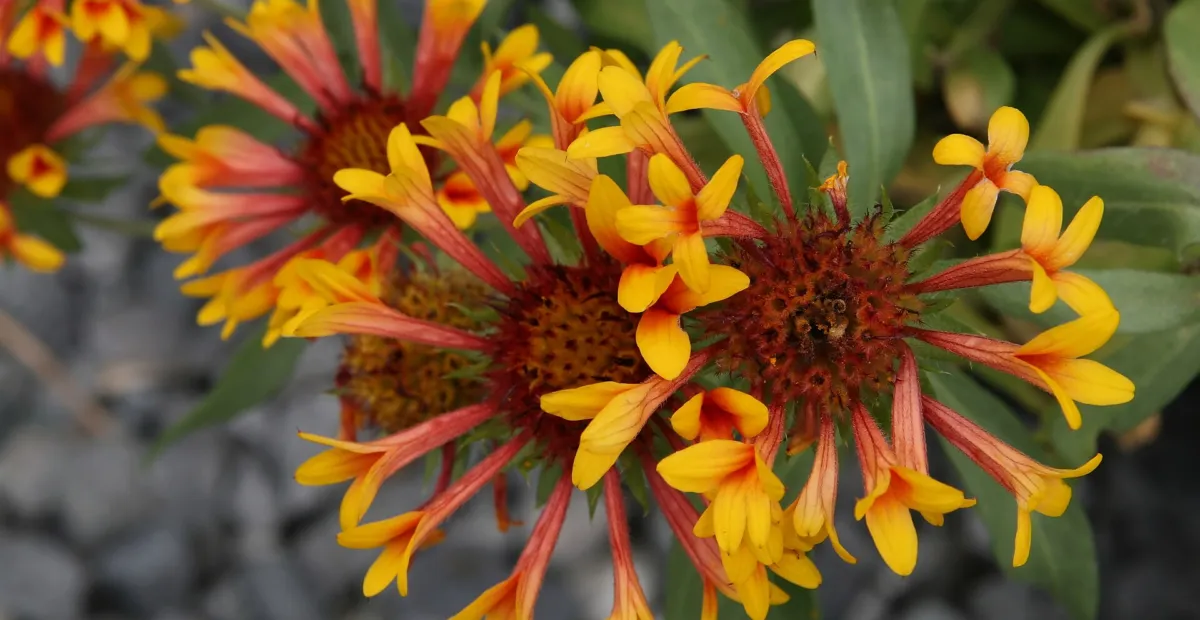
The plant has erect green stems covered in fine hairs, alternate gray-green to green leaves, and large terminal composite heads. Lower leaves may be longer and shallowly lobed, while upper leaves are smaller and less divided. The contrasting red-centered, yellow- or orange-tipped rays are a useful identification feature.
Flowering
The flower heads are showy, radial composites with contrasting ray and disk florets. Blooms are produced on long stalks over an extended warm-season period, especially when spent flowers are removed. Color varies among plants and cultivars from mostly red to mostly yellow, with many bicolored combinations.
Pollination and visitors
The open composite flower heads provide nectar and pollen for a diversity of bees and are also visited by butterflies and other flower-visiting insects. Flowers can remain useful to pollinators through a long summer-to-fall bloom period.
Gaillardia grandiflora photos
Click any photo for a larger view. Source, author and license are shown separately.
Diseases and pests
Diseases
Poor drainage can contribute to root rot. Powdery mildew, fungal leaf spot, and aster yellows may occur; leafhoppers can spread aster yellows. Improve air circulation, avoid overhead watering, remove badly affected growth, and discard plants showing severe aster-yellows symptoms.
Pests
Leafhoppers are the main concern because they can transmit aster yellows. Inspect new growth and leaf undersides, remove heavily affected plants, control weeds that shelter insects, and favor beneficial insects. Avoid routine broad-spectrum insecticide use during bloom.
Related diseases and pests
Only Plant Doctor profiles whose host data indicate this plant may be affected are shown here.
 DiseaseImpatiens necrotic spot virus diseaseImpatiens necrotic spot orthotospovirus
 DiseaseBlack Root RotBerkeleyomyces basicola
 DiseaseAster yellows‘Candidatus Phytoplasma asteris’
 DiseaseMaple powdery mildewSawadaea bicornis
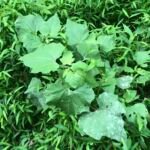 DiseaseCucurbit Powdery MildewPodosphaera xanthii (Castagne) U. Braun & Shishkoff
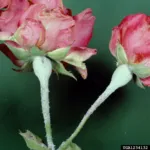 DiseaseRose powdery mildewPodosphaera pannosa
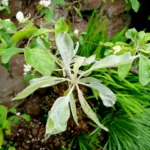 DiseaseApple Powdery MildewPodosphaera leucotricha
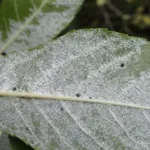 DiseaseAsh Powdery MildewPhyllactinia fraxini (DC.) Fuss
Toxicity and pollen
Reliable horticultural sources report no known toxicity for blanketflower, but Gaillardia foliage and sap contain sesquiterpene lactones that may irritate sensitive skin. Prevent ingestion, wash hands after handling, and keep plant material away from children and pets as a sensible precaution.
- Typical season
- May–September in much of the United States
- Pollination / pollen
- Insect-dispersed pollen
This is an insect-pollinated flowering hybrid, so its pollen is not typically dispersed in large airborne clouds like wind-pollinated tree or grass pollen. Airborne exposure is nevertheless not zero: pollen, flower parts, or sap may affect especially sensitive individuals through close contact. Individual allergy responses vary.
Native habitat
The hybrid itself is a cultivated garden cross rather than a naturally occurring native species. Its parentage links it to open prairie, meadow, and sunny disturbed habitats. It performs best in exposed, well-drained sites with warm summers and does poorly where heavy soil stays saturated.
Interesting fact
Gaillardia x grandiflora is a garden hybrid involving G. aristata and G. pulchella. The hybrid name grandiflora means large-flowered. Many cultivars are short-lived but can persist by reseeding in favorable sites. Leaving some seedheads may provide food for goldfinches.
Frequently asked questions (FAQ)
The most relevant questions about this plant, with short and direct answers.
🌱Quick care
What is Gaillardia x grandiflora?⌄
Gaillardia x grandiflora is a showy, short-lived herbaceous perennial commonly grown for its red, orange, and yellow daisy-like flowers. It is a garden hybrid related to prairie and annual blanketflowers.
How much sun does Gaillardia x grandiflora need?⌄
Gaillardia x grandiflora needs full sun, ideally at least 6 hours of direct sunlight daily. More sun generally produces sturdier growth and better flowering.
How often should I water Gaillardia x grandiflora?⌄
Water Gaillardia x grandiflora moderately while it is becoming established, then allow the soil to dry between waterings. Established plants are drought tolerant, but prolonged drought can reduce flowering.
Is Gaillardia x grandiflora easy to grow?⌄
Gaillardia x grandiflora is generally easy to grow when planted in full sun and fast-draining soil. The main challenge is preventing root or crown problems caused by excess moisture, especially in winter.
🌤️Environment and placement
What type of soil is best for Gaillardia x grandiflora?⌄
The best soil for Gaillardia x grandiflora is sandy or loamy soil that drains quickly and is not overly fertile. Heavy clay should be improved with better drainage or avoided.
Can Gaillardia x grandiflora grow in clay soil?⌄
Gaillardia x grandiflora can struggle in clay soil because poor drainage may cause winter loss and root problems. Plant it on a raised berm or in a container if the clay cannot be drained effectively.
Can Gaillardia x grandiflora tolerate drought?⌄
Gaillardia x grandiflora tolerates drought well once established. Water deeply during extended hot, dry periods, particularly if the plant is young or growing in a container.
Can Gaillardia x grandiflora grow in containers?⌄
Gaillardia x grandiflora grows well in containers with drainage holes and a light, well-drained potting mix. Containers dry out faster than garden soil, so check moisture regularly without keeping the mix soggy.
Is Gaillardia x grandiflora suitable for pollinator gardens?⌄
Gaillardia x grandiflora is suitable for pollinator gardens because its flowers attract bees and butterflies. Leaving some flower heads in place can also provide seeds for birds such as goldfinches.
Is Gaillardia x grandiflora deer resistant?⌄
Gaillardia x grandiflora is commonly considered deer resistant, although no plant is completely deer proof. Deer pressure, food availability, and local conditions can affect the level of browsing.
💧Care and problems
Should I deadhead Gaillardia x grandiflora?⌄
Deadheading Gaillardia x grandiflora is optional but can keep the plant tidy and encourage continued flowering. Leave some spent heads if you want seed production or bird food.
Why is my Gaillardia x grandiflora not blooming?⌄
Gaillardia x grandiflora may fail to bloom because of insufficient sunlight, excessive fertilizer, overwatering, or competition from nearby plants. Move or thin crowded plants and avoid rich, constantly wet soil.
Why is my Gaillardia x grandiflora turning brown?⌄
Brown foliage or flowers on Gaillardia x grandiflora may result from drought, natural aging, overwatering, or fungal disease. Check the soil before watering and remove badly affected leaves while improving air circulation.
What diseases affect Gaillardia x grandiflora?⌄
Gaillardia x grandiflora can be affected by powdery mildew, leaf spot, rust, and aster yellows. Full sun, good spacing, careful watering, and prompt removal of diseased material help reduce problems.
Does Gaillardia x grandiflora need fertilizer?⌄
Gaillardia x grandiflora usually needs little fertilizer and often performs best in moderately poor soil. Excess fertilizer can produce weak, leafy growth and fewer flowers.
How long does Gaillardia x grandiflora live?⌄
Gaillardia x grandiflora is often a short-lived perennial, commonly lasting about two to three years. Excellent drainage, moderate watering, and occasional propagation can help maintain a planting.
🪴Planting and repotting
When should I plant Gaillardia x grandiflora?⌄
Plant Gaillardia x grandiflora in spring after the danger of hard frost has passed, or in fall early enough for roots to establish before the ground freezes. Local timing should follow your USDA hardiness zone and seasonal weather.
How far apart should I plant Gaillardia x grandiflora?⌄
Space Gaillardia x grandiflora about 12 to 18 inches apart for most cultivars, allowing more room for larger varieties. Good spacing improves airflow and reduces disease risk.
Can Gaillardia x grandiflora survive winter?⌄
Gaillardia x grandiflora can survive cold winters, but winter drainage is critical. Plants in heavy, wet soil may die even when temperatures are within their normal hardiness range.
Should I grow Gaillardia x grandiflora in raised beds?⌄
Raised beds are useful for Gaillardia x grandiflora when native soil drains poorly. Use a free-draining soil mix and avoid creating a water-holding pocket around the crown.
✂️Propagation and pruning
How do I grow Gaillardia x grandiflora from seed?⌄
Sow Gaillardia x grandiflora seeds on the soil surface or cover them only lightly, then keep the seedbed evenly moist until germination. Many cultivars can be started indoors about 4 to 6 weeks before the last spring frost.
Can Gaillardia x grandiflora be propagated by division?⌄
Gaillardia x grandiflora can be propagated by dividing established crowns in spring. Separate rooted shoots carefully and replant them immediately in well-drained soil.
Will Gaillardia x grandiflora come true from seed?⌄
Gaillardia x grandiflora cultivars may not come true from seed because they are hybrids. Seed-grown plants can vary in flower color, form, height, and performance, while division or cuttings better preserve named cultivars.
Does Gaillardia x grandiflora self-seed?⌄
Gaillardia x grandiflora can self-seed when flower heads are allowed to mature, although the resulting plants may differ from the parent cultivar. Deadhead flowers if you want to limit volunteer seedlings.
When should I cut back Gaillardia x grandiflora?⌄
Cut Gaillardia x grandiflora back after flowering declines or in late season, leaving a short basal clump. In some climates, cutting plants back to roughly 6 inches can improve their appearance and may help winter survival.
⚠️Toxicity and safety
Is Gaillardia x grandiflora toxic to dogs and cats?⌄
Gaillardia x grandiflora is generally regarded as a low-concern plant for pets, with no established major toxicity commonly reported. Any plant material can still cause stomach upset if eaten, so contact a veterinarian after a concerning ingestion.
Can Gaillardia x grandiflora irritate skin?⌄
Gaillardia x grandiflora may cause contact dermatitis in sensitive people, particularly after handling its leaves or sap. Wear gloves when pruning or transplanting, and wash exposed skin afterward.
Is Gaillardia x grandiflora safe to plant around children?⌄
Gaillardia x grandiflora is generally considered a low-concern ornamental plant, but children should not be encouraged to eat its leaves or flowers. Supervise young children around all garden plants and wash hands after handling.
🌸Flowering and special interest
When does Gaillardia x grandiflora bloom?⌄
Gaillardia x grandiflora typically blooms from early summer into fall, with timing varying by cultivar and climate. Regular deadheading and adequate sunlight can help extend the flowering season.
How do I make Gaillardia x grandiflora bloom longer?⌄
To extend blooming, grow Gaillardia x grandiflora in full sun, avoid excessive fertilizer and water, and remove spent flowers regularly. If flowering declines in midsummer, cutting the plant back can encourage a later flush.
Are Gaillardia x grandiflora flowers good for cutting?⌄
Gaillardia x grandiflora flowers can be used as cut flowers, especially from taller cultivars. Harvest stems when the blooms are freshly open and place them in clean water immediately.
Why are my Gaillardia x grandiflora stems flopping?⌄
Flopping stems on Gaillardia x grandiflora are often caused by excessive shade, rich soil, overfertilization, or vigorous growth. More sunlight, leaner soil, appropriate spacing, and a midsummer cutback can improve plant structure.
Similar plants
 Azure Monkshood (Aconitum carmichaelii) care guideAconitum carmichaelii
 Monkshood (Aconitum ‘Stainless Steel’)Aconitum 'Stainless Steel'
 Monkshood (Aconitum ‘Bressingham Spire’)Aconitum 'Bressingham Spire'
 Golden full moon maple (Acer shirasawanum ‘Aureum’)Acer shirasawanum 'Aureum'
 Globosum (Acer platanoides ‘Globosum’)Acer platanoides 'Globosum'
 Striped maple (Acer pensylvanicum) care guideAcer pensylvanicum