
 Source:
 Echinocactus ‘Horizonthalonius’ short overview
Echinocactus 'Horizonthalonius' is a slow-growing, solitary barrel cactus with a blue-gray, ribbed body, dramatic curved spines, and rose-pink flowers. The quoted name is treated here as a horticultural identity, while Echinocactus horizonthalonius is the accepted species backbone; dependable cultivar-specific differences are not documented. Provide intense light, very sharp drainage, careful summer watering, and a completely dry winter rest.
Taxonomic classification
Echinocactus ‘Horizonthalonius’ care guide
Light and placement
Give full sun with strong airflow, ideally in a south- or west-facing position behind rain protection. Acclimate plants gradually after greenhouse shade to prevent sunscald. Too little light causes weak, elongated growth and poor flowering; sudden intense sun can bleach or scorch the blue-gray epidermis, especially when air is stagnant.
Watering and humidity
During active growth, water thoroughly only after the substrate has dried completely, then let excess drain away. Intervals depend on heat, pot size, and mix rather than the calendar. Reduce sharply in fall and keep completely dry through cool winter dormancy. Never leave the pot standing in water or combine cold temperatures with wet roots.
Soil and growing medium
Use a predominantly mineral cactus substrate containing pumice, lava, coarse grit, or decomposed granite, with excellent drainage and no standing water. A limestone or other calcareous component is compatible with its mainly rocky, often limestone-derived habitat. A slightly alkaline reaction is reasonable, but cultivar-specific pH testing is not documented.
Feeding
Feed only during active growth, typically spring through summer, using a low-nitrogen cactus fertilizer at half strength or weaker. Apply to already-moist soil rather than bone-dry roots, and stop feeding in late summer or when growth pauses. Do not fertilize a dormant, stressed, recently repotted, or root-damaged plant.
Growth and habit
This is a very slow-growing, normally solitary cactus that generally does not produce useful offsets. Growth is concentrated in warm, bright periods and may pause during extreme heat or winter. The main maintenance implication is patience: avoid frequent repotting, heavy feeding, or attempts to accelerate growth with extra water.
Planting and repotting
Plant outdoors only where winter moisture can be excluded and the climate is reliably warm enough. Set the root ball at its original level rather than burying the stem, backfill with mineral grit, and allow the soil to dry before the first thorough irrigation. Space so air circulates freely around the crown.
Repot only when roots have filled the container or the substrate has degraded, preferably in spring or early summer. Use a pot with a drainage hole and handle the plant with thick gloves, folded cardboard, or tongs. Let damaged roots dry before watering.
Propagation and pruning
Propagation
Propagate primarily from seed collected from fully mature, dried fruits. Clean and dry seed before sowing in a sterile, gritty medium with warmth and bright filtered light; transition seedlings gradually to stronger sun. Grafting is possible for difficult or slow seedlings. Offsets are generally uncommon, so routine division is not appropriate.
Pruning
No routine pruning is required. Remove only dead, diseased, or irreversibly damaged tissue with a sterile blade. Because the plant is solitary and slow-growing, cutting the crown is not a normal shaping technique and can permanently disfigure or kill it.
Overwintering
Keep bright, cool, and completely dry in winter. A frost-free location around 40–55°F is the conservative container approach in the United States. Some dry plants reportedly tolerate brief temperatures near 14°F, but this varies by provenance and does not justify exposing a potted plant to freezing rain, prolonged frost, or wet soil.
Uses
Primarily an ornamental collector’s cactus for mineral gardens, dryland displays, greenhouse benches, and sharply drained containers. Its strong spines make it unsuitable beside paths, play areas, or animal-accessible planting beds. Do not treat it as an edible or medicinal plant.
Appearance
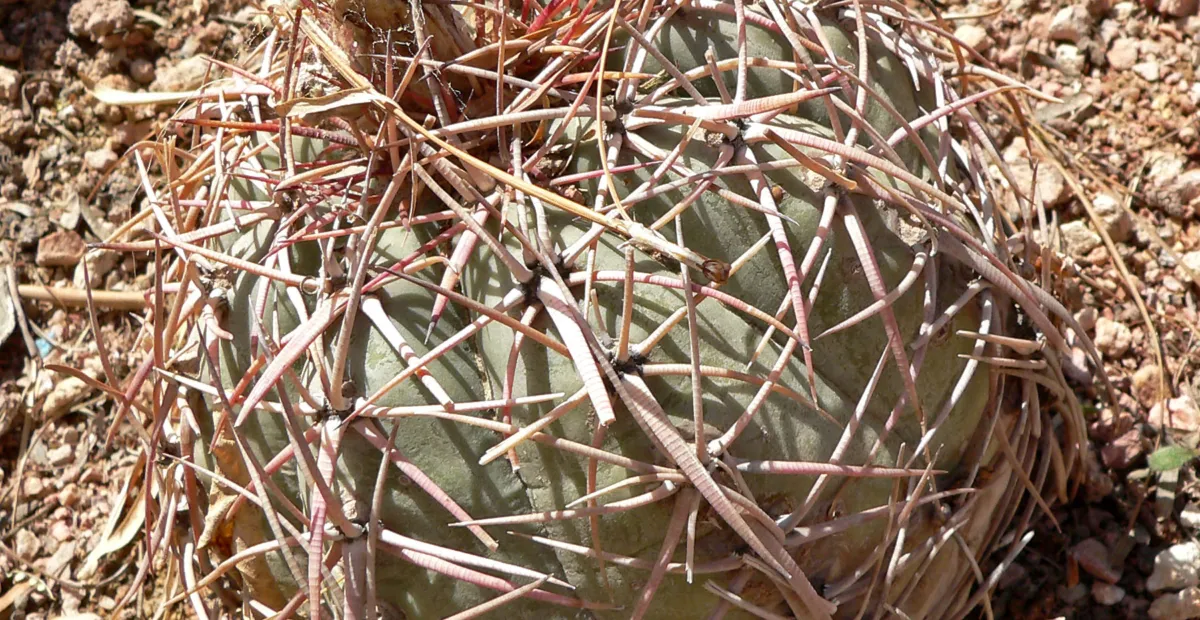
The stem is usually solitary, blue-gray to gray-green, flattened-globose or short-cylindrical, with broad ribs that may curve helically. Areoles carry several stout, annulate, pinkish, gray, tan, or brown spines; one or more central spines may descend or curve strongly. Woolly crown growth and hairy fruits are useful identification features.
Flowering
Flowers arise from the woolly crown and are typically rose-pink to magenta, opening during the brighter part of the day. The species backbone flowers mainly from spring into late summer, with timing varying by region, rainfall, temperature, and plant maturity. Reliable differences for the quoted horticultural identity are not documented.
Pollination and visitors
Specific animal pollinators were not reliably documented for this exact horticultural identity during review. The species has conspicuous, open daytime flowers, but visitor-group assignment should remain unresolved rather than being inferred from flower color alone.
Echinocactus 'Horizonthalonius' photos
Click any photo for a larger view. Source, author and license are shown separately.
Diseases and pests
Diseases
The principal risk is root or basal rot caused by wet substrate, poor drainage, or watering during cool dormancy. Use a mineral, fast-draining mix; keep the crown and soil surface dry in winter; and isolate plants showing soft, darkened tissue. Remove rot only with sterile tools and allow cut surfaces to callus before re-rooting.
Pests
Watch for mealybugs, scale, spider mites, and root-feeding insects, especially under greenhouse conditions. Inspect areoles, crown wool, and roots during repotting. Remove small infestations with a targeted cotton-swab treatment or an appropriately labeled cactus-safe product; improve ventilation and avoid repeated excess irrigation.
Related diseases and pests
Only Plant Doctor profiles whose host data indicate this plant may be affected are shown here.
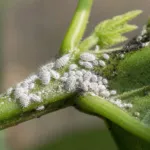 PestCotton mealybugPhenacoccus solenopsis Tinsley
 DiseaseRhizopus soft rotRhizopus stolonifer
 DiseaseBacterial soft rotPectobacterium carotovorum
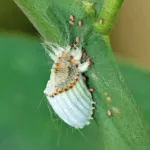 PestCottony Cushion ScaleIcerya purchasi
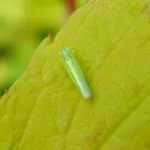 PestSmaller green leafhopperEmpoasca vitis
 DiseasePhytophthora root and crown rotPhytophthora nicotianae
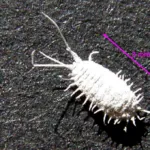 PestObscure mealybugPseudococcus viburni
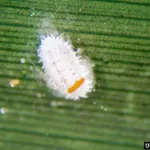 PestCitrus mealybugPlanococcus citri
Toxicity and pollen
No reliable source located in this review identifies species-specific poisonous compounds for Echinocactus 'Horizonthalonius' or the accepted species backbone. The practical hazard is mechanical: rigid spines can puncture skin, eyes, mouths, and paws, and glochids are not the main feature of this taxon. Keep away from children and pets and handle with protective equipment.
- Typical season
- Flowering-season exposure is localized and generally limited
- Pollination / pollen
- Flower pollen; dispersal characteristics not documented for this identity
Cactus pollen is produced in the flowers, but reliable species-specific airborne pollen or clinical allergy data were not found. Because the flowers are insect-associated and pollen exposure is usually localized, concern is provisionally rated low rather than none. People with known pollen sensitivity should avoid direct handling of flowering plants.
Native habitat
The accepted species backbone occurs in arid desert and dry shrubland from the southwestern United States into Mexico, commonly on rocky slopes and limestone-influenced substrates. It experiences intense sun, low humidity, sparse rainfall, and pronounced seasonal drying. The supplied cultivar identity is not tied to a documented wild provenance.
Interesting fact
The species backbone is among the smaller Echinocactus cacti and can flower in containers when mature. Its ribs may run vertically or curve helically around the stem. Populations show substantial variation in spine form, body shape, and flower color. The woolly fruits conceal dark seeds and dry before dispersal.
Frequently asked questions (FAQ)
The most relevant questions about this plant, with short and direct answers.
🌱Quick care
How do you care for Echinocactus 'Horizonthalonius'?⌄
Give Echinocactus 'Horizonthalonius' full sun, very fast-draining mineral soil, and low-frequency watering. Let the soil dry completely before watering and keep the plant much drier during winter.
Is Echinocactus 'Horizonthalonius' easy to grow?⌄
Echinocactus 'Horizonthalonius' is considered a challenging, slow-growing cactus because it is especially vulnerable to rot. Excellent drainage, strong light, and careful watering are essential.
How often should I water Echinocactus 'Horizonthalonius'?⌄
Water Echinocactus 'Horizonthalonius' only after its soil has dried completely, usually every 2–3 weeks during active summer growth in a container. Water less often in cool or winter conditions.
🌤️Environment and placement
How much sunlight does Echinocactus 'Horizonthalonius' need?⌄
Echinocactus 'Horizonthalonius' needs several hours of direct sunlight daily and performs best in full sun. Acclimate indoor or newly purchased plants gradually to prevent sunburn.
Can Echinocactus 'Horizonthalonius' grow indoors?⌄
Echinocactus 'Horizonthalonius' can grow indoors if placed directly beside a very bright, sunny window or under a strong grow light. Insufficient light can weaken growth and increase the risk of overwatering problems.
Can Echinocactus 'Horizonthalonius' grow outside in the United States?⌄
Echinocactus 'Horizonthalonius' can grow outdoors in hot, dry areas with excellent drainage and strong sunlight. In colder or humid regions, grow it in a container that can be protected from wet freezes and prolonged winter moisture.
What USDA hardiness zone is suitable for Echinocactus 'Horizonthalonius'?⌄
Echinocactus 'Horizonthalonius' is best treated conservatively as a frost-protected cactus in much of the United States. Dry plants may tolerate brief temperatures near 32°F and occasionally colder conditions, but wet soil combined with frost is dangerous.
Does Echinocactus 'Horizonthalonius' need protection from frost?⌄
Yes, protect Echinocactus 'Horizonthalonius' from frost, especially when its soil is wet. Keep it dry before cold weather and move container plants under cover when freezing temperatures or winter precipitation are expected.
💧Care and problems
Why is my Echinocactus 'Horizonthalonius' turning soft?⌄
A soft or collapsing Echinocactus 'Horizonthalonius' most often indicates root or stem rot caused by excess moisture. Stop watering, inspect the roots, and improve drainage; a severely rotten plant may not recover.
Why is my Echinocactus 'Horizonthalonius' turning yellow?⌄
Yellowing in Echinocactus 'Horizonthalonius' can result from overwatering, poor drainage, root damage, or inadequate light. Check the soil and roots before watering again and move the plant to brighter conditions if needed.
Why is my Echinocactus 'Horizonthalonius' shrinking?⌄
Some seasonal shrinking is normal when Echinocactus 'Horizonthalonius' is kept dry, particularly in winter. Persistent or severe collapse can indicate dehydration, root loss, or rot and should be checked at the roots.
Does Echinocactus 'Horizonthalonius' need fertilizer?⌄
Echinocactus 'Horizonthalonius' needs little fertilizer and can usually be fed lightly only during spring and summer growth. Use a diluted, low-nitrogen cactus fertilizer and never fertilize a dry, dormant, or stressed plant.
What pests affect Echinocactus 'Horizonthalonius'?⌄
Echinocactus 'Horizonthalonius' may be affected by mealybugs, scale, aphids, or whiteflies. Inspect the woolly crown, spines, and roots regularly, and isolate and treat infestations promptly.
🪴Planting and repotting
What soil is best for Echinocactus 'Horizonthalonius'?⌄
Use a predominantly mineral cactus mix containing materials such as pumice, lava rock, coarse grit, or gravel. Adding limestone or other calcareous grit suits this species, while dense organic potting soil raises rot risk.
Can Echinocactus 'Horizonthalonius' grow in limestone soil?⌄
Yes, Echinocactus 'Horizonthalonius' is well suited to limestone-rich, sharply draining soil. Use limestone as part of a gritty mineral mix rather than planting it in compacted or water-retentive ground.
What type of pot is best for Echinocactus 'Horizonthalonius'?⌄
Choose a pot with a drainage hole and enough depth for the plant’s root system, preferably made from breathable terracotta. Avoid oversized containers because they hold moisture for too long around the roots.
When should I repot Echinocactus 'Horizonthalonius'?⌄
Repot Echinocactus 'Horizonthalonius' in spring or early summer when it is beginning active growth, and only when the roots have filled the container or the soil has deteriorated. Handle the plant with thick protection and allow damaged roots to dry before watering.
How do you plant Echinocactus 'Horizonthalonius' in the ground?⌄
Plant Echinocactus 'Horizonthalonius' in a raised, rocky site that receives full sun and drains rapidly after rain. Set it at the same depth as before and avoid planting it where winter water can collect.
✂️Propagation and pruning
How do you propagate Echinocactus 'Horizonthalonius'?⌄
Propagate Echinocactus 'Horizonthalonius' primarily from seed; offsets are uncommon. Sow fresh, clean seed in a sterile, very well-draining medium and provide warmth, light, and careful moisture until seedlings establish.
Can Echinocactus 'Horizonthalonius' be grown from cuttings?⌄
Echinocactus 'Horizonthalonius' is not normally propagated from cuttings because it is a solitary, globular cactus without readily rooting segments. Seed propagation is the standard method, although grafting may be used by specialist growers.
Does Echinocactus 'Horizonthalonius' produce offsets?⌄
Echinocactus 'Horizonthalonius' usually remains solitary and does not commonly produce offsets. If a side shoot appears, it may be separated only after it has developed enough tissue to root safely.
⚠️Toxicity and safety
Is Echinocactus 'Horizonthalonius' poisonous to people or pets?⌄
Species-specific toxicity information for Echinocactus 'Horizonthalonius' is uncertain, so do not allow people or pets to chew it. Its well-documented primary hazard is mechanical injury from sharp, often hooked spines.
Are the spines of Echinocactus 'Horizonthalonius' dangerous?⌄
Yes, the spines of Echinocactus 'Horizonthalonius' can puncture skin and may snag clothing or gloves. Handle it with long tools, thick gloves, and eye protection, and keep it away from walkways, children, and pets.
How do you safely repot Echinocactus 'Horizonthalonius'?⌄
Safely repot Echinocactus 'Horizonthalonius' by wrapping the body with folded cardboard, newspaper, or a thick towel and using tongs or a plant strap. Do not grip the spines directly, and let any root damage dry before watering.
🌸Flowering and special interest
Does Echinocactus 'Horizonthalonius' flower?⌄
Yes, mature Echinocactus 'Horizonthalonius' can produce funnel-shaped flowers from the woolly crown. Flowering requires strong light, good health, and sufficient maturity, which may take many years because the plant grows slowly.
What color are Echinocactus 'Horizonthalonius' flowers?⌄
Echinocactus 'Horizonthalonius' commonly produces pink to magenta flowers, although color can vary among plants. Flowers emerge from the dense wool at the top of the mature stem.
Why is my Echinocactus 'Horizonthalonius' not flowering?⌄
A young age, insufficient direct light, weak growth, or unsuitable winter conditions can prevent Echinocactus 'Horizonthalonius' from flowering. Keep it bright, dry and cool in winter, and avoid forcing growth with frequent watering.
How old does Echinocactus 'Horizonthalonius' need to be before flowering?⌄
There is no dependable single flowering age for Echinocactus 'Horizonthalonius', but it generally must reach maturity after many years of slow growth. Seed-grown plants may require substantial time before producing their first flowers.
Similar plants
 Azure Monkshood (Aconitum carmichaelii) care guideAconitum carmichaelii
 Monkshood (Aconitum ‘Stainless Steel’)Aconitum 'Stainless Steel'
 Monkshood (Aconitum ‘Bressingham Spire’)Aconitum 'Bressingham Spire'
 Golden full moon maple (Acer shirasawanum ‘Aureum’)Acer shirasawanum 'Aureum'
 Globosum (Acer platanoides ‘Globosum’)Acer platanoides 'Globosum'
 Striped maple (Acer pensylvanicum) care guideAcer pensylvanicum