
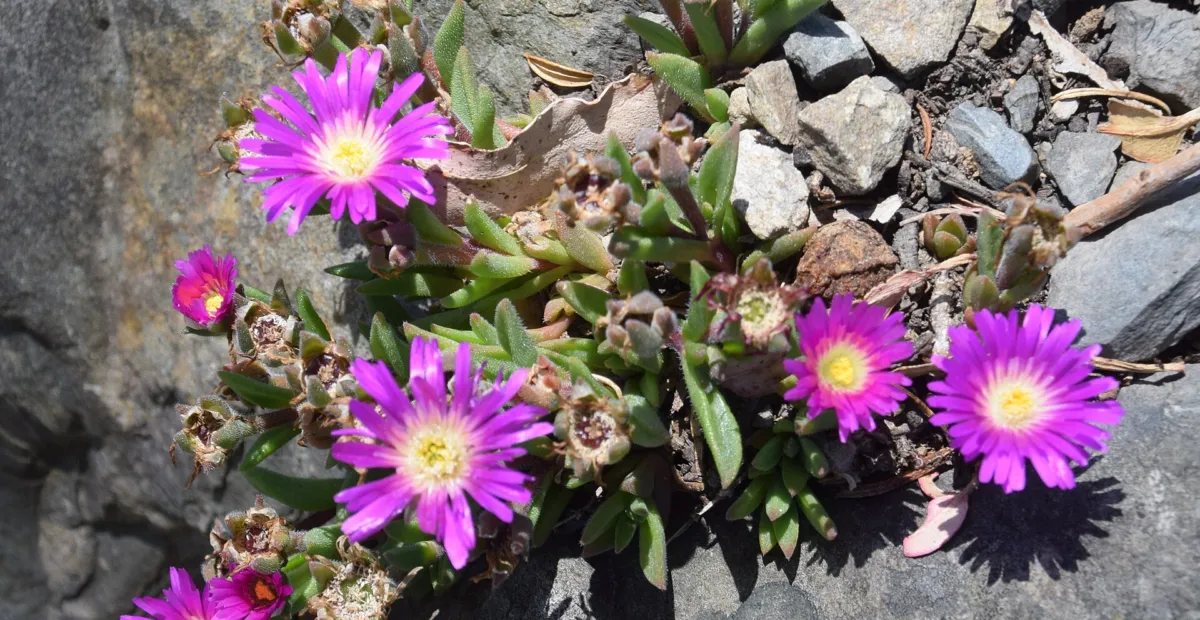
 Source:
Fire Sheepfig (Delosperma sutherlandii) short overview
Fire Sheepfig (Delosperma sutherlandii) is a low, spreading succulent perennial from eastern South Africa, valued for its fleshy green foliage and bright pink to purple, daisy-like flowers. In U.S. gardens it works well in rockeries, gravel beds, slopes, containers, and other hot, dry sites. Give it full sun, very sharp drainage, and modest watering; winter performance is strongest in Zones 6–10 when crowns stay relatively dry.
Taxonomic classification
Fire Sheepfig (Delosperma sutherlandii) care guide
Light and placement
Give the plant full sun, ideally with at least 6 hours of direct light and excellent exposure from the south or west. Strong light supports compact growth and flower opening. Pale, elongated stems and sparse flowering indicate insufficient light; soft, bleached, or scorched patches may indicate excessive heat combined with reflected light or abrupt exposure.
Watering and humidity
Water thoroughly, then allow the soil to dry before watering again. During active spring and summer growth, irrigation may be needed after extended dry periods, but rainfall should count toward the total. Reduce watering in cool, cloudy weather and keep winter plants nearly dry, especially in heavy rain climates. Overwatering causes soft leaves, collapse, and root rot.
Soil and growing medium
Use a gritty, sharply draining mix or sandy, rocky soil. Delosperma sutherlandii tolerates a broad pH range, from acidic through alkaline conditions, provided water drains rapidly. Avoid heavy clay and planting sites that remain wet after rain. In containers, combine potting mix with mineral grit, pumice, or coarse perlite.
Feeding
Feed sparingly because excess fertility can produce soft, weak growth. In spring, apply a dilute balanced or low-nitrogen succulent fertilizer once, or top-dress lightly with mature compost where the soil is poor. Do not fertilize dry, recently transplanted, dormant, or winter-wet plants.
Growth and habit
A low, spreading perennial that forms a dense mat from branching stems. Growth is moderately fast under warm, bright conditions. Keep stems from sitting in persistently wet soil, and thin crowded sections if airflow declines. The plant is best maintained as a dry-site ground cover rather than as a moisture-loving border perennial.
Planting and repotting
Plant in spring after the danger of hard frost has passed, setting the crown at the same depth as in its original container. Space plants about 12–24 inches apart so spreading stems can knit together without excessive crowding. Water once after planting, then let the soil dry between subsequent irrigations.
Repot container plants in spring when roots fill the pot or the mix breaks down. Move the plant into a slightly larger container with a drainage hole and a gritty succulent medium. Handle the fleshy stems carefully, and allow disturbed roots to dry briefly before watering.
Propagation and pruning
Propagation
Propagate from stem cuttings in late spring or summer, using short healthy segments placed in a gritty, barely moist medium. Seeds can be sown on the surface of a sandy mix and kept lightly moist until germination. Allow cut ends to dry briefly before planting to reduce rot risk.
Pruning
Routine pruning is usually unnecessary. Remove dead or damaged stems in spring and trim lightly after flowering if the mat spreads beyond its space. Avoid cutting deeply into the woody crown, and do not prune when cold, wet weather is likely.
Overwintering
In USDA Zone 6 and colder or in areas with wet winters, grow the plant in a container or place it under rain protection. Keep the crown relatively dry, use a gravel mulch rather than moisture-retaining mulch, and move containers to a bright, cool, frost-protected location when severe cold is forecast. Avoid warm, dark indoor storage.
Uses
Use as a drought-tolerant ornamental ground cover in rock gardens, gravel beds, sunny slopes, raised beds, containers, and patio plantings. Its spreading habit can help cover bare soil and moderate erosion. It is not documented here as a food or medicinal plant, so avoid culinary or therapeutic use.
Appearance
The plant has succulent, needle-like to narrowly cylindrical green leaves on branching stems. Its foliage and stems form a low, spreading mat, while the stems and persistent root base may become somewhat woody with age. Short rigid hairs can occur on the herbaceous parts, a useful identification feature when visible.
Flowering
The plant produces open, daisy-like flowers with numerous narrow rays. Blooms are typically strongest from spring into summer in the United States, opening most fully in bright sunshine and closing or becoming less conspicuous in dull conditions. Flower color may range from vivid pink to purple-magenta.
Pollination and visitors
North Carolina Extension and South African botanical guidance report attraction to bees and butterflies; bumblebee visitation is plausible for the open flowers, but a species-level primary pollinator was not documented in the reviewed sources. Flowers are most available to visitors during bright spring and summer conditions.
Delosperma sutherlandii photos
Click any photo for a larger view. Source, author and license are shown separately.
Diseases and pests
Diseases
Usually trouble-free when grown in fast-draining soil. Root and crown rot are the principal concerns and develop when irrigation, rainfall, or winter moisture remains around the roots. Improve drainage, avoid burying the crown, and remove collapsed tissue. Discard severely rotted plants rather than repeatedly replanting infected material.
Pests
Aphids and mealybugs may appear, especially under glass or in sheltered containers. Inspect new growth and leaf joints regularly. Remove small infestations by hand or with a water spray; use insecticidal soap only when needed and according to the product label. Avoid chronically humid, poorly ventilated conditions.
Related diseases and pests
Only Plant Doctor profiles whose host data indicate this plant may be affected are shown here.
 DiseasePhytophthora cactorum crown, collar, root and fruit rotPhytophthora cactorum
 PestMealy Plum AphidHyalopterus pruni (Geoffroy, 1762)
 DiseasePhytophthora root and crown rotPhytophthora nicotianae
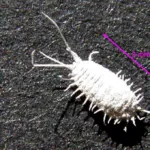 PestObscure mealybugPseudococcus viburni
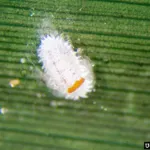 PestCitrus mealybugPlanococcus citri
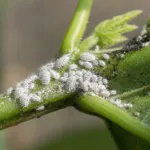 PestCotton mealybugPhenacoccus solenopsis Tinsley
Toxicity and pollen
Reliable species-specific toxicity information for humans, dogs, cats, and children was not located in the authoritative sources reviewed. Do not treat the plant as edible; prevent ingestion and monitor for gastrointestinal upset after substantial consumption. Seek professional veterinary or medical advice if symptoms occur.
- Typical season
- Spring through summer; exact allergy season is undocumented
- Pollination / pollen
- Primarily insect-transported pollen; airborne relevance undocumented
This is an insect-pollinated flowering plant, but species-specific airborne-pollen and allergy studies were not found. Its pollen is generally presented within flowers rather than dispersed by wind, yet insect pollination alone does not establish zero allergy risk. People with known pollen sensitivity should use ordinary garden precautions during bloom.
Native habitat
The species is native to eastern South Africa from Gauteng through KwaZulu-Natal, where it occurs in subtropical environments. It is adapted to sunny, seasonally dry conditions and mineral, sandy, rocky, or otherwise well-drained soils. In cultivation, winter survival depends heavily on keeping the root crown from prolonged cold moisture.
Interesting fact
The species is native to Gauteng through KwaZulu-Natal in South Africa.
Its branches arise from a persistent woody root system.
The fleshy foliage helps it tolerate periods of drought.
Bright flowers open most fully in strong sunlight.
Its dense mat can help reduce soil erosion on slopes.
Frequently asked questions (FAQ)
The most relevant questions about this plant, with short and direct answers.
🌱Quick care
What is Fire Sheepfig (Delosperma sutherlandii)?⌄
Fire Sheepfig is a low-growing, mat-forming succulent perennial in the ice plant family, Aizoaceae. It produces fleshy, needlelike foliage and bright pink to purple-pink, daisy-like flowers.
How much sun does Fire Sheepfig need?⌄
Fire Sheepfig needs full sun, ideally at least 6 hours of direct sunlight daily. Less light can produce looser growth and fewer flowers.
How often should you water Fire Sheepfig?⌄
Water Fire Sheepfig infrequently and allow the soil to dry between waterings. Reduce watering during cool, wet weather because constantly damp soil can cause root or crown rot.
Is Fire Sheepfig drought tolerant?⌄
Yes, Fire Sheepfig is drought tolerant once established. It may need occasional deep watering during prolonged summer heat, especially when newly planted.
🌤️Environment and placement
What USDA zones can grow Fire Sheepfig?⌄
Fire Sheepfig is commonly listed for USDA Zones 6a through 10b, although winter survival depends heavily on drainage and local conditions. Protect it from prolonged cold combined with wet soil.
Where should I plant Fire Sheepfig?⌄
Plant Fire Sheepfig in a sunny rock garden, gravel bed, slope, raised bed, or container with excellent drainage. Its spreading habit also makes it useful as a low ground cover.
Can Fire Sheepfig grow in shade?⌄
Fire Sheepfig tolerates limited light shade but performs best in full sun. Heavy shade usually reduces flowering and can encourage weak, open growth.
Can Fire Sheepfig grow in containers?⌄
Yes, Fire Sheepfig grows well in containers, troughs, and patio planters with drainage holes. Use a shallow, wide pot and a gritty mix that dries quickly.
Is Fire Sheepfig suitable for slopes or erosion control?⌄
Yes, its dense, spreading growth can help cover soil on slopes and reduce erosion. The planting site must still drain freely, particularly during winter and heavy rain.
💧Care and problems
What soil is best for Fire Sheepfig?⌄
Use sandy, rocky, or gravelly soil that drains sharply. Avoid heavy clay and rich mixes that stay wet around the roots.
Why is my Fire Sheepfig turning soft or collapsing?⌄
Soft leaves or collapsing stems usually indicate excess moisture, poor drainage, or cold wet conditions. Move container plants to a drier mix and improve drainage around plants in the ground.
Why is my Fire Sheepfig not flowering?⌄
Insufficient sunlight, excessive moisture, or overly rich soil can reduce flowering. Provide full sun, lean sharply drained soil, and restrained watering.
Does Fire Sheepfig need fertilizer?⌄
Fire Sheepfig usually needs little fertilizer because it is adapted to lean soils. If growth is weak, apply a light, balanced fertilizer in spring and avoid heavy feeding.
Does Fire Sheepfig need winter protection?⌄
Fire Sheepfig may need protection from winter wet, especially in colder or rainy regions. Plant it in raised or sloped, sharply drained soil and avoid covering the crown with moisture-retaining mulch.
What pests or diseases affect Fire Sheepfig?⌄
Fire Sheepfig is generally trouble-free outdoors, but wet soil can cause root or crown rot. Plants grown under glass may occasionally attract aphids or mealybugs.
🪴Planting and repotting
When is the best time to plant Fire Sheepfig?⌄
Plant Fire Sheepfig in spring after the risk of hard frost has passed, giving the roots a full growing season to establish. In mild climates, fall planting can work if winter drainage is excellent.
How far apart should Fire Sheepfig be planted?⌄
Space Fire Sheepfig about 12 to 24 inches apart, depending on how quickly you want the ground cover to fill in. Individual plants commonly spread roughly 1 to 2 feet wide.
How do you repot Fire Sheepfig?⌄
Repot Fire Sheepfig into a slightly wider container using a gritty, fast-draining mix. Handle the roots gently, water lightly after repotting, and then let the mix dry before watering again.
✂️Propagation and pruning
How do you propagate Fire Sheepfig from cuttings?⌄
Propagate Fire Sheepfig by taking short stem cuttings and allowing the cut ends to dry briefly before placing them in gritty, lightly moist soil. Keep the cuttings in bright light and avoid keeping the mix wet.
Can Fire Sheepfig be grown from seed?⌄
Yes, Fire Sheepfig can be grown from seed. Sow the small seeds on the surface of a sandy, well-drained medium and keep them lightly moist until germination.
Can Fire Sheepfig be divided?⌄
Mature Fire Sheepfig mats can be divided if sections include healthy roots and stems. Divide during active growth, replant promptly, and water sparingly while the sections establish.
Does Fire Sheepfig need pruning?⌄
Fire Sheepfig does not require regular pruning. Trim dead material and lightly shorten straggly stems after flowering to keep the mat compact.
⚠️Toxicity and safety
Is Fire Sheepfig toxic to dogs, cats, or people?⌄
No reliable species-specific toxicity classification was found for Fire Sheepfig. Because its safety has not been firmly established, prevent pets and children from chewing the plant and contact a medical or veterinary professional if it is ingested.
🌸Flowering and special interest
When does Fire Sheepfig bloom?⌄
Fire Sheepfig generally blooms from spring into summer, with bright pink or purple-pink flowers appearing most strongly in sunny conditions. Bloom timing varies with climate and growing conditions.
What color are Fire Sheepfig flowers?⌄
Fire Sheepfig flowers are typically bright pink to purple-pink and have a daisy-like form. Flower color can vary somewhat among plants and selections.
Does Fire Sheepfig attract pollinators?⌄
Yes, Fire Sheepfig flowers can attract bees and butterflies. Full sun and good drainage generally encourage the strongest flowering display.
Similar plants
 Stock Sheepfig (Delosperma floribundum) care guideDelosperma floribundum
 Flatleaf Sheepfig (Delosperma ashtonii) care guideDelosperma ashtonii
 He pickle pla (Delosperma echinatum) care guideDelosperma echinatum
 Tarkastad Sheepfig (Delosperma dyeri) care guideDelosperma dyeri
 Delosperma ‘Fire Spinner’Delosperma 'Fire Spinner'
 Delosperma nubigenum care guideDelosperma nubigenum