
 Source:
 Davallia fejeensis short overview
Davallia fejeensis is a tropical, evergreen epiphytic fern grown for its distinctive fuzzy rhizomes, which creep across the pot and hang over the rim like little rabbit’s feet. Its finely divided, glossy green fronds suit hanging baskets and indoor displays. Give it bright filtered light, warmth, organic well-drained potting mix, and steady moisture without waterlogging. It produces spores rather than flowers and is listed as non-toxic to dogs and cats.
Taxonomic classification
Davallia fejeensis care guide
Light and placement
Place in bright filtered light or partial shade, such as near an east- or north-facing window or several feet back from a bright south- or west-facing window. Gentle morning sun can be tolerated, but harsh midday or afternoon sun may scorch fronds and dry the rhizomes. Too little light produces weak, sparse growth; too much causes pale, crispy foliage.
Watering and humidity
Water thoroughly when the top 1/2 inch of mix has begun to dry, then let excess water drain completely. Keep the root zone lightly and consistently moist, never soggy. Check more often in warm, bright conditions and less often in winter. Do not let the exposed rhizomes become bone-dry for extended periods; moderate to high humidity improves frond quality.
Soil and growing medium
Use a loose, organic, peat-based or peat-free fern mix with added fine bark and perlite for air space. The substrate should hold light, even moisture while draining quickly; avoid dense garden soil and containers that stay saturated. A slightly acidic mix is suitable, but exact species-specific pH requirements are not well documented.
Feeding
Feed during active growth with a balanced liquid houseplant fertilizer diluted to half the label strength about monthly. Apply to already moist media to reduce root stress. Reduce or stop feeding during slow winter growth, after repotting, or when the plant is dehydrated or suffering from root problems.
Growth and habit
This evergreen fern forms arching to spreading fronds from a branching, creeping rhizome. New fronds arise at intervals along the rhizome, so the plant gradually expands outward and trails over the container. Do not bury or heavily prune healthy rhizomes; instead, guide them across the surface or trim only damaged sections.
Planting and repotting
In the United States, grow outdoors only in frost-free locations or seasonally in sheltered containers. Set the plant at the same depth as its original container and leave the rhizomes exposed. Allow room for fronds and rhizomes to spread, especially in hanging baskets.
Repot in spring only when the container is crowded or the growing medium has broken down. Choose a shallow pot just slightly larger than the root mass. Keep the creeping rhizomes on the surface rather than burying them, and water gently after repotting.
Propagation and pruning
Propagation
Propagate by rhizome tip cuttings or division, preferably during active growth. Cut a 2–3 inch rhizome section with one or two attached fronds, place it on moist medium, and pin it down without burying the rhizome. Bright filtered light, warmth, and a humidity enclosure encourage rooting. Spores can also be sown, but this is slower and more technical.
Pruning
Remove yellow, brown, or badly damaged fronds at the base with clean scissors. Occasional trimming keeps a hanging basket tidy, but avoid cutting healthy creeping rhizomes or removing large amounts of green foliage at once. Prune mainly during active growth so the plant can replace lost fronds.
Overwintering
Bring outdoor containers indoors before temperatures approach 55°F. Place the plant in bright filtered light, protect it from drafts and heating vents, reduce watering slightly as growth slows, and maintain moderate humidity. Do not expose it to frost or prolonged temperatures near freezing.
Uses
Primarily an ornamental indoor fern for hanging baskets, terrariums with ventilation, shaded rooms, and frost-free patios. Its spreading rhizomes provide visual interest at the container edge. It has no documented culinary or medicinal use in the reviewed sources.
Appearance
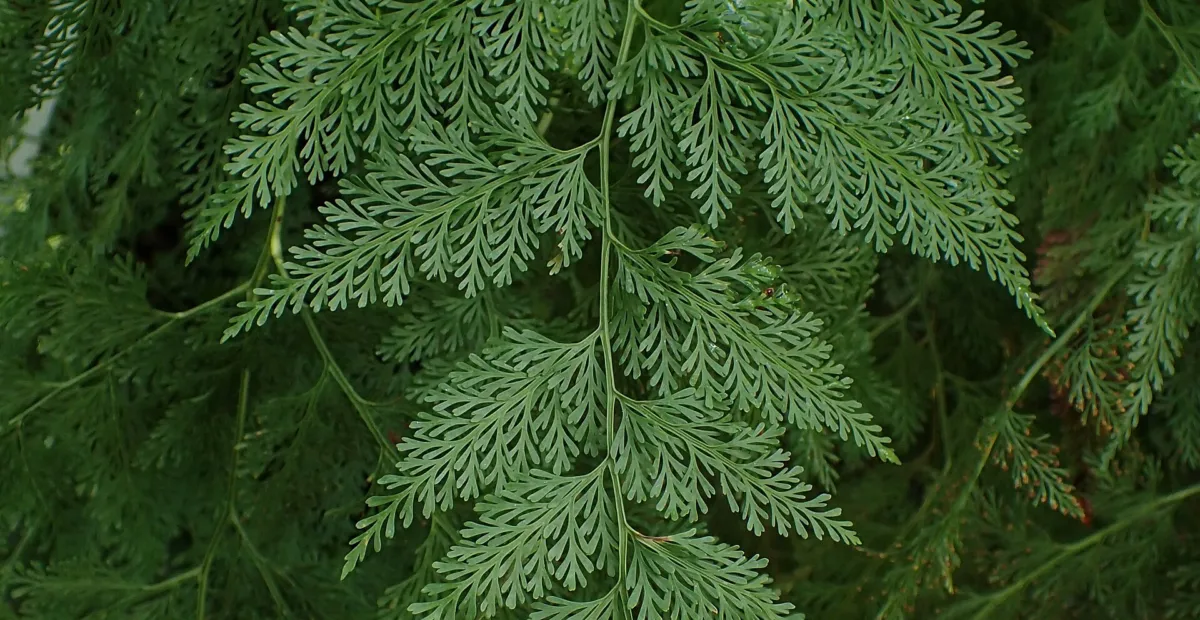
The most distinctive feature is the long, branching, brown to gray-brown rhizome covered with dense soft hairs or chaffy scales. Fronds are firm, glossy, and finely multi-pinnate, with ovate to deltoid outlines and narrow pointed pinnules. Rhizomes creep across the surface and spill over the pot, producing fronds at intervals.
Pollination and visitors
As a fern, Davallia fejeensis reproduces by spores rather than flowers and has no documented animal pollination requirement or characteristic pollinator attraction.
Davallia fejeensis photos
Click any photo for a larger view. Source, author and license are shown separately.
Diseases and pests
Diseases
The main risks are root or rhizome rot from persistently wet, poorly aerated media and occasional fungal spotting under stagnant, wet conditions. Use a free-draining mix, water when the surface has begun to dry, remove badly damaged fronds, and improve air movement. Avoid overhead watering late in the day.
Pests
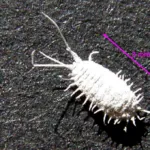
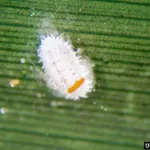
Inspect fronds and rhizomes for spider mites, mealybugs, and scale. Spider mites are more likely in hot, dry air; improve humidity and rinse foliage gently. Remove scale or mealybugs manually with a cotton swab and use an appropriately labeled houseplant treatment if needed. Quarantine infested plants.
Related diseases and pests
Only Plant Doctor profiles whose host data indicate this plant may be affected are shown here.


Toxicity and pollen
ASPCA lists rabbit's foot fern and Davallia species as non-toxic to dogs and cats. No specific human toxicity is documented in the reviewed sources, but chewing any ornamental plant can cause minor stomach upset, and potting media may contain irritants or microbes. Keep plant material and growing media away from young children who may chew it.
- Pollination / pollen
- Spores, not pollen
Ferns do not produce pollen-bearing flowers or cones. Davallia fejeensis releases spores for reproduction; these are biologically different from pollen. Specific airborne-spore allergy risk for this species is not well documented, so normal care such as avoiding dusty handling and washing hands is reasonable.
Native habitat
In its native range, this fern grows as an epiphyte in wet tropical environments, including Fiji, Pohnpei in the Caroline Islands, and the Tubuai Islands. Epiphytic growth means the rhizomes use elevated organic debris and bark-like surfaces, explaining the need for an airy medium and excellent drainage.
Interesting fact
The common name refers to densely hairy rhizomes that resemble rabbit feet. The rhizomes naturally creep over the potting mix and may hang over the container. The species is an epiphyte in wet tropical habitats rather than a typical terrestrial woodland fern. It was formerly treated by some references as Davallia solida var. fejeensis.
Frequently asked questions (FAQ)
The most relevant questions about this plant, with short and direct answers.
🌱Quick care
How do you care for Davallia fejeensis indoors?⌄
Give Davallia fejeensis bright filtered light, evenly moist but well-drained soil, moderate to high humidity, and warm temperatures. Let the top 1/2 inch of mix dry slightly between waterings, and keep its fuzzy rhizomes exposed.
How often should you water Davallia fejeensis?⌄
Water Davallia fejeensis when the top 1/2 inch of potting mix feels slightly dry. Water thoroughly until excess drains, but do not leave the pot sitting in water or keep the rhizomes constantly wet.
What light does Davallia fejeensis need?⌄
Davallia fejeensis grows best in bright, filtered or indirect light with some partial shade. Protect it from strong direct midday sun, which can scorch the delicate fronds.
Is Davallia fejeensis easy to grow as a houseplant?⌄
Davallia fejeensis is a moderately easy houseplant when its moisture and drainage are balanced. It tolerates average indoor humidity better than some ferns, but grows fuller and healthier in more humid conditions.
🌤️Environment and placement
Where should I place Davallia fejeensis indoors?⌄
Place Davallia fejeensis near an east- or north-facing window, or several feet from a brighter window with filtered light. A bathroom or other warm room with indirect light can work well if air circulation remains good.
What temperature is too cold for Davallia fejeensis?⌄
Keep Davallia fejeensis above about 55°F for reliable growth and protect it from frost, cold drafts, and sudden temperature drops. It is frost-tender and is generally grown indoors in colder U.S. climates.
Does Davallia fejeensis need high humidity?⌄
Davallia fejeensis benefits from moderate to high humidity, although it can tolerate average household conditions better than many ferns. Use a humidifier or group plants together if frond tips become brown and crispy.
Can Davallia fejeensis grow in low light?⌄
Davallia fejeensis may survive in lower light, but bright filtered light produces stronger growth and fuller fronds. Avoid placing it in a dark corner or directly against a hot, sunny window.
Can Davallia fejeensis grow outdoors?⌄
Davallia fejeensis can grow outdoors year-round only in warm, frost-free climates, typically USDA Zones 10 and warmer. In colder areas, grow it in a container and bring it indoors before temperatures fall.
💧Care and problems
Why are the fronds on my Davallia fejeensis turning brown?⌄
Brown fronds or tips usually result from dry soil, low humidity, hot direct sun, or cold drafts. Check moisture and placement first, while avoiding constant saturation that can damage the roots.
Why is Davallia fejeensis losing fronds?⌄
Davallia fejeensis can shed fronds after drying out, experiencing a sudden light change, or being exposed to cold or dry air. If the rhizomes remain firm and healthy, improve its conditions and allow new fronds time to develop.
Why is my Davallia fejeensis turning yellow?⌄
Yellowing fronds commonly indicate overwatering, poor drainage, insufficient light, or aging foliage. Let the upper layer of mix dry slightly between waterings and make sure the container drains freely.
How do I prevent root rot in Davallia fejeensis?⌄
Prevent root rot by using an airy, well-draining fern mix, a pot with drainage holes, and watering only when the surface begins to dry. Never allow the container to stand in runoff or bury the rhizomes in wet mix.
What pests attack Davallia fejeensis?⌄
Davallia fejeensis may attract common houseplant pests such as spider mites, mealybugs, and scale. Inspect fronds and rhizomes regularly, isolate affected plants, and treat pests promptly with an appropriate houseplant control.
Should I mist Davallia fejeensis?⌄
Misting may temporarily increase surface moisture but is not essential if room humidity is adequate. A humidifier, plant grouping, or well-ventilated pebble tray usually provides more consistent humidity without leaving foliage wet for long periods.
Should I fertilize Davallia fejeensis?⌄
Fertilize Davallia fejeensis lightly during active growth with a balanced houseplant fertilizer diluted to half strength. Avoid heavy feeding or fertilizing stressed, recently repotted, or dormant plants.
🪴Planting and repotting
What soil is best for Davallia fejeensis?⌄
Use a loose, organic, slightly acidic fern mix with excellent drainage. A peat- or coco-based mix amended with materials such as fine bark and perlite provides support while allowing air around the roots.
Should Davallia fejeensis rhizomes be buried?⌄
Keep Davallia fejeensis rhizomes resting on top of the potting mix rather than burying them. The fuzzy creeping rhizomes naturally grow across surfaces, and burying them can encourage rot.
What type of pot is best for Davallia fejeensis?⌄
Use a shallow, wide container or hanging basket with drainage holes to accommodate the creeping rhizomes. Choose a pot only slightly larger than the root ball because excessive wet mix can increase rot risk.
When should I repot Davallia fejeensis?⌄
Repot Davallia fejeensis in spring when the plant is actively growing or when roots and rhizomes have outgrown the container. Move it into a slightly larger pot and disturb the delicate rhizomes as little as possible.
Can Davallia fejeensis grow in a hanging basket?⌄
Davallia fejeensis grows well in a hanging basket because its rhizomes naturally creep over the rim and its fronds arch downward. Use a lightweight, well-draining mix and keep the exposed rhizomes on the surface.
✂️Propagation and pruning
How do you propagate Davallia fejeensis?⌄
Propagate Davallia fejeensis by dividing the plant or rooting rhizome sections with at least one attached frond. Lay a rhizome section on moist, well-draining mix, pin it in place, and keep it warm and lightly humid until new growth appears.
Can Davallia fejeensis grow from a rhizome cutting?⌄
Yes, Davallia fejeensis can grow from a 2- to 3-inch rhizome tip cutting with one or two fronds attached. Place the cutting on the surface of moist mix rather than burying it, and provide bright filtered light.
Can you propagate Davallia fejeensis from spores?⌄
Davallia fejeensis produces spores, but spore propagation is slower and less practical for most home growers. Rhizome division or rhizome cuttings are the more reliable methods for producing new plants.
Should I prune Davallia fejeensis?⌄
Prune Davallia fejeensis only to remove dead, damaged, or badly browned fronds. Cut unwanted fronds at their base with clean shears, but do not remove healthy foliage unnecessarily because ferns need it to support new growth.
⚠️Toxicity and safety
Is Davallia fejeensis toxic to dogs and cats?⌄
Davallia fejeensis is listed as non-toxic to dogs and cats. Even non-toxic plants can cause mild stomach upset if eaten, so contact a veterinarian if a pet shows concerning symptoms.
Is Davallia fejeensis poisonous to people?⌄
No specific human toxicity is documented for Davallia fejeensis. As with any ornamental plant, avoid intentional ingestion and keep potting materials, fertilizers, and pest treatments away from children.
🌸Flowering and special interest
Does Davallia fejeensis flower?⌄
Davallia fejeensis does not produce showy flowers because it is a fern. It reproduces through spores, which may appear as small brown structures on the undersides or margins of mature fronds.
What are the fuzzy feet on Davallia fejeensis?⌄
The fuzzy “feet” are creeping rhizomes, not roots or pests. They spread across the surface of the mix and over the container, and they should remain exposed rather than being covered.
Similar plants
 Azure Monkshood (Aconitum carmichaelii) care guideAconitum carmichaelii
 Monkshood (Aconitum ‘Stainless Steel’)Aconitum 'Stainless Steel'
 Monkshood (Aconitum ‘Bressingham Spire’)Aconitum 'Bressingham Spire'
 Golden full moon maple (Acer shirasawanum ‘Aureum’)Acer shirasawanum 'Aureum'
 Globosum (Acer platanoides ‘Globosum’)Acer platanoides 'Globosum'
 Striped maple (Acer pensylvanicum) care guideAcer pensylvanicum