
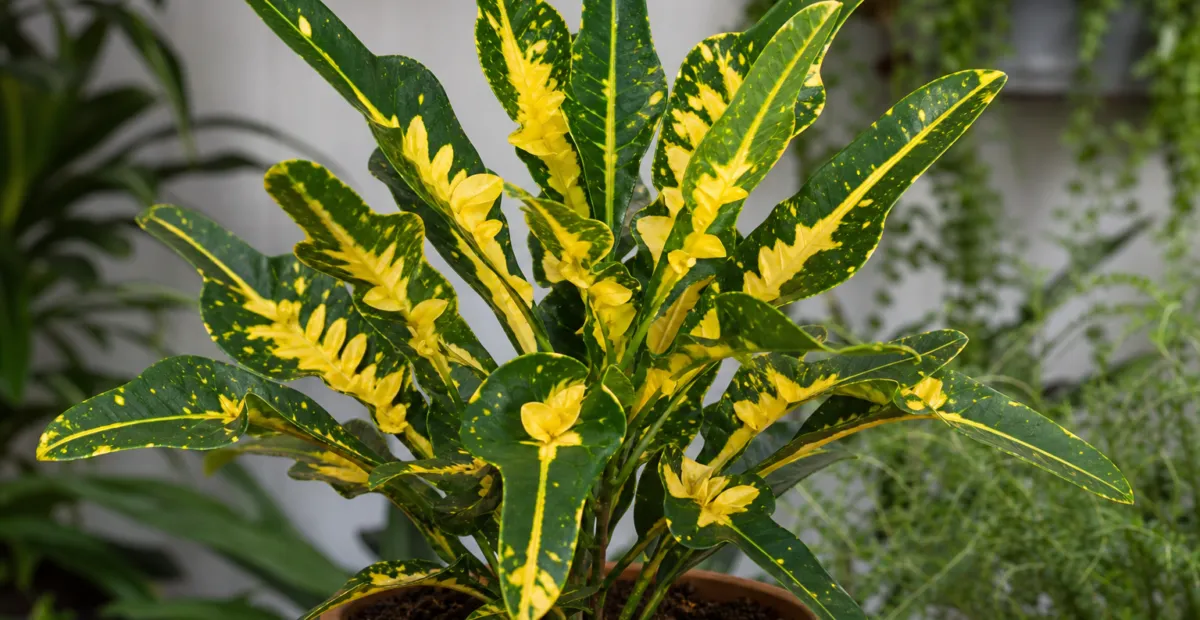
 AI-generated illustration
Victoria Gold Bell (Codiaeum variegatum ‘Victoria Gold Bell’) short overview
Codiaeum variegatum 'Victoria Gold Bell' is a tender evergreen croton cultivar prized for glossy foliage marked with vivid golden-yellow variegation and unusual bell-like growth along the midrib. In the United States it is generally grown as a houseplant, patio container specimen, or seasonal outdoor accent. Provide bright filtered light, warmth, moderate humidity, evenly moist but well-drained soil, and strict protection from frost. Its sap can irritate skin, and ingestion is unsafe.
Taxonomic classification
Victoria Gold Bell (Codiaeum variegatum ‘Victoria Gold Bell’) care guide
Light and placement
Provide bright filtered light or gentle morning sun, such as near an east window or behind a sheer curtain at a south or west window. Strong unfiltered afternoon sun can scorch leaves, particularly after indoor cultivation. Too little light produces duller variegation, elongated growth, and lower-leaf loss; too much sudden sun causes bleaching or brown patches.
Watering and humidity
Water thoroughly when the top inch of mix feels slightly dry, then let excess drain completely. Do not allow the root ball to remain saturated or sit in runoff. Water more often during warm, bright summer growth and less often during cool, low-light winter conditions, while avoiding prolonged drought. Moderate humidity helps reduce leaf drop but does not replace proper watering.
Soil and growing medium
Use a loose, humus-rich potting mix with generous drainage, such as quality indoor potting soil amended with perlite or fine bark. Crotons tolerate slightly acidic media and generally perform poorly in compacted, waterlogged soil. A pH around 5.5–6.5 is a reasonable target, although cultivar-specific pH data are unavailable.
Feeding
Feed during spring and summer when the plant is actively producing leaves, using a balanced liquid houseplant fertilizer diluted to about half the label strength every 3–4 weeks. Water the plant first if the mix is dry. Reduce or stop feeding in low-light winter conditions and after repotting until new growth resumes.
Growth and habit
This cultivar develops an upright, branching croton form and is maintained mainly for its foliage rather than flowers. Growth becomes more open in inadequate light and may slow sharply after cold exposure or relocation. Rotate containers periodically for balanced growth, and pinch overly long shoots only during warm active growth.
Planting and repotting
In the United States, plant outdoors only after nights remain consistently above 50°F and the danger of frost has passed. Set the root ball at the same depth as in its container; do not bury the stem. Allow roughly 18–30 inches between plants where this cultivar is grown as a warm-climate accent, adjusting for the actual nursery size.
Repot in spring or early summer only when roots have filled the container or the mix has become compacted. Move up one pot size rather than using an oversized container, and disturb the root ball as little as practical. Water thoroughly afterward and keep the plant warm while it re-establishes.
Propagation and pruning
Propagation
Stem cuttings are the practical method. Take healthy tip or semi-ripe cuttings during warm active growth, remove lower leaves, and root them in a sterile, airy medium under high humidity and bright indirect light. Use gloves because cut surfaces exude irritating sap. Seed is not a reliable way to preserve cultivar traits.
Pruning
Prune during warm active growth to remove damaged, weak, or excessively long shoots and to encourage branching. Make clean cuts just above a leaf node. Wear gloves and protect nearby surfaces from sap, which can irritate skin and stain materials. Avoid heavy pruning immediately after cold stress or repotting.
Overwintering
Bring outdoor plants indoors before temperatures approach 50°F. Quarantine and inspect for pests, then place in bright filtered light away from drafts and heating vents. Reduce watering as light and growth decline, but do not let the root ball become bone dry. Avoid fertilizing through the darkest part of winter unless the plant is actively growing under strong light.
Uses
Used primarily as an ornamental foliage houseplant, patio container specimen, greenhouse plant, or warm-climate landscape accent. Its vivid leaves work well as a focal point rather than as a culinary or medicinal plant. Do not use it for food, and position it where children and pets cannot chew the foliage.
Appearance
The plant has thick, glossy, leathery leaves arranged along branching stems. 'Victoria Gold Bell' is distinguished in nursery descriptions by bell-like secondary growth emerging from the leaf midrib, together with strong golden-yellow variegation. Exact leaf shape and mature coloration can vary with light, age, and growing conditions.
Flowering
Crotons can produce small, inconspicuous flowers on slender axillary clusters, but this cultivar is grown for foliage and flowering is not a dependable ornamental feature. Exact flowering timing and cultivar-specific floral traits were not reliably documented. Remove flower stalks if they distract from the foliage or appear to weaken a small plant.
Pollination and visitors
No reliable cultivar-specific pollinator record was found. Species-level sources describe small flowers, but the available evidence is insufficient to assign a characteristic visitor group or attraction level to this cultivar.
Diseases and pests
Diseases
Prevent problems by avoiding chronically wet soil, poor air circulation, and sudden environmental changes. Root and stem rots are associated with overwatering or damaged roots. Remove affected tissue, improve drainage, and correct watering; discard severely rotted plants. Leaf spotting can be reduced by keeping foliage drier and isolating symptomatic plants.
Pests
Inspect regularly for spider mites, scale, mealybugs, and thrips, especially in dry indoor conditions. Isolate infested plants, rinse foliage where appropriate, and treat with horticultural oil or insecticidal soap according to the product label. Repeat treatments as needed and avoid applying oils to heat-stressed plants.
Related diseases and pests
Only Plant Doctor profiles whose host data indicate this plant may be affected are shown here.
 PestCitrus mealybugPlanococcus citri
 PestGreenhouse thripsHeliothrips haemorrhoidalis
 Environmental stressOverwatering
 PestOnion thripsThrips tabaci Lindeman
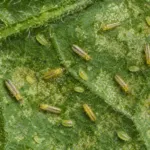 PestMelon thripsThrips palmi Karny
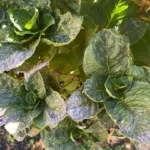 PestChilli thripsScirtothrips dorsalis Hood
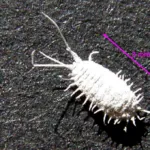 PestObscure mealybugPseudococcus viburni
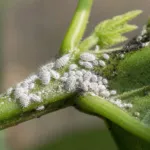 PestCotton mealybugPhenacoccus solenopsis Tinsley
Toxicity and pollen
Codiaeum variegatum produces irritating sap and is considered toxic if eaten. Reported effects include burning or irritation of the mouth and gastrointestinal upset after ingestion; skin or eye contact with sap can cause irritation or dermatitis. Wear gloves when pruning, wash hands afterward, and keep all plant parts away from children and pets.
- Pollination / pollen
- Limited airborne pollen expected from small insect-associated flowers
This is an insect-pollinated flowering plant, but no dependable cultivar-specific measurements of airborne pollen production or allergy risk were located. Its inconspicuous flowers are not generally grown for pollen display. People with known plant allergies should still avoid contact with sap and flowers if irritation occurs.
Native habitat
The species is native to tropical regions including parts of Malaysia, the Pacific islands, and northern Australia. It is adapted to warm, humid conditions and well-drained soils, not freezing winters. Cultivated crotons retain this tropical preference even when grown indoors in temperate regions.
Interesting fact
The cultivar name refers to its characteristic golden coloration and unusual bell-like leaf growth. Croton leaf color is strongly influenced by light intensity and plant age. Codiaeum belongs to the spurge family and exudes latex-like sap when wounded. Hundreds of croton cultivars have been selected for leaf shape and variegation.
Frequently asked questions (FAQ)
The most relevant questions about this plant, with short and direct answers.
🌱Quick care
What is Codiaeum variegatum 'Victoria Gold Bell'?⌄
Codiaeum variegatum 'Victoria Gold Bell' is a colorful croton cultivar grown for its unusual, narrow variegated foliage. It is a frost-tender tropical plant commonly grown as a houseplant or seasonal outdoor container plant in the United States.
How much light does Victoria Gold Bell croton need?⌄
Give Victoria Gold Bell croton bright filtered light for strong growth and better leaf coloration. Protect it from intense afternoon sun through glass, which can scorch the foliage.
How often should I water Victoria Gold Bell croton?⌄
Water when the surface of the potting mix begins to dry, then soak the soil thoroughly and let excess water drain away. Keep the mix moderately and regularly moist, but never leave the pot standing in water.
Is Victoria Gold Bell croton easy to grow indoors?⌄
Victoria Gold Bell croton can grow well indoors when it receives bright light, steady warmth, regular moisture, and moderate to high humidity. It may drop leaves after sudden changes in light, temperature, watering, or location.
🌤️Environment and placement
Can Victoria Gold Bell croton grow outside in the United States?⌄
It can grow outdoors year-round only in warm, frost-free areas, generally comparable to USDA Zones 10–11. In colder regions, grow it in a container and bring it indoors before temperatures fall below 50°F.
What temperature is too cold for Victoria Gold Bell croton?⌄
Protect Victoria Gold Bell croton when temperatures approach or fall below 50°F. Frost and prolonged cold can cause leaf drop, tissue damage, or plant death.
Where should I place Victoria Gold Bell croton indoors?⌄
Place it near a bright east- or west-facing window, or near a bright south-facing window softened by a sheer curtain. Keep it away from cold drafts, heating vents, and abrupt temperature changes.
Does Victoria Gold Bell croton need humidity?⌄
Yes, moderate to high humidity helps Victoria Gold Bell croton maintain healthy leaves. Use a humidifier or group plants together if indoor air is especially dry, while still providing good air circulation.
Can Victoria Gold Bell croton tolerate direct sun?⌄
It can tolerate some gentle morning or late-day sun after gradual acclimation, but bright filtered light is safer indoors. Strong unfiltered midday or afternoon sun may bleach or scorch the leaves.
💧Care and problems
Why is my Victoria Gold Bell croton dropping leaves?⌄
Leaf drop is commonly caused by underwatering, overwatering, cold exposure, drafts, low light, or a recent change in location. Check the roots and soil moisture, then keep conditions warm, bright, and consistent.
Why are the leaves on my Victoria Gold Bell croton turning brown?⌄
Brown leaves or edges usually indicate dry soil, dry air, sun scorch, cold stress, or root problems from excess moisture. Correct the underlying condition rather than simply increasing watering.
Why is my Victoria Gold Bell croton losing its color?⌄
Insufficient light can make Victoria Gold Bell croton foliage less vibrant and encourage weak, stretched growth. Move it gradually to a brighter filtered location and avoid sudden exposure to strong direct sun.
What soil is best for Victoria Gold Bell croton?⌄
Use a loose, humus-rich, well-drained potting mix that retains some moisture without becoming soggy. A standard indoor potting mix amended with drainage material is usually suitable.
How do I fertilize Victoria Gold Bell croton?⌄
Fertilize during active growth with a balanced houseplant fertilizer diluted according to the product label. Avoid heavy feeding when the plant is stressed, recently repotted, or growing slowly in winter.
What pests attack Victoria Gold Bell croton?⌄
Common pests include spider mites, mealybugs, scale, and occasionally whiteflies. Inspect leaf undersides and stems regularly, isolate affected plants, and treat infestations promptly with an appropriate houseplant control.
🪴Planting and repotting
When should I repot Victoria Gold Bell croton?⌄
Repot in spring or early summer when roots circle the container, emerge from drainage holes, or the mix dries unusually quickly. Move it into a pot only slightly larger than the current one.
Does Victoria Gold Bell croton need a pot with drainage holes?⌄
Yes, a drainage hole is essential because the roots should not remain in stagnant water. Empty the saucer after watering and use a well-drained potting mix.
Can I plant Victoria Gold Bell croton in the ground?⌄
You can plant it in the ground only where winters are reliably frost-free and the soil drains well. In most of the United States, a container is more practical because the plant must be protected from cold.
✂️Propagation and pruning
How do I propagate Victoria Gold Bell croton?⌄
Victoria Gold Bell croton is generally propagated from stem cuttings taken during active growth. Use a healthy cutting with several leaves, place it in a warm, humid rooting environment, and keep the medium lightly moist.
Can I prune Victoria Gold Bell croton?⌄
Yes, prune Victoria Gold Bell croton to remove damaged growth, control size, or encourage branching. Wear gloves because the milky sap can irritate skin, and make cuts just above a leaf node.
⚠️Toxicity and safety
Is Victoria Gold Bell croton toxic to cats and dogs?⌄
Yes, Victoria Gold Bell croton is moderately toxic if eaten and should be kept away from cats, dogs, and children. Ingestion may cause mouth or digestive irritation, so contact a veterinarian or poison service if consumption occurs.
Can Victoria Gold Bell croton sap irritate skin?⌄
Yes, its sap can irritate skin and eyes. Wear gloves when pruning or repotting, avoid touching your face, and wash exposed skin promptly with soap and water.
🌸Flowering and special interest
Does Victoria Gold Bell croton flower indoors?⌄
It can produce small, inconspicuous flowers, but Victoria Gold Bell croton is grown primarily for its foliage. Flowering is less important than maintaining bright light, warmth, and steady moisture.
Similar plants
 Azure Monkshood (Aconitum carmichaelii) care guideAconitum carmichaelii
 Monkshood (Aconitum ‘Stainless Steel’)Aconitum 'Stainless Steel'
 Monkshood (Aconitum ‘Bressingham Spire’)Aconitum 'Bressingham Spire'
 Golden full moon maple (Acer shirasawanum ‘Aureum’)Acer shirasawanum 'Aureum'
 Globosum (Acer platanoides ‘Globosum’)Acer platanoides 'Globosum'
 Striped maple (Acer pensylvanicum) care guideAcer pensylvanicum