
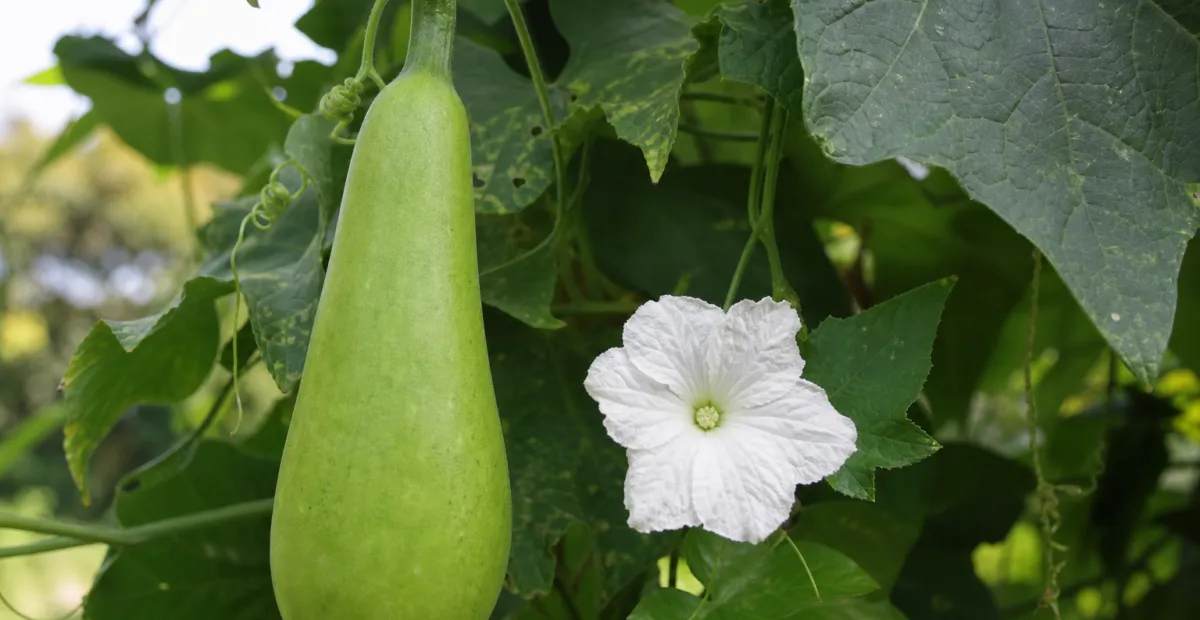
 AI-generated illustration
Benincasa fistulosa short overview
Benincasa fistulosa is a warm-season annual vine in the cucumber family, native to Pakistan and northwestern India. It bears hairy leaves, slender tendrils, solitary yellow flowers, and small round fruits that are harvested immature and cooked as a vegetable. In the United States it is best grown as a frost-tender specialty crop, started after the soil warms and given full sun, fertile soil, regular moisture, and room to trail or climb.
Taxonomic classification
Benincasa fistulosa care guide
Light and placement
Provide at least 6–8 hours of direct sun, ideally in a south-facing bed or beside a warm wall. A trellis keeps foliage and fruit off wet soil; trailing plants need an open, sunny plot. Pale, stretched growth and few flowers suggest insufficient light, while severe midday wilt despite moist soil can indicate excessive heat or root stress.
Watering and humidity
Water deeply when the top inch of soil begins to dry, keeping moisture reasonably even during flowering and fruit enlargement. Mulch after the soil warms to reduce evaporation and splashing. Reduce watering late in the season as temperatures fall, but do not allow newly transplanted vines to dry out. Extra humidity is not required and poor airflow is undesirable.
Soil and growing medium
Use fertile, loose sandy loam or loam with good drainage and useful moisture retention. A slightly acidic to neutral or mildly alkaline reaction is suitable; a practical target is about pH 6.5–7.5. Avoid compacted soil and saturated sites, which restrict roots and increase disease risk.
Feeding
Mix finished compost into the bed before planting. Once vines establish, apply a balanced vegetable fertilizer according to its label, then avoid heavy nitrogen feeding after flowering begins because it can favor foliage over fruit. Container plants may need light, regular feeding, but do not fertilize drought-stressed or waterlogged plants.
Growth and habit
The plant forms a robust, bristly vine that can trail across soil or use tendrils to climb. It is generally smaller and shorter-branched than watermelon, but still needs deliberate support or enough ground area. Harvesting immature fruit regularly can keep the plant productive and makes inspection for pests easier.
Planting and repotting
Sow indoors about 3–4 weeks before the expected last frost, or direct-sow after soil temperatures reach at least 65°F and frost danger has passed. Plant seeds about 1 inch deep. Set plants roughly 3 feet apart, or provide comparable room along a trellis. Harden seedlings before transplanting.
Usually grown as a seasonal vegetable rather than a long-term container plant. If started in pots, transplant promptly while roots are young and disturb them as little as possible. Use a large container with drainage and a trellis or open support; repeated potting-up is not necessary.
Propagation and pruning
Propagation
Propagate from seed. Seeds commonly emerge in about 5–7 days under warm conditions. Sow in individual pots to reduce root disturbance, or direct-sow once the soil is warm. Save seed only from fully mature, healthy fruit and maintain separation from related cucurbits when varietal purity matters.
Pruning
Routine pruning is not essential. Direct young vines onto their support and remove damaged, diseased, or overcrowded growth with clean tools. Avoid extensive cutting during flowering because it can reduce the number of productive nodes and flowers.
Overwintering
Not winter-hardy outdoors. Harvest before the first frost and remove spent vines after production. In most United States climates, overwintering is impractical because this is an annual crop; save seed from mature fruit if permitted and useful.
Uses
The immature fruits are documented as a cooked vegetable and may also be pickled or candied in traditional food systems. The vine can be grown as a specialty edible crop on a trellis. It is not primarily an ornamental plant, and medicinal claims should not be made without separate clinical evidence.
Appearance
The vine has a robust, hairy to bristly stem, slender branched tendrils, and alternate green leaves that are ovate in outline with shallow lobing and fine teeth. Leaf surfaces and veins are rough-hairy. Immature fruits are round to depressed-round, hairy, and green, becoming smoother as they mature.
Flowering
The plant is monoecious, producing separate male and female flowers on the same vine. Flowers occur singly in leaf axils and are small, regular, five-parted, and yellow. Male flowers generally appear about a week before female flowers, and fruit set depends on insect visitation or careful hand pollination.
Pollination and visitors
Pollination is predominantly by bees according to cultivation references. Separate male and female flowers occur on the same plant, and hand pollination can help when bee activity is low or fruit set is poor.
Benincasa fistulosa photos
Click any photo for a larger view. Source, author and license are shown separately.
Diseases and pests
Diseases
Prevent foliar disease with full sun, good air movement, weed control, and watering at the soil surface. Watch for powdery mildew, downy mildew, and bacterial or fungal fruit rots. Remove badly affected tissue, avoid working among wet plants, rotate cucurbits, and discard severely diseased plants rather than composting them.
Pests
Inspect regularly for cucumber beetles, whiteflies, aphids, and cucurbit fruit flies. Use floating row cover until flowering, hand-pick larger pests, remove damaged fruit, and use crop rotation and sanitation. Choose controls labeled for edible cucurbits and follow the product label; avoid unnecessary broad-spectrum insecticides during bloom.
Related diseases and pests
Only Plant Doctor profiles whose host data indicate this plant may be affected are shown here.
 DiseaseCucurbit Downy MildewPseudoperonospora cubensis (Berk. & M.A. Curtis) Rostovzev
 DiseaseCucurbit Powdery MildewPodosphaera xanthii (Castagne) U. Braun & Shishkoff
 DiseaseMaple powdery mildewSawadaea bicornis
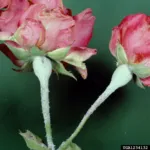 DiseaseRose powdery mildewPodosphaera pannosa
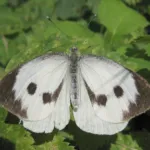 PestLarge White ButterflyPieris brassicae
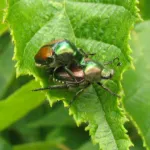 PestJapanese beetlePopillia japonica
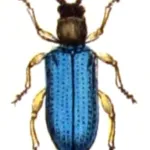 PestCereal leaf beetleOulema melanopus
 PestCitrus whiteflyDialeurodes citri
Toxicity and pollen
No reliable authoritative evidence was found indicating characteristic poisonous compounds in this species. The immature fruit is documented as a food crop, but only correctly identified, properly prepared fruit should be eaten. Cucurbit fruits can occasionally be unusually bitter; do not eat bitter-tasting fruit.
- Typical season
- During flowering in the warm growing season
- Pollination / pollen
- Insect-carried pollen
This is an insect-pollinated cucurbit, so pollen is not normally dispersed in large airborne clouds. However, species-specific clinical allergy information was not located; sensitive people may still react to contact with flowers or pollen, and evidence should be treated as limited rather than proof of zero risk.
Native habitat
Plants of the World Online places the native range in Pakistan to northwestern India and describes the species as a climbing annual of seasonally dry tropical environments. Cultivation reports favor warm lowlands, sunny exposure, and light soils where roots can penetrate freely.
Interesting fact
The accepted species was formerly treated under Praecitrullus and Citrullus.
Its fruits are usually harvested immature rather than fully ripe.
The vine is monoecious, with separate male and female flowers.
Male flowers commonly open before female flowers.
Its native range extends from Pakistan to northwestern India.
Frequently asked questions (FAQ)
The most relevant questions about this plant, with short and direct answers.
🌱Quick care
What is Benincasa fistulosa?⌄
Benincasa fistulosa is a frost-tender annual vine in the Cucurbitaceae family, cultivated mainly for its small, round immature fruits. It is also known as tinda, Indian round gourd, round melon, or Indian baby pumpkin.
How much sun does Benincasa fistulosa need?⌄
Benincasa fistulosa needs full sun, ideally at least 6–8 hours of direct sunlight daily. Strong light supports vigorous vine growth, flowering, and fruit production.
How often should I water Benincasa fistulosa?⌄
Water Benincasa fistulosa regularly to keep the soil evenly and moderately moist, but not waterlogged. Allowing the root zone to dry severely can reduce growth and fruit set.
Is Benincasa fistulosa annual or perennial?⌄
Benincasa fistulosa is a warm-season annual. It normally completes its life cycle in one growing season and is killed by frost.
🌤️Environment and placement
What climate is best for Benincasa fistulosa?⌄
Benincasa fistulosa grows best in warm, sunny conditions with a long frost-free season. Cool, wet weather can slow vine growth, flowering, and fruit development.
Can Benincasa fistulosa grow outdoors in the United States?⌄
Yes, Benincasa fistulosa can grow outdoors in the United States during the warm season if planted after the danger of frost has passed. In short-season areas, start seeds indoors and transplant carefully once the soil is warm.
What USDA hardiness zones are suitable for Benincasa fistulosa?⌄
Benincasa fistulosa is best treated as a warm-season annual rather than a hardy perennial, so USDA zone alone is not decisive. Grow it wherever the season provides warm soil, full sun, and enough frost-free time for fruit production.
Does Benincasa fistulosa need a trellis?⌄
Benincasa fistulosa can be grown trailing on the ground or trained onto a sturdy trellis. A trellis saves space and improves air circulation, but it must support the spreading vine and developing fruit.
How much space does Benincasa fistulosa need?⌄
Give Benincasa fistulosa several feet of horizontal growing room unless it is trained vertically. Exact spacing depends on the variety and support system, but crowded vines generally have poorer airflow and are harder to manage.
💧Care and problems
What soil is best for Benincasa fistulosa?⌄
Plant Benincasa fistulosa in fertile, well-drained sandy loam or loam enriched with organic matter. Soil that stays saturated can encourage root problems and weak growth.
What pH does Benincasa fistulosa prefer?⌄
Benincasa fistulosa generally performs well in mildly acidic to neutral soil, approximately pH 6.5–7.5. Good drainage and fertility are usually more important than achieving an exact pH.
Why are the leaves of my Benincasa fistulosa turning yellow?⌄
Yellow leaves on Benincasa fistulosa may result from overwatering, poor drainage, nutrient deficiency, aging foliage, or pest damage. Check soil moisture, inspect leaf undersides for insects, and remove severely damaged foliage.
What pests attack Benincasa fistulosa?⌄
Commonly reported pests include cucumber beetles or related beetles, aphids, whiteflies, and fruit flies. Monitor plants frequently, remove damaged fruit, improve garden sanitation, and use only treatments labeled for edible crops.
Why is my Benincasa fistulosa flowering but not producing fruit?⌄
Poor fruit set is usually linked to inadequate pollination, excessive heat or cool weather, plant stress, or a lack of pollinating insects. Because the plant bears separate male and female flowers, hand-pollination can help when insect activity is low.
Can Benincasa fistulosa tolerate drought?⌄
Benincasa fistulosa can tolerate brief dryness once established, but it produces best with consistent moisture. Drought stress during flowering and fruit development can reduce fruit set and quality.
🪴Planting and repotting
When should I plant Benincasa fistulosa in the United States?⌄
Sow or transplant Benincasa fistulosa after the last spring frost, when the soil is reliably warm. In northern regions, start seeds indoors a few weeks early to extend the growing season.
Can Benincasa fistulosa be grown in containers?⌄
Yes, Benincasa fistulosa can be grown in a large container with fertile, well-drained potting mix and strong support for its vine. Choose a container large enough for an extensive root system and water it consistently because containers dry quickly.
How deep should Benincasa fistulosa seeds be planted?⌄
Plant Benincasa fistulosa seeds about 1 inch deep in warm, moist soil. Germination is more reliable when the soil is warm rather than cool.
Should I transplant Benincasa fistulosa seedlings?⌄
Benincasa fistulosa can be transplanted, but direct sowing is often preferable because cucurbit roots dislike disturbance. If starting indoors, use individual containers and transplant the seedlings gently after warm weather arrives.
✂️Propagation and pruning
How do you propagate Benincasa fistulosa?⌄
Benincasa fistulosa is normally propagated by seed. Save seed only from fully mature, healthy fruit and store it cool and dry; seed from nearby related cucurbits may not remain true to type if cross-pollination occurred.
Does Benincasa fistulosa need pruning?⌄
Routine pruning is not required for Benincasa fistulosa. Remove dead or diseased leaves and redirect overly long vines only when necessary to improve access, airflow, or support.
How do I hand-pollinate Benincasa fistulosa?⌄
To hand-pollinate Benincasa fistulosa, transfer pollen from a freshly opened male flower to the stigma of a female flower using a small brush or the male flower itself. Female flowers have a small swelling behind the blossom that develops into fruit.
⚠️Toxicity and safety
Is Benincasa fistulosa toxic to humans or pets?⌄
There is no established species-specific toxicity classification for Benincasa fistulosa in the supplied botanical context. Eat properly identified, normally cultivated fruit, and avoid treating traditional or medicinal uses as a substitute for medical advice.
Can you eat Benincasa fistulosa fruit?⌄
Yes, the immature fruit of Benincasa fistulosa is cultivated and eaten as a vegetable, especially in South Asian cuisines. Harvest it young because mature fruit can become firmer and less suitable for tender vegetable preparations.
🌸Flowering and special interest
When does Benincasa fistulosa flower?⌄
Benincasa fistulosa flowers during active warm-season growth, often within several weeks after germination under favorable conditions. Flowering can be delayed by cool temperatures, insufficient sun, drought, or excessive nitrogen.
Are Benincasa fistulosa flowers male and female?⌄
Yes, Benincasa fistulosa is monoecious, meaning one plant produces separate male and female flowers. Bees and other insects normally transfer pollen between them.
How long does Benincasa fistulosa take to produce fruit?⌄
Under warm, favorable conditions, Benincasa fistulosa may produce harvestable immature fruit roughly 7–10 weeks after sowing. Timing varies with variety, temperature, pollination, and growing conditions.
When should I harvest Benincasa fistulosa fruit?⌄
Harvest Benincasa fistulosa fruit while it is young, firm, green, and still tender, often when it is approximately apple- to tennis-ball-sized. Frequent picking can encourage continued production, while overripe fruit becomes less tender.
What does Benincasa fistulosa fruit look like?⌄
Benincasa fistulosa produces nearly spherical fruits that are commonly green, sometimes striped or lightly hairy when young. The immature fruits are usually harvested as a vegetable.
Similar plants
 Azure Monkshood (Aconitum carmichaelii) care guideAconitum carmichaelii
 Monkshood (Aconitum ‘Stainless Steel’)Aconitum 'Stainless Steel'
 Monkshood (Aconitum ‘Bressingham Spire’)Aconitum 'Bressingham Spire'
 Golden full moon maple (Acer shirasawanum ‘Aureum’)Acer shirasawanum 'Aureum'
 Globosum (Acer platanoides ‘Globosum’)Acer platanoides 'Globosum'
 Striped maple (Acer pensylvanicum) care guideAcer pensylvanicum