
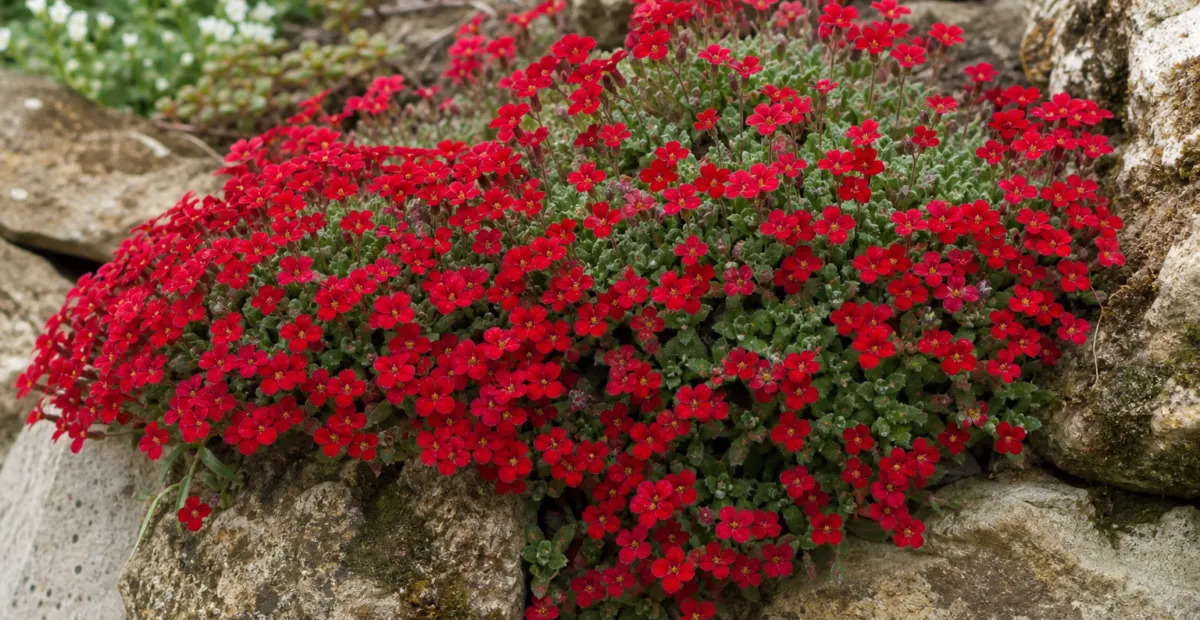
 AI-generated illustration
Aubrieta ‘Crimson’ short overview
Aubrieta 'Crimson' is a low-growing aubretia cultivar valued for its vivid crimson-red flowers in spring and its persistent gray-green foliage. It forms a spreading cushion that suits rock gardens, wall crevices, edging, alpine containers, and sunny banks. The cultivar’s exact parentage, mature size, and formal registration are not consistently documented, so the profile combines cultivar-level descriptions with well-supported guidance for cultivated Aubrieta forms.
Taxonomic classification
Aubrieta ‘Crimson’ care guide
Light and placement
Give full sun for the heaviest flowering, with partial afternoon shade in hot, dry continental climates. A south- or west-facing rock garden, wall, or raised bed is suitable when roots remain cool enough and the crown stays dry in winter. Too little light produces stretched growth and fewer flowers; excessive heat reflected from paving can scorch foliage.
Watering and humidity
Water deeply when the upper few inches of soil dry during the first growing season. After establishment, provide moderate irrigation during spring growth and bloom, then allow the surface to dry between waterings. Reduce watering in cool, wet weather and do not leave containers standing in saucers. Ordinary outdoor humidity is adequate; ventilation matters more than misting.
Soil and growing medium
Use a gritty, sharply drained soil or rock-garden mix. Sandy or loamy soil amended with grit is preferable to heavy, wet clay. Aubrieta generally tolerates neutral to mildly alkaline conditions and can grow well in calcareous pockets, provided winter drainage is excellent. Avoid rich, water-retentive beds that keep the crown wet.
Feeding
Aubrieta usually needs little fertilizer. Work a small amount of compost or a balanced, slow-release perennial fertilizer into poor soil in spring, using the label’s lightest rate. Avoid repeated high-nitrogen feeding, which can produce soft foliage and fewer flowers. Do not feed drought-stressed, waterlogged, or newly divided plants until they have resumed growth.
Growth and habit
This cultivar is expected to form a dense, matting cushion with stems that spread outward and may trail over stones. Light trimming soon after flowering helps maintain compact coverage and encourages fresh foliage. Avoid shearing into old, leafless wood, because regrowth from deeply cut areas can be unreliable.
Planting and repotting
Plant in spring or early fall while temperatures are moderate. Set the crown level with the surrounding soil; do not bury the central rosette. Space plants about 12–24 inches apart, allowing the mat to knit together while preserving airflow. Water regularly during establishment, then reduce irrigation once roots are established.
Repot container-grown plants in spring, immediately after flowering, only when the root ball is crowded or the mix has collapsed. Move the plant into a shallow, well-drained container one size larger, keeping the crown at the same level and avoiding waterlogged saucers.
Propagation and pruning
Propagation
Propagate selected plants by softwood cuttings after flowering or by division in spring or early fall. Seed may produce variable offspring and should not be used when preserving the exact 'Crimson' flower color is important. Root cuttings in a free-draining medium and keep evenly moist, not wet.
Pruning
Trim lightly immediately after flowering to remove spent stems and preserve a dense, compact mat. Do not cut deeply into old bare centers. Remove winter-damaged material in spring once new growth is visible, and avoid late-season heavy pruning that can weaken overwintering foliage.
Overwintering
Leave the evergreen foliage in place through winter. In cold regions, protect container roots by grouping pots against a sheltered wall or moving them into an unheated, bright shelter. Avoid thick, wet mulch over the crown, which can trap moisture and encourage rot. Ensure snowmelt and winter rain drain away freely.
Uses
Use as a flowering groundcover, rock-garden accent, wall plant, edging subject, or shallow container specimen. Its low habit is useful for softening stonework and covering gravelly banks. It is ornamental rather than a recommended culinary plant, and no medicinal use should be assumed.
Appearance
The plant has small gray-green leaves arranged along low, branching stems, creating a persistent cushion rather than a tall clump. Flowering stems rise slightly above the foliage and carry small, cross-shaped flowers. Red-flowered Aubrieta forms are distinctive in spring, but cultivar identity should be confirmed from a nursery label or breeder record because names are inconsistently applied.
Flowering
Small four-petaled flowers are carried in short racemes and can cover the foliage in spring. Crimson-red coloration is associated with the cultivar name, although the exact shade may vary among plants sold under this nonstandardized name. Bloom is typically strongest after a cool winter and may be reduced by excessive summer moisture or shade.
Pollination and visitors
Open, nectar-bearing four-petaled flowers are suitable for visits by small bees, hoverflies, and some butterflies. Evidence found supports general Aubrieta pollinator value rather than a named pollinator species for this exact cultivar. Avoid insecticides on open flowers.
Diseases and pests
Diseases
Prevent crown and root problems by using sharply drained soil, avoiding overhead irrigation, and allowing the foliage to dry between waterings. Watch for gray mold, downy mildew, or root rot when conditions are cool and persistently wet. Remove affected tissue and improve airflow; discard severely rotted plants rather than replanting into saturated soil.
Pests
Inspect new growth for aphids and foliage for flea beetles. Slugs may damage plants in damp gardens. Encourage airflow, avoid excess nitrogen, and use hand removal or a targeted treatment only when damage is significant. Wet winter conditions are often more damaging than insect feeding.
Related diseases and pests
Only Plant Doctor profiles whose host data indicate this plant may be affected are shown here.
 DiseaseGray MoldBotrytis cinerea
 PestCabbage Stem Flea BeetlePsylliodes chrysocephala
 DiseaseCucurbit Downy MildewPseudoperonospora cubensis (Berk. & M.A. Curtis) Rostovzev
 DiseaseGrape Downy MildewPlasmopara viticola
 PestTurnip flea beetlePhyllotreta nemorum (Linnaeus, 1758)
 PestTurnip Flea BeetlePhyllotreta atra (Fabricius, 1775)
 DiseaseOnion downy mildewPeronospora destructor
 Environmental stressWaterlogging
Toxicity and pollen
No authoritative source located for a toxicity assessment specific to Aubrieta 'Crimson'. Do not treat the plant as edible, and prevent children or pets from chewing ornamental plants. Normal garden contact is not expected to be hazardous, but ingestion should be discussed with a poison center or veterinarian if symptoms occur.
- Typical season
- Spring during flowering
- Pollination / pollen
- Insect-dispersed pollen
Aubrieta is insect-pollinated, so its pollen is not generally released in large airborne clouds like wind-pollinated trees and grasses. However, no cultivar-specific allergen testing was located, and sensitive people may still react to pollen or plant contact. Avoid handling flowering plants during symptoms and wash hands afterward.
Native habitat
Wild Aubrieta species occur mainly in rocky, mountainous habitats of southeastern Europe, Anatolia, and nearby Mediterranean regions. They are associated with exposed limestone, scree, crevices, and open slopes where drainage is rapid and competition is limited. Garden forms retain this preference for sun, mineral soil, and a dryish crown.
Interesting fact
Aubrieta is centered in the eastern Mediterranean, especially Turkey and Greece. The genus is taxonomically difficult and includes many horticultural hybrids and cultivars. Its flowers have the characteristic four-petaled structure of the mustard family. Mature plants can spill over stone edges and wall faces without becoming woody.
Frequently asked questions (FAQ)
The most relevant questions about this plant, with short and direct answers.
🌱Quick care
What is Aubrieta 'Crimson'?⌄
Aubrieta 'Crimson' is a low-growing, mat-forming perennial in the mustard family, Brassicaceae. It is grown for its vivid crimson spring flowers and evergreen to semi-evergreen foliage.
How much sun does Aubrieta 'Crimson' need?⌄
Aubrieta 'Crimson' grows best in full sun but tolerates partial shade. More sun generally supports denser growth and heavier flowering, while afternoon shade can help in very hot climates.
How often should I water Aubrieta 'Crimson'?⌄
Water Aubrieta 'Crimson' moderately while it establishes, then allow the soil to dry somewhat between waterings. Reduce watering after establishment, especially in fall and winter.
Is Aubrieta 'Crimson' evergreen?⌄
Aubrieta 'Crimson' usually keeps foliage through winter in mild conditions, although leaves may thin or suffer some browning in severe cold or wet weather. Excellent drainage helps preserve the foliage.
How big does Aubrieta 'Crimson' get?⌄
Aubrieta 'Crimson' is typically a very low perennial that spreads wider than it grows tall. Exact dimensions are not consistently documented for this cultivar, but comparable aubrieta forms commonly reach about 4–6 inches tall and spread 12–24 inches.
🌤️Environment and placement
What USDA hardiness zone is Aubrieta 'Crimson' suitable for?⌄
Aubrieta 'Crimson' is cold hardy when planted in sharply drained soil, but a cultivar-specific USDA zone rating is not consistently published. Protect it from prolonged winter wet, which is often more damaging than cold.
Can Aubrieta 'Crimson' grow in partial shade?⌄
Yes, Aubrieta 'Crimson' can grow in partial shade, particularly where summers are hot. Flowering is usually strongest with several hours of direct sunlight each day.
What soil is best for Aubrieta 'Crimson'?⌄
Use gritty, sharply drained soil for Aubrieta 'Crimson'. A rock-garden mix or ordinary soil amended with grit and gravel is preferable to heavy, water-retentive clay.
Can Aubrieta 'Crimson' grow in a rock garden?⌄
Yes, Aubrieta 'Crimson' is well suited to rock gardens, gravel beds, raised edges, and crevices with excellent drainage. Its spreading habit allows it to soften rocks and hardscape.
Can Aubrieta 'Crimson' grow between pavers or in a wall?⌄
Aubrieta 'Crimson' can grow in wall crevices and between lightly used pavers when the planting pockets contain gritty soil. It does not tolerate frequent foot traffic or compacted, poorly drained gaps.
Is Aubrieta 'Crimson' drought tolerant?⌄
Aubrieta 'Crimson' becomes moderately drought tolerant after establishment. Water during prolonged heat or drought, but avoid frequent irrigation that keeps the crown and roots constantly wet.
💧Care and problems
Why is Aubrieta 'Crimson' turning brown at the base?⌄
Brown or bare growth at the center commonly results from age, excess moisture, poor airflow, or insufficient light. Improve drainage and lightly trim the plant after flowering to encourage fresh outer growth.
Why is Aubrieta 'Crimson' not flowering?⌄
Aubrieta 'Crimson' may fail to flower because of too much shade, excessive nitrogen, young age, or winter damage. Move or expose it to more sun, avoid heavy feeding, and keep the soil sharply drained.
How should I fertilize Aubrieta 'Crimson'?⌄
Aubrieta 'Crimson' generally needs little fertilizer. Apply a light layer of compost or a restrained balanced perennial fertilizer in spring, avoiding excessive nitrogen that can produce foliage at the expense of flowers.
Does Aubrieta 'Crimson' need deadheading?⌄
Deadheading is optional for Aubrieta 'Crimson' but can improve its appearance and prevent unwanted seed formation. Shearing lightly after the main spring bloom is usually more useful for maintaining a compact mat.
What problems commonly affect Aubrieta 'Crimson'?⌄
The main problems are root or crown rot from wet soil, sparse aging centers, and occasional aphids or flea beetles. Good air circulation, gritty soil, and restrained watering prevent many issues.
🪴Planting and repotting
When should I plant Aubrieta 'Crimson' in the United States?⌄
Plant Aubrieta 'Crimson' in spring after the soil can be worked or in early fall, allowing roots to establish before extreme weather. In mild-winter areas, fall planting is often especially effective.
How far apart should I plant Aubrieta 'Crimson'?⌄
Space Aubrieta 'Crimson' about 12–18 inches apart for a continuous groundcover effect, adjusting the spacing according to the size of the nursery plants. Leave extra room in wet climates to improve airflow.
Can Aubrieta 'Crimson' be grown in a container?⌄
Yes, Aubrieta 'Crimson' grows well in containers, troughs, and alpine planters with drainage holes. Use a gritty potting mix and water only when the upper portion of the mix has begun to dry.
How do I overwinter Aubrieta 'Crimson' in a pot?⌄
Overwinter potted Aubrieta 'Crimson' outdoors in a protected, well-drained location suited to its local climate. Keep the pot from sitting in water, because wet winter roots are more vulnerable than the foliage is to frost.
✂️Propagation and pruning
How can I propagate Aubrieta 'Crimson'?⌄
Propagate Aubrieta 'Crimson' most reliably from stem cuttings or by dividing established plants. Seed may not reproduce the named cultivar accurately, so seedlings can differ in flower color or habit.
Can Aubrieta 'Crimson' be grown from seed?⌄
Aubrieta 'Crimson' can be grown from seed, but the resulting plants may not remain true to the named cultivar. For uniform crimson flowers, use cuttings or division from a verified plant.
When should I divide Aubrieta 'Crimson'?⌄
Divide Aubrieta 'Crimson' in early spring or soon after flowering when temperatures are moderate. Replant divisions immediately in gritty soil and water them enough to establish without keeping the soil saturated.
Should I prune Aubrieta 'Crimson'?⌄
Lightly prune Aubrieta 'Crimson' immediately after its main spring flowering period. Remove spent flower stems and trim overly long growth without cutting deeply into old, leafless wood.
⚠️Toxicity and safety
Is Aubrieta 'Crimson' toxic to dogs, cats, or people?⌄
The toxicity of Aubrieta 'Crimson' is not well documented, so it should not be considered safe to ingest. Keep plant material away from children and pets, and contact a medical or veterinary professional if it is eaten.
Can Aubrieta 'Crimson' be used in an edible garden?⌄
Aubrieta 'Crimson' should be treated as an ornamental plant rather than an edible crop. Do not use its leaves, flowers, or seeds for food unless a reliable plant-safety source specifically confirms that use.
🌸Flowering and special interest
When does Aubrieta 'Crimson' bloom?⌄
Aubrieta 'Crimson' generally blooms in spring, often from early to late spring depending on climate and winter conditions. Flowering may begin earlier in warmer regions and later in colder areas.
What color are the flowers of Aubrieta 'Crimson'?⌄
The flowers of Aubrieta 'Crimson' are described as crimson or deep red. Exact color intensity can vary with light, temperature, plant age, and the source of the plant.
How long do Aubrieta 'Crimson' flowers last?⌄
Aubrieta 'Crimson' usually provides several weeks of spring color when grown in suitable conditions. Cool temperatures, adequate light, and good drainage help extend the display.
How do I make Aubrieta 'Crimson' flower more?⌄
Give Aubrieta 'Crimson' a sunny position, sharply drained soil, and restrained nitrogen fertilization. Lightly shear it after flowering to maintain a dense habit and support healthy growth for the next season.
Similar plants
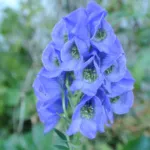 Azure Monkshood (Aconitum carmichaelii) care guideAconitum carmichaelii
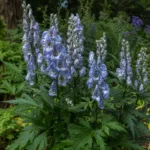 Monkshood (Aconitum ‘Stainless Steel’)Aconitum 'Stainless Steel'
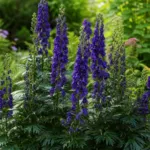 Monkshood (Aconitum ‘Bressingham Spire’)Aconitum 'Bressingham Spire'
 Golden full moon maple (Acer shirasawanum ‘Aureum’)Acer shirasawanum 'Aureum'
 Globosum (Acer platanoides ‘Globosum’)Acer platanoides 'Globosum'
 Striped maple (Acer pensylvanicum) care guideAcer pensylvanicum