
 Source:
 Astilbe rosea short overview
Astilbe rosea is a rhizomatous herbaceous perennial grown for airy, plume-like flower panicles above finely divided foliage. In United States gardens, the name is most often encountered in connection with the peach-pink ‘Peach Blossom’ type, although the taxonomic identity of the unqualified name is not fully clear. Give it evenly moist, humus-rich soil and protection from strong afternoon sun for dependable growth and flowering.
Taxonomic classification
Astilbe rosea care guide
Light and placement
Plant where it receives bright morning light, dappled shade, or filtered light with protection from strong afternoon sun. In cooler climates it can tolerate more sun if the soil never dries. Scorched margins, limp foliage, and rapid browning indicate excessive sun or drought; weak flowering and elongated growth suggest overly dark conditions.
Watering and humidity
Keep the root zone consistently moist from spring through the end of flowering. Water deeply when the surface begins to dry, rather than applying frequent shallow sprinkles. Increase watering during hot, windy weather and for container plants; reduce only after foliage dies back, while preventing the crown from drying completely.
Soil and growing medium
Use fertile, humus-rich soil that holds moisture without remaining saturated. A loam amended with compost or leaf mold is suitable. Astilbes generally perform well in slightly acidic to neutral soil; improve compact clay with organic matter and drainage rather than planting into stagnant, waterlogged ground.
Feeding
Apply a thin layer of compost or leaf mold around the plant in spring. If growth is weak, use a balanced slow-release perennial fertilizer at the label rate as growth begins. Do not fertilize drought-stressed, newly divided, or waterlogged plants, and avoid heavy late-season nitrogen that encourages soft growth.
Growth and habit
Forms a slowly enlarging clump from short rhizomes, with new shoots emerging seasonally from the crown. Growth and flowering decline when plants repeatedly dry out. Divide crowded clumps every four to six years to restore vigor and maintain even spacing.
Planting and repotting
Plant in spring or early fall, setting the crown at soil level or only slightly below it. Space plants about 18–24 inches apart, allowing room for clump expansion and airflow. Water thoroughly after planting and mulch with organic matter, keeping mulch away from the crown.
Repot container-grown plants in early spring as new growth begins, or transplant dormant divisions before hot weather. Use a moisture-retentive but freely draining potting mix and a container with drainage holes. Container plants dry out faster than those in beds and may need division when the crown becomes crowded.
Propagation and pruning
Propagation
Divide established clumps in early spring as new shoots emerge, or in early fall where plants can re-establish before freezing. Separate vigorous crown sections with roots and shoots, replant promptly, and keep them consistently moist. Seed propagation is possible but is less predictable for named hybrid material.
Pruning
Leave faded plumes standing through fall and winter if their texture is desired. Cut stems and old foliage to the ground in late winter or early spring before new shoots expand. Remove diseased foliage promptly and discard it rather than composting it.
Overwintering
Leave dried stems for winter interest and habitat, then cut back before spring growth. Apply a light mulch in late fall where winters are exposed or soil heaves. Container plants are more vulnerable than in-ground clumps and should be insulated or moved to a protected, unheated location.
Uses
Use in shaded perennial borders, woodland-style plantings, moist beds, pond edges, and containers that can be watered regularly. Flower plumes are suitable for fresh or dried arrangements. This is an ornamental plant; no culinary or medicinal use is supported here.
Appearance
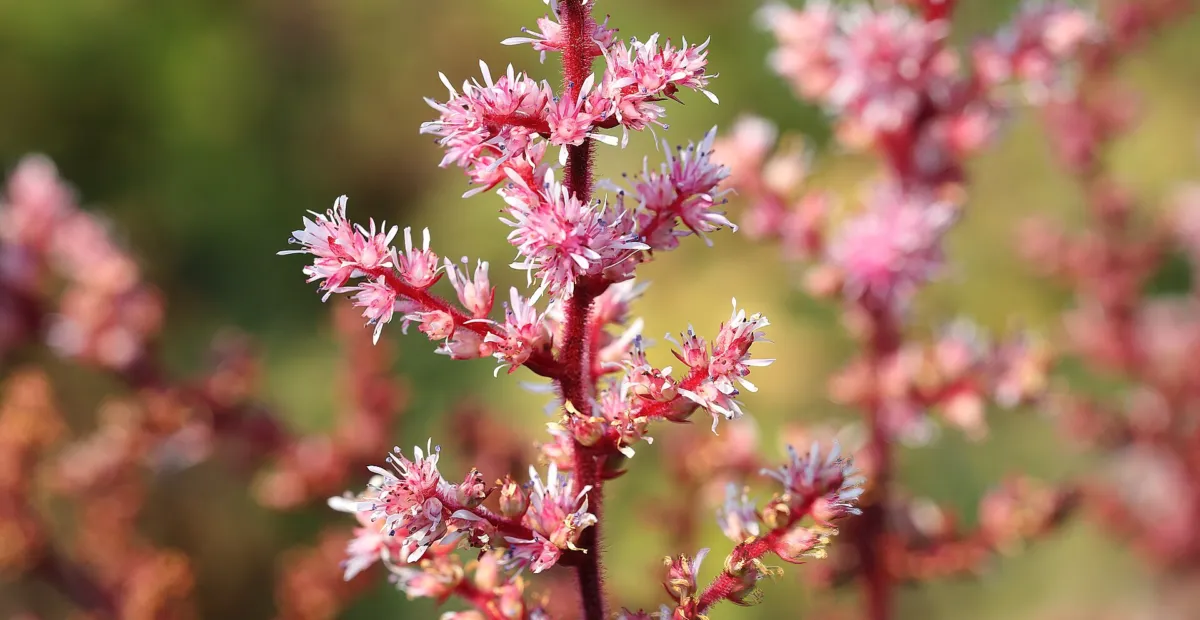
The plant produces fern-like, compound leaves with multiple toothed leaflets. Upright flower stems emerge through the foliage and terminate in branched, feathery panicles. Young growth may show bronze or reddish tones, while faded flower heads can remain decorative after the petals dry.
Flowering
The inflorescence is a branched, plume-like panicle made of many tiny flowers. Pink to peach-pink plumes rise above the foliage, usually in late spring or summer depending on climate and the plant represented by the name. Spent panicles can remain attractive after flowering as they fade and dry.
Pollination and visitors
The small flowers in the plume panicles may be visited by bees, bumblebees, hoverflies, and other small insects. The available evidence supports a general visitor-group description rather than a confidently documented single pollinator species.
Astilbe rosea photos
Click any photo for a larger view. Source, author and license are shown separately.
Diseases and pests
Diseases
Watch for powdery mildew, leaf spot, and root or crown rot in crowded, poorly ventilated, or persistently waterlogged sites. Water at the soil surface, remove badly affected foliage, improve air circulation, and avoid overwatering. Sanitize tools when dividing crowns.
Pests
Typical problems include spider mites during hot, dry weather, foliar nematodes, aphids, and occasional slug or snail feeding. Reduce stress with regular watering, inspect new growth, remove heavily damaged leaves, and use physical controls first. Avoid broad-spectrum insecticides while flowers are being visited.
Related diseases and pests
Only Plant Doctor profiles whose host data indicate this plant may be affected are shown here.
 Environmental stressOverwatering
 PestBroad mitePolyphagotarsonemus latus (Banks)
 DiseaseMaple powdery mildewSawadaea bicornis
 DiseaseCucurbit Powdery MildewPodosphaera xanthii (Castagne) U. Braun & Shishkoff
 DiseaseRose powdery mildewPodosphaera pannosa
 DiseaseApple Powdery MildewPodosphaera leucotricha
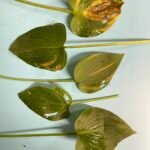 PestStrawberry foliar nematodeAphelenchoides fragariae
 Environmental stressWaterlogging
Toxicity and pollen
No authoritative evidence located in the reviewed sources indicates significant toxicity to people or pets. As with any ornamental plant, ingestion can cause nonspecific stomach upset, and sap or plant debris may irritate sensitive individuals. Do not treat lack of reported toxicity as proof of edibility.
- Typical season
- During flowering, typically late spring through summer
- Pollination / pollen
- Insect-dispersed floral pollen
Astilbe is primarily insect-pollinated, so its pollen is not typically dispersed in large airborne clouds like wind-pollinated tree or grass pollen. Flowers may still contribute localized exposure for people sensitive to ornamental pollen, especially during handling or close contact.
Native habitat
Astilbes are associated broadly with moist woodland, ravine, streamside, and damp meadow habitats in East Asia and eastern North America. They favor cool root conditions, organic soils, and partial shade rather than drought-prone, fully exposed sites.
Interesting fact
The name is frequently associated with ‘Peach Blossom’, a peach-pink astilbe grown in American shade gardens. Astilbe flower plumes contain hundreds of tiny individual flowers. Dried flower heads can provide winter structure if stems are left standing.
Frequently asked questions (FAQ)
The most relevant questions about this plant, with short and direct answers.
🌱Quick care
What is Astilbe rosea?⌄
Astilbe rosea is a hardy, rhizomatous perennial in the Saxifragaceae family, grown for fern-like foliage and upright, feathery flower plumes. The name is also associated with cultivated rose-flowered astilbe hybrids, so plant labels may vary.
How much light does Astilbe rosea need?⌄
Astilbe rosea grows best in part shade to shade. It can tolerate more morning sun when the soil stays consistently moist, but hot afternoon sun may scorch the foliage.
How often should I water Astilbe rosea?⌄
Water Astilbe rosea regularly enough to keep the soil evenly moist. Do not allow the root zone to dry out, especially during hot summer weather or the first growing season.
Is Astilbe rosea hardy?⌄
Astilbe rosea is a frost-hardy perennial that typically survives winter when established. Its exact cold tolerance can vary with the cultivar and local growing conditions.
🌤️Environment and placement
Where should I plant Astilbe rosea?⌄
Plant Astilbe rosea in a cool, sheltered part-shade or shade location with moist, fertile, humus-rich soil. Woodland edges, shaded borders, and consistently moist areas near water are suitable.
Can Astilbe rosea grow in full shade?⌄
Astilbe rosea can grow in full shade, but flowering may be reduced if the site is extremely dark. Bright filtered light or gentle morning sun usually supports better bloom production.
Can Astilbe rosea grow in full sun?⌄
Astilbe rosea can grow in limited full sun only when the soil remains reliably moist. In most U.S. gardens, afternoon shade is safer because dry heat can cause leaf scorch and dormancy.
What soil is best for Astilbe rosea?⌄
Use moist, fertile, humus-rich loam enriched with compost or other organic matter. The soil should retain moisture without remaining stagnant or waterlogged around the roots.
Can Astilbe rosea grow in clay soil?⌄
Astilbe rosea can tolerate improved clay soil, provided it holds moisture without poor drainage. Incorporate organic matter before planting and avoid sites where water remains pooled for long periods.
Is Astilbe rosea suitable for a rain garden?⌄
Astilbe rosea can suit a consistently moist rain-garden edge or swale margin, but it is not ideal for a permanently flooded spot. Choose a position that drains gradually after heavy rain.
💧Care and problems
Why are Astilbe rosea leaves turning brown?⌄
Brown leaf edges usually indicate dry soil, heat stress, or excessive sun. Restore consistent moisture, apply mulch, and provide afternoon shade rather than simply adding fertilizer.
Why is my Astilbe rosea wilting?⌄
Wilting usually means the plant is experiencing insufficient moisture or heat stress. Check the soil several inches below the surface, water deeply, and protect the plant from drying afternoon conditions.
Does Astilbe rosea need fertilizer?⌄
Astilbe rosea usually needs only moderate feeding when grown in fertile soil. Apply compost annually or use a balanced, slow-release fertilizer according to the product label if growth is weak.
What pests and diseases affect Astilbe rosea?⌄
Astilbe rosea is generally trouble-free, but Japanese beetles, vine weevils, powdery mildew, and wilt can occur. Good airflow, evenly moist soil, and removal of damaged foliage help reduce problems.
Is Astilbe rosea deer resistant?⌄
Astilbe rosea is commonly considered deer resistant, although no ornamental plant is completely deer proof. Hungry deer may still browse it, particularly where preferred food is limited.
🪴Planting and repotting
When is the best time to plant Astilbe rosea?⌄
Plant Astilbe rosea in spring or early fall while temperatures are moderate. Spring planting is especially useful in colder regions because it gives the roots more time to establish before winter.
How far apart should Astilbe rosea be planted?⌄
Space Astilbe rosea according to its mature width, commonly about 18 to 24 inches apart for medium-sized plants. Check the cultivar label because mature size varies considerably among astilbes.
Can Astilbe rosea be grown in containers?⌄
Astilbe rosea can be grown in a container that has drainage holes and enough volume for its rhizomatous roots. Container plants dry out faster, so monitor moisture closely and provide winter protection in cold regions.
✂️Propagation and pruning
How do you propagate Astilbe rosea?⌄
The easiest way to propagate Astilbe rosea is by dividing established clumps. Seed propagation is possible, but seedlings may not reproduce the parent’s exact flower color or form.
When should Astilbe rosea be divided?⌄
Divide Astilbe rosea in early spring as new growth emerges or in early fall. Replant the divisions promptly, keep them well watered, and mulch lightly while they establish.
How often should Astilbe rosea be divided?⌄
Divide Astilbe rosea when clumps become crowded, flowering declines, or the center begins to weaken, usually every three to six years. Healthy plants may not need division on a fixed schedule.
Should Astilbe rosea be cut back in fall?⌄
Astilbe rosea can be cut back in late fall after the foliage dies, but leaving the dried flowerheads through winter adds texture and habitat. Remove old stems before new growth begins in late winter or spring.
⚠️Toxicity and safety
Is Astilbe rosea toxic to dogs, cats, or people?⌄
No significant toxicity is documented for Astilbe rosea, but species-specific evidence is limited. Prevent pets and children from chewing ornamental plants, and contact a veterinarian or poison service if ingestion causes symptoms.
🌸Flowering and special interest
When does Astilbe rosea bloom?⌄
Astilbe rosea generally blooms from late spring into summer, depending on the cultivar and climate. Flowering time can shift with local temperatures, light exposure, and the plant’s maturity.
Why is my Astilbe rosea not blooming?⌄
Poor flowering is commonly caused by excessive shade, drought stress, overcrowding, or insufficient establishment time. Improve moisture, divide congested clumps, and provide bright filtered light rather than harsh afternoon sun.
Do Astilbe rosea flowers attract pollinators?⌄
Astilbe rosea’s small flowers can provide resources for visiting bees and other insects. Its value for pollinators varies with the flower structure, bloom density, and what other plants are flowering nearby.
Can Astilbe rosea be used as a cut flower?⌄
Astilbe rosea can be cut for fresh arrangements and may also be dried. Harvest stems when the flower plumes are partly open, and place them in water immediately after cutting.
Should I deadhead Astilbe rosea?⌄
Deadheading Astilbe rosea is optional and mainly improves appearance. Removing spent plumes will not usually produce a second major flush of flowers, while leaving them provides attractive seed-head texture.
Similar plants
 Azure Monkshood (Aconitum carmichaelii) care guideAconitum carmichaelii
 Monkshood (Aconitum ‘Stainless Steel’)Aconitum 'Stainless Steel'
 Monkshood (Aconitum ‘Bressingham Spire’)Aconitum 'Bressingham Spire'
 Golden full moon maple (Acer shirasawanum ‘Aureum’)Acer shirasawanum 'Aureum'
 Globosum (Acer platanoides ‘Globosum’)Acer platanoides 'Globosum'
 Striped maple (Acer pensylvanicum) care guideAcer pensylvanicum