
 Source:
 Allium ‘White Giant’ short overview
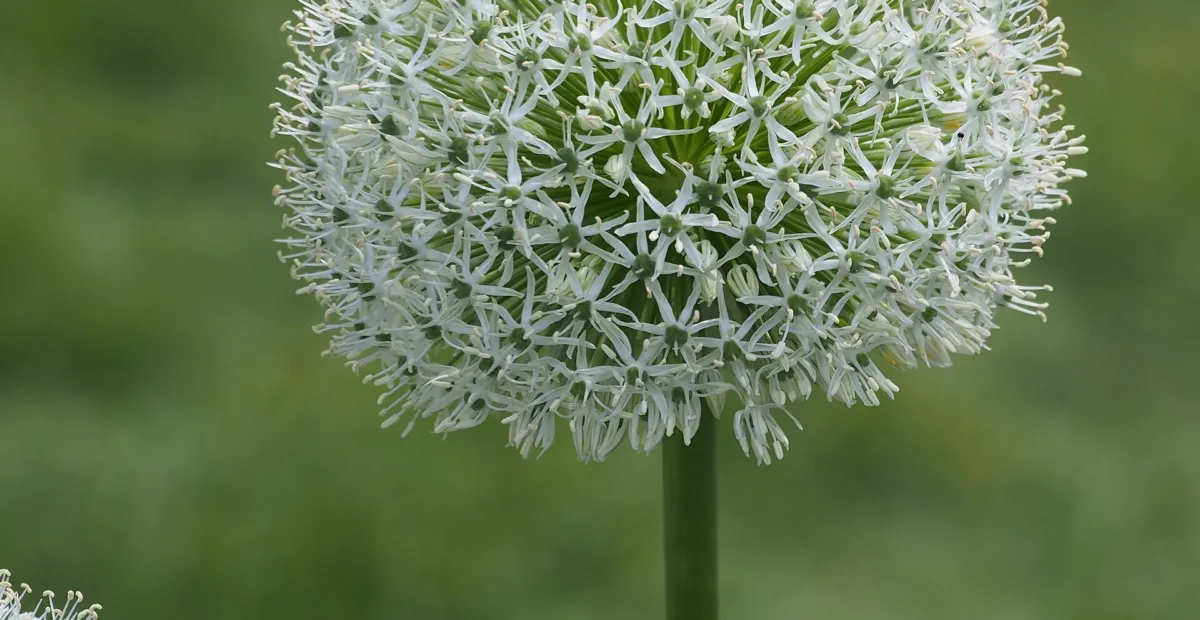
Allium 'White Giant' is a tall, bulbous ornamental onion grown for its broad, rounded heads of white, star-shaped florets. The cultivar is commonly associated with Allium stipitatum, although some horticultural sources also group it with giant onion forms, so its parentage is not completely consistent across references. In U.S. gardens, it performs best in full sun and sharply drained soil, flowering in late spring to early summer before the foliage fades.
Taxonomic classification
Allium ‘White Giant’ care guide
Light and placement
Plant in an open site with at least 6 hours of direct sun, preferably with a south- or west-facing orientation and good air movement. Strong light supports sturdy scapes and fuller umbels. Floppy stems, weak flowering and pale growth suggest insufficient sun; scorched leaf margins usually indicate heat or drought stress rather than excessive light alone.
Watering and humidity
Water deeply after planting and keep soil moderately moist while roots and spring foliage develop. Once flowering finishes and the leaves begin to die back, reduce irrigation and let the soil become relatively dry in summer. Avoid frequent shallow watering and never leave bulbs in saturated ground, which encourages rot.
Soil and growing medium
Use loose, sharply draining soil with a mineral component such as sand or grit. Loam, sandy loam and chalky soils are suitable, and the plant tolerates a broad pH range from acidic to alkaline. Improve heavy clay with drainage material and raised planting rather than adding rich organic matter alone.
Feeding
In poor soil, apply a balanced bulb fertilizer or a modest top-dressing of compost as growth begins in spring. Do not overfeed with high-nitrogen fertilizer, which can produce soft foliage and weaker stems. Stop regular feeding after flowering as the plant enters its summer dormancy.
Growth and habit
This bulbous perennial forms a seasonal basal clump, sends up one or more strong flowering scapes, and becomes dormant after bloom. Foliage commonly declines as flowering begins or soon afterward, so combine it with later-emerging perennials or grasses that can conceal the retreating leaves.
Planting and repotting
Plant pointed bulbs in fall in full sun, with the basal plate down, at roughly three to four times the bulb's height. Use groups of at least five for a stronger display, but leave enough room for clump expansion. Water after planting, then maintain only moderate moisture until winter rains or freezes arrive.
Container-grown bulbs rarely need annual repotting. Move or divide congested bulbs during fall dormancy, replacing exhausted, compacted mix with a gritty, well-drained bulb substrate. Use containers with drainage holes and avoid oversized pots that stay wet around a small bulb.
Propagation and pruning
Propagation
Propagate mainly by separating offsets when the bulbs are dormant, usually in fall. Seed is possible but slow and does not guarantee the exact cultivar. Plant offsets promptly at normal bulb depth and expect several seasons before flowering-size clumps develop.
Pruning
No routine pruning is needed. Remove spent flowerheads if self-sowing is unwanted, or leave them in place for winter structure and seed development. Allow foliage to yellow and die back naturally; cutting green leaves early can weaken the bulb's reserves.
Overwintering
Leave bulbs outdoors in the ground in suitable USDA Zones 4–8 when drainage is reliable. In colder exposed areas, add a light winter mulch after the ground freezes, but remove excess mulch as growth resumes. Container bulbs are more vulnerable to freezing and may need a sheltered, unheated location.
Uses
Best used as a vertical accent in sunny borders, gravel gardens, cottage gardens, wildlife plantings and large containers with excellent drainage. The tall stems and durable umbels are useful for fresh or dried arrangements. This is an ornamental cultivar, not a recommended culinary onion; do not encourage ingestion of bulbs or foliage.
Appearance
The plant has strap-shaped blue-green to gray-green basal leaves and tall, smooth, upright scapes. Its defining feature is a dense, rounded umbel composed of many small white, six-parted florets, sometimes showing darker centers. Leaves may remain fresher at bloom than in some other giant alliums, but cultivar expression varies.
Flowering
Flowering scapes rise above the basal foliage and carry dense globes of white, six-parted florets. The normal U.S. garden season is late May through June, varying with latitude and spring temperatures. Dried seedheads can remain ornamental after the florets fade, although removing them may reduce self-sowing.
Pollination and visitors
The open florets provide accessible nectar and pollen for visiting insects. Sources for the associated Allium stipitatum type specifically document butterflies and moths, while broader allium guidance supports insect visitation. A cultivar-specific pollinator inventory is not available, so no particular insect species is assigned.
Allium 'White Giant' photos
Click any photo for a larger view. Source, author and license are shown separately.
Diseases and pests
Diseases
The main risk is bulb or root rot in persistently wet soil, sometimes accompanied by leaf lesions or collapse. Prevent problems with sharp drainage, careful summer irrigation and clean planting stock. Remove badly rotted bulbs and avoid replanting immediately in contaminated, waterlogged soil; improve drainage before trying again.
Pests
Alliums are generally resistant to deer and rabbits, but slugs, snails, onion fly, allium leaf miner and bulb mites may occasionally occur. Inspect emerging leaves and stems, remove pests by hand where practical, and use barriers or locally approved controls only when damage is significant. Good sanitation reduces carryover.
Related diseases and pests
Only Plant Doctor profiles whose host data indicate this plant may be affected are shown here.
 PestAllium leafminerPhytomyza gymnostoma Loew
 DiseaseTomato spotted wilt virusOrthotospovirus tomatomaculae (tomato spotted wilt virus; TSWV)
 PestOnion thripsThrips tabaci Lindeman
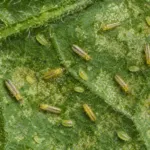 PestMelon thripsThrips palmi Karny
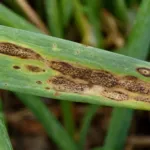 DiseaseStemphylium Leaf BlightStemphylium vesicarium (Wallr.) E.G. Simmons
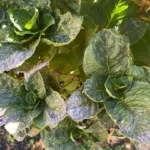 PestChilli thripsScirtothrips dorsalis Hood
 DiseaseRhizopus soft rotRhizopus stolonifer
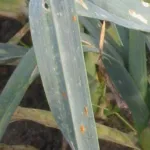 DiseaseAllium rustPuccinia allii
Toxicity and pollen
Allium plants contain sulfur compounds that can cause gastrointestinal upset and, in sufficient amounts, red-blood-cell damage in dogs and cats. Evidence is stronger for culinary onions and related Allium species than for this exact cultivar, but ornamental bulbs should still be treated as unsafe to ingest. Wear gloves if handling causes skin irritation and seek veterinary advice after pet ingestion.
- Typical season
- May–June in much of the United States
- Pollination / pollen
- Relatively heavy, insect-carried pollen; airborne release may occur during bloom
This is an insect-pollinated flowering bulb, so pollen is not usually released like grass or tree pollen, but flower handling and close exposure can still cause symptoms in sensitive people. The exact airborne-allergen profile of 'White Giant' has not been established. Avoid rubbing the eyes after handling flowers and use gloves if contact causes irritation.
Native habitat
The associated Allium stipitatum is linked with open, dry to seasonally dry habitats from Turkey through Central Asia, including rocky or well-drained soils. Garden plants need comparable drainage and sun, but the named cultivar itself is a horticultural selection rather than a wild population.
Interesting fact
The name 'White Giant' is used inconsistently in horticultural trade. Some references place it under Allium stipitatum, while others connect it with Allium giganteum or a hybrid background. Its flowers are made of hundreds of tiny florets rather than one single bloom. The scapes can remain visually strong after flowering as seedheads mature.
Frequently asked questions (FAQ)
The most relevant questions about this plant, with short and direct answers.
🌱Quick care
What is Allium 'White Giant'?⌄
Allium 'White Giant' is a tall ornamental onion grown for its large, spherical white flower heads. It is a cold-hardy bulbous perennial in the Amaryllidaceae family.
Is Allium 'White Giant' fragrant?⌄
Yes, Allium 'White Giant' can have an onion-like fragrance, especially when the foliage or bulb is bruised. The scent is usually less noticeable when the plant is left undisturbed.
Does Allium 'White Giant' come back every year?⌄
Yes, Allium 'White Giant' is a perennial bulb that can return for several years when planted in well-drained soil. Flowering may decline in crowded or overly wet locations.
🌤️Environment and placement
How much sun does Allium 'White Giant' need?⌄
Allium 'White Giant' grows best in full sun, receiving at least 6 hours of direct light daily. More sun generally supports stronger stems and better flowering.
What USDA hardiness zones can grow Allium 'White Giant'?⌄
Allium 'White Giant' is generally listed as hardy in USDA Zones 3–8 or 3–9, depending on the supplier and local conditions. Good drainage is especially important in regions with wet winters.
What type of soil is best for Allium 'White Giant'?⌄
Use well-drained loam, sandy loam, or chalky soil for Allium 'White Giant'. Improve heavy clay or poorly drained ground with organic matter and, where necessary, create a raised or amended planting area.
Can Allium 'White Giant' be grown in clay soil?⌄
Allium 'White Giant' can grow in clay soil only when drainage is improved. Amend the planting area or use a raised bed, because waterlogged clay can cause bulb rot.
Can Allium 'White Giant' tolerate frost?⌄
Yes, Allium 'White Giant' is a cold-hardy bulb and normally tolerates winter frost when planted at the proper depth. In very cold areas, a light winter mulch can help protect the soil from repeated freezing and thawing.
💧Care and problems
How often should I water Allium 'White Giant'?⌄
Water Allium 'White Giant' moderately during active growth, allowing the soil to dry somewhat between waterings. Reduce watering after flowering as the bulb enters summer dormancy, and avoid persistently wet soil.
Does Allium 'White Giant' tolerate drought?⌄
Established Allium 'White Giant' has some drought tolerance, particularly after flowering and during summer dormancy. Water during prolonged spring or early-summer drought, but do not keep the bulb consistently wet.
Should I fertilize Allium 'White Giant'?⌄
A light application of bulb fertilizer or balanced slow-release fertilizer at planting can support Allium 'White Giant'. Avoid excessive nitrogen, which may produce lush foliage at the expense of flowers.
Why is my Allium 'White Giant' not blooming?⌄
Allium 'White Giant' may fail to bloom because of insufficient sunlight, shallow or late planting, immature bulbs, overcrowding, or wet soil. Allow the foliage to mature naturally and check that the bulbs are not shaded or rotting.
What pests affect Allium 'White Giant'?⌄
Allium 'White Giant' is generally trouble-free, but slugs, snails, onion pests, and allium leaf miner may occasionally cause damage. Poor drainage can create more serious problems than insect feeding by encouraging bulb diseases.
Why are my Allium 'White Giant' leaves turning yellow?⌄
Yellowing leaves after flowering are usually normal as Allium 'White Giant' enters summer dormancy. Yellowing before or during flowering may indicate water stress, poor drainage, disease, or natural foliage senescence depending on timing.
🪴Planting and repotting
When should I plant Allium 'White Giant' bulbs?⌄
Plant Allium 'White Giant' bulbs in the fall, after summer heat has passed and before the ground freezes. In much of the United States, this is commonly September through November, adjusted for local climate.
How deep should Allium 'White Giant' bulbs be planted?⌄
Plant Allium 'White Giant' bulbs about 4–7 inches deep, with the pointed end facing upward. A practical rule is to plant them at roughly three to four times the bulb’s height, using the deeper end of the range for large bulbs.
How far apart should Allium 'White Giant' bulbs be planted?⌄
Space Allium 'White Giant' bulbs about 8–10 inches apart for individual specimens or a dense group. Wider spacing can be used when you want each tall flower head to stand out clearly.
Can Allium 'White Giant' grow in containers?⌄
Yes, Allium 'White Giant' can grow in a large container with drainage holes and well-drained potting mix. Choose a heavy pot to reduce tipping and protect the container from extreme winter freezing where needed.
✂️Propagation and pruning
Should I cut back Allium 'White Giant' foliage after flowering?⌄
Do not cut back Allium 'White Giant' foliage while it is still green, because the leaves replenish the bulb for the following year. Remove yellow or fully dried foliage later in summer.
Should I deadhead Allium 'White Giant'?⌄
Deadheading is optional for Allium 'White Giant'. Remove spent flower heads for a tidier appearance, or leave them in place because the dried globes can provide winter interest and may produce seed.
How do I propagate Allium 'White Giant'?⌄
Propagate Allium 'White Giant' mainly by separating offsets from established bulbs in the fall. Growing from seed is possible but usually takes longer to produce flowering-size plants and may not reproduce the cultivar exactly.
When should I divide Allium 'White Giant' bulbs?⌄
Divide Allium 'White Giant' bulbs in the fall after the foliage has died back. Lift the clump carefully, separate healthy offsets, and replant them immediately at the recommended depth.
⚠️Toxicity and safety
Is Allium 'White Giant' deer resistant?⌄
Allium 'White Giant' is generally considered deer resistant because of its onion-like odor and taste. Deer resistance is not absolute, especially when other food is scarce.
Is Allium 'White Giant' toxic to dogs and cats?⌄
Yes, Allium 'White Giant' should be treated as potentially toxic to dogs, cats, horses, and other pets if eaten. Keep bulbs, foliage, and flowers away from animals and contact a veterinarian promptly if ingestion is suspected.
Is Allium 'White Giant' toxic to people?⌄
Allium 'White Giant' should not be eaten because ornamental alliums may cause gastrointestinal upset or other adverse effects. Do not use it as a culinary onion, and wash hands after handling bulbs if skin irritation occurs.
🌸Flowering and special interest
How tall does Allium 'White Giant' get?⌄
Allium 'White Giant' typically grows about 36–48 inches tall, although especially favorable plants may approach 5 feet. Plant it toward the back of a border so its height does not hide shorter flowers.
When does Allium 'White Giant' bloom?⌄
Allium 'White Giant' usually blooms in late spring to early summer, often from May into June in much of the United States. The exact timing varies with USDA zone and spring temperatures.
What do Allium 'White Giant' flowers look like?⌄
The flowers form large, rounded white globes made of many small, star-shaped blooms. Mature flower heads are commonly described as roughly 6–8 inches across.
Can I use Allium 'White Giant' as a cut flower?⌄
Yes, Allium 'White Giant' makes a long-lasting cut flower and can also be dried. Cut stems when the flower head is fully formed but before the oldest florets begin to fade.
Do bees and butterflies visit Allium 'White Giant'?⌄
Yes, the white flower heads of Allium 'White Giant' attract bees and other pollinating insects. Its nectar-rich blooms are particularly useful in late-spring garden displays.
Similar plants
 Azure Monkshood (Aconitum carmichaelii) care guideAconitum carmichaelii
 Monkshood (Aconitum ‘Stainless Steel’)Aconitum 'Stainless Steel'
 Monkshood (Aconitum ‘Bressingham Spire’)Aconitum 'Bressingham Spire'
 Golden full moon maple (Acer shirasawanum ‘Aureum’)Acer shirasawanum 'Aureum'
 Globosum (Acer platanoides ‘Globosum’)Acer platanoides 'Globosum'
 Striped maple (Acer pensylvanicum) care guideAcer pensylvanicum