
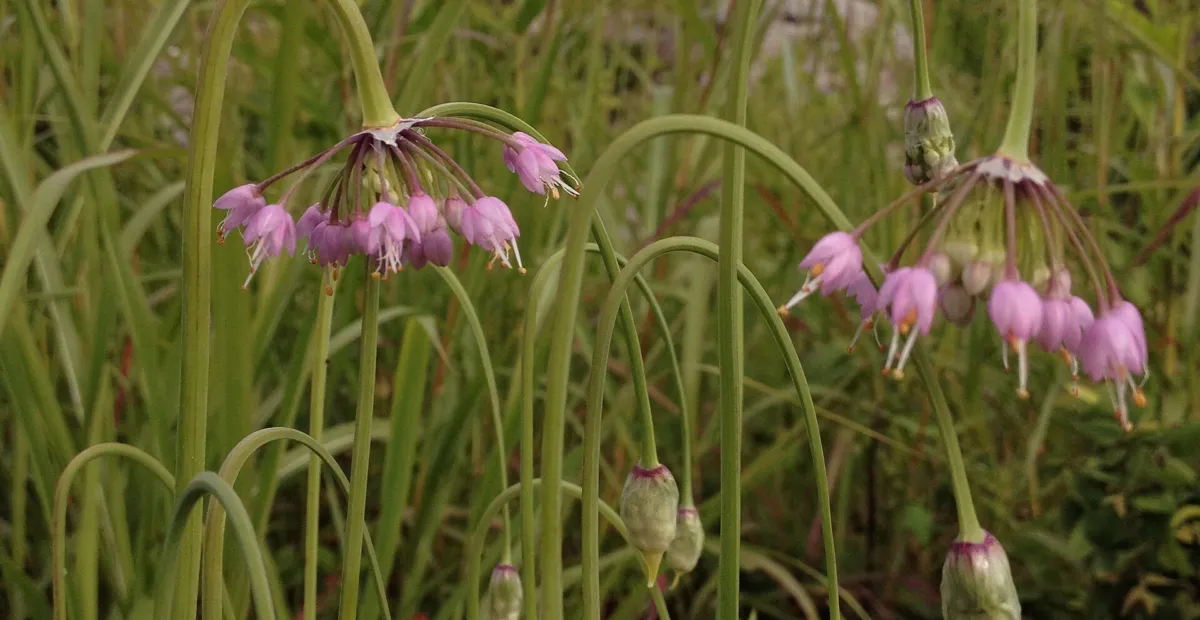
 Source:
 Allium ‘Cernuum’ short overview
Allium 'Cernuum' is a hardy North American bulbous perennial grown for its distinctive nodding umbels of pale pink to lavender flowers. Narrow, grass-like leaves form a modest clump, while each flowering stem bends sharply beneath the bloom cluster. It performs best in full sun and sharply drained soil, tolerates dry conditions once established, and works well in rock gardens, native borders, prairies and pollinator plantings.
Taxonomic classification
Allium ‘Cernuum’ care guide
Light and placement
Grow in full sun, ideally with at least 6 hours of direct light and good air movement. A south- or west-facing border, rock garden or open meadow edge is suitable. In hot climates, light afternoon shade can help. Too little light produces floppy growth and fewer flowers; excessive heat combined with reflected light may scorch foliage.
Watering and humidity
Water deeply after planting and during the first growing season whenever the upper few inches of soil dry. Once established, allow the soil to dry moderately between waterings; it tolerates seasonal drought but flowers better with moisture during active growth. Reduce watering as foliage yellows and stop regular irrigation during dormancy unless conditions are exceptionally dry.
Soil and growing medium
Use sandy or loamy soil with excellent drainage; rocky or gravelly ground is suitable. Average garden soil is acceptable if it does not remain waterlogged. A slightly acidic to slightly alkaline reaction is tolerated, with neutral soil a reliable target.
Feeding
Usually needs little fertilizer. Incorporate a modest amount of finished compost before planting, or apply a balanced bulb fertilizer at label rate in early spring as growth begins. Avoid heavy nitrogen feeding, which can produce soft foliage and weaker flowering; do not fertilize drought-stressed or waterlogged plants.
Growth and habit
This bulbous perennial forms clumps gradually through basal offsets and occasional self-seeding. Foliage appears before flowering and persists into late summer before going dormant. Removing spent flower stalks limits seed spread, while leaving some capsules provides ornamental structure and seed for natural regeneration.
Planting and repotting
Plant bulbs in fall, or set established divisions in early spring. Place bulbs about 2–3 inches deep, measured from the bulb base, and space plants roughly 6–12 inches apart. Water after planting and keep evenly but not continuously wet during establishment.
Repot container-grown bulbs only when crowded or when the medium has degraded, preferably during dormancy in fall. Use a deep container with drainage holes and a gritty, free-draining mix; avoid disturbing roots during active growth.
Propagation and pruning
Propagation
Sow fresh or stored seed in fall or provide cold, moist stratification before spring sowing. Seed-grown plants commonly need two or three years to flower. Divide offsets or separate bulblets in early spring or fall, replanting them promptly at normal bulb depth.
Pruning
Cut flowering stems after bloom if you want to prevent self-seeding or maintain a tidy display. Leave the foliage until it yellows and dies back naturally, since it replenishes the bulb. Remove only fully dead leaves and stalks in late summer or fall.
Overwintering
Leave bulbs outdoors in the ground in suitable USDA Zones 4a–8b. A thin mulch layer can moderate freeze–thaw cycles, but avoid burying crowns in wet organic material. Container plants are more exposed to cold; place pots in a sheltered location or protect the container without keeping the mix constantly wet.
Uses
Useful in native borders, rock gardens, prairie plantings, cottage-style beds, open woodland edges and pollinator gardens. The bulbs and leaves have documented culinary use as an onion-flavored food, but harvesting should be conservative and only from confidently identified, legally obtained plants. Dried seed capsules add seasonal structure.
Appearance
Several narrow, flat to keeled, grass-like leaves rise from a membranous conical bulb. Mature bulbs commonly produce one slender, leafless scape that bends sharply below the flower cluster. The pendulous umbels, protruding stamens and later spherical crested seed capsules are especially useful identification features.
Flowering
Loose umbels of up to about 30 small, bell-shaped flowers hang from the sharply bent tip of each leafless scape. Flowers are usually pale pink to lavender, though white forms occur within the species. Bloom is typically concentrated from early to mid-summer, followed by decorative capsules.
Pollination and visitors
Flowers provide nectar and pollen for a diverse visitor community. Documented visitors include cellophane bees, leafcutter bees, small resin bees, sweat bees, bumblebees, syrphid flies and soldier or tumbling flower beetles; butterflies are also reported as visitors.
Allium 'Cernuum' photos
Click any photo for a larger view. Source, author and license are shown separately.
Diseases and pests
Diseases
Usually trouble-free when grown in well-drained soil. Excess moisture can encourage bulb rot and fungal decline; improve drainage, avoid overwatering, and remove badly affected bulbs. Good air circulation and clean planting stock reduce disease pressure.
Pests
Alliums are generally resistant to deer and often have few pest problems. Watch for onion thrips, bulb mites and larvae that attack damaged bulbs, especially in stressed or poorly drained plantings. Remove affected material, improve sanitation and drainage, and avoid routine broad-spectrum insecticides during bloom.
Related diseases and pests
Only Plant Doctor profiles whose host data indicate this plant may be affected are shown here.
 PestOnion thripsThrips tabaci Lindeman
 PestMelon thripsThrips palmi Karny
 PestChilli thripsScirtothrips dorsalis Hood
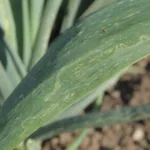 PestAllium leafminerPhytomyza gymnostoma Loew
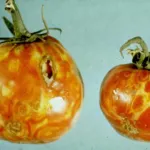 DiseaseTomato spotted wilt virusOrthotospovirus tomatomaculae (tomato spotted wilt virus; TSWV)
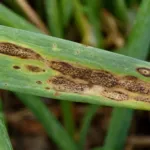 DiseaseStemphylium Leaf BlightStemphylium vesicarium (Wallr.) E.G. Simmons
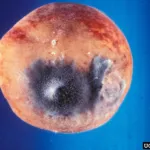 DiseaseRhizopus soft rotRhizopus stolonifer
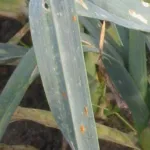 DiseaseAllium rustPuccinia allii
Toxicity and pollen
Species-specific human toxicity evidence is limited. The bulbs and leaves are reported as edible, but identification must be certain because unrelated bulbous plants can be dangerous. As an Allium, it should be kept away from dogs and cats: ingestion of plant material may cause gastrointestinal upset, and concentrated Allium exposure can damage red blood cells. Do not use as food unless correctly identified and responsibly harvested.
- Typical season
- June–August
- Pollination / pollen
- Insect-dispersed pollen
The flowers release pollen during insect visits rather than producing clouds of wind-borne pollen. No reliable species-specific clinical allergy rating was found, so airborne allergy risk is classified as low but not absent; sensitive gardeners should avoid rubbing flowers and wash hands after handling.
Native habitat
Native across much of Canada, the United States and northeastern Mexico, it occurs in rocky glades, bluff edges, open woods, dry meadows, prairies, gravelly slopes and other open temperate habitats. It handles seasonal dryness but benefits from drainage and is less suited to persistently saturated soils.
Interesting fact
The specific epithet cernuum means “nodding,” referring to the drooping flower clusters. After flowering, spherical crested capsules split open to reveal dark seeds with a honeycomb-like surface. The species is highly variable across its broad North American range in stature, flower color and bloom timing.
Frequently asked questions (FAQ)
The most relevant questions about this plant, with short and direct answers.
🌱Quick care
What is Allium 'Cernuum' commonly called?⌄
Allium 'Cernuum' is generally known as nodding onion or nodding wild onion. The verified botanical species behind this horticultural identity is Allium cernuum, a North American perennial onion.
Is Allium 'Cernuum' a perennial?⌄
Yes, Allium 'Cernuum' is a hardy, bulb-forming perennial. It dies back or becomes dormant after flowering and returns from underground bulbs the following growing season.
How much sunlight does Allium 'Cernuum' need?⌄
Grow Allium 'Cernuum' in full sun to partial shade. Full sun usually produces the strongest flowering, while afternoon shade can help in hot U.S. climates.
How often should I water Allium 'Cernuum'?⌄
Water Allium 'Cernuum' moderately while it is establishing, then allow the soil to dry somewhat between waterings. Established plants usually need supplemental water only during prolonged heat or drought.
What USDA hardiness zones can grow Allium 'Cernuum'?⌄
Allium 'Cernuum' is commonly grown in USDA Zones 3–9. Exact performance can vary with the plant’s regional form, soil drainage, and winter moisture.
🌤️Environment and placement
Where should I plant Allium 'Cernuum' in the garden?⌄
Plant Allium 'Cernuum' in a sunny rock garden, native-plant bed, prairie planting, border, or open woodland edge. Choose a location with good air circulation and soil that does not stay wet.
Does Allium 'Cernuum' grow well in containers?⌄
Allium 'Cernuum' can grow in a container if the pot has drainage holes and a sharply draining mix. Use a container deep enough for the bulbs and protect it from extreme winter temperature swings.
What type of soil is best for Allium 'Cernuum'?⌄
The best soil for Allium 'Cernuum' is sandy or loamy, well-drained soil. Heavy clay should be amended or avoided because persistent moisture around the bulbs can cause rot.
Can Allium 'Cernuum' tolerate drought?⌄
Established Allium 'Cernuum' has good drought tolerance once its roots and bulbs are established. It still benefits from occasional deep watering during extended summer drought, especially in containers.
Is Allium 'Cernuum' native to the United States?⌄
Yes, Allium cernuum is native to broad areas of North America, including many parts of the United States. Whether it is locally native depends on the state and region.
Is Allium 'Cernuum' deer resistant?⌄
Allium 'Cernuum' is generally considered deer resistant because of its onion-like scent and flavor. Deer may still browse young growth when preferred food is scarce.
Does Allium 'Cernuum' attract pollinators?⌄
Yes, the flowers of Allium 'Cernuum' provide nectar and pollen for pollinating insects. Its open flower clusters are especially useful in native and wildlife-friendly plantings.
💧Care and problems
Why is my Allium 'Cernuum' not flowering?⌄
Allium 'Cernuum' may fail to flower because the bulbs are immature, the site is too shady, the soil stays wet, or the plant received excessive nitrogen. Plants grown from seed can take two or three years to bloom.
Why are the leaves of my Allium 'Cernuum' turning yellow?⌄
Yellowing leaves after flowering is often a normal sign that Allium 'Cernuum' is entering summer dormancy. Yellowing during active growth can indicate overwatering, poor drainage, bulb damage, or another root problem.
Should I fertilize Allium 'Cernuum'?⌄
Allium 'Cernuum' usually needs little fertilizer when planted in reasonably fertile soil. If growth is weak, apply a light, balanced fertilizer in early spring rather than using repeated high-nitrogen feeding.
Does Allium 'Cernuum' have common pest problems?⌄
Allium 'Cernuum' generally has few serious pest problems in garden conditions. Poor drainage and excessive moisture are usually greater risks than insects, although slugs or bulb-feeding pests can occasionally cause damage.
How should I care for Allium 'Cernuum' in winter?⌄
Allium 'Cernuum' normally requires no special winter protection when grown in suitable USDA Zones. Avoid winter watering in poorly drained soil, and use only a light mulch layer if the site has severe freeze-thaw cycles.
🪴Planting and repotting
When should I plant Allium 'Cernuum' bulbs?⌄
Plant Allium 'Cernuum' bulbs in fall, several weeks before the ground freezes, so they can begin root growth before winter. Container-grown plants can usually be installed in spring or fall when the soil is workable.
How deep should I plant Allium 'Cernuum' bulbs?⌄
Plant Allium 'Cernuum' bulbs with the pointed end up and cover them with soil to roughly two to three times the bulb’s height. Follow the supplier’s instructions for unusually small bulbs or nursery divisions.
How far apart should Allium 'Cernuum' plants be spaced?⌄
Space Allium 'Cernuum' plants about 6–12 inches apart, depending on the desired density. Wider spacing improves air circulation, while closer planting creates a fuller clump over time.
Can I transplant Allium 'Cernuum'?⌄
Yes, Allium 'Cernuum' can be transplanted during dormancy or in early spring before active growth. Replant the bulbs promptly at the same depth and water once to settle the soil.
✂️Propagation and pruning
How do I propagate Allium 'Cernuum' from seed?⌄
Sow fresh Allium 'Cernuum' seed in fall outdoors or give it a cold, moist period before spring sowing. Seed-grown plants commonly need two or three years before producing their first flowers.
Can Allium 'Cernuum' be propagated by division?⌄
Yes, divide Allium 'Cernuum' by separating offset bulbs from an established clump in early spring or fall. Replant the offsets immediately in well-drained soil and keep them lightly moist until established.
Does Allium 'Cernuum' self-seed?⌄
Yes, Allium 'Cernuum' can self-seed when its flower capsules are allowed to mature. Remove spent flower heads before seed release if you want to limit seedlings and maintain a tidier planting.
Should I deadhead Allium 'Cernuum'?⌄
Deadhead Allium 'Cernuum' after flowering if you want to reduce self-seeding or improve the plant’s appearance. Leave the foliage in place until it naturally yellows so the bulb can replenish its energy.
Should I cut back Allium 'Cernuum' foliage after flowering?⌄
Do not cut back green Allium 'Cernuum' foliage immediately after flowering. Remove it only after it has yellowed and begun to die back naturally, unless damaged leaves need to be trimmed for sanitation.
⚠️Toxicity and safety
Is Allium 'Cernuum' toxic to dogs and cats?⌄
Treat Allium 'Cernuum' as potentially unsafe for dogs and cats because it belongs to the onion genus, although species-specific toxicity information is limited. Prevent pets from eating the bulbs or large amounts of foliage, and contact a veterinarian or pet poison service after ingestion.
Can people eat Allium 'Cernuum'?⌄
Allium cernuum has edible onion-flavored bulbs and foliage in traditional and botanical references, but a cultivated plant should be correctly identified before eating. Do not consume plants treated with ornamental pesticides, and use caution because the supplied identity is a horticultural form rather than a separately verified species-level cultivar.
Is Allium 'Cernuum' safe to plant around children?⌄
Allium 'Cernuum' is generally suitable for family gardens when it is not eaten, but its bulbs and foliage should not be treated as a snack. Teach children not to ingest ornamental plants and supervise digging around the bulbs.
🌸Flowering and special interest
When does Allium 'Cernuum' bloom?⌄
Allium 'Cernuum' typically blooms in midsummer, often during July and August in much of the United States. Flowering may occur earlier or later depending on latitude, elevation, and seasonal temperatures.
What do Allium 'Cernuum' flowers look like?⌄
Allium 'Cernuum' produces rounded clusters of small, bell-shaped flowers on stems that bend or nod downward. Flower colors can range from white to pink, rose, or purplish tones depending on the plant’s form.
Why do the flower heads of Allium 'Cernuum' nod downward?⌄
The downward-facing flower head is a natural identifying feature of Allium 'Cernuum'. Its nodding umbel is the reason the plant is commonly called nodding onion.
Similar plants
 Azure Monkshood (Aconitum carmichaelii) care guideAconitum carmichaelii
 Monkshood (Aconitum ‘Stainless Steel’)Aconitum 'Stainless Steel'
 Monkshood (Aconitum ‘Bressingham Spire’)Aconitum 'Bressingham Spire'
 Golden full moon maple (Acer shirasawanum ‘Aureum’)Acer shirasawanum 'Aureum'
 Globosum (Acer platanoides ‘Globosum’)Acer platanoides 'Globosum'
 Striped maple (Acer pensylvanicum) care guideAcer pensylvanicum