
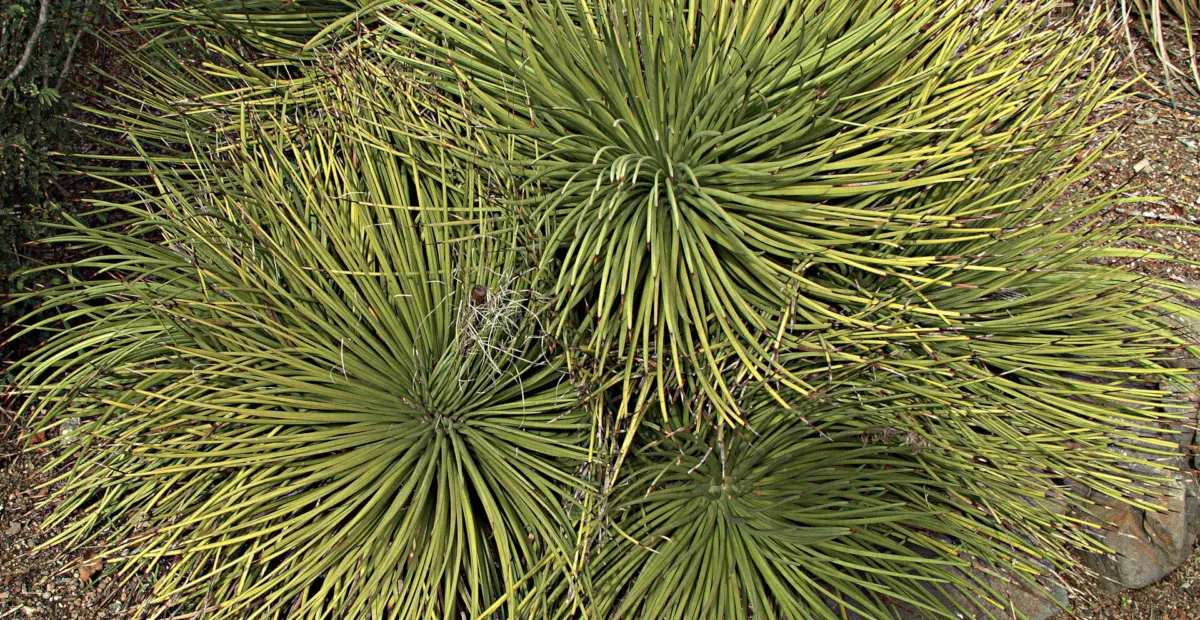
 Source:
 Agave stricta short overview
Agave stricta is a distinctive Mexican succulent that forms dense, rounded rosettes of narrow, rigid leaves, giving mature clumps a spiny hedgehog-like appearance. It comes from dry limestone landscapes in Puebla and Oaxaca and is valued in the United States as a sculptural container or rock-garden plant. Provide strong sun, sharply drained soil, restrained watering, and winter protection where temperatures regularly fall below freezing.
Taxonomic classification
Agave stricta care guide
Light and placement
Grow in full sun, ideally with a south- or west-facing exposure and unobstructed light for most of the day. In containers, acclimate gradually to intense summer sun to reduce scorch. Pale, stretched leaves and a looser rosette usually indicate insufficient light; bleached patches or sudden tan lesions suggest sun stress, especially after a move from shade.
Watering and humidity
Water deeply, then allow the potting mix or planting bed to dry completely before watering again. During spring and summer, this may mean watering every 2–4 weeks in a container, depending on heat and pot size; reduce sharply in fall and keep nearly dry in winter. Direct water at the soil, not into the rosette, and never leave the plant standing in a saucer.
Soil and growing medium
Use a mineral-rich succulent mix amended with pumice, grit, or coarse perlite. The planting site must drain rapidly after storms because persistent moisture around the crown encourages rot. Limestone-derived soils are part of its natural context, but an ordinary neutral to mildly alkaline cactus mix is usually adequate; fertility and drainage matter more than precise pH.
Feeding
Feed only during active spring and summer growth, using a balanced fertilizer at one-quarter to one-half the label strength once or twice. A small amount of finished compost may be incorporated when planting, but rich organic soil is unnecessary. Do not fertilize newly transplanted, drought-stressed, diseased, or overwintering plants.
Growth and habit
This agave commonly develops a dense, cespitose clump rather than remaining a solitary rosette. Mature plants can produce numerous offsets, making the plant gradually broader and more architectural. The species is unusual among agaves for its capacity to offset and persist through repeated flowering events, although individual rosettes may still decline after blooming.
Planting and repotting
Plant only after the soil has warmed and the site can drain freely. Set the crown high or level with the surrounding soil rather than in a depression. Backfill with gritty soil, water once to settle the roots, then allow the planting area to dry before the next irrigation. In colder parts of the United States, use a raised bed or a container that can be moved under cover.
Repot in spring when roots have filled the container or drainage has declined. Choose a heavy pot only slightly larger than the root mass and use a gritty, fast-draining succulent mix. Handle the plant with padding or long tools, keep the crown above the soil, and wait several days before watering after transplanting.
Propagation and pruning
Propagation
Propagate most easily by separating rooted offsets in spring or early summer. Remove the pup with a clean knife, allow damaged tissue to callus briefly, then pot into a dry, gritty mix and water lightly only after roots begin to establish. Seed propagation is possible but slower and less predictable, requiring warmth, light, and careful moisture control.
Pruning
Remove only dead or badly damaged leaves, cutting them at the base with clean, sharp tools. Wear thick gloves and eye protection because the leaf tips and margins are sharp. After flowering, remove a declining spike once it has dried or cut it back near the base; avoid damaging offsets during cleanup.
Overwintering
Keep container plants bright, cool, and almost dry through winter, ideally above about 25°F. Move them indoors, into a greenhouse, or under a dry, frost-free roof before hard freezes. In borderline outdoor climates, protect the crown from prolonged rain and use breathable frost cloth during short cold events; wet soil greatly increases cold damage and rot risk.
Uses
Used as a sculptural specimen for rock gardens, xeric beds, raised planters, and containers. Its compact, spiny foliage suits modern and desert-style designs. The leaves and flower stalk are armed, so place it away from narrow walkways and play areas. Although agaves have regional food and fiber traditions, home use of this exact species should not be assumed without verified identification and preparation guidance.
Appearance
The plant is recognized by its many narrow, stiff, linear leaves arranged in compact rosettes. Leaves may be green, blue-green, yellow-green, or flushed reddish-purple, with fine marginal roughness and a conspicuous gray terminal spine. Dense offsetting creates rounded, pincushion-like clumps unlike broad-leaved century agaves.
Flowering
When mature, the rosette sends up a tall, narrow, spike-like inflorescence bearing reddish to purple campanulate flowers. The flowering spike is typically produced in the warm season, but exact timing depends on latitude, winter conditions, and cultivation. After flowering, the flowering rosette may weaken, while offsets can preserve the clump.
Pollination and visitors
The exposed stamens and nectar-bearing agave flowers can be visited by insects, including bees and other flower visitors. Species-specific pollinator records for Agave stricta are limited, so a precise insect species is not assigned here. Avoid insecticide applications while the flowering spike is active, particularly systemic products.
Agave stricta photos
Click any photo for a larger view. Source, author and license are shown separately.
Diseases and pests
Diseases
Root and crown rot are the principal moisture-related problems and appear as soft, darkening tissue or a collapsing center. Prevent them with gritty soil, full drainage, careful winter watering, and good air circulation. Remove infected tissue if localized, let wounds dry, and discard severely rotted plants. Leaf spotting can worsen under persistent wetness or poor ventilation.
Pests
Agave snout weevil can cause wilting, loose leaves, or hidden crown damage, although susceptibility varies by species and region. Inspect plants at the crown and remove badly infested material. Scale and mealybugs may settle in leaf axils; isolate affected containers, wash pests away, and use a labeled treatment only as directed. Avoid insecticides on open flowers to protect visitors.
Related diseases and pests
Only Plant Doctor profiles whose host data indicate this plant may be affected are shown here.
 DiseasePhytophthora cactorum crown, collar, root and fruit rotPhytophthora cactorum
 DiseaseRhizopus soft rotRhizopus stolonifer
 DiseaseBacterial soft rotPectobacterium carotovorum
 DiseasePhytophthora root and crown rotPhytophthora nicotianae
 Environmental stressUnderwatering
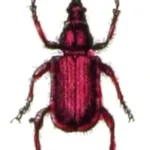 PestPeach weevilRhynchites bacchus
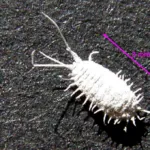 PestObscure mealybugPseudococcus viburni
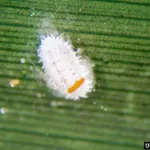 PestCitrus mealybugPlanococcus citri
Toxicity and pollen
Agave sap contains irritating compounds that may cause burning, redness, or dermatitis after skin contact, while the sharp leaf tips and margins can puncture skin. Handle with gloves, eye protection, and long sleeves; wash exposed skin promptly. Do not chew leaves or sap, and seek medical advice if eye exposure or significant ingestion occurs.
- Typical season
- Typically summer when cultivated outdoors in the United States
- Pollination / pollen
- Insect-released pollen from exposed anthers; airborne exposure is likely limited compared with wind-pollinated plants.
Agave stricta is insect-pollinated rather than primarily wind-pollinated, so routine airborne pollen dispersal is expected to be lower than for wind-pollinated plants. However, the species-specific allergy literature is limited, and flowering plants can still expose sensitive people to pollen through direct contact or nearby flower activity. Avoid handling open flowers if unusually sensitive.
Native habitat
Agave stricta is associated with dry, seasonally arid habitats in Puebla and Oaxaca, including limestone hills, flats, and sandy or rocky substrates. It occurs in xeric scrub and transitional vegetation, with populations documented across a range of elevations and local climates. Rapid drainage, strong sunlight, and a pronounced dry season are central features of its natural ecological setting.
Interesting fact
The specific epithet stricta refers to an upright or erect form. The species belongs to the narrow-leaved Agave group often associated with Agave striata. Its dense offsetting habit is notable because many familiar agaves are strongly monocarpic and remain solitary before flowering.
Frequently asked questions (FAQ)
The most relevant questions about this plant, with short and direct answers.
🌱Quick care
How do you care for Agave stricta?⌄
Grow Agave stricta in full sun, sharply drained soil, and with infrequent deep watering. Keep it drier during cool or wet weather and protect it from hard freezes.
Is Agave stricta a cactus?⌄
No, Agave stricta is a succulent in the Asparagaceae family, not a cactus. Its narrow, spine-tipped leaves form a dense rosette.
How large does Agave stricta get?⌄
The rosette commonly reaches about 20 inches tall and wide in cultivation, although mature specimens can vary. Its flower stalk rises much higher than the foliage.
How fast does Agave stricta grow?⌄
Agave stricta is a slow-growing succulent, especially in cool, dim, or container conditions. Faster growth occurs with strong light, warmth, good drainage, and an active growing season.
🌤️Environment and placement
How much sun does Agave stricta need?⌄
Agave stricta needs full sun, ideally at least 6 hours of direct sunlight daily. Give newly moved plants a short acclimation period to prevent sunscald.
Can Agave stricta grow indoors?⌄
Agave stricta can grow indoors temporarily or year-round only in a very bright, sunny location. Use a gritty cactus or succulent mix, excellent drainage, and water sparingly.
What USDA zones can grow Agave stricta outdoors?⌄
Agave stricta is best treated as a container or protected plant in areas with regular freezing weather. Its cold tolerance is limited, so local winter conditions matter more than a single hardiness-zone label.
Can Agave stricta survive winter outside?⌄
Agave stricta may survive mild, dry winters but should be protected from hard freezes. Move container plants indoors or under cover before freezing temperatures, and keep sheltered plants nearly dry in winter.
What temperature is too cold for Agave stricta?⌄
Freezing temperatures can damage Agave stricta, especially when the plant is wet. Protect it whenever a hard freeze is forecast rather than relying on cold tolerance alone.
💧Care and problems
How often should you water Agave stricta?⌄
Water Agave stricta thoroughly, then allow the soil to dry completely before watering again. Established plants need much less water in winter, during cool weather, or in rainy climates.
Why is my Agave stricta turning yellow?⌄
Yellowing leaves commonly indicate excess moisture, poor drainage, or root stress in Agave stricta. Check the roots and soil before watering again, and remove any standing water from saucers.
Why is my Agave stricta becoming soft or mushy?⌄
Soft or mushy tissue usually signals rot caused by excess water, poor drainage, cold moisture, or damage at the crown. Remove affected material if possible, improve airflow and drainage, and keep the plant dry while it recovers.
Does Agave stricta need fertilizer?⌄
Agave stricta needs little fertilizer and can grow well without regular feeding. If growth is active, apply a diluted balanced fertilizer sparingly rather than using a high-nitrogen product.
What pests affect Agave stricta?⌄
Agave stricta is generally trouble-free but may occasionally develop scale insects. Inspect leaf bases and treat infestations early with a method labeled for ornamental succulents.
🪴Planting and repotting
What type of soil is best for Agave stricta?⌄
Use very sharply drained sandy, gritty, or rocky soil for Agave stricta. Limestone-derived soil is suitable, provided water does not remain around the roots.
Can Agave stricta grow in clay soil?⌄
Agave stricta generally performs poorly in heavy clay unless drainage is substantially improved. Grow it in a raised bed, rock garden, or container filled with a mineral-heavy succulent mix.
How do you repot Agave stricta?⌄
Repot Agave stricta into a container with a drainage hole and a gritty, fast-draining mix. Handle the plant carefully, keep the crown above the soil, and wait several days before watering after repotting.
What is the best container for Agave stricta?⌄
Choose a sturdy container with a drainage hole and enough weight to support the rosette. Unglazed clay can help the mix dry faster, while shallow or oversized containers should be avoided.
How do you plant Agave stricta in the ground?⌄
Plant Agave stricta slightly high in a sunny site with sandy, gritty, or rocky soil. Set the crown at or just above the surrounding soil level so water cannot collect around it.
✂️Propagation and pruning
Does Agave stricta need pruning?⌄
Agave stricta does not require routine pruning. Remove only dead or badly damaged leaves, using gloves and tools that keep your hands away from the sharp leaf tips.
How do you propagate Agave stricta?⌄
Propagate Agave stricta mainly from offsets, also called pups, taken when they are developing roots. Allow cut surfaces to dry briefly, then pot offsets in a well-drained succulent mix.
Can Agave stricta be grown from seed?⌄
Agave stricta can be grown from seed, but seed propagation is slower and less predictable than using offsets. Sow fresh seed in a sterile, sharply drained medium and provide warmth and bright light.
Does Agave stricta produce pups?⌄
Agave stricta can produce offsets around the base or nearby as it matures. These young plants can be separated and grown independently once they are large enough to handle.
⚠️Toxicity and safety
Is Agave stricta poisonous to people?⌄
Agave stricta has irritating sap and sharp spines that can injure or irritate skin and eyes. Wear gloves, long sleeves, and eye protection when planting, pruning, or dividing it.
Is Agave stricta safe for dogs and cats?⌄
Agave stricta should be kept away from dogs and cats because eating plant material may be harmful and the foliage can cause physical injury. Contact a veterinarian or animal poison resource if a pet chews or swallows it.
Where should Agave stricta be planted safely?⌄
Place Agave stricta away from walkways, play areas, and narrow entrances because its leaves end in sharp spines. A sunny rock garden, raised bed, or secure container location is safer.
🌸Flowering and special interest
Does Agave stricta flower?⌄
Yes, Agave stricta produces a tall, upright flower spike with small reddish flowers. Flowering is infrequent and may occur only after many years of growth.
When does Agave stricta bloom?⌄
Agave stricta commonly blooms in summer when mature, although timing varies with climate and growing conditions. The flower stalk can rise several feet above the rosette.
Does Agave stricta die after flowering?⌄
Agave stricta is generally described as polycarpic, so the flowering rosette does not necessarily die after blooming. This distinguishes it from many monocarpic agave species, though individual plants may still decline after flowering.
Should you cut off the Agave stricta flower stalk?⌄
Cut the flower stalk down after flowering when it has dried or finished displaying. Use protective clothing because the plant remains spiny and its sap can irritate skin.
Similar plants
 Azure Monkshood (Aconitum carmichaelii) care guideAconitum carmichaelii
 Monkshood (Aconitum ‘Stainless Steel’)Aconitum 'Stainless Steel'
 Monkshood (Aconitum ‘Bressingham Spire’)Aconitum 'Bressingham Spire'
 Golden full moon maple (Acer shirasawanum ‘Aureum’)Acer shirasawanum 'Aureum'
 Globosum (Acer platanoides ‘Globosum’)Acer platanoides 'Globosum'
 Striped maple (Acer pensylvanicum) care guideAcer pensylvanicum