
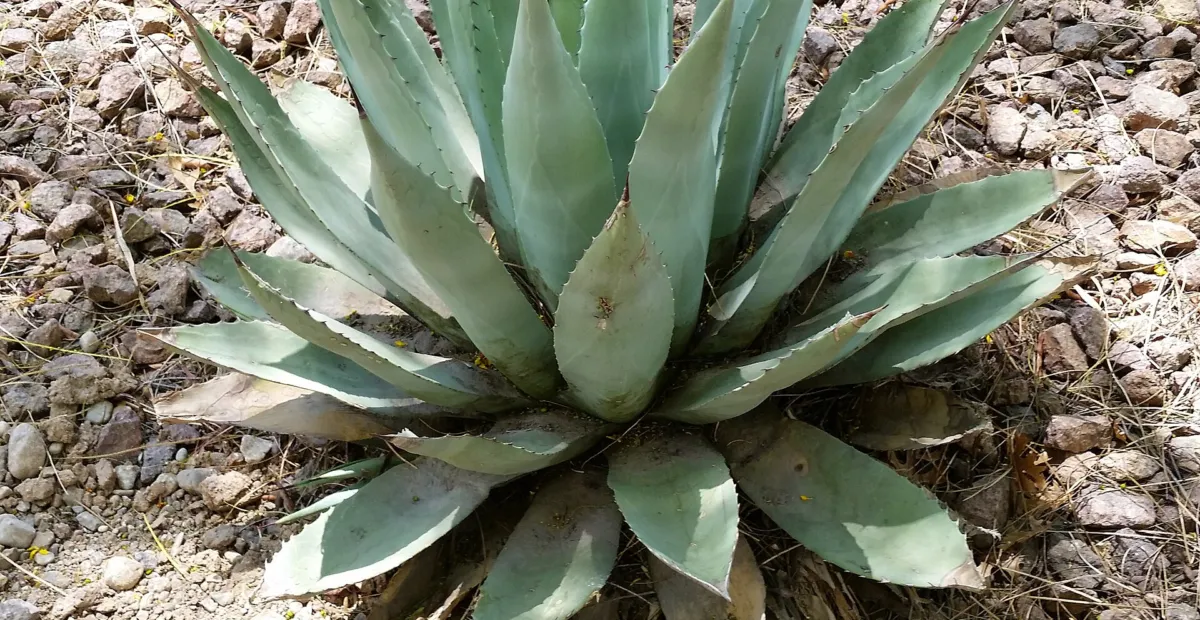
 Source:
 Havard’s Century Plant (Agave havardiana) short overview
Havard's Century Plant is a cold-hardy, blue-gray agave native to rocky slopes and grasslands of the Chihuahuan Desert in west Texas and northern Mexico. Its compact, symmetrical rosette carries rigid leaves with dark marginal teeth and a sharp terminal spine. After roughly 20–40 years, a mature rosette sends up a spectacular branched stalk of yellow flowers, then usually dies after setting seed. A solitary or occasionally offset-forming, blue-gray rosette agave from the Chihuahuan Desert. It is valued for architectural foliage, drought tolerance, unusual cold hardiness, and a once-in-a-lifetime summer inflorescence.
Taxonomic classification
Havard’s Century Plant (Agave havardiana) care guide
Light and placement
Give full sun, ideally in a south- or west-facing bed with strong air movement. A little afternoon shade is tolerated in very hot climates, but deep shade produces looser rosettes, weaker color, and slower growth. Pale, stretched leaves indicate insufficient light; bleached patches or scorch after an abrupt move into intense sun indicate sun acclimation problems.
Watering and humidity
Water deeply only after the soil has dried substantially, then allow excess water to drain completely. In spring and summer, established plants may need occasional irrigation during prolonged drought; reduce sharply in fall and keep winter watering minimal, especially in cool or rainy areas. Water at the soil surface rather than into the rosette. Humidity is generally unimportant if drainage and airflow are good.
Soil and growing medium
Use a mineral, gritty mix with rapid drainage. In containers, combine a cactus or succulent base with extra pumice, grit, or coarse perlite; avoid heavy peat-rich mixes that remain wet around the roots. In beds, plant on a mound or slope where winter rain cannot collect. The species tolerates a broad pH range, including calcareous soils, provided the root zone is aerated.
Feeding
Feed sparingly during active spring growth with a dilute, low-nitrogen succulent fertilizer, or top-dress lightly with mature compost in spring. Do not fertilize drought-stressed, newly transplanted, dormant, or winter-wet plants. Excess nitrogen can encourage softer growth and reduce the compact, blue-gray form.
Growth and habit
Growth is slow to moderate and the plant remains stemless, with leaves arranged in a dense basal rosette. It is usually solitary, though mature plants may occasionally produce offsets. The rosette stores water and can remain attractive for many years before producing its terminal inflorescence; flowering ends the life of that rosette.
Planting and repotting
Choose the driest, sunniest available site and improve drainage before planting rather than relying on frequent irrigation later. Set the crown level with or slightly above the surrounding soil and avoid burying the leaves. Water once after planting, then let the root zone dry between irrigations. Wear thick gloves and eye protection because both leaf tips and margins are sharp.
Repot container plants only when roots have filled the pot or the mix has degraded. Move up one pot size in spring, use a heavy container for stability, and replace compacted organic mix with a gritty, fast-draining substrate. Handle the rosette with padding or thick gloves, keep the crown dry, and wait several days before watering after transplanting.
Propagation and pruning
Propagation
Propagate from fresh seed when available, sowing in a very free-draining medium with warmth and bright light. Mature plants may occasionally produce offsets; separate them during active growth once they have formed roots, then allow damaged surfaces to dry before planting. Seed propagation is generally more reliable than relying on offsets because this species is often solitary.
Pruning
Remove only dead or badly damaged leaves, cutting them close to the base with a clean tool. Do not routinely trim healthy leaves, and never remove the flower stalk before flowering if wildlife value is desired. After the rosette has finished flowering and clearly declines, remove the spent stalk and dead plant carefully, wearing heavy protective equipment.
Overwintering
Outdoor plants need excellent drainage and protection from prolonged winter rain more than from brief dry freezes. In colder regions, use a rain shelter, gravel mulch, or a container that can be moved under cover. Avoid wrapping the rosette in material that traps moisture. Container specimens should be kept bright, cool, and nearly dry during winter.
Uses
Useful in xeriscapes, rock gardens, dry borders, succulent collections, urban landscapes, and large containers. Its architectural rosette provides year-round structure, while the mature flower stalk can support desert wildlife. Do not place it beside paths, play areas, or narrow entrances because the spines and sharp leaf tips can injure people and pets.
Appearance
The plant forms a striking, low, symmetrical rosette of thick, rigid, smooth, blue-gray leaves. Dark brown curved teeth line the margins, and each leaf ends in a prominent spine. The foliage has a powdery glaucous surface that emphasizes the geometric spiral. The flowering stalk is tall, branched, and candelabra-like, rising dramatically above the rosette.
Flowering
The mature rosette produces one tall, branched inflorescence in late spring and summer, with flowering commonly extending from May through August depending on elevation, rainfall, and local climate. Flowers are yellow to yellow-green and open at night, producing abundant nectar. After flowering and fruiting, the original rosette normally declines and dies.
Pollination and visitors
Night-opening flowers produce abundant nectar and are documented as important resources for nectar-feeding bats in the Chihuahuan Desert. Bees and moths may also visit, while birds can take nectar or forage around the inflorescence. Visitor composition varies with region, weather, elevation, and whether compatible agaves are flowering nearby.
Agave havardiana photos
Click any photo for a larger view. Source, author and license are shown separately.
Diseases and pests
Diseases
Root and crown rot are the main preventable problems and usually follow poor drainage, overwatering, or winter wetness. Plant high, use a mineral substrate, and remove standing water from the rosette. Inspect for soft, discolored tissue and isolate affected plants. Good airflow and dry foliage reduce the likelihood of fungal and bacterial decay.
Pests
Scale insects, mealybugs, and agave snout weevil can affect agaves, although serious problems are not consistently reported for this species. Inspect leaf bases and the crown regularly. Remove small infestations with a cotton swab or directed water, improve plant vigor, and use a labeled control only when monitoring shows that treatment is justified.
Related diseases and pests
Only Plant Doctor profiles whose host data indicate this plant may be affected are shown here.
 Environmental stressOverwatering
 DiseaseBacterial soft rotPectobacterium carotovorum
 PestCotton mealybugPhenacoccus solenopsis Tinsley
 DiseaseRhizopus soft rotRhizopus stolonifer
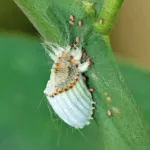 PestCottony Cushion ScaleIcerya purchasi
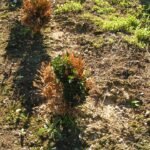 DiseasePhytophthora root and crown rotPhytophthora nicotianae
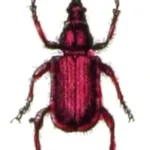 PestPeach weevilRhynchites bacchus
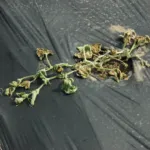 DiseaseBacterial WiltRalstonia solanacearum species complex
Toxicity and pollen
Species-specific poisoning data are limited, but Agave sap is known to cause irritant contact dermatitis in some agaves, and the leaves are mechanically hazardous. Wear gloves, long sleeves, and eye protection when planting, pruning, or removing the plant. Avoid rubbing the face or eyes after handling; wash exposed skin promptly. Do not consume this ornamental plant without verified species-specific preparation guidance.
- Typical season
- May–August when flowering
- Pollination / pollen
- Heavy, insect- and bat-carried pollen; not typically wind-dispersed
The flowers produce substantial pollen, but it is primarily transferred by bats and visiting insects rather than released for long-distance wind dispersal. Allergy sensitivity can still vary, and handling flowering material may expose a person to pollen. People with known severe pollen allergies should use reasonable precautions during bloom and avoid shaking the inflorescence.
Native habitat
In nature, this agave occurs in the Chihuahuan Desert on rocky slopes, outcrops, grasslands, and dry shrubland, commonly at mid to high elevations. It grows in exposed, rapidly drained soils and experiences intense sun, seasonal rainfall, drought, and occasional freezing temperatures. Its blue-gray leaves and compact rosette are adaptations to water-limited environments.
Interesting fact
The species was named for Valery Havard, a physician, botanist, and military officer who studied Texas flora. A single flowering stalk may carry many lateral branches and large clusters of flowers. Although often called a century plant, flowering usually occurs decades rather than a literal century after germination. Mature plants are commonly solitary instead of forming dense colonies.
Frequently asked questions (FAQ)
The most relevant questions about this plant, with short and direct answers.
🌱Quick care
How do you care for Havard's Century Plant (Agave havardiana)?⌄
Grow Havard's Century Plant in full sun, sharply drained gritty soil, and water sparingly. It is a low-maintenance, drought-tolerant agave, but consistently wet soil can cause fatal root rot.
How large does Havard's Century Plant get?⌄
A mature Havard's Century Plant typically forms a rosette about 2–3 feet tall and 3–4 feet wide. Its blue-gray leaves can grow to about 24 inches long and have dark marginal spines plus a sharp terminal spine.
🌤️Environment and placement
How much sun does Agave havardiana need?⌄
Agave havardiana grows best in full sun, generally meaning at least 6 hours of direct sunlight daily. It can tolerate light shade, but reduced light may produce weaker growth and less compact rosettes.
Is Agave havardiana cold hardy?⌄
Yes, Agave havardiana is among the more cold-hardy agaves and is commonly grown in USDA Zones 5–10. Cold tolerance is much better when the plant is kept dry, because wet winter soil increases the risk of rot.
Can Havard's Century Plant survive winter outdoors?⌄
Havard's Century Plant can survive winter outdoors in many cold climates if planted in very sharply drained soil and protected from prolonged winter moisture. In colder or wet regions, containers may need shelter from rain and snow.
Can Agave havardiana be grown indoors?⌄
Agave havardiana is generally better outdoors because it needs strong direct light and excellent airflow. It can be overwintered indoors in a bright, sunny window, but water very sparingly and keep it away from children and pets.
💧Care and problems
How often should I water Havard's Century Plant?⌄
Water Havard's Century Plant thoroughly but infrequently, allowing the soil to dry completely between waterings. Reduce watering during cool, cloudy weather and keep the crown and root zone nearly dry in winter.
How do I know if Agave havardiana is overwatered?⌄
Soft or collapsing leaves, a foul smell, darkened tissue at the base, and a loose rosette can indicate overwatering or root rot. Move the plant to drier, better-drained soil and remove rotted tissue if the damage is limited.
Why are the leaves of my Agave havardiana turning brown?⌄
Brown leaf tips or margins can result from drought stress, cold damage, sun exposure after a sudden change, or physical injury. Older outer leaves naturally decline, but widespread soft brown tissue usually indicates excess moisture or rot.
Does Agave havardiana need fertilizer?⌄
Agave havardiana usually grows well without regular fertilizer because it is adapted to lean, rocky soils. If growth is weak, apply a small amount of diluted, low-nitrogen succulent fertilizer during active spring or summer growth.
How fast does Agave havardiana grow?⌄
Agave havardiana is a slow-growing succulent, especially in containers, poor light, or cool climates. Its growth rate varies with heat, sunlight, water, and growing season length, so reaching mature size can take many years.
What pests and diseases affect Havard's Century Plant?⌄
Havard's Century Plant generally has few serious pest or disease problems when grown in dry, well-drained soil. The main cultural risk is root or crown rot caused by excess moisture, especially during cool weather.
🪴Planting and repotting
Where should I plant Agave havardiana?⌄
Plant Agave havardiana in a sunny rock garden, xeriscape, raised bed, or dry border away from paths and play areas. Its mature rosette can reach roughly 2–3 feet tall and 3–4 feet wide, with rigid leaves and sharp spines.
What type of soil does Agave havardiana need?⌄
Agave havardiana needs sandy, gritty, rocky, or otherwise mineral-rich soil that drains rapidly. Avoid heavy clay and low spots where water remains around the roots after rain or irrigation.
Does Agave havardiana grow well in containers?⌄
Yes, Agave havardiana grows well in a container with a drainage hole and a predominantly gritty succulent mix. Choose a heavy, stable pot, avoid standing water, and protect the container from excessive winter moisture in cold climates.
✂️Propagation and pruning
Should I remove dead leaves from Agave havardiana?⌄
Remove only completely dead or loose leaves, using thick gloves, protective clothing, and clean tools. Do not cut healthy leaves merely to improve appearance, because wounds can expose the plant to moisture-related problems.
How do you propagate Agave havardiana from pups?⌄
Propagate Agave havardiana by separating a basal offset with its own roots, then allowing any cut surface to dry and callus before planting it in dry, gritty soil. Wait several days before watering so the wound can seal.
Does Agave havardiana produce offsets?⌄
Agave havardiana is usually solitary and may produce few or no offsets, although mature plants can occasionally form pups. Seed propagation is therefore useful when offsets are unavailable, but seedlings take much longer to reach flowering size.
Can you grow Agave havardiana from seed?⌄
Yes, Agave havardiana can be grown from seed by sowing fresh seed on the surface of a sterile, sharply drained medium and keeping it lightly moist. Seedlings need bright light, careful watering, and protection from rot while young.
⚠️Toxicity and safety
Is Agave havardiana toxic to dogs and cats?⌄
Treat Agave havardiana as unsafe for pets because its sap can irritate the mouth and skin, while its spines can cause puncture injuries. Prevent chewing or digging around the plant and contact a veterinarian promptly after ingestion or injury.
Is Agave havardiana poisonous to people?⌄
Agave havardiana has irritating sap and dangerous spines, so it should not be handled casually or consumed. Wear gloves, long sleeves, sturdy shoes, and eye protection when planting, pruning, or removing it.
How should I safely plant Agave havardiana near a walkway?⌄
Plant Agave havardiana well away from sidewalks, doors, play areas, and seating because its leaf tips and margins are sharply spined. Leave enough clearance for the mature 3–4-foot rosette and for safe maintenance access.
🌸Flowering and special interest
How long does Agave havardiana take to flower?⌄
Agave havardiana is monocarpic and generally flowers only once after roughly 20–40 years, although the timing varies with climate and growing conditions. After flowering and seed production, the mature rosette eventually dies.
When does Havard's Century Plant bloom?⌄
Havard's Century Plant usually blooms in summer, commonly from June through August in suitable parts of the United States. The flower stalk can rise approximately 12 feet and bears branching clusters of yellow flowers.
Does Agave havardiana die after flowering?⌄
Yes, the flowering rosette of Agave havardiana normally dies after blooming because the species is monocarpic. Any offsets produced before or around flowering can continue growing, and mature plants may also leave viable seed.
Does Agave havardiana attract pollinators?⌄
Yes, the tall summer flower stalk of Agave havardiana can attract hummingbirds, butterflies, and other nectar-seeking pollinators. Flowering is infrequent, so the plant is most valuable as a pollinator resource when it reaches maturity.
Similar plants
 Azure Monkshood (Aconitum carmichaelii) care guideAconitum carmichaelii
 Monkshood (Aconitum ‘Stainless Steel’)Aconitum 'Stainless Steel'
 Monkshood (Aconitum ‘Bressingham Spire’)Aconitum 'Bressingham Spire'
 Golden full moon maple (Acer shirasawanum ‘Aureum’)Acer shirasawanum 'Aureum'
 Globosum (Acer platanoides ‘Globosum’)Acer platanoides 'Globosum'
 Striped maple (Acer pensylvanicum) care guideAcer pensylvanicum