
 Source:
 Marginata (Agave americana ‘Marginata’) short overview
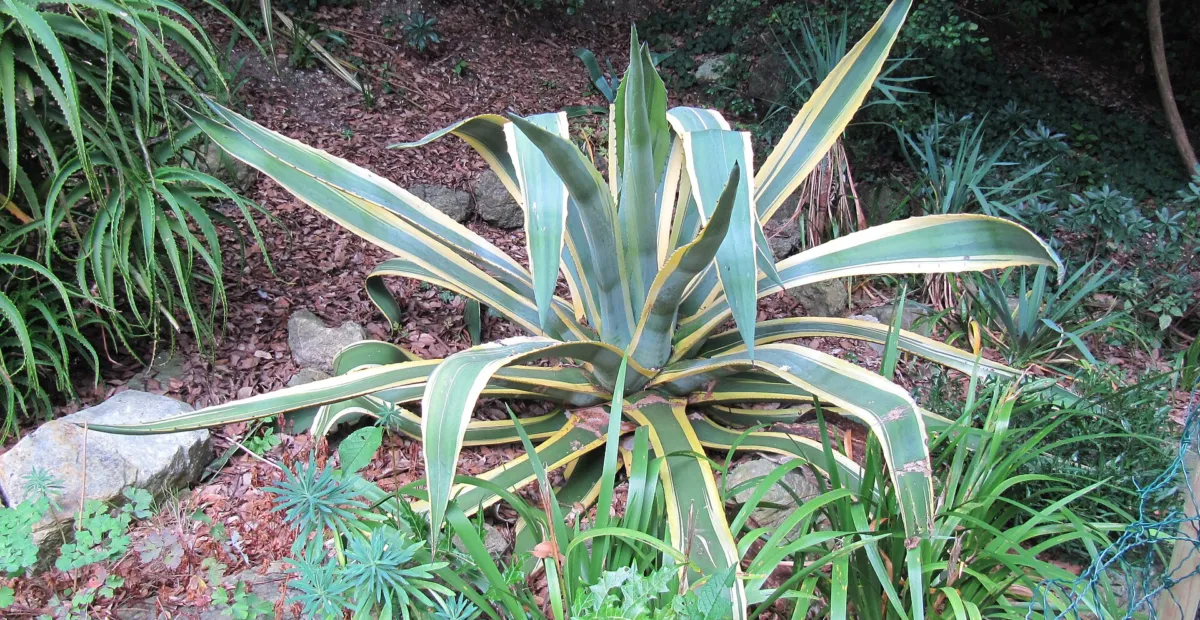
Agave americana 'Marginata' is a bold, evergreen century plant cultivar valued for its blue-green, sword-shaped leaves edged in yellow. It forms a broad, spiny rosette and thrives in full sun, lean soil, and excellent drainage. In warm climates it can become a substantial landscape specimen; elsewhere, grow it in a large container and overwinter it under protection. Mature plants flower only once, then die after producing offsets and seed.
Taxonomic classification
Marginata (Agave americana ‘Marginata’) care guide
Light and placement
Give full sun, ideally with unobstructed southern or western exposure in the United States. A few hours of bright afternoon shade can reduce scorch in very hot inland climates, but deep shade produces looser growth and weaker variegation. Stretching, predominantly green new leaves, or a tilted rosette suggests insufficient light; bleached patches or dry brown margins suggest excessive reflected heat, sudden exposure, or drought stress.
Watering and humidity
Water deeply only after the mix has dried well through most of the container or planting bed. In spring and summer, frequency depends on heat and rainfall; in winter, water sparingly and only during extended dry spells. Never allow the rosette or roots to remain saturated. Humidity is not a watering substitute: in humid regions, use extra gritty drainage and reduced irrigation.
Soil and growing medium
Use a gritty, sharply draining mix such as cactus soil amended with pumice, gravel, or coarse perlite. In the ground, avoid heavy compacted clay and sites that remain wet after rain. The species tolerates a broad pH range, from slightly acidic through slightly alkaline, but drainage is more important than fine pH adjustment.
Feeding
Fertilizer is usually optional. If growth is weak, apply a low-nitrogen cactus or succulent fertilizer at half strength once in spring and, if needed, again in early summer. Avoid rich, frequent feeding, which can produce softer growth and reduce the plant's drought-adapted form. Do not fertilize during cold, wet, or dormant periods.
Growth and habit
Forms a large, evergreen basal rosette and commonly produces offsets around the parent plant. Growth is slow but the eventual clump can become imposing. Because the plant is monocarpic, the main rosette declines after flowering; removing offsets selectively helps maintain access and prevents an overcrowded spiny colony.
Planting and repotting
Plant after the danger of hard frost has passed, setting the root ball at the same depth as before. Do not bury the crown. Allow generous clearance for the mature rosette and its offsets; about 6–10 feet is appropriate for a specimen-sized planting. Water once after planting, then let the soil dry substantially between irrigation.
Repot container plants only when crowded or unstable, preferably in spring or early summer. Use a heavy, wide container with a drainage hole and fresh gritty mix. Wear thick gloves and protect arms and eyes from the leaf tips. Allow disturbed roots to dry briefly before watering.
Propagation and pruning
Propagation
Propagate mainly by separating well-rooted basal offsets in spring or early summer. Allow wounds to dry briefly, then pot or plant in a gritty, well-drained medium. Seed propagation is possible after pollination but is less uniform because seedlings do not necessarily reproduce the cultivar's marginal variegation.
Pruning
Routine pruning is unnecessary. Remove only dead or badly damaged leaves with sterilized loppers, working from the outside inward. Do not cut healthy leaf tips to make the plant safer; the remaining spines can still injure people. Remove the spent flowering stalk and dead rosette after flowering if needed, while preserving healthy offsets.
Overwintering
In Zones 9–11, protect the crown from prolonged cold and winter wet. In colder areas, grow in a large movable container and bring it into a bright, cool, dry space before hard freezes. Keep watering minimal indoors, provide strong light, and return it outdoors gradually in spring to prevent sunburn.
Uses
A strong architectural specimen for xeriscapes, gravel gardens, rock gardens, dry borders, and large containers. Its mature size and spines make it unsuitable beside narrow walkways. The species has documented traditional food, fiber, and fermented-product uses, but this ornamental cultivar should not be harvested or consumed without verified identification and appropriate preparation.
Appearance
The plant forms a symmetrical, evergreen rosette of thick, rigid, blue-green leaves with conspicuous yellow bands along the margins. Each leaf narrows to a strong terminal spine and carries marginal teeth. The cultivar is visually brighter than the plain green species and develops a bold architectural silhouette, especially when viewed from above or at a distance.
Flowering
This monocarpic agave usually flowers once after many years of vegetative growth. A tall central scape rises rapidly from the rosette and bears branched clusters of yellow flowers in summer. The flowering rosette normally dies afterward, while basal offsets may continue the clone. Flowering age varies substantially with climate, culture, and plant history.
Pollination and visitors
Agave americana flowers provide nectar and pollen for nocturnal nectar-feeding bats and may also be visited by birds and insects. In the southwestern United States, agave flowers are important seasonal resources for migratory nectar-feeding bats. Visitor activity is most relevant when the plant produces its terminal flowering stalk.
Agave americana 'Marginata' photos
Click any photo for a larger view. Source, author and license are shown separately.
Diseases and pests
Diseases
The main preventable problems are crown and root rots caused by persistently wet soil. Provide excellent drainage, avoid overhead irrigation into the rosette, and remove badly rotted tissue only with sterilized tools. Scale, fungal spotting, and occasional bacterial problems may occur under stressed or poorly ventilated conditions; improve site conditions before using treatment.
Pests
Agave snout weevil is the most serious potential pest, especially where it occurs. Watch for wilting, collapse, tunneling, or foul tissue at the crown. Remove and destroy heavily infested plants; inspect offsets before planting. Scale and mealybugs may occur, particularly on stressed container plants, and can be managed with hand removal or labeled horticultural products.
Related diseases and pests
Only Plant Doctor profiles whose host data indicate this plant may be affected are shown here.
 Environmental stressUnderwatering
 PestPeach weevilRhynchites bacchus
 DiseaseBacterial WiltRalstonia solanacearum species complex
 PestObscure mealybugPseudococcus viburni
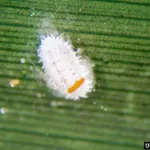 PestCitrus mealybugPlanococcus citri
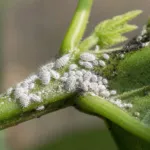 PestCotton mealybugPhenacoccus solenopsis Tinsley
 DiseaseBacterial Fruit BlotchAcidovorax citrulli
 Environmental stressSalt stress
Toxicity and pollen
Agave sap and plant tissues can cause painful skin irritation or dermatitis, especially after contact with cut surfaces; the spines also cause mechanical injuries. Avoid contact with eyes and mouth, wear gloves when handling, and wash exposed skin promptly. Reliable cultivar-specific ingestion data for people and pets are limited, so do not treat the plant as edible in home-garden use.
- Typical season
- Usually summer, coinciding with flowering; local timing varies.
- Pollination / pollen
- Heavy pollen associated with animal-pollinated flowers
The plant produces pollen only when it flowers, and its large outdoor inflorescence is primarily visited by animals rather than relying on wind dispersal. Airborne exposure is therefore likely lower than for wind-pollinated plants, but individual allergy responses cannot be ruled out. Avoid handling flowers and pollen-covered tissues if sensitive.
Native habitat
The species is native to Mexico and occurs in dry, seasonally warm habitats including rocky slopes, scrub, grassland margins, and other open sites with rapid drainage. It is adapted to intense sun, periodic drought, and lean mineral soils. The cultivar itself is a cultivated selection rather than a distinct wild population.
Interesting fact
The cultivar's yellow leaf margins are a stable ornamental feature used to distinguish it from green-leaved forms. Agaves are monocarpic: the flowering rosette dies after reproduction. Mature plants can produce a towering flower stalk, while offsets preserve the plant in cultivation.
Frequently asked questions (FAQ)
The most relevant questions about this plant, with short and direct answers.
🌱Quick care
How do you care for Agave americana 'Marginata'?⌄
Give Agave americana 'Marginata' full sun, sharply drained gritty soil, and little water. Let the soil dry completely between thorough waterings, and protect the plant from hard freezes.
🌤️Environment and placement
How much sunlight does Agave americana 'Marginata' need?⌄
Agave americana 'Marginata' grows best with at least 6 hours of direct sunlight daily. It can tolerate bright partial shade, but lower light may produce weaker growth and less pronounced variegation.
Can Agave americana 'Marginata' grow indoors?⌄
Agave americana 'Marginata' can grow indoors temporarily or in a very bright sunroom, but it is usually too large and sharply spined for ordinary indoor spaces. Use a sunny window, excellent drainage, and minimal watering if overwintering it indoors.
What USDA hardiness zones suit Agave americana 'Marginata'?⌄
Agave americana 'Marginata' is generally suited to USDA Zones 9–11. In colder areas, grow it in a container or provide protection before freezing weather because hard freezes can damage or kill it.
How cold hardy is Agave americana 'Marginata'?⌄
Agave americana 'Marginata' tolerates mild cold but should be protected from hard freezes, especially when soil is wet. Exact cold tolerance varies with plant size, drainage, exposure, and the duration of freezing temperatures.
💧Care and problems
How often should you water Agave americana 'Marginata'?⌄
Water Agave americana 'Marginata' deeply, then allow the soil to dry fully before watering again. Established plants may need water only occasionally during the growing season and much less during cool or rainy weather.
Why is my Agave americana 'Marginata' turning yellow?⌄
Yellowing leaves on Agave americana 'Marginata' commonly indicate excessive moisture or poor drainage, particularly when the lower leaves soften. Check the roots and soil, reduce watering, and move the plant to a faster-draining site if necessary.
Why is my Agave americana 'Marginata' becoming soft?⌄
Soft or collapsing leaves usually indicate rot caused by overwatering, wet soil, or freeze injury. Remove damaged tissue, keep the crown dry, and improve drainage before watering again.
Does Agave americana 'Marginata' need fertilizer?⌄
Agave americana 'Marginata' does not require frequent fertilizer because it is naturally slow growing and adapted to lean soils. If growth is weak, apply a light, balanced or low-nitrogen succulent fertilizer during active growth according to the label.
Does Agave americana 'Marginata' have serious pest problems?⌄
Agave americana 'Marginata' usually has few serious pest or disease problems when grown in dry, well-drained conditions. Inspect stressed plants for scale or other insects and correct watering problems first.
🪴Planting and repotting
What soil is best for Agave americana 'Marginata'?⌄
Use gritty, sharply drained cactus or succulent soil for Agave americana 'Marginata'. In garden beds, amend heavy clay with mineral material or plant on a raised mound so water cannot remain around the roots.
How far apart should Agave americana 'Marginata' be planted?⌄
Allow at least 6 feet of clearance from walkways, play areas, and other places where people or pets may brush against the foliage. Mature plants can become several feet wide, and their leaves extend well beyond the central rosette.
Can Agave americana 'Marginata' grow in a container?⌄
Agave americana 'Marginata' grows well in a sturdy container with drainage holes and gritty succulent soil. Choose a heavy pot to prevent tipping, but remember that the plant can eventually outgrow ordinary patio containers.
When should Agave americana 'Marginata' be planted?⌄
Plant Agave americana 'Marginata' during warm, active-growing weather when the soil is workable and drainage is good. Avoid planting immediately before a hard freeze or during prolonged wet conditions.
How do you transplant Agave americana 'Marginata'?⌄
Wear thick gloves and protective clothing, lift the plant with care, and replant it at the same depth in dry, sharply drained soil. Allow injured roots to dry for several days before watering, especially if roots were cut during removal.
✂️Propagation and pruning
How do you propagate Agave americana 'Marginata'?⌄
Propagate Agave americana 'Marginata' mainly by separating well-rooted pups from the base. Let cut surfaces dry briefly, then plant the offsets in gritty soil and water sparingly until roots are established.
Does Agave americana 'Marginata' produce pups?⌄
Agave americana 'Marginata' commonly produces offsets, or pups, around the parent rosette as it matures. These pups can be removed and replanted once they have their own roots.
Can you grow Agave americana 'Marginata' from seed?⌄
Agave americana 'Marginata' can produce seed after flowering, but seed-grown plants may not reliably preserve the parent’s marginal variegation. Offsets are the more practical way to maintain the cultivar’s appearance.
Should you prune Agave americana 'Marginata'?⌄
Agave americana 'Marginata' generally needs no routine pruning. Remove only dead or badly damaged leaves with sanitized, long-handled tools, and never cut into the central growing point unless removing a severely rotted plant.
⚠️Toxicity and safety
Is Agave americana 'Marginata' poisonous to dogs and cats?⌄
Agave americana 'Marginata' has irritating sap and sharp spines that can injure pets. Keep animals away from the plant, and contact a veterinarian or poison-control service if sap is swallowed or causes eye, mouth, or skin irritation.
Is Agave americana 'Marginata' safe to plant around children?⌄
Agave americana 'Marginata' is not a good choice beside play areas or busy paths because its leaf tips and marginal teeth are sharp. Place it well away from traffic and consider removing or blunting only the most hazardous terminal spines when appropriate.
Can Agave americana 'Marginata' irritate skin?⌄
Yes, the sap of Agave americana 'Marginata' can irritate skin and eyes. Wear gloves, long sleeves, and eye protection when planting, pruning, or separating pups, and wash exposed skin promptly.
🌸Flowering and special interest
How large does Agave americana 'Marginata' get?⌄
Agave americana 'Marginata' can form a very large rosette, commonly several feet tall and wide, with individual leaves reaching about 6 feet long in favorable conditions. Provide more space than the young plant’s current size suggests.
How long does Agave americana 'Marginata' take to flower?⌄
Agave americana 'Marginata' usually flowers only after many years of growth, often around 10 years or more, although timing varies by climate and growing conditions. It produces a tall flower stalk and then the main rosette dies.
Does Agave americana 'Marginata' die after flowering?⌄
Yes, the main Agave americana 'Marginata' rosette normally dies after producing its once-in-a-lifetime flower stalk. Well-established pups around the base can continue the plant’s growth in the landscape.
How tall is the flower stalk of Agave americana 'Marginata'?⌄
The flower stalk of Agave americana 'Marginata' can rise roughly 20 feet or more above the rosette. Give a flowering plant plenty of clearance from structures, overhead wires, and paths before the stalk develops.
Similar plants
 Azure Monkshood (Aconitum carmichaelii) care guideAconitum carmichaelii
 Monkshood (Aconitum ‘Stainless Steel’)Aconitum 'Stainless Steel'
 Monkshood (Aconitum ‘Bressingham Spire’)Aconitum 'Bressingham Spire'
 Golden full moon maple (Acer shirasawanum ‘Aureum’)Acer shirasawanum 'Aureum'
 Globosum (Acer platanoides ‘Globosum’)Acer platanoides 'Globosum'
 Striped maple (Acer pensylvanicum) care guideAcer pensylvanicum