
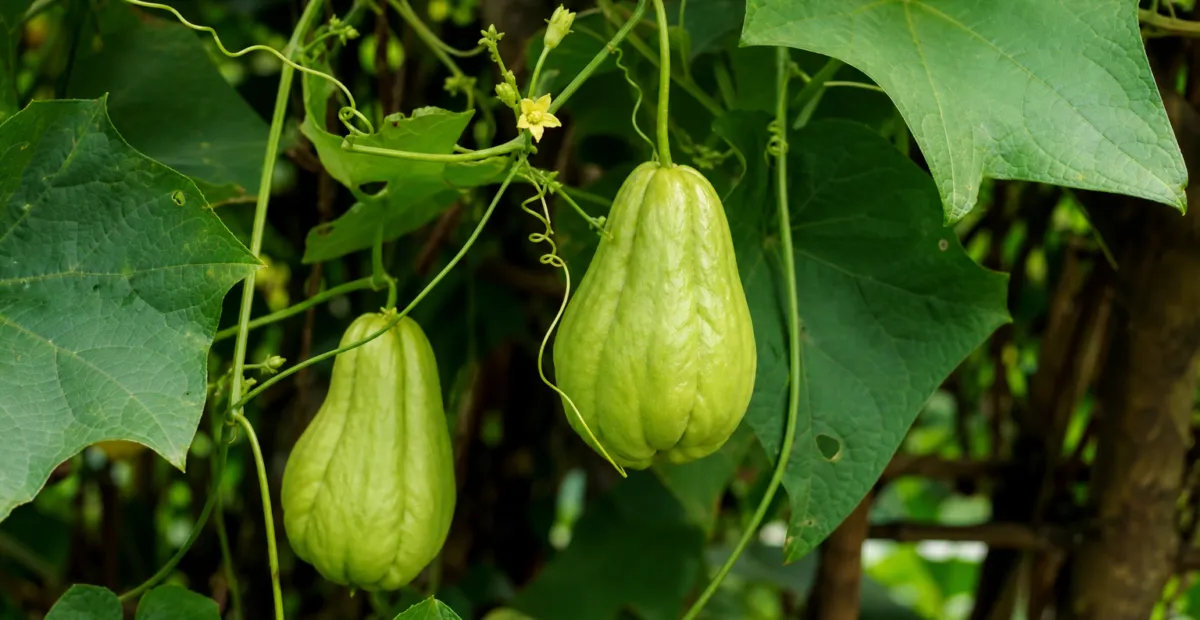
Chayote (Sechium edule) short overview
Chayote is a vigorous, warm-season vine in the gourd family, grown for its edible pear-shaped fruits and tender shoots. In frost-free climates it can behave as a perennial, while gardeners elsewhere grow it as a long-season annual. The plant needs full sun, rich well-drained soil, steady moisture, and a strong trellis or arbor. Each fruit contains one large seed that can sprout while still inside the fruit.
Taxonomic classification
Chayote (Sechium edule) care guide
Light and placement
Give chayote full sun, ideally with at least 8 hours of direct light and a south- or southwest-facing orientation. A trellis, arbor, or fence should not cast prolonged shade over the vine. Insufficient light produces weak, stretched growth and delayed flowering; intense heat reflected from walls is usually tolerated if moisture is consistent.
Watering and humidity
Water deeply whenever the upper few inches of soil begin to dry, keeping the root zone consistently moist during vine expansion and fruit development. Increase frequency during hot, windy weather and reduce it only after growth slows. Apply water at the soil line or with drip irrigation to keep foliage drier and reduce fungal disease; humidity is less important than steady root moisture and airflow.
Soil and growing medium
Use fertile, moisture-retentive but well-drained soil amended with compost. A loam or sandy loam is ideal; avoid compacted clay and sites that remain waterlogged. Chayote generally performs well in slightly acidic to neutral soil, approximately pH 6.0–7.0.
Feeding
Before planting, incorporate compost or a balanced slow-release fertilizer. Feed again when vines begin strong expansion and at the start of fruit production, following the product label at a moderate rate. Avoid excessive nitrogen, which can produce lush foliage with delayed flowering and fruiting. Do not fertilize drought-stressed or waterlogged plants.
Growth and habit
This vigorous twining vine produces long seasonal growth and uses tendrils to climb. Its mature behavior is best managed vertically on a durable structure rather than allowed to sprawl across beds. In frost-free areas, old growth can be cut back after the season; in colder regions, the plant is usually replaced or protected for winter.
Planting and repotting
Plant after the danger of frost has passed and soil has warmed. Set the whole mature fruit on its side or at a slight angle with the sprouting end just above or barely covered by soil; do not separate the seed from the fruit. Allow roughly 12–20 feet between plants or provide equivalent vertical growing space.
Container-grown plants can be shifted into a larger container before vigorous spring growth begins. Handle the sprouting fruit and developing roots gently, provide immediate trellis support, and avoid repeatedly disturbing the root system once growth accelerates.
Propagation and pruning
Propagation
The standard method is planting the entire mature fruit, because the single seed often germinates inside it. Start indoors several weeks before the last frost or plant outdoors once soil is warm. Keep the fruit partly exposed, maintain even moisture, and transplant carefully after roots and shoots develop.
Pruning
Train young shoots onto the support and remove weak, damaged, or overcrowded growth. After the main harvest, cut back excessive seasonal growth as needed. In perennial climates, prune the vine to a manageable framework during dormancy or after frost damage, taking care not to remove the crown unnecessarily.
Overwintering
In USDA Zones 8–11, mulch the crown heavily after growth declines and protect the root area from hard freezes. In colder regions, harvest before frost and grow the plant as an annual, or lift and overwinter the crown in a protected, cool location if practical. Containers can be moved indoors or into a frost-free greenhouse, but reduced winter light may cause leaf loss.
Uses
Grow chayote primarily as an edible vegetable and fruit crop, with young shoots and leaves also used as food in some regions. The vigorous vine can provide seasonal shade on an arbor, but it requires substantial support and may overwhelm small structures. Culinary preparation should follow established food-safety practices.
Appearance
Chayote has thin green twining stems, curling tendrils, and broad, shallowly lobed leaves resembling cucumber foliage. Small pale flowers occur in clusters, and the distinctive fruit is pear-shaped, light green, and sometimes wrinkled or spiny. The plant is identified most readily by its vigorous climbing habit and single large seed within each fruit.
Flowering
Chayote is monoecious, producing separate male and female flowers on the same vine. Small pale green to cream flowers appear in clusters, with female flowers followed by developing fruits. Flowering is favored by warm temperatures and a long growing season, though the exact outdoor calendar varies substantially by U.S. climate.
Pollination and visitors
Small flowers are visited by bees and wasps, which can transfer pollen between the separate male and female flowers. Pollinator activity supports fruit set, although fruit production may also occur under manual pollination and is influenced by cultivar and growing conditions.
Sechium edule photos
Click any photo for a larger view. Source, author and license are shown separately.
Diseases and pests
Diseases
Prevent disease by planting in well-drained soil, allowing air circulation, watering at the base, and removing heavily affected foliage. Watch for powdery mildew, downy mildew, and fungal fruit or stem rots, especially during humid weather. Clean up fallen plant debris and avoid working among wet vines.
Pests
Inspect new growth and leaf undersides for aphids, spider mites, squash bugs, cucumber beetles, and whiteflies. Use strong water sprays for light infestations, remove badly affected leaves, encourage beneficial insects, and apply targeted controls only when necessary. Avoid broad-spectrum insecticides during flowering because they can harm flower visitors.
Toxicity and pollen
Chayote is widely cultivated as an edible vegetable, and no well-established major toxicity is documented for ordinary culinary use of properly identified plant parts. Handle fresh cut fruit cautiously if the sap causes temporary skin irritation or numbness, and avoid eating unfamiliar ornamental or contaminated material. Individual sensitivities remain possible.
- Typical season
- Late summer and fall where outdoor crops flower
- Pollination / pollen
- Insect-dispersed pollen
Chayote pollen is produced by insect-visited flowers and is not generally recognized as a major airborne allergen in U.S. gardening references. Because flowering plants can still affect particularly sensitive individuals, people with known pollen allergies should avoid handling flowering vines during peak symptoms and use ordinary exposure precautions.
Native habitat
Chayote is associated with warm, frost-free upland and tropical environments where soils remain fertile and evenly moist but drain freely. It performs best with a long growing season, warm nights, and protection from cold winds. Cultivated populations are now widespread beyond its Mesoamerican origin.
Interesting fact
The single large seed can germinate inside the fruit while it is still attached to the vine or stored.
The plant bears separate male and female flowers on the same vine.
A mature vine can cover an arbor and produce fruit above head height.
Chayote is cultivated in tropical and subtropical regions worldwide.
The fruit, seed, shoots, leaves, and some roots are used as food in different cuisines.
Frequently asked questions (FAQ)
The most relevant questions about this plant, with short and direct answers.
🌱Quick care
What is Chayote (Sechium edule)?⌄
Chayote is a frost-tender, vigorous perennial vine in the Cucurbitaceae family that produces pear-shaped edible fruits. It is commonly grown as a warm-season vegetable in the United States.
How much sun does Chayote need?⌄
Chayote grows best in full sun, although it can tolerate partial shade in hot climates. Provide the brightest location available to support vigorous growth and fruit production.
How often should I water Chayote?⌄
Keep Chayote evenly moist, especially during vine growth, flowering, and fruit development. Water when the soil surface begins to dry, but avoid standing water because the roots are prone to rot.
Is Chayote frost hardy?⌄
No, Chayote is frost tender and can be damaged or killed by freezing temperatures. In cold climates, grow it as an annual or overwinter the roots or container indoors before frost.
🌤️Environment and placement
What temperature is best for growing Chayote?⌄
Chayote grows best with daytime temperatures around 66–86°F and nighttime temperatures above 60°F. Growth declines in cool weather, and temperatures below about 54°F can prevent successful production or kill the plant.
What USDA hardiness zones can grow Chayote?⌄
Chayote is best suited to warm USDA Zones 9–11, where it can behave as a perennial. Gardeners in colder zones can try it as a long-season annual or grow it in a container that can be protected indoors.
Does Chayote need a trellis?⌄
Yes, Chayote needs a strong trellis, arbor, fence, or similar support because its vines can grow more than 30 feet long. Install the support before or at planting so the rapidly growing tendrils can climb easily.
How much space does a Chayote vine need?⌄
Allow at least 8–12 feet of space for each Chayote plant, plus enough overhead room for the vine to spread. A sturdy overhead trellis makes harvesting and maintenance easier.
What soil is best for Chayote?⌄
Use fertile, well-drained loam enriched with compost or other organic matter. A slightly acidic to neutral soil, roughly pH 5.5–7.0, is generally suitable, while poorly drained soil can cause root and fruit rot.
💧Care and problems
Why is my Chayote growing leaves but not fruit?⌄
Chayote may produce abundant vines without fruit when the season is too short, temperatures are too cool, pollinators are scarce, or the plant receives excessive nitrogen. It may also need time to mature, since the best yields often occur after establishment.
Why is my Chayote vine not flowering?⌄
Chayote flowers best after sustained warmth and when day length is near or above 12 hours. In much of the United States, flowering may be delayed until late summer or fall, and plants in short-season regions may not flower before frost.
How is Chayote pollinated?⌄
Chayote produces separate male and female flowers on the same plant and is usually pollinated by bees and other insects. Lack of pollinators can lead to flowers dropping without fruit development.
Why are my Chayote flowers falling off?⌄
Flowers may fall because of inadequate pollination, cool or excessively hot weather, drought, waterlogged soil, or other plant stress. Maintain even moisture, avoid disturbing flowers, and encourage natural pollinators.
Should I fertilize Chayote?⌄
Yes, apply compost or a balanced vegetable fertilizer after the vine is established and growing actively. Avoid heavy nitrogen applications because they can produce excessive vine growth at the expense of fruiting.
Does Chayote need pruning?⌄
Chayote does not require extensive pruning, but you can remove damaged, overcrowded, or unwanted vines to keep the trellis manageable. Prune lightly because the plant needs substantial foliage to support fruit production.
🪴Planting and repotting
How do you plant a Chayote fruit?⌄
Plant the entire mature Chayote fruit rather than removing the single seed. Set it on its side or with the sprouting end angled upward in fertile, well-drained soil, leaving the shoot end slightly exposed where local conditions permit.
When should I plant Chayote in the United States?⌄
Plant Chayote in spring after the danger of frost has passed and the soil has warmed. In warm parts of the Southeast, including South Florida, fall planting may also be possible.
Can Chayote grow in a container?⌄
Yes, Chayote can grow in a large container if it has fertile, well-drained potting mix, consistent moisture, and a very strong trellis. Container growing is most useful in cold climates because the plant can be moved indoors for protection.
How deep should I plant Chayote?⌄
Plant the fruit about as deep as its width, avoiding excessive depth that can encourage rot. Keep the sprouting end near the surface and provide good drainage around the fruit.
✂️Propagation and pruning
Can you grow Chayote from a cutting?⌄
The standard and most reliable method is planting the whole fruit, which contains the seed. Although vegetative propagation may be possible, it is less commonly recommended for home gardeners than fruit planting.
How long does it take Chayote to sprout?⌄
A Chayote fruit commonly sprouts in roughly two to three weeks under warm, moist conditions. Cool temperatures, excessive moisture, or an old or damaged fruit can delay or prevent sprouting.
How long does it take Chayote to produce fruit?⌄
Chayote commonly needs several months of warm growth before harvest, and fruit develops about 35 days after successful pollination. In temperate areas, the season may end before the plant can produce mature fruit.
⚠️Toxicity and safety
Is Chayote safe to eat?⌄
Correctly identified Chayote fruit, including the flesh and immature seed, is generally eaten as a vegetable and is considered low concern when properly prepared. Do not eat any plant that has not been positively identified.
Can Chayote sap irritate your skin?⌄
Yes, the sap released while peeling or cutting Chayote can irritate some people’s skin. Wear gloves when handling freshly cut fruit and wash exposed skin if irritation occurs.
Can you eat Chayote raw?⌄
Yes, young Chayote can be eaten raw when sliced or grated, and it has a crisp, mild flavor. Cook older or tougher fruits as you would summer squash, removing any portions that have become unpleasantly fibrous.
How should Chayote be stored after harvest?⌄
Store Chayote in a closed container or plastic bag to prevent moisture loss, ideally in a cool refrigerator area. Very cold storage can cause chilling injury, so avoid placing it against the coldest refrigerator surfaces.
🌸Flowering and special interest
What do Chayote flowers look like?⌄
Chayote flowers are small and usually white to greenish white. Male and female flowers occur separately on the same vine, and the female flowers develop into the pear-shaped fruits after pollination.
When should I harvest Chayote?⌄
Harvest Chayote when the fruits are young, firm, and still tender, often around hand size. Young fruits have softer skin and seed; fruits left on the vine longer become tougher and may begin sprouting.
Similar plants
 Pointed Gourd (Trichosanthes dioica) care guideTrichosanthes dioica
  Bitter Gourd (Momordica charantia) care guideMomordica charantia
  Gac (Momordica cochinchinensis) care guideMomordica cochinchinensis
 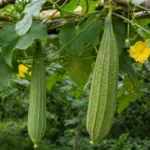 Sponge Gourd (Luffa aegyptiaca) care guideLuffa aegyptiaca
 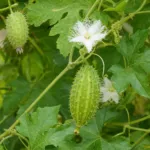 CAIGUA (Cyclanthera pedata) care guideCyclanthera pedata
 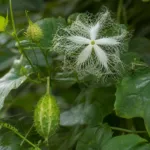 Trichosanthes cucumerina care guideTrichosanthes cucumerina