
Gray leaf spot of corn
Cercospora zeae-maydisGray leaf spot of corn overview
Gray leaf spot of corn is a fungal foliar disease caused primarily by Cercospora zeae-maydis. It begins on lower leaves as small spots that elongate into rectangular tan-to-gray lesions bounded by veins. Warm, humid weather, prolonged leaf wetness, continuous corn and infected residue increase risk, while resistant hybrids, rotation, residue management and timely scouting form the foundation of U.S. integrated management.
Typical conditions
Overview
Gray leaf spot, also called grey leaf spot in some international references, is a fungal disease of maize and field, seed, sweet and silage corn. In U.S. corn, Cercospora zeae-maydis is the principal documented causal species, although the closely related C. zeina can produce similar symptoms in some regions. Field diagnosis is usually based on symptom pattern and disease context; definitive species separation may require laboratory or molecular testing.
The disease is most damaging when lesions progress from lower leaves into the ear leaf and upper canopy before or during grain fill. Symptoms can resemble other corn leaf diseases, herbicide injury or abiotic streaking, so examine lesion shape, vein limitation, distribution in the canopy and the presence of infected residue.
Symptoms and identification
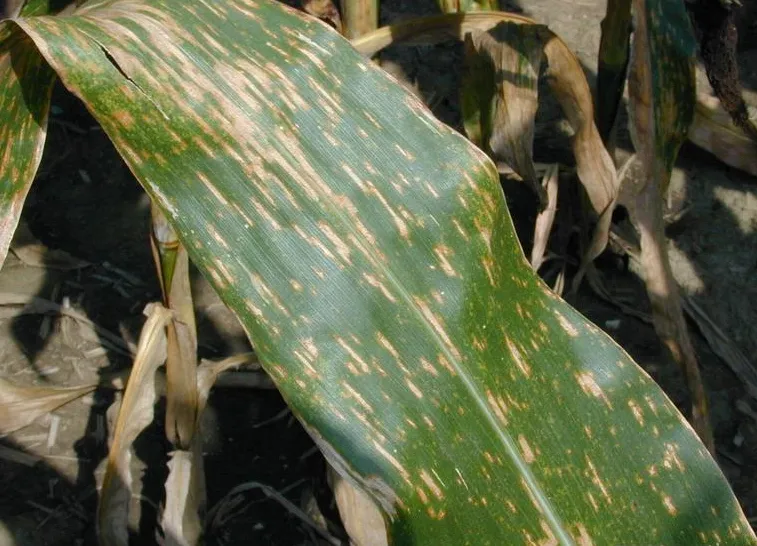
Initial symptoms are small, dark or tan lesions that may have a yellow halo, commonly beginning on lower leaves. Lesions elongate parallel to the veins and become pale brown, tan or gray, typically forming narrow rectangular or matchstick-like spots with blunt ends. Veins often restrict lesion expansion, giving the spots a distinctly squared appearance.
As disease increases, individual lesions merge into larger gray or necrotic areas. Leaves may develop a gray cast when sporulation is abundant, then senesce prematurely. Severe disease can move upward through the canopy and kill the ear leaf and nearby leaves, reducing the photosynthetic area available for grain fill. Northern corn leaf blight usually produces longer, canoe-shaped lesions, while tar spot produces discrete raised black stromata rather than flat rectangular lesions.
Causes and spread
The disease is driven by the interaction of a susceptible corn hybrid, viable pathogen in corn residue and prolonged warm, humid leaf-wetness periods. Continuous corn and reduced-tillage systems can leave more infected residue at the soil surface, increasing local spore production. Dense canopies, low-lying or poorly ventilated fields, frequent dew, rain and irrigation that keeps leaves wet also favor infection.
Conidia spread mainly by wind and rain splash. The pathogen is not generally managed as a seed-transmitted disease, and documented host records are centered on corn rather than a broad range of unrelated crops. Long-distance movement between fields can still occur through airborne spores, so rotation alone may not eliminate risk where neighboring corn fields are infected.
Life cycle and persistence
Cercospora zeae-maydis survives between crops mainly in infected corn leaves and other surface residue. During warm, humid periods, the fungus produces asexual spores, called conidia, on colonized residue and diseased leaf tissue. Wind and splashing water move these spores to newly emerging or expanding corn leaves.
After a sufficiently long wet period, spores germinate and penetrate leaves. New lesions generally become visible after an incubation period, and sporulation from diseased tissue commonly requires roughly two to three weeks, although the pathogen can also produce secondary spores under favorable humid conditions. Repeated infection cycles allow disease to move from lower leaves toward the upper canopy. The pathogen is considered highly host-specific to corn in reliable host records; seed is not regarded as the principal pathway for spread.
Treatment and control
Existing lesions do not recover. Treatment aims to protect healthy upper leaves and slow further disease development when infection occurs early enough to affect grain fill or silage value. First confirm the diagnosis and assess hybrid susceptibility, disease progression, weather risk, growth stage and expected return before treating.
In commercial corn, a foliar fungicide may be justified in a susceptible hybrid when disease is present on a substantial portion of plants at or below the ear leaf and warm, humid conditions indicate continued spread. Applications are commonly evaluated around tasseling through early reproductive growth, but the correct timing, product and interval depend on the product label, crop use, disease pressure and local recommendations. Avoid unnecessary sprays, observe all label restrictions and use resistance-management practices.
For small plantings, remove heavily diseased leaves only when this can be done without spreading spores or significantly weakening the plant; complete plant removal after harvest and sanitation are usually more useful than attempting to rescue severely affected plants.
Low-impact and biological control
For home gardens and organic production, management is primarily preventive because there is no practical way to cure established lesions.
- Choose corn hybrids or open-pollinated varieties with the best available gray-leaf-spot resistance for your region.
- Rotate corn with unrelated crops for at least one season where practical, particularly after a severe outbreak.
- Remove, chop and compost or properly incorporate diseased residue after harvest; do not move visibly infected debris to clean beds unless composting conditions are adequate.
- Improve air movement by avoiding excessive plant density and unnecessary overhead irrigation. Water at the soil line when possible and allow foliage to dry.
- Scout lower leaves regularly from late vegetative growth through tasseling, especially after humid weather.
- Biological products should be considered only when specifically labeled and supported for the crop and disease; they should supplement, not replace, resistant genetics and sanitation.
Prevention
Start with a hybrid or variety with strong, locally reliable resistance or tolerance to gray leaf spot. Review state Extension recommendations and seed-company disease ratings rather than relying only on a generic resistance claim.
- Rotate corn with soybean, small grains or another non-corn crop when feasible.
- Manage infected residue through chopping, accelerated decomposition and, where compatible with the farm’s conservation goals, tillage that buries residue.
- Avoid planting highly susceptible corn repeatedly in fields with a history of severe disease.
- Scout from approximately V10 through R3, concentrating on the third leaf below the ear leaf, the ear leaf and leaves above it.
- Use local weather information and disease-forecasting tools to identify periods of elevated risk.
- Keep records of hybrid, planting date, residue system, disease onset, canopy position and weather to improve future decisions.
Interesting facts
- The characteristic lesions are often described as matchstick-shaped because they are narrow, rectangular and aligned with the corn leaf veins.
- Infected corn residue is a major source of primary inoculum, which helps explain the greater risk in continuous-corn systems and fields with heavy surface residue.
- Gray leaf spot is not the same disease as northern corn leaf blight, whose lesions are generally longer and canoe-shaped.
- Cercospora zeae-maydis and C. zeina are closely related, symptomatically similar fungi; accurate species identification may require molecular analysis.
- The ear leaf and leaves immediately above and below it are especially important because damage there can reduce grain-filling capacity.
Use only fungicides legally authorized in the United States for gray leaf spot on the specific corn crop and production system. Follow the current EPA-approved product label for crop, rate, timing, application method, personal protective equipment, re-entry interval, preharvest interval and restrictions. Do not make routine applications without confirming disease risk, hybrid susceptibility and expected economic benefit; rotate fungicide modes of action as required by the label and current resistance-management guidance.
Affected plants
The plants below are linked to this problem by structured host-plant data. The list updates automatically as new plant profiles are added.
 Beet (Beta vulgaris) care guideBeta vulgaris
 Tagetes (Tagetes erecta) care guideTagetes erecta
 Pink Banana (Musa velutina) care guideMusa velutina
 Bitter Gourd (Momordica charantia) care guideMomordica charantia
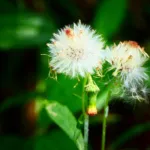 Redflower ragleaf (Crassocephalum crepidioides) care guideCrassocephalum crepidioides
 Moth orchid (Phalaenopsis ‘Harlequin’)Phalaenopsis 'Harlequin'
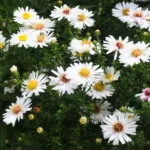 Aster dumosus care guideAster dumosus
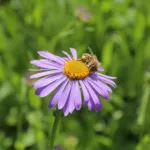 Aster tongolensis care guideAster tongolensis
 Frikart’s aster (Aster frikartii) care guideAster frikartii
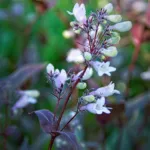 Husker Red penstemon (Penstemon digitalis ‘Husker Red’)Penstemon digitalis 'Husker Red'
 Begonia benaratensis care guideBegonia benaratensis
 Iron Cross Begonia (Begonia masoniana) care guideBegonia masoniana