
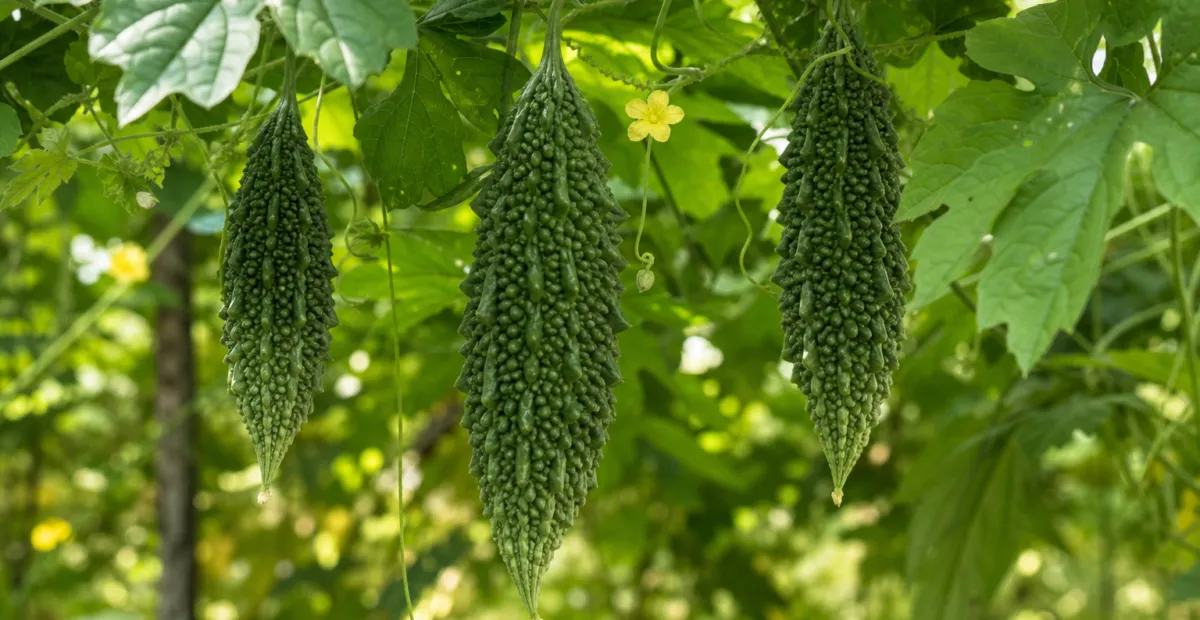
Bitter Gourd (Momordica charantia) short overview
Bitter Gourd (Momordica charantia) is a fast-growing, frost-tender annual vine in the cucumber family. It produces deeply lobed leaves, separate yellow male and female flowers, and distinctive warty fruits that are harvested green as a vegetable. In warm U.S. climates it can climb 12–20 feet in one season, while cooler regions require an early start indoors and a long, hot growing period. Ripe fruits split open to expose scarlet-coated seeds.
Taxonomic classification
Bitter Gourd (Momordica charantia) care guide
Light and placement
Give Bitter Gourd 6–8 hours of direct sun, ideally in a south- or west-facing position with open airflow. A little afternoon shade can help in very hot climates, but heavy shade produces weak vines, fewer flowers and poor fruiting. Pale leaves, long bare internodes and sparse flowers usually indicate insufficient light; scorched margins or sudden wilt in intense heat indicate root-zone stress rather than a need for deep shade.
Watering and humidity
Water deeply when the top inch of soil begins to dry, keeping the root zone consistently moist but never waterlogged. Trellised vines may need frequent watering during flowering and fruit enlargement, especially in containers or black-plastic beds. Reduce watering slightly in cool weather, but do not allow young plants to dry out. Humidity is helpful, while wet foliage and stagnant air encourage disease.
Soil and growing medium
Use fertile soil amended with compost or well-rotted organic matter, with a loose structure that drains quickly yet holds steady moisture. Raised beds are useful in heavy clay. A pH near 6.0–7.5 is suitable; nutrient deficiencies become more likely in very acidic, compacted or alkaline soils. Avoid fresh manure and sites where cucurbits repeatedly suffered from soilborne disease.
Feeding
Mix compost into the bed before planting, then begin a balanced vegetable fertilizer once vines are established. Feed lightly every 3–4 weeks during active growth, or use a controlled-release product according to its label. Avoid excessive nitrogen after flowering begins because it can produce lush foliage with fewer female flowers and less fruit. Stop routine feeding as the season cools or growth slows.
Growth and habit
This rapid annual vine uses tendrils to climb and can reach about 12–20 feet in one warm season. Train the main stems early over a strong trellis, arch or fence so fruits hang freely and air circulates. The vine may sprawl if unsupported. Harvesting regularly encourages continued production and prevents heavy ripe fruits from tearing the support.
Planting and repotting
Sow seeds 1/2–1 inch deep in warm mix, preferably after soaking or lightly nicking the hard seed coat when germination is slow. Transplant carefully because cucurbits dislike root disturbance. Set plants out after frost danger when soil is at least about 60°F, and install trellising before vines become tangled. Mulch after the soil warms to conserve moisture and reduce splash-borne disease.
In containers, move seedlings into a final pot at least 5 gallons in size before roots become crowded. Use a fertile, well-drained mix and provide trellising immediately. If a larger container is needed, transplant before flowering and disturb the root ball as little as possible.
Propagation and pruning
Propagation
Propagate by seed. Sow in warm conditions about 4 weeks before outdoor planting, or direct sow once soil temperatures are reliably warm. Germination can be improved by soaking seeds or lightly nicking the coat. Use fresh, mature seed and avoid disturbing roots during transplanting.
Pruning
Prune only to control excess length, remove damaged growth or improve airflow. Direct young shoots onto the trellis rather than cutting heavily. Remove crowded side growth if the canopy becomes dense, and clear spent vines after frost. Regular fruit harvesting is more useful than routine hard pruning.
Overwintering
The vine is killed by frost and is normally discarded after the growing season. In USDA Zones 9–11, a protected plant may continue longer in warm weather, but it is still commonly grown as an annual. Container plants require a warm, very bright indoor location and may suffer from poor light, mites and reduced fruiting indoors.
Uses
Young green fruits are used as a vegetable in stir-fries, soups, curries, stuffed dishes and pickles. The vine is also a striking edible-garden ornamental when trained over a trellis. Allowing fruits to ripen provides colorful displays and food for some birds, but ripe fruits, seeds and concentrated plant preparations should not be treated as ordinary food. Do not rely on the plant for unproven medicinal benefits.
Appearance
Leaves are rounded to kidney-shaped and palmately lobed, with a soft, cucumber-like texture. Slender stems bear simple tendrils and separate male and female flowers on the same plant. The elongated fruits are prominently ridged and warty, changing from green to yellow-orange as they ripen, then splitting into three curling sections around bright red seed coverings.
Flowering
The plant is monoecious: male and female flowers occur separately on the same vine. Yellow male flowers generally appear first, followed by female flowers with a visible immature fruit behind the flower. Flowering is most productive in warm, bright weather. Poor fruit set can result from cool temperatures, excess nitrogen, low insect activity or inadequate transfer between male and female flowers.
Pollination and visitors
Honey bees are documented visitors and important pollinators, although they may preferentially visit male flowers. Studies also report other insect visitors, including halictid bees and flies, while diurnal hawkmoths can contribute to pollination when bee activity is limited. Good fruit set depends on movement of pollen from male to female flowers.
Momordica charantia photos
Click any photo for a larger view. Source, author and license are shown separately.
Diseases and pests
Diseases
Cucurbit downy mildew can cause angular yellow leaf spots followed by gray-purple growth beneath leaves, especially in humid weather. Improve spacing and airflow, water at the soil line, remove badly affected foliage and avoid working among wet plants. Monitor for powdery mildew, damping-off and viral symptoms; remove severely infected plants rather than composting them.
Pests
Inspect regularly for cucumber beetles, aphids, whiteflies, spider mites and fruit flies. Use floating row cover before flowering, hand-pick larger pests, wash foliage with water and use insecticidal soap only when necessary and according to the label. Harvest promptly and remove fallen or overripe fruit. The plant is also a documented host for some fruit flies.
Toxicity and pollen
Young, properly prepared green fruit is widely eaten, but ripe fruit and seeds are reported as toxic and can cause gastrointestinal or systemic effects. Evidence and risk vary with plant part, maturity and amount consumed. Keep ripe fruit and seeds away from children and pets, avoid concentrated medicinal preparations without professional guidance, and seek poison-control or medical advice after a concerning ingestion.
- Typical season
- Summer to early fall outdoors
- Pollination / pollen
- Heavy, relatively non-airborne pollen carried mainly by visiting insects
Bitter Gourd is insect-pollinated, so its pollen is not normally released in large airborne clouds. Some pollen exposure is still possible during close handling of flowers or dense plantings, and insect-pollinated does not mean zero allergy risk. No reliable U.S.-specific pollen-allergy ranking for this species was identified.
Native habitat
The species is native to tropical and subtropical regions of the Old World and grows in warm, humid habitats, disturbed ground, thickets, field margins and cultivated areas. It favors fertile soils with reliable moisture and abundant sunlight. In the United States it is cultivated and can naturalize in parts of the South, including Florida and other warm regions.
Interesting fact
The ripe fruit opens into three curling sections that expose seeds wrapped in bright red arils. Bitter Gourd is monoecious, so one plant bears both male and female flowers. The species is a cucurbit but its fruit is botanically a berry. Fruit bitterness is associated with cucurbitane compounds including momordicines.
Frequently asked questions (FAQ)
The most relevant questions about this plant, with short and direct answers.
🌱Quick care
What is Momordica charantia commonly called in the United States?⌄
Momordica charantia is commonly called Bitter Gourd. It is also sold in the United States under names such as bitter melon, but Bitter Gourd is the verified common name used here.
Is Bitter Gourd easy to grow?⌄
Bitter Gourd is moderately easy to grow when given warm weather, full sun, steady moisture, and a sturdy trellis. It grows quickly, but cool temperatures, poor pollination, and waterlogged soil can reduce fruit production.
Does Bitter Gourd grow as a vine or a bush?⌄
Bitter Gourd grows as a fast-climbing annual vine with tendrils. Provide a strong trellis, fence, or arch because mature vines can become vigorous and heavy with foliage and fruit.
🌤️Environment and placement
How much sunlight does Bitter Gourd need?⌄
Bitter Gourd grows best in full sun, with at least 6 hours of direct light daily. It can tolerate partial shade, but less light usually means weaker growth and fewer flowers or fruits.
What temperature does Bitter Gourd need to grow?⌄
Bitter Gourd needs warm growing conditions and is frost tender. Plant it outdoors only after the danger of frost has passed and soil temperatures are consistently warm; cool weather can stall germination and vine growth.
Can Bitter Gourd grow in containers?⌄
Bitter Gourd can grow in a large container if it has rich, well-drained potting mix, consistent moisture, and a sturdy trellis. Use a container with substantial root volume because the vigorous vine can become crowded in small pots.
What kind of soil is best for Bitter Gourd?⌄
Use rich, organic, well-drained soil that holds moisture without becoming soggy. Raised beds or amended sandy loam are useful where heavy soil causes poor drainage or root problems.
Does Bitter Gourd need a trellis?⌄
A trellis is strongly recommended for Bitter Gourd. Vertical support improves air circulation, keeps fruit off the ground, makes harvesting easier, and helps prevent vines from spreading over nearby plants.
💧Care and problems
How often should I water Bitter Gourd?⌄
Water Bitter Gourd whenever the soil surface begins to dry, keeping the root zone evenly moist. Avoid both drought stress and standing water, especially during flowering and fruit development.
Why is my Bitter Gourd vine growing leaves but no fruit?⌄
A leafy Bitter Gourd vine without fruit may be too young, receiving insufficient light, or lacking pollination. The plant produces separate male and female flowers, so insect activity and warm conditions are important for fruit set.
Why are Bitter Gourd flowers falling off?⌄
Bitter Gourd flowers commonly drop when they are male flowers, when temperatures are unfavorable, or when female flowers are not pollinated. Water stress, excessive nitrogen, and poor insect activity can also reduce successful fruit set.
How do I hand-pollinate Bitter Gourd?⌄
To hand-pollinate Bitter Gourd, transfer pollen from a freshly opened male flower to the center of a female flower using a small brush or by gently touching the flower parts together. Female flowers have a small swelling behind the blossom.
Why are my Bitter Gourd leaves turning yellow?⌄
Yellow leaves may result from overwatering, poor drainage, nutrient deficiency, aging foliage, or disease. Check the roots and soil moisture first, then inspect the leaves and stems for insects, spots, wilting, or distorted growth.
What pests commonly affect Bitter Gourd?⌄
Bitter Gourd can be affected by aphids, whiteflies, cucumber beetles, mites, and fruit flies, depending on location. Inspect new growth and developing fruit regularly, and use physical removal or a labeled treatment appropriate for edible crops.
What diseases can affect Bitter Gourd?⌄
Bitter Gourd may develop powdery mildew, downy mildew, bacterial or fungal wilts, and fruit rots, especially in humid or poorly ventilated conditions. Trellising, crop rotation, clean foliage, good drainage, and avoiding overhead watering can reduce risk.
🪴Planting and repotting
When should I plant Bitter Gourd in the United States?⌄
Plant Bitter Gourd after the last spring frost when the soil and air are reliably warm. In short-season areas, start seeds indoors several weeks before transplanting, but avoid disturbing the roots during planting.
How deep should Bitter Gourd seeds be planted?⌄
Plant Bitter Gourd seeds about 1 inch deep in warm, moist soil. Germination is often improved by soaking seeds overnight or lightly scarifying the hard seed coat before sowing.
How far apart should Bitter Gourd plants be spaced?⌄
Space Bitter Gourd plants about 12 to 24 inches apart when growing them on a trellis, allowing more room when vines will spread. Follow the spacing recommendations for the specific cultivar and support system.
Can Bitter Gourd be transplanted?⌄
Bitter Gourd can be transplanted, but it is sensitive to root disturbance like many cucurbits. Start seeds in individual containers and move seedlings outdoors carefully once temperatures are warm and plants have several true leaves.
How long does Bitter Gourd take to germinate?⌄
Bitter Gourd seeds commonly germinate in roughly 5 to 14 days under warm conditions. Germination may take longer when soil is cool, the seed coat is hard, or moisture levels fluctuate.
✂️Propagation and pruning
How do you propagate Bitter Gourd?⌄
Bitter Gourd is usually propagated from seed. Save mature, fully developed seeds from ripe fruit, clean and dry them thoroughly, and store them in a cool, dry place until the next warm growing season.
Should Bitter Gourd vines be pruned?⌄
Light pruning can help train Bitter Gourd onto its support and remove damaged, diseased, or overcrowded growth. Avoid severe pruning because excessive removal of healthy foliage can reduce flowering and fruit development.
How do I train Bitter Gourd on a trellis?⌄
Guide young Bitter Gourd shoots onto the trellis and loosely tie them only when necessary. Once tendrils attach, continue redirecting heavy or wandering stems so the canopy remains open and manageable.
⚠️Toxicity and safety
Is Bitter Gourd poisonous?⌄
Bitter Gourd requires moderate caution rather than being considered uniformly poisonous. The immature fruit is widely eaten as a vegetable, but concentrated preparations, large amounts, seeds, and other plant parts may pose greater safety concerns.
Can you eat Bitter Gourd seeds?⌄
Bitter Gourd seeds should not be eaten casually, especially in large amounts or as a concentrated preparation. Seeds and surrounding tissues contain compounds associated with toxicity, and extra caution is needed for children and people with glucose-6-phosphate dehydrogenase deficiency.
Is Bitter Gourd safe during pregnancy?⌄
Avoid medicinal preparations and concentrated amounts of Bitter Gourd during pregnancy because reproductive safety is uncertain and potential pregnancy risks have been reported. Anyone who is pregnant or trying to conceive should ask a healthcare professional before consuming it therapeutically.
Can Bitter Gourd lower blood sugar?⌄
Bitter Gourd preparations may lower blood glucose, but they are not an established replacement for diabetes treatment. People taking glucose-lowering medication should consult a healthcare professional before using Bitter Gourd supplements or concentrated juice.
Is Bitter Gourd invasive in the United States?⌄
Bitter Gourd can escape cultivation in some warm regions, and it is classified as invasive in parts of Florida. Prevent ripe fruits from dropping seed, and check local extension or invasive-plant guidance before growing it near natural areas.
🌸Flowering and special interest
When does Bitter Gourd flower?⌄
Bitter Gourd generally flowers after producing several weeks of vigorous vine growth in warm weather. Male flowers usually appear first, followed by female flowers that have a small immature fruit behind the blossom.
How can I tell whether a Bitter Gourd flower is male or female?⌄
A male Bitter Gourd flower grows on a slender stalk and contains pollen-producing structures. A female flower has a noticeably swollen ovary behind the blossom, resembling a tiny developing fruit.
When should Bitter Gourd be harvested?⌄
Harvest Bitter Gourd while the fruits are firm, green, and immature, often about 8 to 10 days after flowering depending on the cultivar. Pick regularly with pruners to encourage continued production and prevent overripe fruits from splitting.
Can you eat ripe Bitter Gourd fruit?⌄
Ripe Bitter Gourd fruit turns yellow or orange and may split open to expose brightly colored seeds. The immature green fruit is the usual culinary stage; ripe fruit is more bitter and should be handled cautiously because the seeds and outer tissues may contain irritating or toxic compounds.
Similar plants
 Gac (Momordica cochinchinensis) care guideMomordica cochinchinensis
  Scarlet gourd (Coccinia grandis) care guideCoccinia grandis
  Benincasa fistulosa care guideBenincasa fistulosa
  CAIGUA (Cyclanthera pedata) care guideCyclanthera pedata
  Chayote (Sechium edule) care guideSechium edule
  Spiny gourd or spine gourd or teasle gourd and also known as bristly balsam pea (Momordica dioica) care guideMomordica dioica