
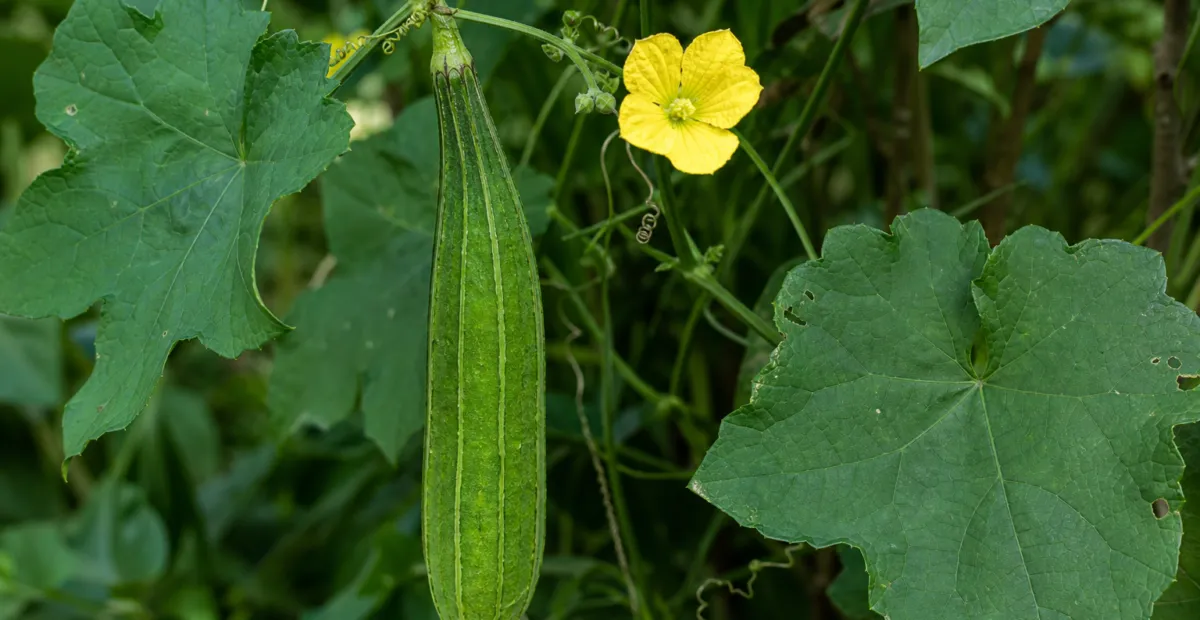
Silk gourd (Luffa acutangula) short overview
Silk gourd (Luffa acutangula) is a vigorous, warm-season annual vine from the Indian subcontinent. Grow it on a sturdy trellis in full sun and evenly moist, well-drained soil. Its yellow flowers produce ridged, edible young fruits; mature fruits develop a fibrous interior useful as a natural scrubber, although this species is generally valued more as a vegetable than as a sponge crop. A vigorous annual cucurbit vine grown for tender, ridged fruits and, less commonly, dried fibrous interiors. It needs heat, full sun, steady moisture, fertile well-drained soil, and a sturdy trellis.
Taxonomic classification
Silk gourd (Luffa acutangula) care guide
Light and placement
Give at least 6–8 hours of direct sun, ideally in a south- or west-facing position protected from cold winds. Strong light supports compact, productive growth and better flowering. Pale, stretched vines and sparse flowers indicate insufficient light; scorched leaves or rapidly wilting foliage suggest heat or root-zone stress rather than a need for shade.
Watering and humidity
Water deeply when the upper inch of soil begins to dry, keeping the root zone evenly moist rather than alternating drought and saturation. Increase frequency during flowering, fruit enlargement, and hot weather. Mulch the soil without burying the stem, and use drip irrigation or a low stream at the base to keep leaves and fruit drier.
Soil and growing medium
Use fertile loam or sandy loam amended with compost, combining reliable moisture retention with rapid drainage. Neutral to slightly alkaline soil is suitable. Avoid compacted ground, stagnant water, and overly rich nitrogen conditions that produce foliage at the expense of flowers and fruit.
Feeding
Before planting, incorporate a moderate amount of finished compost. During active vine growth, use a balanced slow-release fertilizer or a dilute balanced liquid feed according to the product label. Do not repeatedly apply high-nitrogen fertilizer once flowering begins; excessive nitrogen can produce lush vines with fewer useful fruits.
Growth and habit
A vigorous herbaceous vine that climbs by branched tendrils and can cover a large trellis during one warm season. Male flowers usually appear before abundant female flowers. Trellising improves air circulation, keeps fruit cleaner, and encourages straighter fruits; provide support strong enough for mature vines and gourds.
Planting and repotting
Sow indoors about 4–6 weeks before the expected last frost, or direct-sow after soil has warmed. Place seeds about 1.5–2 inches deep. Space plants roughly 3 feet apart, with rows or trellis runs 5–6 feet apart. Install support before vines become heavy.
Transplant only while plants are young, because cucurbit roots resent disturbance. Harden seedlings gradually and move them outdoors after frost danger has passed and soil is warm. A large container of about 2–5 gallons can support one plant if watering and trellising are consistent.
Propagation and pruning
Propagation
Propagate from seed. Sow fresh, fully mature seeds in warm medium; provide bottom heat if germination is slow. Direct sowing works after the soil has warmed, while transplants provide a useful head start in short-season areas. Avoid unnecessary root disturbance.
Pruning
Guide young shoots onto the support and remove damaged or diseased leaves promptly. Once the trellis is well covered, selectively thin crowded side growth for airflow. Avoid severe pruning during flowering and fruiting because the plant needs substantial leaf area to mature its crop.
Overwintering
Treat the plant as an annual outside frost-free climates. It is not a practical outdoor overwintering plant where freezing temperatures occur. Remove spent vines after harvest and save mature seed only from healthy, correctly identified plants if seed saving is desired.
Uses
Harvest young fruits for cooking when tender, generally before they become fibrous. Mature fruits can be dried and peeled for a plant-fiber scrubber, although angled types are often preferred as vegetables rather than for premium sponge production. The vigorous vine can also cover a trellis ornamentally. Do not make medicinal preparations or consume bitter fruit without authoritative, species-specific guidance.
Appearance
The vine has hairy or rough green stems, branched tendrils, and ovate to heart-shaped leaves divided into three to seven broad lobes. The most distinctive fruit feature is the set of sharp longitudinal ridges. Flowers are bright yellow, with male blossoms in clusters and female blossoms solitary beneath a developing fruit.
Flowering
The plant is monoecious, producing separate male and female flowers on the same vine. Male flowers occur in clusters or racemes, while female flowers are usually solitary and have a small ovary beneath the corolla. Yellow to orange-yellow flowers open during the warm season, commonly during daylight.
Pollination and visitors
Documented visitors include bees, bumblebees, flies, beetles, wasps, and moths; studies of ridged gourd pollination have especially reported moth visitation, while agricultural guidance commonly notes insect pollination. Flower visits can improve fruit set, but visitor composition varies by region and time of day.
Luffa acutangula photos
Click any photo for a larger view. Source, author and license are shown separately.
Diseases and pests
Diseases
Prevent fruit rot by keeping developing gourds off wet soil with a trellis and mulch, improving air circulation, and avoiding overhead irrigation. Monitor for powdery mildew, downy mildew, and general cucurbit leaf-spot symptoms. Remove badly affected foliage and use crop rotation and sanitation rather than routine broad-spectrum spraying.
Pests
Common problems include leafminers, spider mites, aphids, cucumber beetles, and occasional fruit-feeding insects. Inspect leaf undersides and new growth regularly, remove heavily damaged leaves, use strong water sprays for light infestations, and favor crop rotation, sanitation, and targeted low-impact controls. Trellising also reduces soil-contact fruit damage.
Toxicity and pollen
No reliable authoritative evidence was located establishing a characteristic human or pet poisoning risk for the species when correctly identified and grown as a food crop. Young fruits are used as a vegetable, but bitter or unusually foul-tasting cucurbits should not be eaten because cucurbitacin-related bitterness can indicate risk. Avoid ingesting ornamental treatments or unidentified plant material.
- Typical season
- Summer through early fall
- Pollination / pollen
- Mostly insect-carried pollen
This is an insect-pollinated cucurbit, so pollen is generally transferred at flowers rather than released as a large windborne cloud. Direct airborne allergy evidence for Luffa acutangula is limited, and individual sensitivity cannot be ruled out. People with known plant-pollen allergies should avoid handling flowers if symptoms occur.
Native habitat
The species is native to the Indian subcontinent and is associated with warm tropical or subtropical conditions, including seasonally dry climates and cultivated landscapes. It favors a long frost-free period, high warmth, fertile soils, and dependable moisture during active growth.
Interesting fact
The species is an annual vine in temperate gardens but can behave as a perennial only where frost is absent. Its immature ridged fruits are eaten as a vegetable, while older fruits develop a fibrous network. The genus has separate male and female flowers on the same plant. Mature seeds are typically dark and flattened.
Frequently asked questions (FAQ)
The most relevant questions about this plant, with short and direct answers.
🌱Quick care
What is silk gourd (Luffa acutangula)?⌄
Silk gourd is a fast-growing, frost-tender annual vine in the cucumber family, Cucurbitaceae. Its young ridged fruits are eaten as a vegetable, while fully mature fruits can be processed into natural sponges.
🌤️Environment and placement
How much sun does silk gourd need?⌄
Silk gourd needs full sun, ideally at least 6–8 hours of direct sunlight daily. Strong light supports vigorous vines, flowering, and fruit development.
What type of soil is best for Luffa acutangula?⌄
Use fertile, moisture-retentive but well-drained loam with a neutral to slightly alkaline pH. Avoid compacted or waterlogged soil, which can promote root and fruit problems.
Does silk gourd need a trellis?⌄
Yes, silk gourd grows best on a strong trellis, fence, or other support. A tall vertical structure improves air circulation and helps produce straighter, cleaner fruits.
How tall can a silk gourd vine grow?⌄
A silk gourd vine can grow more than 20 feet in favorable conditions. Give it substantial vertical support and enough horizontal room for side shoots to spread.
Is silk gourd frost tolerant?⌄
No, silk gourd is frost-tender and can be seriously damaged or killed by freezing temperatures. Grow it as a warm-season annual in most of the United States and protect it from early or late frosts when practical.
💧Care and problems
How often should I water silk gourd?⌄
Keep the soil evenly moist throughout the growing season, especially during flowering and fruit formation. Water deeply when the surface begins to dry, but do not leave the roots in standing water.
Why is my silk gourd vine growing leaves but not fruit?⌄
A young silk gourd vine may produce abundant male flowers before female flowers appear. Insufficient sunlight, cool weather, drought, excessive nitrogen, or poor pollination can also delay fruit set.
When should I harvest silk gourd for eating?⌄
Harvest silk gourd while the fruits are young, tender, and still green, commonly when they are under about 6 inches long. Older fruits become increasingly fibrous and may develop a bitter or unpleasant taste.
Can silk gourd be used to make a loofah sponge?⌄
Yes, silk gourd fruits can develop a fibrous inner network suitable for use as a natural sponge when allowed to mature fully. Leave selected fruits on the vine until the skin dries and turns yellow-brown or brown.
When should I harvest silk gourd for sponges?⌄
Harvest silk gourd for sponges when the fruit is lightweight, dry, and yellow-brown to brown, with the outer skin beginning to loosen. If frost threatens, harvest mature-looking fruits and finish drying them indoors in a well-ventilated place.
How do I make a sponge from a mature silk gourd?⌄
Allow the mature fruit to dry, then peel away the brittle outer skin, shake out the seeds, and rinse the remaining fiber thoroughly. Let the cleaned sponge dry completely before using or storing it.
Why are my silk gourd fruits turning brown or rotting?⌄
A fruit left to mature for sponge production naturally turns brown, but premature browning or soft rot can result from disease, injury, or prolonged contact with wet soil. Grow the vine on a trellis and keep developing fruits off the ground.
What pests commonly affect silk gourd?⌄
Leafminers, aphids, thrips, caterpillars, and fruit flies may attack silk gourd, although serious infestations are not inevitable. Inspect leaves and young fruits regularly and contact your local county Extension office for locally approved treatment options.
What diseases affect Luffa acutangula?⌄
Reported problems include powdery mildew, downy mildew, and fruit rot. Good spacing, full sun, trellising, careful watering, and removing severely affected plant material can reduce disease pressure.
🪴Planting and repotting
Can you grow silk gourd in a container?⌄
Yes, silk gourd can grow in a large container, but it needs fertile soil, consistent moisture, full sun, and a sturdy trellis. A container holding about 5 gallons is a practical minimum, with more root space generally producing stronger growth.
When should I plant silk gourd in the United States?⌄
Plant silk gourd outdoors only after the danger of frost has passed and the soil has warmed. In much of the United States, this means late spring; gardeners in short-season areas should start seeds indoors several weeks earlier.
Can I direct-sow Luffa acutangula seeds?⌄
Yes, direct-sow silk gourd seeds after the last frost when the soil is warm. In cooler regions, starting seeds indoors about 4–6 weeks before transplanting can provide the long growing season this plant needs.
How far apart should silk gourd plants be spaced?⌄
Space silk gourd plants about 3 feet apart, with roughly 6 feet between rows when possible. Wider spacing is useful because the vines are vigorous and need room for airflow and support.
✂️Propagation and pruning
How long does silk gourd take to germinate?⌄
Silk gourd seeds commonly germinate in about 4–7 days under warm, moist conditions. Cool soil, old seed, or inconsistent moisture can make germination slower or less uniform.
Should I soak silk gourd seeds before planting?⌄
Soaking silk gourd seeds in warm water for several hours can help soften the seed coat, although it is not essential. Sow them in warm soil and keep the medium evenly moist until seedlings emerge.
How do I save silk gourd seeds?⌄
Leave a healthy fruit on the vine until it is fully dry and the seeds rattle inside. Remove the seeds, dry them thoroughly, and store them in a cool, dark, dry place for the next growing season.
Should I prune silk gourd vines?⌄
Light pruning can help control excessive lateral growth and improve access to flowers and fruit. Avoid heavy pruning, because removing too much foliage can reduce plant vigor and sun protection.
⚠️Toxicity and safety
Can you eat mature silk gourd?⌄
Mature silk gourd is usually too fibrous and tough for normal vegetable use. Eat only young, tender fruit, and discard any fruit that tastes distinctly bitter.
How do I know if a silk gourd is too bitter to eat?⌄
Taste a tiny piece of raw fruit before cooking, and discard it if it is distinctly bitter. Bitter cucurbit fruits should not be eaten because bitterness can indicate potentially harmful cucurbitacins.
Is silk gourd toxic to people or pets?⌄
Silk gourd has no established characteristic toxicity when correctly identified and eaten young, but bitter fruit should be avoided. Do not eat fruit with a strong bitter taste, and prevent children or pets from consuming unidentified plant parts.
🌸Flowering and special interest
Why does silk gourd flower but not set fruit?⌄
Silk gourd may flower without fruiting when female flowers are scarce or pollinators are inactive. Keep the plant well watered, avoid pesticides during bloom, and hand-pollinate by transferring pollen from a male flower to a female flower if needed.
When does silk gourd flower?⌄
Silk gourd may begin flowering roughly 6–10 weeks after sowing when growing conditions are warm. Male flowers often appear first, followed by female flowers that develop behind a small immature fruit.
Do silk gourd flowers open at night?⌄
Yes, Luffa acutangula flowers generally open in the evening and are pollinated by insects. This differs from some other luffa species, whose flowers may open mainly during the day.
Similar plants
 Chayote (Sechium edule) care guideSechium edule
  Scarlet gourd (Coccinia grandis) care guideCoccinia grandis
  Gac (Momordica cochinchinensis) care guideMomordica cochinchinensis
 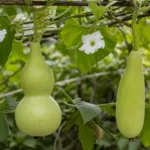 Calabash (Lagenaria siceraria) care guideLagenaria siceraria
 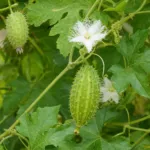 CAIGUA (Cyclanthera pedata) care guideCyclanthera pedata
 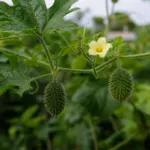 Spiny gourd or spine gourd or teasle gourd and also known as bristly balsam pea (Momordica dioica) care guideMomordica dioica