
Potassium deficiency
Potassium deficiency overview
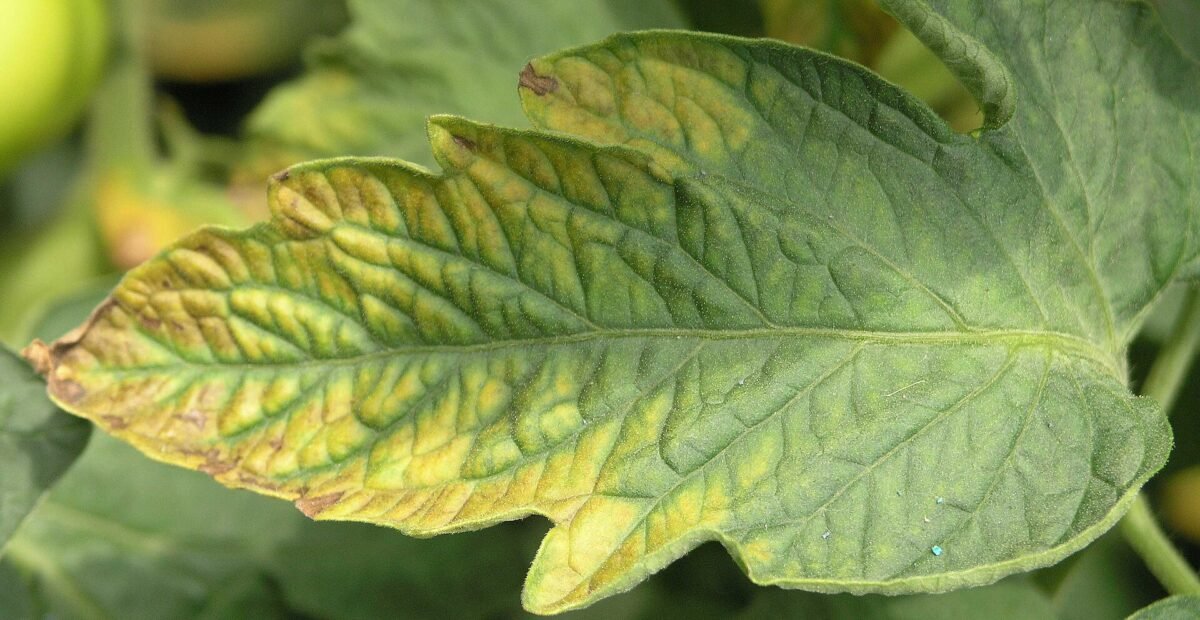
Potassium deficiency is a nutritional disorder caused by inadequate plant-available potassium or restricted uptake. It commonly begins on older leaves as pale or yellow margins, followed by brown scorching and tissue death. Drought, waterlogging, cool soil, root damage, low-CEC sandy soil and heavy crop removal can contribute. Confirm the diagnosis with soil or tissue testing before fertilizing.
Typical conditions
Overview
Potassium is an essential macronutrient, but it is not a structural component of most plant compounds. It helps regulate water relations, enzyme activity, photosynthesis, carbohydrate movement and the strength and function of growing tissues.
Deficiency usually appears first on mature or lower foliage. Marginal yellowing, flecking or bronzing can progress from the leaf tip and edges to a continuous brown scorch. Severe deficiency may cause premature leaf death, stunting, reduced flowering or fruit development, poorer crop quality and increased sensitivity to drought, cold or disease stress.
These symptoms overlap with salt injury, drought, root damage, foliar diseases, herbicide injury, insect feeding and deficiencies of other nutrients. Confirm suspected cases with a representative soil test and, for valuable crops or perennial plants, a properly timed tissue test.
Symptoms and identification
- Yellowing or pale green tissue begins near the tips and margins of older, lower leaves.
- Marginal flecks, mottling, bronzing or tan-gray bands may develop before tissue becomes brown and necrotic.
- The scorch may extend inward from the edges; leaves can curl, wilt, die prematurely or drop.
- Plants may be stunted, with reduced vigor, delayed maturity, weaker stems, poorer fruit set or lower fruit, seed or tuber quality.
- Potato commonly shows scorching of older leaflet margins, particularly during tuber bulking. Corn may show yellow-to-brown lower-leaf margins and striping. Soybean and alfalfa may show marginal chlorosis or pale spots.
- Uniform symptoms across several nearby plants are more consistent with a soil or irrigation-related nutrient problem than with a localized foliar infection, although this is not conclusive.
Causes and spread
Potassium deficiency is not contagious and does not spread from plant to plant like a disease. It develops from a mismatch between potassium supply and crop demand.
- Low native or exchangeable potassium, repeated harvest removal, insufficient fertilization and inadequate incorporation of crop residues can deplete available potassium.
- Sandy, highly weathered or low-cation-exchange-capacity soils are more prone to potassium loss through leaching, especially after heavy rain or overirrigation.
- Drought, waterlogging, cold soil, compaction, root rot, transplant damage and restricted root volume can limit uptake even when soil potassium is moderate.
- Very high applications of calcium, magnesium or other competing cations may contribute to nutrient imbalance, but they should not be assumed to be the cause without testing.
Life cycle and persistence
This disorder has no pathogen or insect lifecycle. It develops whenever potassium supply to roots is inadequate relative to plant demand, or when root conditions prevent uptake. Symptoms may intensify during rapid vegetative growth, fruit filling, grain production or potato tuber bulking. Previously damaged leaves generally do not return to normal after correction; improvement is assessed by the condition of newly expanding foliage and new growth.
Treatment and control
First confirm the likely cause with a soil test and, when useful, tissue analysis. Correct the root-zone problem before increasing fertilizer: irrigate deeply but appropriately, improve drainage, relieve compaction where feasible and address root disease or severe root restriction.
If available potassium is low, apply a potassium fertilizer selected from the soil-test recommendation. Potassium sulfate may be preferred where chloride sensitivity or soil salinity is a concern; potassium chloride is effective for many field crops but is not appropriate for every crop, soil or situation. Do not guess rates from a generic garden schedule.
Water-soluble or foliar products may provide temporary support in specific production systems, but they do not replace root-zone fertility correction and can burn foliage if misapplied. Remove severely dead leaves only when needed for sanitation or airflow. Monitor newly developing leaves and growth rather than expecting scorched tissue to recover.
Low-impact and biological control
Use an integrated soil-fertility approach rather than relying on foliar sprays or untested home remedies.
- Have the soil tested through a reputable laboratory before adding potassium. For high-value vegetables, orchards, vines or container crops, consider plant tissue analysis as well.
- Choose an OMRI-listed or otherwise appropriate organic fertilizer only when its label permits the intended crop and use. Commonly available organic potassium sources may include sulfate of potash, potassium-magnesium sulfate or processed plant-derived products, but their nutrient analysis and suitability vary.
- Apply compost primarily to improve organic matter, structure and moisture management; compost is not a predictable potassium correction unless its analysis supports that use.
- Maintain even irrigation, improve drainage, reduce compaction and protect roots from cultivation damage. These measures improve potassium uptake when the soil contains adequate potassium.
- Do not use wood ash routinely without a soil test: it can raise soil pH rapidly and may create nutrient imbalance or salt injury.
Prevention
Base potassium management on a current soil test, the crop’s expected removal and local university Extension recommendations. Test garden beds every few years or when symptoms recur, and test containers or intensive high-tunnel beds more frequently because salts and nutrient imbalances can accumulate.
- Apply potassium only at the tested rate and use a complete fertility plan that also considers nitrogen, phosphorus, pH, organic matter and salinity.
- Incorporate or retain suitable crop residues where practical, while accounting for what is removed as produce, hay, silage or tubers.
- Maintain consistent soil moisture, good drainage and a healthy root zone with mulch, appropriate irrigation and avoidance of compaction.
- Do not diagnose from one leaf. Compare affected and healthy plants, inspect roots, review irrigation and fertilizer history, and consider tissue testing.
- In the United States, follow the fertilizer label and state or local requirements for application, storage and runoff protection.
Interesting facts
- Potassium is mobile inside plants, so deficiency symptoms commonly begin on older leaves as potassium is redistributed toward younger tissues.
- By the time obvious scorch appears, yield or quality may already have been reduced; correction cannot restore dead leaf tissue or fully recover lost production.
- Potassium deficiency can resemble drought injury, fertilizer or salt burn, magnesium deficiency, herbicide injury, mite or leafhopper damage, and some diseases.
- Low potassium does not always mean the total soil potassium reserve is absent. Dry soil, saturated soil, cold conditions, root injury, compaction or poor root distribution can restrict uptake.
- Healthy potassium nutrition supports plant water regulation and tissue integrity, which can improve tolerance of some environmental and disease stresses without making a plant immune.
Potassium deficiency is not treated with a pesticide. Use only fertilizer products legally authorized for the crop and intended use in the United States, and follow the current product label. Avoid repeated or high-rate applications without a soil or tissue test because excess potassium can upset nutrient balance and may contribute to salinity problems.
Affected plants
The plants below are linked to this problem by structured host-plant data. The list updates automatically as new plant profiles are added.
 Solanum aethiopicum care guideSolanum aethiopicum
 Solanum macrocarpon care guideSolanum macrocarpon
 Eggplant (Solanum melongena) care guideSolanum melongena
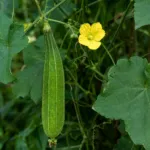 Silk gourd (Luffa acutangula) care guideLuffa acutangula
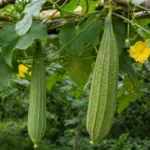 Sponge Gourd (Luffa aegyptiaca) care guideLuffa aegyptiaca
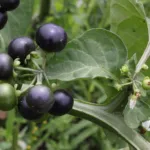 Garden Huckleberry (Solanum scabrum) care guideSolanum scabrum
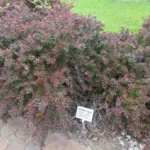 Crimson Pygmy (Berberis thunbergii ‘Crimson Pygmy’)Berberis thunbergii 'Crimson Pygmy'