
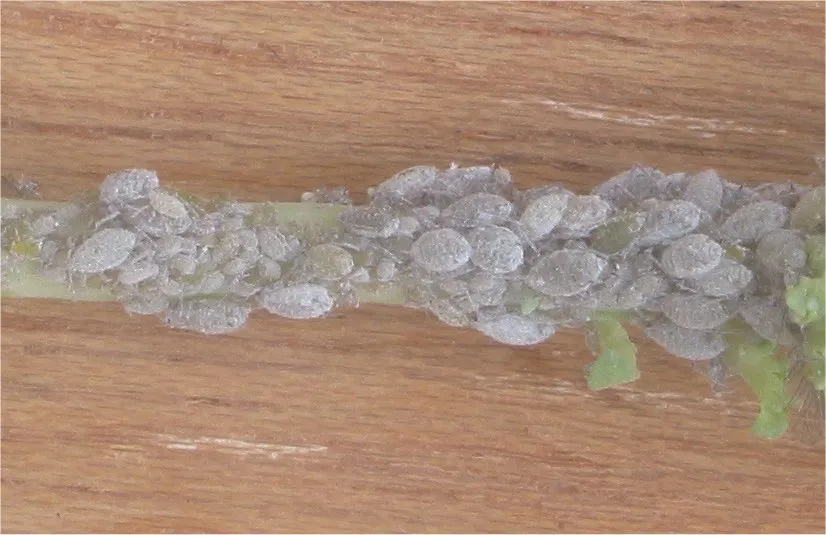
Káposzta-levéltetű
Brevicoryne brassicaeKáposzta-levéltetű overview
A Brevicoryne brassicae, vagyis a káposzta-levéltetű, a káposztafélék viaszos, szürkészöld levéltetve. Tömeges kolóniái főként a fiatal leveleken, hajtáscsúcsokon, virágrügyeken és a fejképző részek mélyén szívogatnak. A közvetlen kártétel növekedési visszamaradás, levél- és fejdeformáció, valamint szennyezett termés lehet; emellett több keresztesvirágú vírus terjesztésében is szerepet játszhat.
Typical conditions
Overview
The cabbage aphid is a small, soft-bodied aphid, usually up to about 1/12 inch long, with a greenish-gray to gray-white appearance caused by a conspicuous powdery wax coating. Wingless adults and nymphs commonly cluster on the undersides of leaves, in folded young foliage, around growing points, in flower buds, and inside developing cabbage or Brussels sprout heads. Winged adults are darker around the head and thorax and disperse when colonies become crowded or host quality declines.
Identification should be confirmed carefully because other aphid species can occur on the same crops. The combination of a dense colony, gray-white wax covering, brassica host and preference for young tissue is characteristic, but a close examination may be needed for species-level confirmation.
Symptoms and identification
- Dense gray-green or gray-white aphid colonies on young leaves, shoot tips, flower buds, seed stalks or developing heads.
- Leaf curling, puckering, yellowing or distortion around feeding sites.
- Stunting of young plants and reduced development of cabbage, broccoli, cauliflower, kale or Brussels sprouts when infestations are heavy.
- Sticky honeydew and dark sooty mold may occur, although the main market problem is often live aphids and shed wax contaminating harvested produce.
- When virus transmission occurs, symptoms depend on the virus and may include mosaic, chlorotic patterns, leaf distortion or later internal necrotic spotting. Aphid presence alone does not prove a virus infection.
Causes and spread
Both nymphs and adults feed by inserting piercing-sucking mouthparts into phloem tissue. Colonies often begin on field edges, nearby mustard weeds, volunteer brassicas or infested transplants and then expand through the crop. Winged forms are produced when plants deteriorate, colonies become crowded or conditions favor dispersal. Movement of infested transplants, crop residues and unmanaged Brassicaceae weeds can maintain local populations.
The pest is restricted primarily to the mustard family. It can also acquire and transmit some crucifer viruses in a nonpersistent manner during brief probing visits, but virus transmission is not inevitable and should be diagnosed separately from aphid injury.
Life cycle and persistence
In warm regions and during favorable periods, females can reproduce without mating and give birth directly to live female nymphs. Several overlapping generations may develop during a crop season. Nymphs pass through several molts and may become wingless adults that remain in the colony or winged adults that migrate to new plants.
In colder temperate parts of the United States, sexual forms may appear in autumn. Eggs are laid on brassica plants, weeds or nearby plant debris and can overwinter before hatching in spring. Development is temperature-dependent: populations generally build more rapidly in mild conditions, while cold weather slows activity. Regional timing varies, so scouting is more reliable than relying on a calendar alone.
Treatment and control
Begin with physical control in gardens: direct a firm water spray at leaf undersides and growing points, repeat as needed, and prune or remove heavily infested leaves when this will not reduce crop quality. Check again after treatment because aphids hidden inside heads or curled leaves may survive.
For commercial or high-value plantings, use a structured scouting plan and consider crop-specific action thresholds rather than treating every aphid. UC IPM guidance notes that broccoli and cauliflower may tolerate substantial aphid numbers before heading, whereas cabbage and crops near head formation or harvest have lower tolerance because contamination is difficult to remove. Always inspect natural enemies before deciding to spray, and reassess after treatment.
Spray coverage is difficult when colonies are deep inside heads. If an intervention is justified, target the youngest infested tissue and follow the product label regarding coverage, reentry interval, preharvest interval and repeat applications.
Low-impact and biological control
- Conserve naturally occurring predators such as lady beetles, syrphid fly larvae, lacewing larvae and predatory midges by avoiding broad-spectrum insecticides when they are not necessary.
- Look for tan, swollen aphid mummies, which indicate parasitism by wasps including Diaeretiella rapae.
- Use insecticidal soap or another organically acceptable product only when labeled for the crop and aphid problem. Thorough coverage of aphids is essential, and repeat applications may be needed because these materials have little residual activity.
- Test soap products on a small area first. Brassicas can be injured by concentrated sprays, heat, drought stress or repeated applications; follow the label exactly.
- Combine washing, removal of infested tissue, clean transplants, residue management and beneficial-insect conservation rather than relying on one treatment.
Prevention
- Inspect transplants carefully and do not plant brassicas carrying aphid colonies.
- Scout at least weekly, checking leaf undersides, the youngest inner leaves, growing points and developing heads; increase monitoring during cool, dry periods and before harvest.
- Remove volunteer brassicas and mustard-family weeds around beds, while avoiding unnecessary removal of flowering plants that support beneficial insects away from crop areas.
- Remove or promptly destroy crop residues after harvest so colonies cannot continue developing or produce overwintering eggs.
- Use floating row cover over new plantings where practical, removing it before flowering if pollination is required.
- Maintain balanced irrigation and nutrition; avoid plant stress and excessive nitrogen that can encourage succulent growth and aphid increase.
- Rotate brassica plantings when feasible and start with clean seedling material.
Interesting facts
- The white coating is wax produced by the aphid, not a fungal growth.
- Cabbage aphids are specialized on Brassicaceae and are associated with crops such as cabbage, broccoli, cauliflower, Brussels sprouts, kale, turnip, mustard and radish.
- Winged and wingless forms can occur in the same population, allowing both local colony growth and dispersal.
- The parasitoid Diaeretiella rapae is an important natural enemy; a parasitized aphid becomes a swollen tan mummy from which the adult wasp later emerges.
- Insecticides cannot reliably prevent virus acquisition or transmission during the very brief probing period, so clean planting material, weed management and early monitoring remain important.
Use only pesticides legally authorized and currently labeled in the United States for the specific crop, site and aphid problem. Follow the current label for rate, spray interval, crop safety, worker protection, pollinator precautions, reentry interval and preharvest interval. Do not assume that a product labeled for another aphid, crop or state is legal or effective here. Avoid routine broad-spectrum applications that can kill parasitoids and predators and may select for resistance.
Affected plants
The plants below are linked to this problem by structured host-plant data. The list updates automatically as new plant profiles are added.
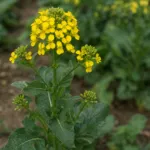 Ethiopian Rape (Brassica carinata) care guideBrassica carinata
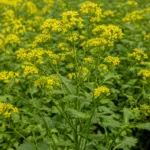 Brown Mustard (Brassica juncea) care guideBrassica juncea
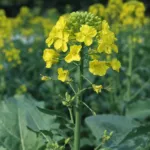 Rapeseed (Brassica napus) care guideBrassica napus
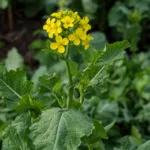 Urnip rape (Brassica rapa) care guideBrassica rapa
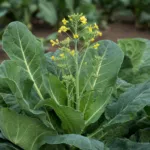 Collard greens (Brassica oleracea) care guideBrassica oleracea
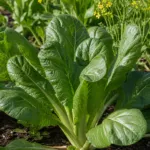 Integrifolia Group (Brassica juncea Integrifolia Group)Brassica juncea Integrifolia Group
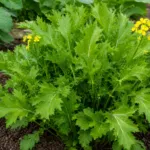 Multiceps Group (Brassica juncea Multiceps Group)Brassica juncea Multiceps Group
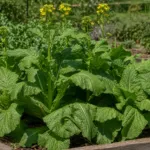 Broad-leaved mustard (Brassica juncea Rugosa Group)Brassica juncea Rugosa Group
 Black Mustard (Brassica nigra) care guideBrassica nigra
 Garden Peony (Paeonia officinalis) care guidePaeonia officinalis
 False goatsbeard (Astilbe × arendsii ‘Fanal’)Astilbe × arendsii 'Fanal'