
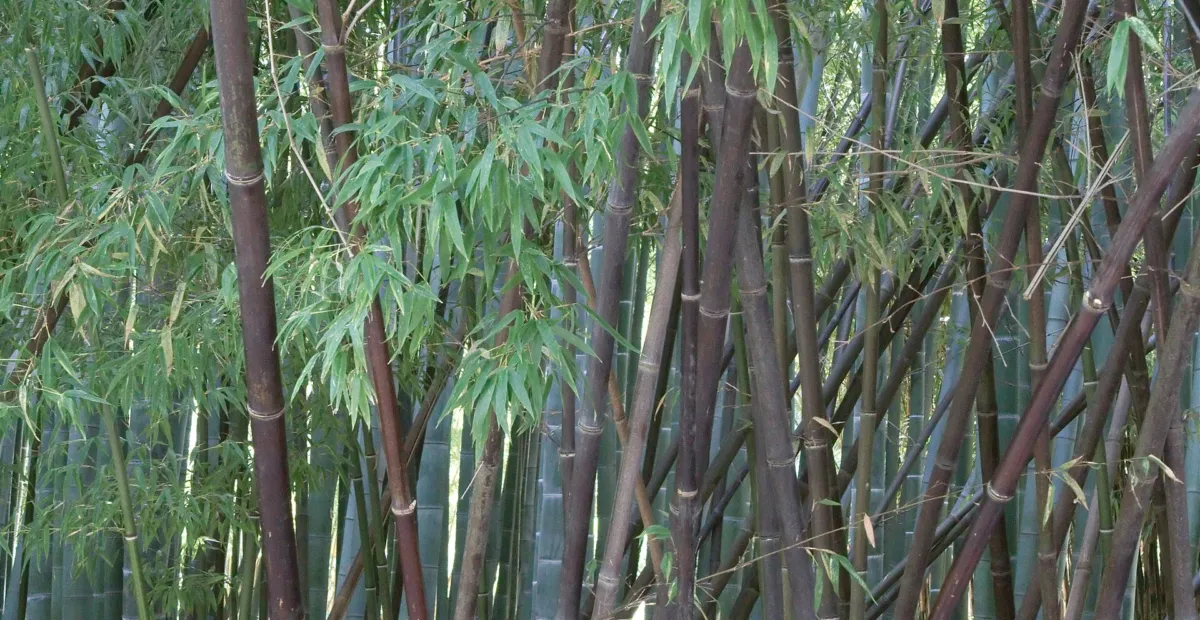
 Source:
 Black bamboo or purple bamboo (Chinese: 紫竹) (Phyllostachys nigra) short overview
Black bamboo is an elegant evergreen running bamboo from China, grown for its slender culms that emerge green and gradually develop polished purple-black to black coloring. It forms an architectural screen or specimen when given fertile, evenly moist, well-drained soil and sun to partial shade. Mature plants can become substantial, so install a rhizome barrier or grow it in a large container where spread must be controlled.
Taxonomic classification
Black bamboo or purple bamboo (Chinese: 紫竹) (Phyllostachys nigra) care guide
Light and placement
Grow in full sun for the darkest culm color, or partial shade where summers are hot and dry. A south- or west-facing position gives strong light; afternoon shade can reduce leaf scorch in exposed sites. Pale, sparse growth may indicate insufficient light, while curled, browned leaf margins usually point to drought, intense reflected heat or drying wind rather than excessive shade alone.
Watering and humidity
Water deeply when the upper few inches of soil begin to dry, keeping the root zone consistently moist rather than saturated. Newly planted divisions need regular irrigation through their first growing season; established plants tolerate brief dryness but perform best with summer moisture. Increase watering during hot, windy weather and reduce it in cool weather, while maintaining drainage to prevent rhizome decline.
Soil and growing medium
Use fertile loam enriched with compost or other well-rotted organic matter. The soil should hold moisture but drain freely, since stagnant winter water can damage roots and rhizomes. Black bamboo tolerates a broad pH range from acidic through alkaline; structure and drainage matter more than precise pH adjustment. Mulch to moderate soil temperature, keeping mulch away from emerging culms.
Feeding
Top-dress in spring with compost or a balanced slow-release fertilizer, then feed lightly again during vigorous summer growth if foliage is pale or growth is weak. Container plants can receive a balanced liquid fertilizer at reduced strength during the growing season. Do not heavily fertilize drought-stressed, newly divided or dormant plants, and avoid excess nitrogen that encourages soft, top-heavy growth.
Growth and habit
This is a running bamboo with underground rhizomes that can send up new culms beyond the original planting area. New shoots expand rapidly during the growing season, while older culms persist and provide structure. In cool or dry conditions it may appear more clumping, but favorable warm, moist sites can support vigorous spread. Containment and annual thinning are important maintenance tasks.
Planting and repotting
Plant into prepared, well-drained soil after the danger of severe frost has passed, or in early fall where roots can establish before winter. Set the root ball at its original depth and water thoroughly. Apply a 2–4 inch mulch layer, leaving the crown uncovered. Install a durable rhizome barrier before planting if the bamboo must remain within a defined area; containers also require periodic root management.
Container-grown plants need repotting or root division when rhizomes circle densely, drainage declines or new growth weakens. Shift into a heavy, wide container with drainage holes and a fertile loam-based mix. Repot in spring, divide only when necessary, and avoid burying the crown. Large containers may still require periodic removal of escaping rhizomes.
Propagation and pruning
Propagation
Propagate mainly by division of established rhizomes and culm sections, preferably in spring as new growth begins. Each division should include healthy rhizome tissue, roots and at least one viable culm or bud. Keep divisions evenly moist while they establish. Seed is uncommon because flowering is rare, and seed availability or viability should not be assumed.
Pruning
Remove dead, weak, damaged or poorly positioned culms in spring, cutting them at ground level with a clean saw or loppers. Thin older stems to display the dark canes and improve air circulation. Remove unwanted new shoots promptly where spread is a concern. Avoid indiscriminate topping, which can leave unattractive cut stems and does not stop rhizome expansion.
Overwintering
In USDA Zone 7 and colder exposures, mulch the root zone before winter and shelter plants from persistent drying winds. Container plants are more cold-sensitive because roots lack surrounding ground insulation; move them to a protected unheated space or insulate the container during severe freezes. Water newly planted specimens before the ground freezes, but do not keep winter soil waterlogged.
Uses
Use black bamboo as a specimen, privacy screen, tall background, courtyard accent or large-container plant. The black culms are valued for ornamental and craft applications, including decorative woodwork. Although bamboo shoots may be edible in some Phyllostachys species, do not assume culinary safety or preparation requirements for this exact plant without verified species-specific guidance.
Appearance
Young culms are green and become glossy purple-black to black over roughly two or more seasons. The slender, hollow canes have prominent nodes and alternate grooves characteristic of Phyllostachys. Narrow lance-shaped leaves form dense, feathery sprays on arching stems. The combination of dark canes and fresh green foliage makes the species easy to recognize in cultivated collections.
Flowering
Like other bamboos, Phyllostachys nigra flowers infrequently and may flower synchronously across plants of related genetic origin. The flowers are small and inconspicuous rather than showy. A flowering event can reduce vigor, and some flowering clumps or portions may die afterward, although the exact response varies with clone, flowering pattern and growing conditions.
Pollination and visitors
The inconspicuous flowers are adapted primarily to wind pollination, not to attracting bees, butterflies or other showy-flower visitors. Reliable evidence for characteristic animal pollinators of this exact species is limited, so no animal visitor group is assigned.
Phyllostachys nigra photos
Click any photo for a larger view. Source, author and license are shown separately.
Diseases and pests
Diseases
Black bamboo is generally trouble-free when drainage and air circulation are good. Watch for root or rhizome problems in saturated soil, and remove declining material promptly. Reduce disease pressure by avoiding overhead irrigation, maintaining moderate spacing and disinfecting cutting tools between plants. Correct cultural stress before resorting to fungicides.
Pests
Slugs may chew young foliage, especially in damp, shaded conditions. Inspect new growth and remove hiding places near the crown; hand-pick or use a labeled control if damage is persistent. Scale insects, mites or aphids may occasionally occur under stress. Encourage airflow, rinse foliage when practical and use targeted treatments only when monitoring shows they are needed.
Related diseases and pests
Only Plant Doctor profiles whose host data indicate this plant may be affected are shown here.




Toxicity and pollen
No reliable species-specific toxicology source was located that establishes Phyllostachys nigra as poisonous to people or pets. Do not equate that evidence gap with proven safety. Prevent children and animals from chewing large quantities of leaves, shoots or hard culm fragments, and seek medical or veterinary advice after significant ingestion or if symptoms occur.
- Typical season
- No dependable regular U.S. season documented; only during rare flowering
- Pollination / pollen
- Light, wind-dispersed grass pollen released during flowering
Phyllostachys nigra is a flowering grass and produces wind-dispersed pollen when it flowers, but flowering is rare and not a dependable annual seasonal event. Because species-specific aeroallergen evidence is limited, its allergy importance cannot be rated confidently. People with significant grass-pollen sensitivity should avoid handling flowering material and monitor symptoms during unusual bloom events.
Native habitat
The species is native to China, where it occurs in temperate to subtropical environments with adequate seasonal moisture. In cultivation it prefers fertile soils that remain moist but drain well, and it benefits from shelter from cold, drying winds. Its running rhizomes allow expansion through suitable ground and can make it difficult to confine in warm, favorable sites.
Interesting fact
The dramatic black color develops with age rather than appearing on most newly emerging culms. Black bamboo has been cultivated in Europe since the early nineteenth century and has received the RHS Award of Garden Merit. Its flowering is exceptionally infrequent compared with annual ornamental grasses, and flowering behavior may follow a long genetic cycle.
Frequently asked questions (FAQ)
The most relevant questions about this plant, with short and direct answers.
🌱Quick care
What is Phyllostachys nigra commonly called?⌄
Phyllostachys nigra is commonly called black bamboo or purple bamboo (Chinese: 紫竹). It is an evergreen bamboo in the grass family, Poaceae, valued for culms that mature from green to purple-black.
How much sun does black bamboo need?⌄
Black bamboo grows best in full sun to partial shade. More sun usually encourages stronger growth and better culm coloration, while partial shade can reduce heat and drying stress.
How often should I water Phyllostachys nigra?⌄
Water Phyllostachys nigra regularly enough to keep the soil moderately and consistently moist. Do not let newly planted plants dry out, and increase watering during extended heat or drought.
Is black bamboo evergreen?⌄
Yes, black bamboo is generally evergreen in suitable climates. Cold, drying winds or severe winter exposure can cause leaf damage or temporary foliage loss.
🌤️Environment and placement
What USDA hardiness zones can black bamboo grow in?⌄
Black bamboo is commonly grown in USDA Zones 6 through 10, with established plants tolerating temperatures near 0°F under favorable conditions. Winter damage is more likely in exposed sites or during abrupt cold snaps.
What is the best soil for Phyllostachys nigra?⌄
Plant Phyllostachys nigra in fertile, humus-rich, moist but well-drained loam. Avoid persistently waterlogged soil, although the plant should not be allowed to become drought-stressed.
Can black bamboo grow in partial shade?⌄
Yes, black bamboo can grow in partial shade, although it may develop less vigorous growth and less intense dark culm coloring than plants grown with more sunlight. Protect it from strong, drying winds.
Can I plant black bamboo near a house or fence?⌄
Plant black bamboo near structures only when its spread can be physically contained and inspected. Because Phyllostachys species produce running rhizomes, avoid placing it directly against property lines, foundations, drains, or other hard-to-access areas.
Is Phyllostachys nigra a running or clumping bamboo?⌄
Phyllostachys nigra is a running bamboo that spreads through horizontal rhizomes. Its rate of spread varies with climate, soil, irrigation, and available space, so it should not be treated as reliably clumping in U.S. gardens.
💧Care and problems
How fast does black bamboo grow?⌄
Black bamboo can grow vigorously once established, especially in warm, fertile, well-watered conditions. New shoots emerge mainly during the spring growth period, with later growth depending on climate and plant health.
Why are my black bamboo canes still green?⌄
Young black bamboo culms are usually green and gradually turn purple-black as they mature, often over one or more growing seasons. Insufficient light, stress, or a mislabeled plant can also affect coloration.
Why are the leaves on my black bamboo turning brown?⌄
Brown leaves commonly result from drought, winter wind, intense heat, root disturbance, or inadequate soil moisture. Check the root zone, water deeply when it is dry, and protect exposed plants from persistent drying winds.
Does black bamboo need fertilizer?⌄
Black bamboo benefits from fertile soil and may be fed with a balanced fertilizer during active growth if growth is weak or foliage is pale. Avoid excessive fertilizer, which can produce rapid, maintenance-heavy growth.
What pests or diseases affect Phyllostachys nigra?⌄
Black bamboo is generally low-maintenance and relatively disease-free, but slugs and other moisture-loving pests may damage foliage. Inspect stressed plants regularly and correct watering or drainage problems before treating pests.
🪴Planting and repotting
When is the best time to plant black bamboo?⌄
Plant black bamboo in spring or early fall, when soil moisture is dependable and temperatures are moderate. Spring planting gives the root system a long season to establish before winter.
How do I plant black bamboo in the ground without letting it spread?⌄
Install a durable rhizome barrier around the planting area or use a large, sturdy container. A barrier should be installed deeply, extend above the soil surface, and remain accessible for regular inspection and root pruning.
Can Phyllostachys nigra grow in a container?⌄
Yes, black bamboo grows well in a large container with fertile, well-drained potting mix. Container plants dry out and freeze more quickly than in-ground plants, so they require closer watering and winter protection.
How do I repot black bamboo?⌄
Repot black bamboo when the container is crowded with rhizomes or the plant dries out unusually fast, preferably in spring. Move it into a wider, heavy container, refresh the growing medium, and water thoroughly after planting.
✂️Propagation and pruning
How do you propagate Phyllostachys nigra?⌄
The most practical way to propagate black bamboo is by dividing established plants or rhizome sections in spring. Each division needs viable rhizomes, healthy roots, and at least one vigorous culm or shoot.
Can black bamboo be grown from seed?⌄
Seed propagation is generally impractical because bamboo flowering and seed production are infrequent and unpredictable. Nursery plants are normally produced by division or other vegetative methods.
How should I prune black bamboo?⌄
Remove dead, damaged, weak, or overcrowded culms in spring, cutting them near ground level. Selectively remove lower branches or leaves to display the dark canes, but retain enough foliage for healthy growth.
Can I cut black bamboo back hard?⌄
Black bamboo tolerates substantial pruning, but severe cutting can reduce its appearance and vigor for a time. Remove unwanted culms at the base and avoid stripping all foliage from living stems.
How do I stop black bamboo from spreading?⌄
Contain black bamboo with a properly installed rhizome barrier, a large durable container, or consistent annual rhizome pruning. Inspect beyond the planting area each spring and remove escaping shoots before they become established.
⚠️Toxicity and safety
Is black bamboo toxic to dogs, cats, or people?⌄
Species-specific toxicity evidence for Phyllostachys nigra is limited, and it is not generally reported as a commonly poisonous ornamental. Do not allow children or pets to chew unidentified plant material, and contact a medical or veterinary professional if ingestion causes symptoms.
Is black bamboo invasive in the United States?⌄
Black bamboo can be invasive or difficult to control where its running rhizomes escape cultivation, although legal and ecological status varies by state and locality. Check local regulations and use containment wherever it is planted in the ground.
Can black bamboo damage fences, foundations, or pipes?⌄
Escaping rhizomes can move along or beneath hard surfaces and may create costly removal problems near fences, paving, foundations, or utility areas. Plant it away from vulnerable structures and install a barrier before the rhizomes spread.
🌸Flowering and special interest
Does Phyllostachys nigra flower?⌄
Yes, Phyllostachys nigra can flower, but flowering is unusual and difficult to predict in garden plants. Bamboo flowering may be followed by reduced vigor or dieback, although the response can vary by plant and flowering event.
What should I do if my black bamboo starts flowering?⌄
Remove flowering shoots promptly if you want to reduce the chance of additional flowering on the plant. Continue normal care, but monitor the grove for declining culms and be prepared to divide or replace weakened sections if necessary.
Does black bamboo die after flowering?⌄
Black bamboo may decline or die after a major flowering event, but this is not guaranteed for every plant or flowering cycle. Remove dead culms, maintain even moisture, and watch for healthy replacement shoots from surviving rhizomes.
Similar plants
 Azure Monkshood (Aconitum carmichaelii) care guideAconitum carmichaelii
 Monkshood (Aconitum ‘Stainless Steel’)Aconitum 'Stainless Steel'
 Monkshood (Aconitum ‘Bressingham Spire’)Aconitum 'Bressingham Spire'
 Golden full moon maple (Acer shirasawanum ‘Aureum’)Acer shirasawanum 'Aureum'
 Globosum (Acer platanoides ‘Globosum’)Acer platanoides 'Globosum'
 Striped maple (Acer pensylvanicum) care guideAcer pensylvanicum