
 AI-generated illustration
Red Luna (Peperomia caperata ‘Red Luna’) short overview
Peperomia caperata 'Red Luna' is a compact tropical houseplant grown for its deeply corrugated, heart-shaped foliage in rich burgundy and red tones. It performs best in bright, filtered light with protection from harsh midday sun, an airy potting mix, and careful watering after the surface begins to dry. Keep it warm, avoid cold drafts and waterlogged soil, and expect occasional slender flower spikes under favorable indoor conditions.
Taxonomic classification
Red Luna (Peperomia caperata ‘Red Luna’) care guide
Light and placement
Provide bright filtered or indirect light, ideally near an east- or west-facing window or several feet back from a bright south-facing window. Gentle morning sun can be tolerated, but strong midday or afternoon rays may bleach or scorch the leaves. Too little light can produce stretched growth and duller coloration; too much direct sun can cause faded, crispy, or brown patches.
Watering and humidity
Water thoroughly when the upper portion of the mix has dried and excess water drains freely, then empty the saucer. Do not keep the pot constantly wet or allow it to sit in water. Water less often in winter and in lower light, and more promptly during warm, bright active growth. Use room-temperature water and keep water out of dense leaf centers where possible.
Soil and growing medium
Use a loose, fast-draining mix such as peat or coco coir amended with perlite, fine bark, or another open mineral component. The root system is vulnerable to stagnant moisture, so the container must have drainage holes. A slightly acidic to neutral mix is suitable; avoid dense garden soil and heavy, water-retentive compost.
Feeding
Feed during active growth with a balanced liquid houseplant fertilizer diluted to quarter or half strength about monthly. Apply to already moist soil rather than dry roots. Reduce or stop feeding during slow winter growth, after repotting, or when the plant is stressed, chilled, or showing root problems.
Growth and habit
Forms a compact, low-growing rosette or clustered mound from short stems. Growth is generally steady in warm bright conditions and slows in winter or low light. Rotate the pot periodically for even growth, remove damaged leaves, and avoid frequent disturbance of the shallow root system.
Planting and repotting
Grow as a container plant in the United States, planting at the same depth as the original root ball. Use a small pot with drainage and leave modest space around the crown rather than burying the stems. Establish it indoors at warm temperatures; move outside only during reliably warm, frost-free weather.
Repot in spring or early summer only when roots fill the container or the mix has broken down. Move up one pot size rather than making a large jump, and keep the crown at its original depth. Water lightly after repotting and allow the plant to settle in bright filtered light.
Propagation and pruning
Propagation
Leaf-petiole or leaf-section cuttings and stem cuttings are practical methods. Take healthy material during active growth, allow wounds to callus briefly when appropriate, and root in a lightly moist, airy medium with warmth and bright indirect light. Division is possible when the plant has multiple rooted crowns.
Pruning
Pruning is usually limited to removing yellow, damaged, or spent leaves and flower spikes. Use clean scissors at the base of the petiole or spike. Pinching healthy stems is optional and can encourage a fuller appearance, while severe cutting is rarely needed.
Overwintering
Keep indoors before temperatures approach 50°F and protect from frost, cold windows, and drafts. Maintain bright filtered light and reduce watering as growth slows. Do not place directly beside heating vents, which can cause rapid drying and leaf-edge damage.
Uses
Primarily used as a compact ornamental foliage plant for desks, shelves, terrariums with ventilation, windowsills, and mixed houseplant displays. It is useful where a small plant with strongly textured red foliage is wanted. It is not established here as a culinary or medicinal plant.
Appearance
Leaves are broadly heart-shaped, thick, and strongly puckered or corrugated, with prominent radiating veins. 'Red Luna' is associated with red to burgundy foliage and often reddish petioles, although color intensity varies with light, age, and growing conditions. The compact leaves arise in a dense rosette-like arrangement.
Flowering
This cultivar can produce slender, upright cream-white flower spikes typical of Peperomia caperata. Flowering is secondary to the foliage display and may occur at various times indoors when plants are mature and growing well. Spikes can be removed after they fade if a tidier appearance is preferred.
Pollination and visitors
No reliable cultivar-specific pollinator records were located. Peperomia flowers produce tiny spikes, but their visitor or pollination relationships are not sufficiently documented here to assign a specific animal group.
Diseases and pests
Diseases
The main risk is root or crown rot caused by persistently wet media, poor drainage, or cool conditions. Remove affected tissue, replace saturated mix, and improve drainage. Leaf-spot symptoms are best managed by keeping foliage dry, increasing air movement, and removing badly damaged leaves with clean tools.
Pests
Watch for mealybugs, scale, thrips, and fungus gnats. Inspect leaf bases and petioles regularly, isolate affected plants, remove visible insects, and use insecticidal soap or another labeled treatment according to directions. Let the upper mix dry appropriately to discourage fungus gnats.
Related diseases and pests
Only Plant Doctor profiles whose host data indicate this plant may be affected are shown here.
 DiseaseAlternaria leaf spot and fruit rotAlternaria alternata
 DiseasePhytophthora root and crown rotPhytophthora nicotianae
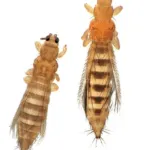 PestOnion thripsThrips tabaci Lindeman
 PestMelon thripsThrips palmi Karny
 PestChilli thripsScirtothrips dorsalis Hood
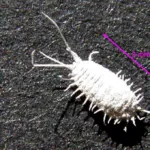 PestObscure mealybugPseudococcus viburni
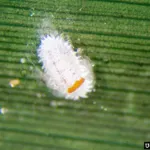 PestCitrus mealybugPlanococcus citri
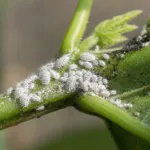 PestCotton mealybugPhenacoccus solenopsis Tinsley
Toxicity and pollen
ASPCA lists Peperomia caperata as non-toxic to dogs and cats. This supports a low poisoning concern, but ingestion of any houseplant can still cause mild stomach upset, and individual sensitivities are possible. Keep plants and potting materials away from children and pets that chew plants.
- Pollination / pollen
- Small flower pollen; dispersal relevance uncertain
As an insect-associated flowering houseplant, it is not generally treated as a major airborne pollen source. However, cultivar-specific aerobiology is not well studied, and sensitive individuals should avoid handling flowers if symptoms occur. Soil mold and indoor dust may be more relevant household irritants than the plant's pollen.
Native habitat
The species is native to southeastern Brazil, where it occurs in warm, humid tropical environments. Its natural setting is consistent with protection from frost, filtered light, organic but freely draining substrates, and relatively stable moisture rather than prolonged saturation.
Interesting fact
The cultivar is grown primarily for red-burgundy, highly textured foliage rather than its flowers. Peperomia caperata is native to southeastern Brazil and belongs to the pepper family, Piperaceae. The species is a compact perennial adapted to warm, humid tropical conditions but is commonly cultivated as an indoor plant.
Frequently asked questions (FAQ)
The most relevant questions about this plant, with short and direct answers.
🌱Quick care
How do you care for Peperomia caperata 'Red Luna'?⌄
Give Peperomia caperata 'Red Luna' bright filtered light, an airy fast-draining mix, and water only after the upper soil has dried. Keep it warm, protect it from frost and cold drafts, and avoid consistently wet soil.
Is Peperomia caperata 'Red Luna' easy to grow indoors?⌄
Yes, Peperomia caperata 'Red Luna' is generally an easy indoor plant when overwatering is avoided. Its compact size and tolerance of average household conditions make it suitable for desks, shelves, and windowsills.
🌤️Environment and placement
How much light does Peperomia caperata 'Red Luna' need?⌄
Peperomia caperata 'Red Luna' needs bright filtered or indirect light for strong growth and rich burgundy coloring. Protect it from intense direct afternoon sun, which can bleach or scorch the leaves.
Can Peperomia caperata 'Red Luna' grow in low light?⌄
Peperomia caperata 'Red Luna' can tolerate lower light temporarily, but growth may become slower and less compact. Move it closer to a bright window or provide filtered grow-light exposure if the foliage loses color.
What window is best for Peperomia caperata 'Red Luna'?⌄
An east- or north-facing window, or a bright window covered by a sheer curtain, is usually suitable for Peperomia caperata 'Red Luna'. A south- or west-facing window may require extra filtering during strong afternoon sun.
What temperature does Peperomia caperata 'Red Luna' prefer?⌄
Keep Peperomia caperata 'Red Luna' in a stable indoor range of about 60–80°F. Protect it from frost, cold drafts, cold window glass, and sudden temperature changes.
Does Peperomia caperata 'Red Luna' need high humidity?⌄
No, Peperomia caperata 'Red Luna' usually adapts to average household humidity. Extra humidity can help in very dry rooms, but good airflow and dry foliage are more important than misting.
💧Care and problems
How often should you water Peperomia caperata 'Red Luna'?⌄
Water Peperomia caperata 'Red Luna' when the upper inch or two of the mix feels dry and the pot feels noticeably lighter. Water thoroughly until excess drains, then empty any water left in the saucer.
How do you know when Peperomia caperata 'Red Luna' needs water?⌄
Check the soil rather than following a fixed schedule: water Peperomia caperata 'Red Luna' when the upper layer has dried and the pot feels light. Slightly wrinkled leaves can indicate dryness, but soft or yellowing leaves more often suggest excess moisture.
Why are the leaves on my Peperomia caperata 'Red Luna' turning yellow?⌄
Yellow leaves on Peperomia caperata 'Red Luna' commonly result from overwatering or soil that drains too slowly. Let the mix dry further between waterings and inspect the roots for brown, soft, or foul-smelling decay.
Why are Peperomia caperata 'Red Luna' leaves curling or wrinkling?⌄
Curling or wrinkled leaves usually mean Peperomia caperata 'Red Luna' is too dry, although damaged roots can also prevent water uptake. Check the soil moisture, then adjust watering while avoiding repeated saturation.
Why is my Peperomia caperata 'Red Luna' losing its red color?⌄
Peperomia caperata 'Red Luna' may lose some burgundy color when light is too weak. Move it gradually into brighter filtered light, while avoiding harsh direct sun that can damage the foliage.
Why is Peperomia caperata 'Red Luna' dropping leaves?⌄
Leaf drop is often caused by overwatering, abrupt temperature changes, cold drafts, or severe dryness. Check the roots and soil first, then keep the plant in a warm, stable location with a consistent dry-down cycle.
What pests attack Peperomia caperata 'Red Luna'?⌄
Peperomia caperata 'Red Luna' can occasionally attract mealybugs, spider mites, whiteflies, or other common houseplant pests. Inspect leaf undersides and stems regularly, isolate affected plants, and treat pests promptly with an appropriate houseplant product.
How often should you fertilize Peperomia caperata 'Red Luna'?⌄
Feed Peperomia caperata 'Red Luna' lightly during active spring and summer growth with a diluted, balanced houseplant fertilizer. Reduce or stop feeding in winter or whenever growth slows.
🪴Planting and repotting
What soil is best for Peperomia caperata 'Red Luna'?⌄
Use a loose, airy, fast-draining houseplant mix for Peperomia caperata 'Red Luna'. A standard mix amended with perlite, pumice, orchid bark, or another aerating material helps reduce the risk of root rot.
Does Peperomia caperata 'Red Luna' need a drainage hole?⌄
Yes, Peperomia caperata 'Red Luna' should be planted in a container with a drainage hole. Decorative pots without drainage can trap water around the roots and greatly increase the risk of rot.
When should you repot Peperomia caperata 'Red Luna'?⌄
Repot Peperomia caperata 'Red Luna' when roots fill the container, emerge from drainage holes, or the mix has become compacted. Repot in spring when possible and move it only one pot size larger.
Does Peperomia caperata 'Red Luna' like to be root-bound?⌄
Peperomia caperata 'Red Luna' tolerates being slightly snug in its pot and does not need frequent repotting. Avoid oversized containers because excess soil stays wet longer and can damage the roots.
✂️Propagation and pruning
How do you propagate Peperomia caperata 'Red Luna'?⌄
Propagate Peperomia caperata 'Red Luna' from healthy leaf or stem cuttings in a warm, bright, lightly moist rooting medium. Stem cuttings usually preserve the growth point more reliably, while leaf propagation can be slower.
Can you propagate Peperomia caperata 'Red Luna' from a leaf?⌄
Yes, Peperomia caperata 'Red Luna' can be propagated from a healthy leaf under suitable warm, bright, and lightly moist conditions. Results can vary, and a leaf cutting without the appropriate tissue may fail to produce a new plant.
Can you divide Peperomia caperata 'Red Luna'?⌄
Yes, a mature Peperomia caperata 'Red Luna' with several rooted growth points can sometimes be divided during repotting. Separate the clumps carefully and replant them in small containers with airy mix.
Should you prune Peperomia caperata 'Red Luna'?⌄
Pruning Peperomia caperata 'Red Luna' is optional and mainly helps remove damaged leaves or shape leggy growth. Use clean scissors and cut just above a healthy node or at the base of a spent leaf.
⚠️Toxicity and safety
Is Peperomia caperata 'Red Luna' toxic to cats?⌄
Peperomia caperata 'Red Luna' is generally considered non-toxic to cats based on species-level information for Peperomia caperata. Even non-toxic plants can cause mild stomach upset if eaten in quantity, so discourage chewing.
Is Peperomia caperata 'Red Luna' toxic to dogs?⌄
Peperomia caperata 'Red Luna' is generally considered non-toxic to dogs based on species-level information for Peperomia caperata. Keep pets from consuming large amounts because any plant material may cause digestive upset.
Is Peperomia caperata 'Red Luna' safe for children?⌄
Peperomia caperata 'Red Luna' is not known to contain a significant toxic principle, but it should still be kept out of reach of young children. Choking, irritation, or stomach upset can occur from chewing plant material.
🌸Flowering and special interest
Does Peperomia caperata 'Red Luna' flower?⌄
Yes, Peperomia caperata 'Red Luna' can produce slender, pale spike-like flower clusters when mature and growing well. The flowers are secondary to its foliage and may appear intermittently indoors.
What do Peperomia caperata 'Red Luna' flowers look like?⌄
The flowers of Peperomia caperata 'Red Luna' appear as narrow, upright spikes rather than showy petals. They are typically cream to pale green and resemble the characteristic tail-like inflorescences of many peperomias.
Should you cut off Peperomia caperata 'Red Luna' flowers?⌄
Cutting off Peperomia caperata 'Red Luna' flower spikes is optional and mainly a matter of appearance. Remove them with clean scissors if they fade or if you want the plant to focus on foliage.
Similar plants
 Rosso (Peperomia caperata ‘Rosso’)Peperomia caperata 'Rosso'
 Watermelon Peperomia (Peperomia argyreia) care guidePeperomia argyreia
 Ruby Glow (Peperomia graveolens) care guidePeperomia graveolens
 He baby rubberpla (Peperomia obtusifolia) care guidePeperomia obtusifolia
 Trailing Peperomia (Peperomia prostrata) care guidePeperomia prostrata
 Silver Ripple (Peperomia caperata ‘Silver Ripple’)Peperomia caperata 'Silver Ripple'